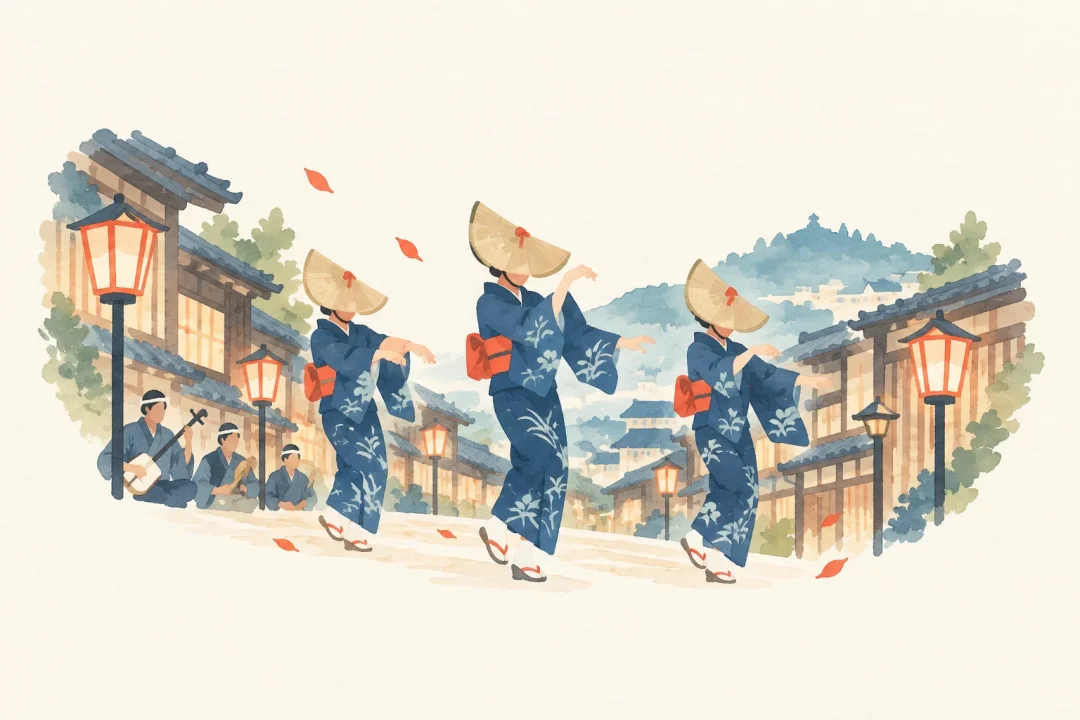
Four days in Sarama, connected by prayer and Kuicha
Sarama Myakuzutsu
The 2026 edition of Sarama Myakuzutsu has ended.
Festival information
EVENT INFORMATION- Dates
- 2026/09/17 〜 2026/09/20Ended
- Season / frequency
- 4 days beginning on the Kinoe-uma day in lunar calendar: August–September / A traditional annual event
- Location
- The “Jā” (square) at Ikemazoe Bunmiya, and Bunmiya and its square in Maezato
- Area
- Okinawa Prefecture・Miyakojima City(From Tokyo: approx. 2 h 30 min–3 h · flight time only)Prefecture-level estimate to a main station or airport, not the venue. Airport access, check-in and onward travel are extra; remote areas and islands can take much longer.
- Features
- Highlights and activities
- Wishes behind the festival
- Participation / viewing
- Spectators welcome
- Last updated
- 2026/10/19
A traditional ritual connected with the Ikema people, passed down in Sarama, Irabu, Miyakojima City. Prayers and offerings of Kuicha are held, centered around the mutu in Ikemazoe and Maezato.
About Sarama Myakuzutsu
Sarama Myakuzutsu is a traditional ritual passed down in the Sarama district of Irabu, Miyakojima City, Okinawa Prefecture.
Community members pray and offer Kuicha, centered around the “mutu” in Ikemazoe and Maezato.
The event is held over 4 days beginning on a particular day of the lunar calendar, and has been passed down as a prayer for bountiful harvests and good health.
A cultural event that reflects the ties among the Ikema people, also passed down on Ikema Island and in the Hirara and Nishihara districts.
Source: 宮古島市教育委員会公認歴史文化観光ロードアプリサイト » 【市指定:無形民俗】佐良浜ミャークヅツ~さらはまみゃーくづつ~ / ミーウヤら「ヒャサッサ」 池間・前里添の伝統行事・佐良浜ミャークヅツ クイチャー奉納し五穀豊穣と健康祈る – 宮古新報
Festival highlights
A highlight is the Kuicha offered after the Miuyara and others perform prayers.
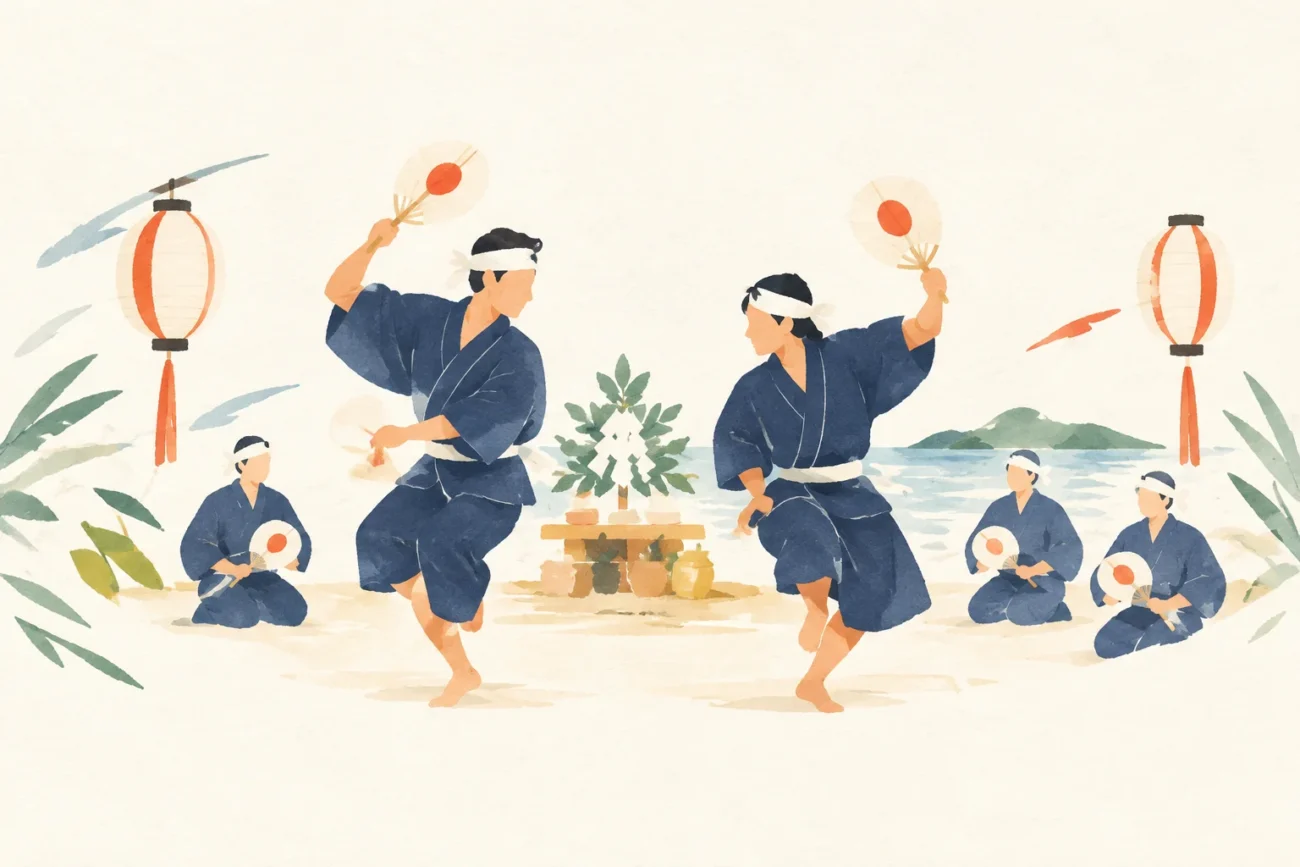
In Ikemazoe, participants enter the square carrying miruku sake, form a circle with the Tsukasanma at the front, and dance while calling out “Hyasassa.”
In Maezato, Kuicha is also offered following prayers at Bunmiya.
The event offers a glimpse of ritual and dance coming together as local people look on.
Four days in Sarama, connected by prayer and Kuicha
What to expect
The event spans 4 days: the first day, “Arabi”; the second, “Nnakanuhii”; the third, “Atonuhii”; and the final day, “Butōibī.”
Prayers are held at each mutu, led by the Miuyara and Tsukasanma.
Afterward, people drink miruku sake in the squares of Ikemazoe and Maezato and offer Kuicha.
A custom of welcoming elders who arrive early in the morning and handing out commemorative gifts during the event period is also described.
How to take part
The festival is led by the Tsukasuya and Miuyara of each mutu.
It is not presented as an event for general visitors to take part in prayers or offerings; visitors are expected to quietly observe the community’s sacred rites.
At the same time, there are moments when Kuicha is offered as residents look on.
Follow local instructions about where visitors may watch and where they may enter.
Location and access
- Venue and address
Sarama district, Ikemazoe and Maezato, Irabu, Miyakojima City, Okinawa Prefecture.
In Ikemazoe, events take place at the “Jā” at Ikemazoe Bunmiya; in Maezato, they take place at Bunmiya and its square.
- By car
Head for the Sarama district.
At ritual sites and within the settlement, please take care not to obstruct traffic or disrupt local life.
Address Ikemazoe and Maezato, Irabu, Miyakojima City, Okinawa Prefecture
Dates and season
2026 event information (the listed dates have passed)
In 2026, the event was held over 4 days, from September 17 to September 20, in Motomura in Ikemazoe and Nakamura in Maezato.
The dates are not fixed on the Gregorian calendar; the event traditionally begins on the Kinoe-uma day in lunar calendar: August–September.
In 2026, prayers and offerings of Kuicha began on the first day.
Accommodation and hotels PR
Showing nearby accommodation.
Prices and availability are current at the time of retrieval. For multi-night stays, only the first night’s price is shown. Confirm the final price and directions to the venue with the booking provider. Select your dates again when using the area search link. Search area: within 3 km of Central Okinawa Prefecture / Miyakojima City (the search is not centered on the festival venue)
Tips for your visit
Myakuzutsu is not a tourist attraction but an important sacred rite for the community.
Do not enter worship sites or mutu without permission, and ask local people before taking photographs.
Avoid loud voices and conspicuous behavior, and quietly observe from areas where visitors are permitted.
Roads in the settlement may become crowded during the ritual, so give priority to residents passing through.
Nearby attractions

うえのドイツ文化村
沖縄県宮古島市上野にあるテーマパーク
写真:Uzumaki~jawiki at Japanese Wikipedia / CC BY-SA 3.0
Photo source ·
宮古島市熱帯植物園
沖縄県宮古島市にある植物園

宮古島市総合博物館
沖縄県宮古島市にある博物館
Origins and History of Sarama Myakuzutsu
Two stories about the festival’s origins have been passed down.
One story says the festival was granted as a reward to the lord of Ikema in Nakaboya for paying the head tax in full. Another says it began as a way to enjoy life in this world after the sorrow of losing an only child.
Miyakojima City’s cultural heritage introduction considers the former story more likely.
In Sarama, the community is divided between Ikemazoe and Maezato, and traditions centered on the Miuyas have been passed down to the present day.
Official information
The history and culture tourism road app site, officially recognized by the Miyakojima City Board of Education, describes the origins of Sarama Myakuzutsu, its 4-day structure, the areas where it is passed down, and the traditions of the Miuyas.
The city’s cultural heritage introduction identifies it as a city-designated intangible folk cultural property.
Sarama Myakuzutsu at a Glance
Sarama Myakuzutsu is a traditional ritual held over 4 days in Ikemazoe and Maezato, featuring prayers and offerings of Kuicha.
A community event praying for bountiful harvests and good health, it keeps alive the ties between Ikema culture and Sarama.
When observing, it is important to treat it not as a tourist event but as a sacred rite upheld by the community, and to quietly follow local instructions.
Japanese Festivals.jp Editorial Team
Celebrating local culture and helping you discover a side of Japan you never knew.
Article updated: 2026/10/19
Submit information or a correction Submit photos of this festival