A traditional ritual in which masked visiting deities covered in mud cleanse settlements on Miyako Island
Miyako's Paantu
Festival information
EVENT INFORMATION- Season / frequency
- Shimajiri: early lunar calendar: September; Nohara: the final Day of the Ox in lunar calendar: December / Every year
- Location
- Shimajiri settlement, Hirara, Miyakojima City; Nohara settlement, Ueno, Miyakojima City
- Area
- Okinawa Prefecture・Miyakojima City(From Tokyo: approx. 2 h 30 min–3 h · flight time only)Prefecture-level estimate to a main station or airport, not the venue. Airport access, check-in and onward travel are extra; remote areas and islands can take much longer.
- Highlights and activities
- Wishes behind the festival
- Age restrictions
- In Nohara, boys in the upper grades of elementary school take part in the procession.
- Required number of participants
- In Shimajiri, 3 young men dress up as Paantu
- Last updated
- 2026/10/19
Miyako's Paantu is a traditional ritual in Miyakojima City in which visiting deities covered in grass and mud travel around settlements to drive away misfortune. Distinct forms have been passed down in Shimajiri and Nohara.
About Miyako's Paantu
Miyako's Paantu is a visiting-deity ritual passed down in Shimajiri and Nohara, Miyakojima City, Okinawa Prefecture.
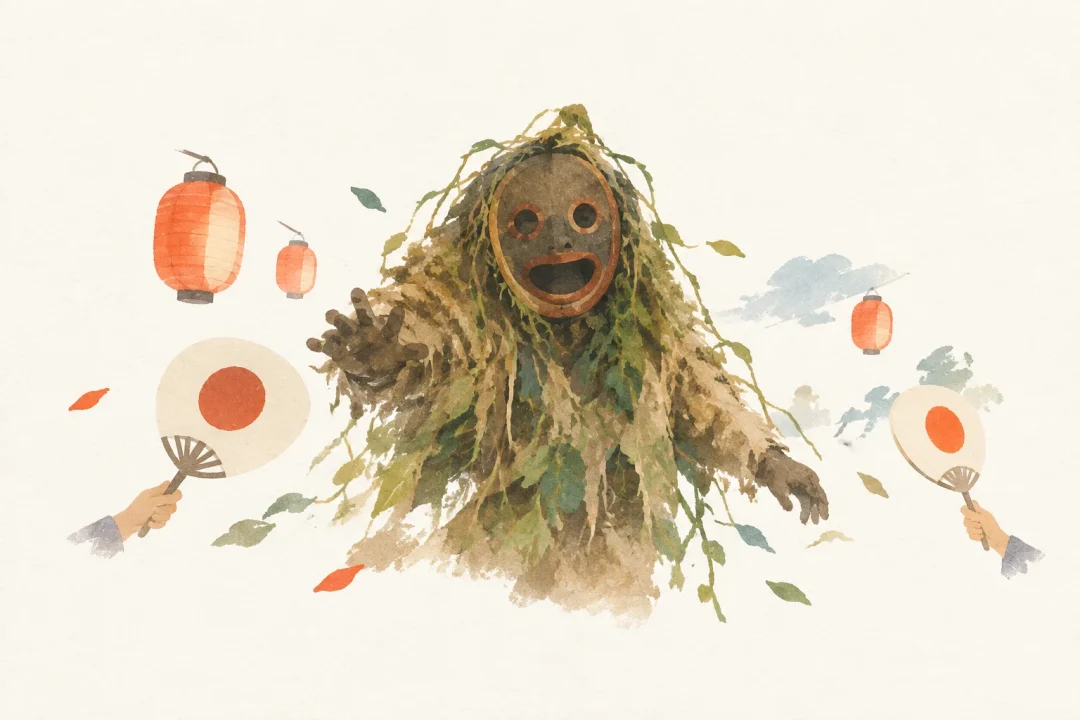
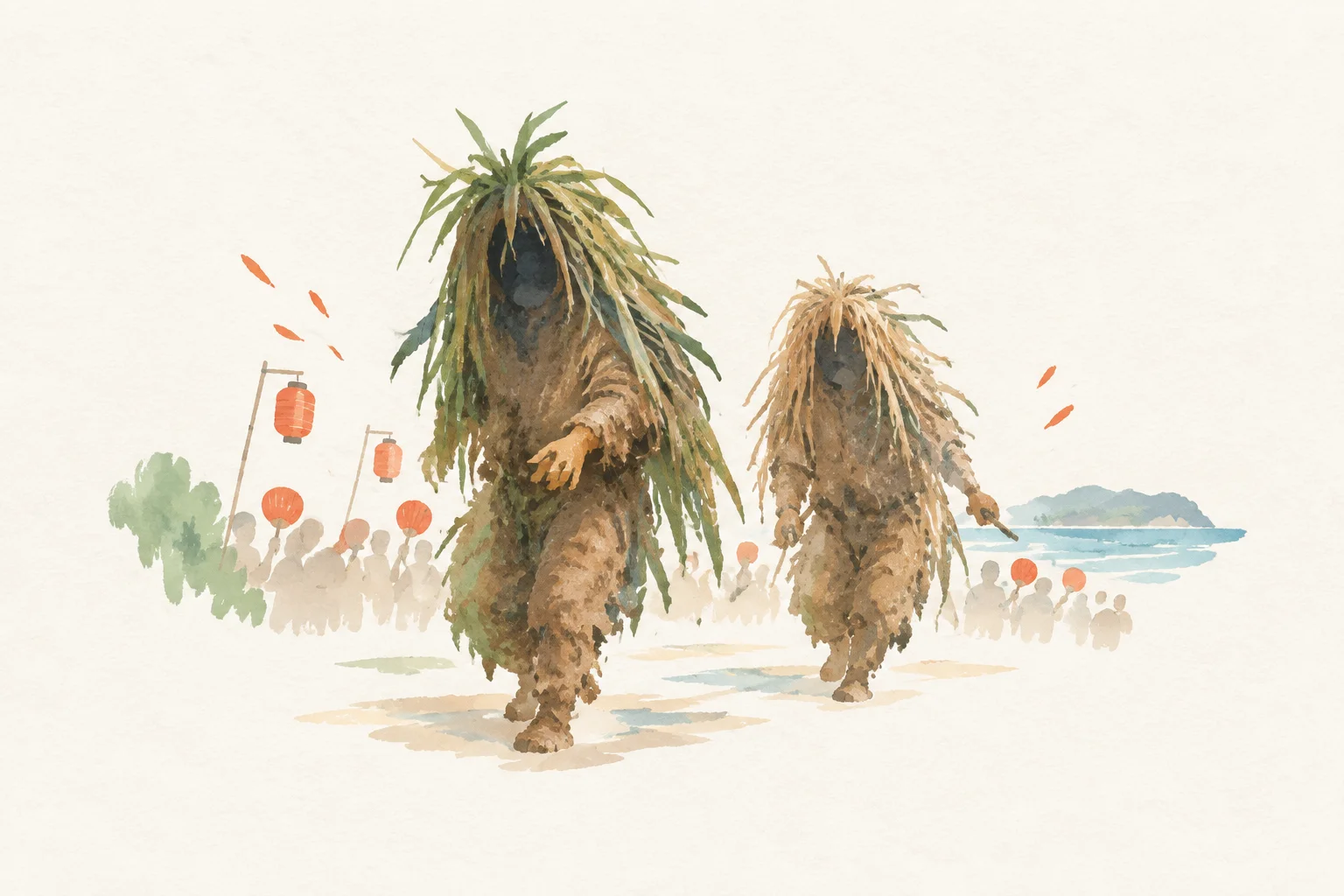
A strange deity wearing a mask and covered in grass travels around the settlement, smearing mud on people and houses to drive away misfortune.
In Shimajiri it is also called Paantu Punaka, and in Nohara it is known as Satiparou (a village cleansing ritual); the proceedings differ by area.
It is designated a National Important Intangible Folk Cultural Property and is also listed as UNESCO Intangible Cultural Heritage.
Source: 国指定文化財等データベース
Festival highlights
In Shimajiri, 3 young men wrap themselves from head to toe in vines and smear on mud that has settled at the bottom of a well to transform into Paantu.
The 3 figures travel around the settlement with masks and staffs, smearing mud on houses and people.
At newly built homes and homes with babies, they are welcomed as beings who bring good fortune.
In Nohara, a procession that includes a masked boy proceeds accompanied by conch shells and small drums, presenting a solemn appearance distinct from Shimajiri's.
A traditional ritual in which masked visiting deities covered in mud cleanse settlements on Miyako Island
What to expect
In Shimajiri, the ritual begins with Sumufusara, in which are hung at the settlement entrances. After prayers, 3 young men dress up at the sacred well in the evening.
After that, the Paantu visit the old village's places of worship and homes throughout the settlement, then run around the village again on the 2nd day to drive away misfortune.
In Nohara, women and boys in the upper elementary school grades form a procession and proceed from east to west, performing prayers and circle-forming rituals along the way.
Finally, they discard the plant leaves to conclude the ritual.
How to take part
In Shimajiri, Paantu visit people and homes in the village, and smearing them with mud is itself part of the event.
In Nohara, women responsible for the household and boys in the upper grades of elementary school from every household take part in the event.
Adult men and girls are said not to take part in the Nohara event.
Please follow local arrangements and guidance on the day to determine what visitors may participate in.
Location and access
- Venue and address
Shimajiri's Paantu takes place in Shimajiri, Hirara, Miyakojima City; the Nohara ritual takes place within the Nohara settlement, Ueno, Miyakojima City.
- By car
It is about a 15-minute drive from Miyako Airport to the Shimajiri settlement.
Source: 宮古のパーントゥ | 沖縄県 | 日本の文化遺産を探す|国宝・重要文化財データベース
Address Shimajiri, Hirara, and Nohara, Ueno, Miyakojima City, Okinawa Prefecture
Dates and season
Shimajiri's Paantu Punaha takes place on an auspicious day in early lunar calendar: September, while Nohara's Satiparai takes place on the final Day of the Ox in lunar calendar: December.
The corresponding Gregorian dates change each year according to the lunar calendar.
Accommodation and hotels PR
Showing nearby accommodation.
Prices and availability are current at the time of retrieval. For multi-night stays, only the first night’s price is shown. Confirm the final price and directions to the venue with the booking provider. Select your dates again when using the area search link. Search area: within 3 km of Central Okinawa Prefecture / Miyakojima City (the search is not centered on the festival venue)
Tips for your visit
In Shimajiri, people and houses get mud on them during the ritual, so you should wear clothes that can get dirty.
Protect electronic devices with waterproof cases or similar, and do not climb onto roofs or buildings or pull on the grass worn by the Paantu.
Since the settlement is also where residents live, it is important not to obstruct the procession or the flow of people, and not to enter private property.
Nearby attractions
At the Miyakojima City Museum, you can learn about the island's history, culture, and natural environment.
Sacred sites known as utaki are also scattered across the island.
Places recommended for enjoying nature include Yonaha Maehama Beach and the Irabu, Kurima, and Ikema bridges.
Even if you visit alongside the festival, it is important to be considerate of local beliefs and places where people live.

うえのドイツ文化村
沖縄県宮古島市上野にあるテーマパーク
写真:Uzumaki~jawiki at Japanese Wikipedia / CC BY-SA 3.0
Photo source ·
宮古島市熱帯植物園
沖縄県宮古島市にある植物園

宮古島市総合博物館
沖縄県宮古島市にある博物館
Origins and History of Miyako's Paantu
Miyako's Paantu is a visiting-deity ritual that has been passed down in distinct forms in Shimajiri and Nohara.
Cultural heritage records describe it as a ritual in which a masked deity travels around the settlement to drive away misfortune.
It was selected in 1982 as an intangible folk cultural property requiring measures such as documentation, and designated a National Important Intangible Folk Cultural Property in 1993.
2018年には「来訪神:仮面・仮装の神々」の一つとしてユネスコ無形文化遺産に記載されています。
Official information
Basic cultural heritage information is available in the Agency for Cultural Affairs' Database of Nationally Designated Cultural Properties.
Miyakojima City's cultural information introduces Shimajiri's Paantu as a ritual held in lunar calendar: September.
For information about the day itself, such as the 2026 date and time, check local announcements from the Shimajiri residents' association and other local sources.
Source: 文化 Culture|行政情報|宮古島市
Miyako's Paantu at a Glance
Miyako's Paantu is a masked visiting-deity ritual passed down in Shimajiri and Nohara.
In Shimajiri, 3 figures covered in grass and mud travel around the settlement, while in Nohara a procession that includes a masked boy purifies the village.
When observing, be prepared for mud and show respect for local rituals.
Japanese Festivals.jp Editorial Team
Celebrating local culture and helping you discover a side of Japan you never knew.
Article updated: 2026/10/19
Submit information or a correction Submit photos of this festival