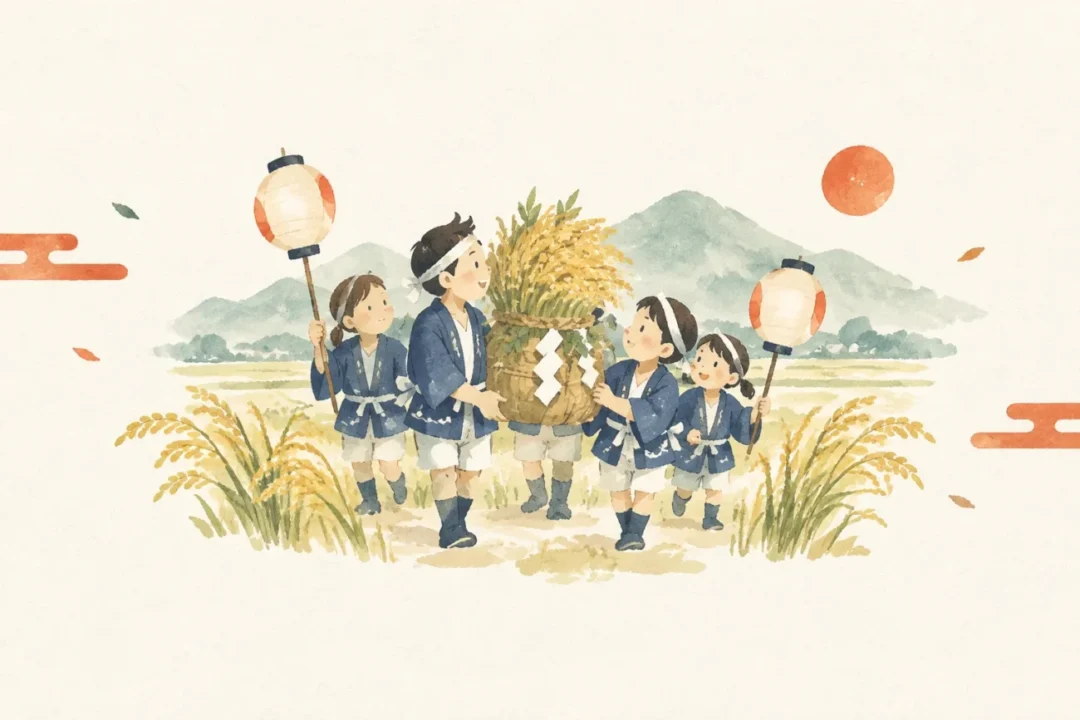
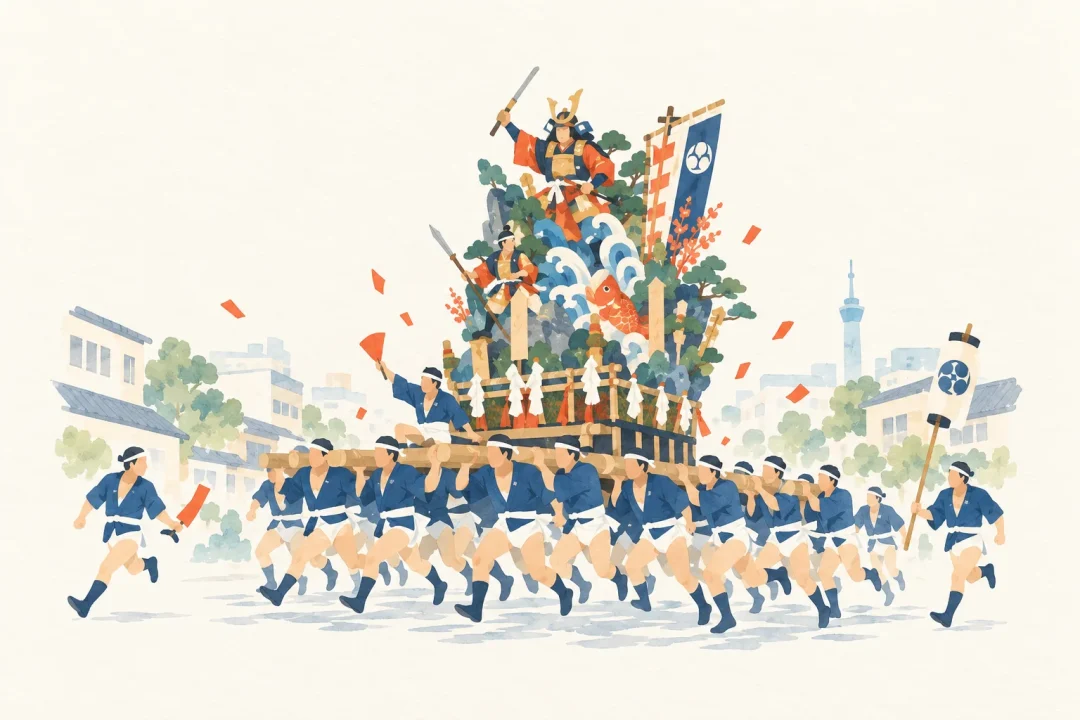
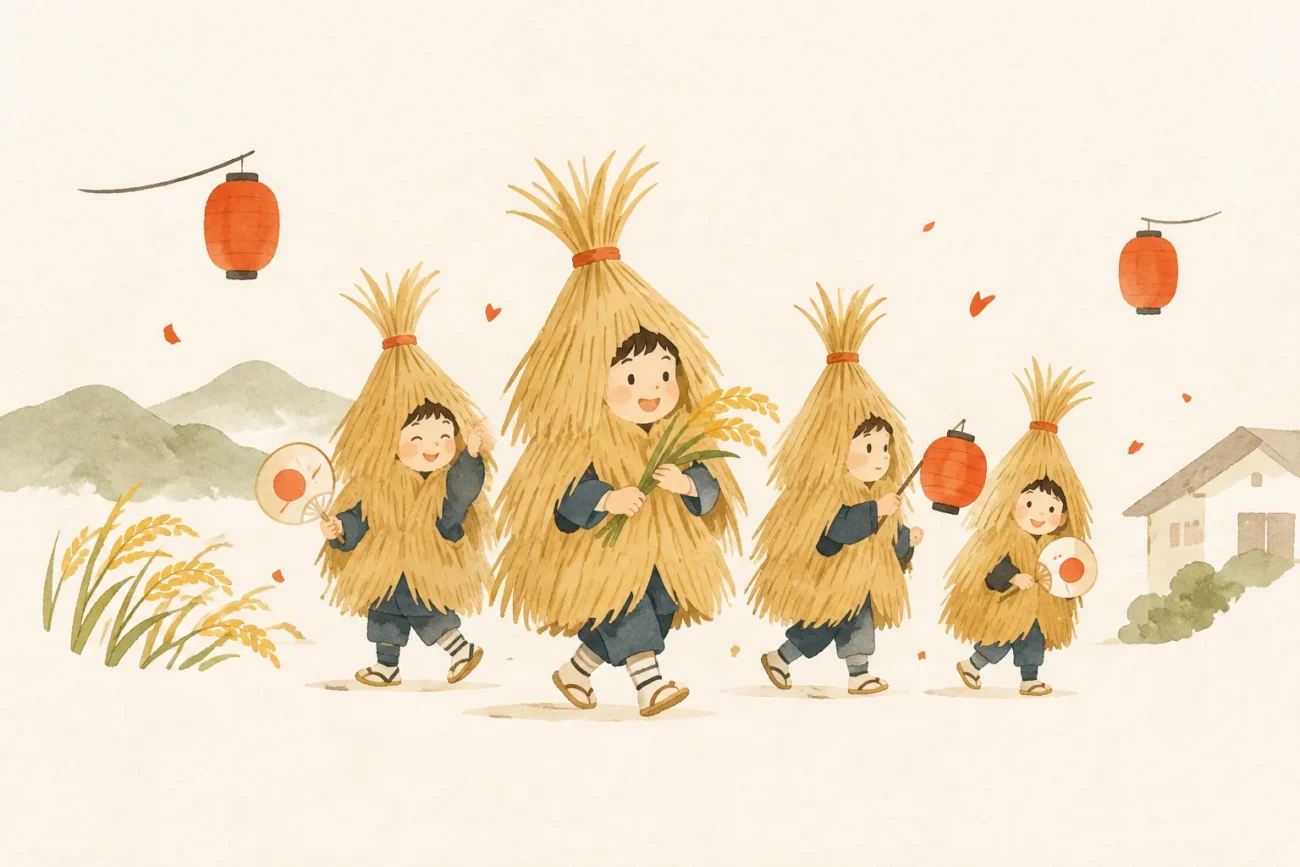
Children in Waratobi celebrate the harvest in Obishiraki
Obishiraki Inoko-sama (commonly known as Tobitobi)
Festival information
EVENT INFORMATION- Season / frequency
- lunar calendar: OctoberThe day before the holiday around the first Day of the Boar. According to the current calendar, it is mainly in November. / Every year
- Location
- Obishiraki district (Shiraki, Nanayama, Karatsu City)
- Area
- Saga Prefecture・Karatsu City(From Tokyo: approx. 1 h 50 min–2 h 10 min · flight time only)Prefecture-level estimate to a main station or airport, not the venue. Airport access, check-in and onward travel are extra; remote areas and islands can take much longer.
- Highlights and activities
- Wishes behind the festival
- Age restrictions
- Children are the main participants. In recent years, the age range for participants has been broadened.
- Last updated
- 2026/10/19
A local event celebrated in the Obishiraki district of Shiraki, Nanayama, Karatsu City, to mark the rice harvest. Children visit homes wearing rice-straw headgear, sharing gratitude for the harvest and wishes for healthy growth.
About Obishiraki Inoko-sama (commonly known as Tobitobi)
Obishiraki Inoko-sama is a rice harvest celebration passed down in the Obishiraki district of Shiraki, Nanayama, Karatsu City, Saga Prefecture.
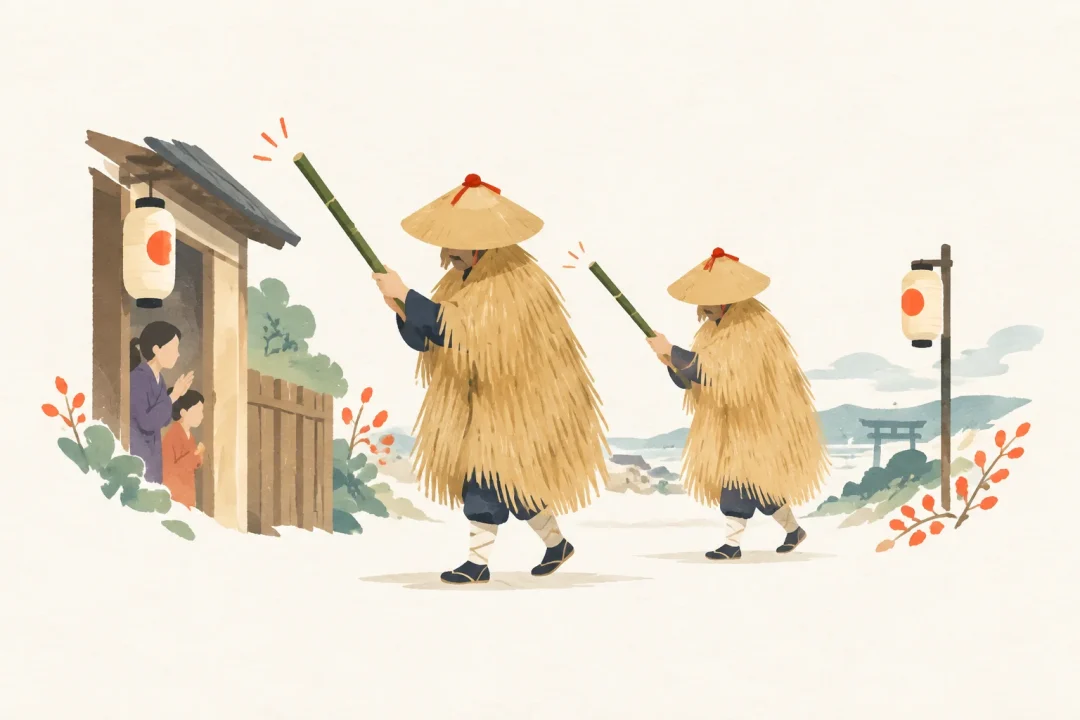
Children from the district wear bundles of rice straw on their heads and visit homes to give thanks for the harvest and celebrate children’s healthy growth.
Each household prepares offerings near the entrance and welcomes the visiting children.
Source: 大白木の亥の子さま 文化遺産オンライン
Festival highlights
The main highlight is seeing children visit homes wearing rice-straw headgear known as “Waratobi.”
At each entrance, they go around loudly chanting “Tobi-tobi-toi-toi-toi,” then head to the next home at the signal from their chaperone.
The community’s hopes for a good harvest are passed down through the event’s distinctive costumes and chants.
Source: 大白木の亥の子さま | 佐賀県 | 日本の文化遺産を探す|国宝・重要文化財データベース
Children in Waratobi celebrate the harvest in Obishiraki
What to expect
During the event, children wear Waratobi made from rice straw and visit homes throughout the district in turn.
Each household welcomes the children with offerings placed near the entrance or beneath a household shrine dedicated to Kojin.
At each entrance, the children repeat their chant, then move on to the next home at the signal from their chaperone.
How to take part
The main participants are children from the Obishiraki district.
In recent years, the age range for participants has been broadened so the event can continue amid a declining child population.
This is not presented as an event where visitors can join the procession, so please take care not to disrupt residents’ daily lives when observing or spending time in the area.
Location and access
- Venue and address
The Obishiraki district of Shiraki, Nanayama, Karatsu City, Saga Prefecture.
The event visits homes throughout the district.
- By car
About 45 minutes from Saga-Yamato IC on the Nagasaki Expressway, or about 20 minutes from Hamatama IC on the Nishi-Kyushu Expressway.
Address Obishiraki district, Shiraki, Nanayama, Karatsu City, Saga Prefecture
Dates and season
- Season
lunar calendar: OctoberThe day before the holiday around the first Day of the Boar.
According to the current calendar, it is mainly in November.
- Frequency
Every year
Accommodation and hotels PR
Showing nearby accommodation.
Prices and availability are current at the time of retrieval. For multi-night stays, only the first night’s price is shown. Confirm the final price and directions to the venue with the booking provider. Select your dates again when using the area search link. Search area: within 3 km of Central Saga Prefecture / Karatsu City (the search is not centered on the festival venue)
Tips for your visit
Obishiraki Inoko-sama is not run as a public event.
If you wish to observe, please do so quietly and avoid disturbing the children visiting homes in the district or the residents’ daily lives.
As the date is determined according to the lunar calendar, please confirm whether it is taking place before you visit.
Nearby attractions
The Nanayama area has attractions to enjoy year-round, including Kannon Falls and Nanayama Onsen.
Kannon Falls is presented as a place to experience the natural surroundings of an area encircled by seven mountains.
If you combine your visit with nearby sightseeing, please give priority to respecting the event and residents’ daily lives in the Obishiraki district.

佐賀県立名護屋城博物館
佐賀県唐津市にある博物館
写真:Aboshi at Japanese Wikipedia / CC BY-SA 3.0
Photo source ·
名護屋城
佐賀県の城跡
写真:Aboshi at Japanese Wikipedia / CC BY-SA 3.0
Photo source ·

唐津神社
佐賀県唐津市南城内にある神社

末盧館
佐賀県唐津市にある博物館

河村美術館
佐賀県唐津市にある美術館

鏡神社
唐津市にある神社
Origins and History of Obishiraki Inoko-sama (commonly known as Tobitobi)
The Inoko custom is said to originate in the practice of eating a mochi made with grains on the Day of the Boar in lunar calendar: October and praying for good health and protection from illness.
In Japan, it became a harvest celebration, spreading through rural communities, mainly in western Japan, after being observed as a court ceremony.
Local residents say that Obishiraki Inoko-sama has continued since before the war. In 2023, it was selected as an Intangible Folk Cultural Property requiring measures such as the creation of records.
Source: 「トービトビ」の声で五穀豊穣 伝統行事「大白木の亥の子さま」子供たちの大きな声響く【佐賀県唐津市】|佐賀のニュース|サガテレビ
Official information
Karatsu City lists Obishiraki “Inoko”-sama as a city-designated Important Intangible Folk Cultural Property.
An overview of its cultural heritage designation is also available on Cultural Heritage Online.
The phone number for the Karatsu City Tourism Division is provided as a contact.
Source: 民俗文化財 - 唐津市ホームページ(生涯学習文化財課)
Obishiraki Inoko-sama (commonly known as Tobitobi) at a Glance
Obishiraki Inoko-sama is a harvest celebration passed down in the Obishiraki district of Shiraki, Nanayama, Karatsu City.
The event is distinctive for the sight of children visiting homes wearing Waratobi and calling out their traditional chants.
The event takes place around the first Day of the Boar in lunar calendar: October, but it is not a public event, so please respect the local community’s way of life when visiting.
Japanese Festivals.jp Editorial Team
Celebrating local culture and helping you discover a side of Japan you never knew.
Article updated: 2026/10/19
Submit information or a correction Submit photos of this festival