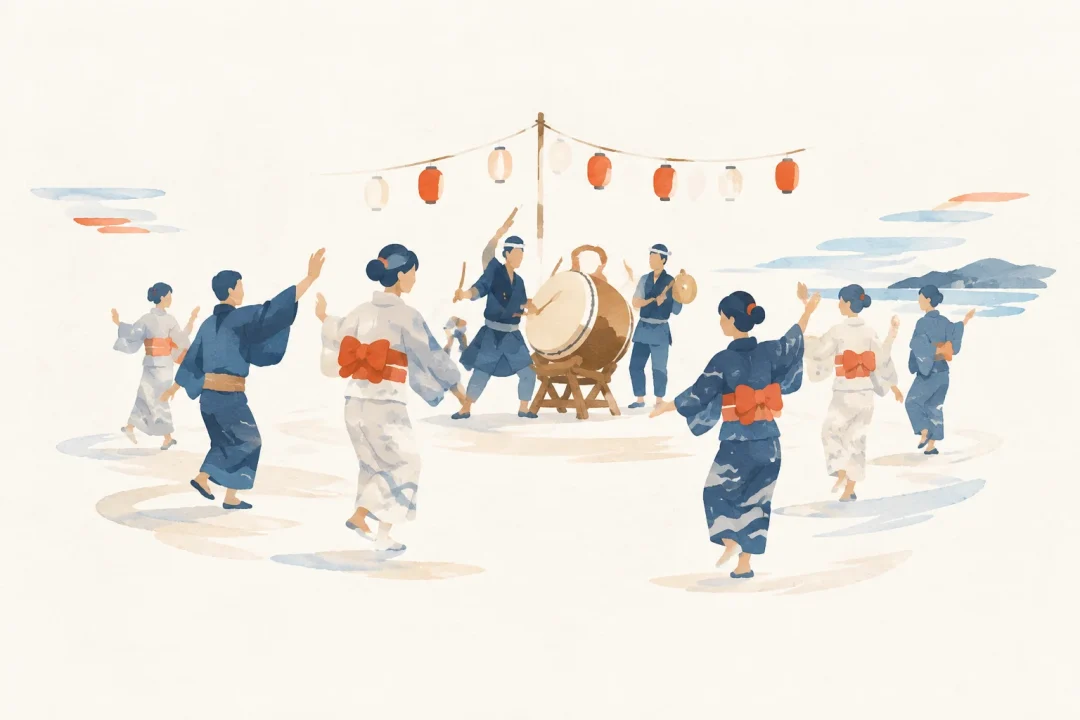
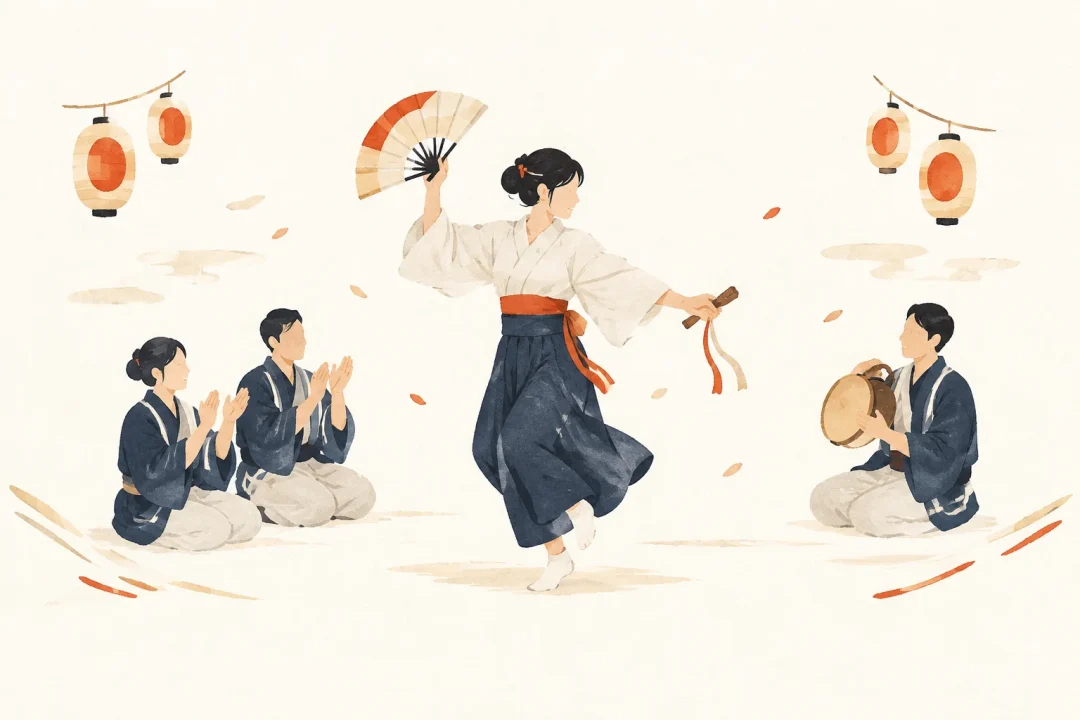
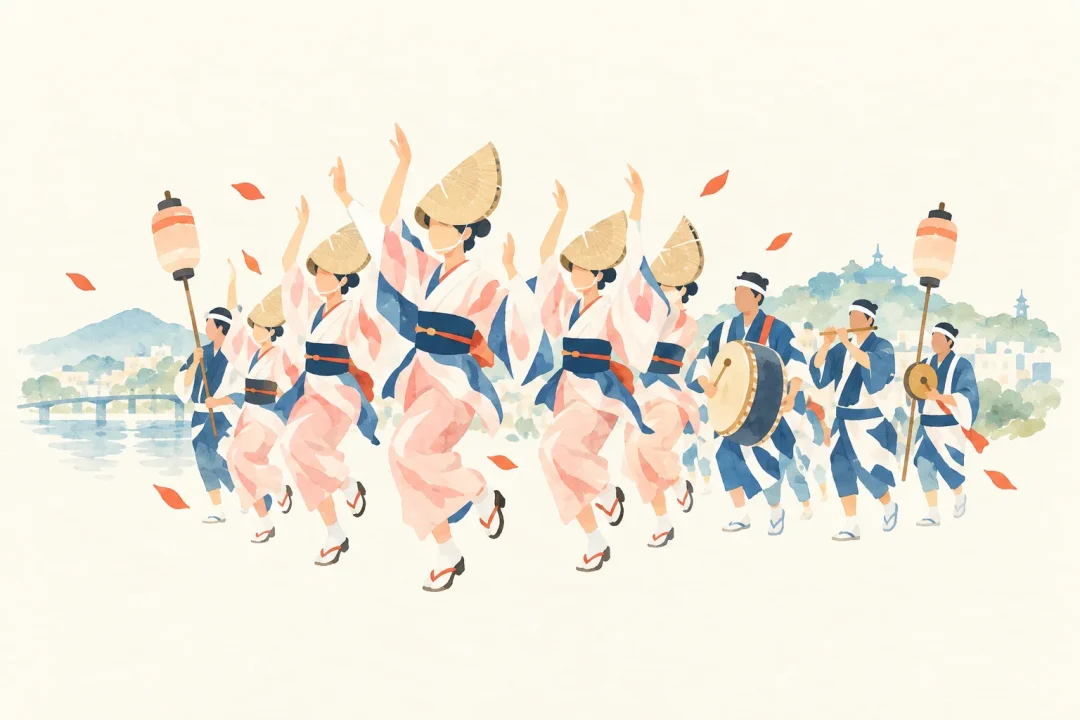
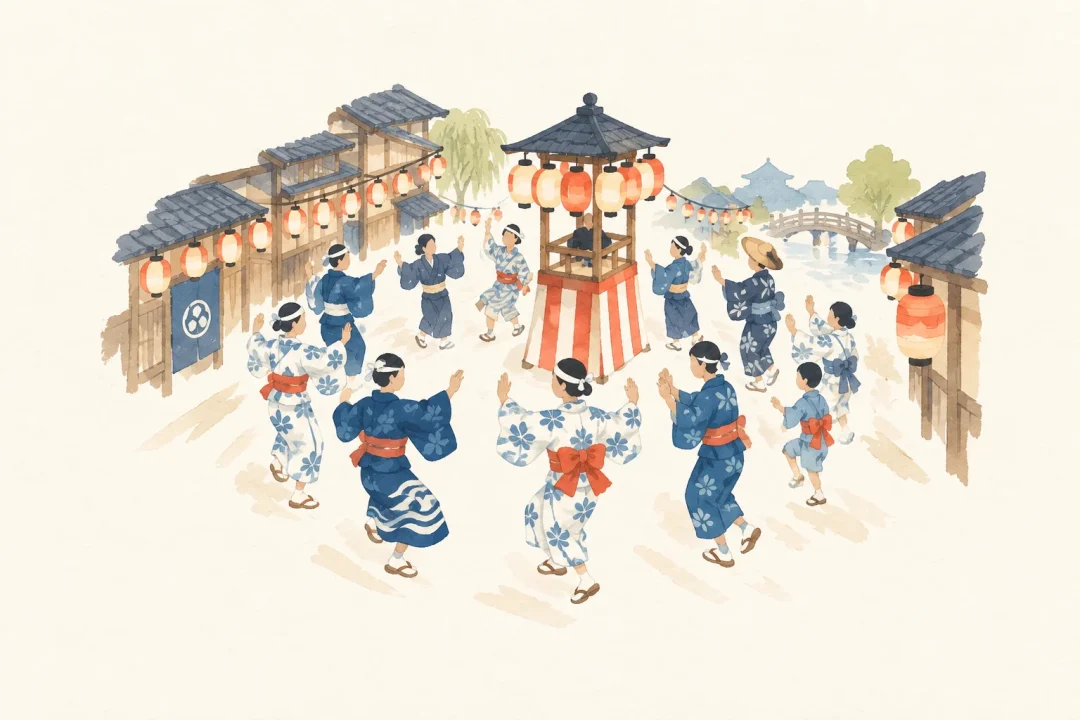
Yokoyama’s quiet Bon Odori, adorned with Tanabata poles and flower hats
Bon Odori in Yokoyama, Nishinoomote City
Festival information
EVENT INFORMATION- Season / frequency
- The 2nd Sunday of every July / Every year
- Location
- Yokoyama Shrine (Yokoyama )
- Area
- Kagoshima Prefecture・Nishinoomote City(From Tokyo: approx. 1 h 50 min–2 h 20 min · flight time only)Prefecture-level estimate to a main station or airport, not the venue. Airport access, check-in and onward travel are extra; remote areas and islands can take much longer.
- Highlights and activities
- Wishes behind the festival
- Participation / viewing
- Spectators welcome
- Last updated
- 2026/10/19
A passed down in Yokoyama, Nishinoomote City, connected to the tragic love story of Akune Chiyojo. Dancers with decorations, masks, and flower hats appear and offer a dance in tribute to the spirits.
About Bon Odori in Yokoyama, Nishinoomote City
A Bon Odori passed down in Yokoyama, Nishinoomote City, this local traditional performing art carries on the tradition of Tanegashima Bon Odori.
It is said to have originated in the Muromachi period. Songs and dances connected to the tragic love story of Akune Chiyojo in the Edo period were later added, giving it a distinctive form.
It has been passed down as a quiet, graceful dance expressing reverence for the spirits.
Source: 鹿児島県/横山盆踊(よこやまぼんおどり)
Festival highlights
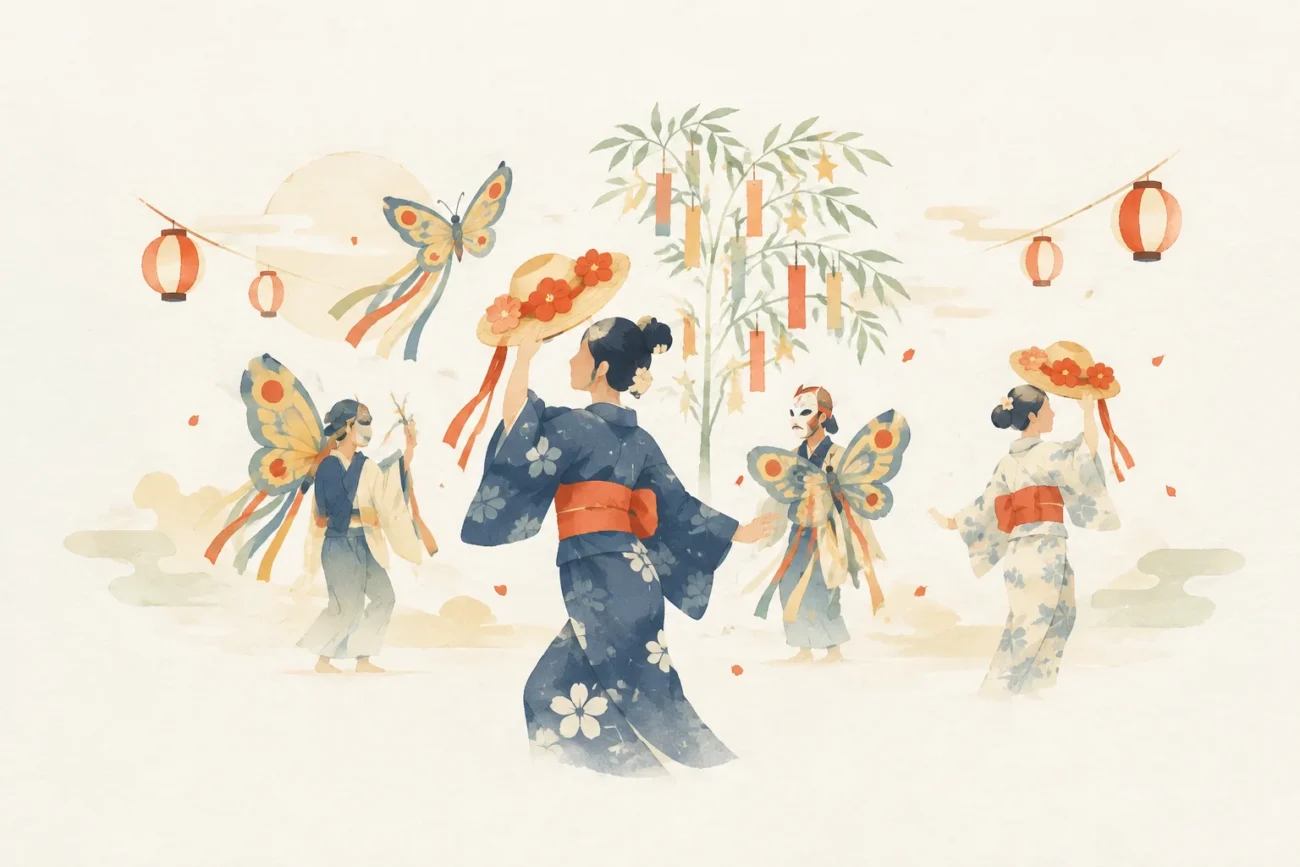
One highlight is the opening scene, in which the role of “Chō,” carrying a bamboo pole decorated for Tanabata, circles the center of the dance area 3 times.
The male role covers his face with a mask called a kamuki, while the female role dances wearing a flower hat.
The contrasting roles created by the masks, flower hats, and Tanabata decorations, along with the quiet movements expressing reverence for the spirits, are characteristic of the dance.
Yokoyama’s quiet Bon Odori, adorned with Tanabata poles and flower hats
What to expect
The dance unfolds in 3 parts: debata, the entrance into the dance area; the main dance; and hikibata, the exit.
In Yokoyama, a Chō carrying a decorated bamboo pole called a Tanabata-zasa joins the procession.
Kudoki songs based on a local tragic love story are also performed, conveying the story and a sense of mourning through song and movement.
Source: 文化遺産データベース
How to take part
This Bon Odori is a traditional performing art presented by a preservation society and local practitioners.
Those wishing to watch can view the dance when it is presented at the venue.
Location and access
- Venue and address
Yokoyama Shrine (Yokoyama Jinja) / 5351-1 Nishinoomote, Nishinoomote City, Kagoshima Prefecture
Address 5351-1 Nishinoomote, Nishinoomote City, Kagoshima Prefecture
Dates and season
- Season
The 2nd Sunday of every July
- Frequency
Every year
Accommodation and hotels PR
Showing nearby accommodation.
Prices and availability are current at the time of retrieval. For multi-night stays, only the first night’s price is shown. Confirm the final price and directions to the venue with the booking provider. Select your dates again when using the area search link. Search area: within 3 km of Central Kagoshima Prefecture / Nishinoomote City (the search is not centered on the festival venue)
Origins and History of Bon Odori in Yokoyama, Nishinoomote City
Yokoyama Bon Odori is said to have originated in the Muromachi period.
Later, a story about the tragic love and deaths of Hishijima Kunitaka and Akune Chiyojo, who moved to Yokoyama during the Edo period, was incorporated into the songs and dances.
It is said that the people of Yokoyama came to offer songs and dances mourning the two, especially Chiyojo, and remembering her feelings.
Official information
Kagoshima Prefecture’s information lists Yokoyama Shrine as the venue for the presentation of Yokoyama Bon Odori and gives the Social Education Division of the Nishinoomote City Board of Education as the contact.
The phone number is 0997-23-3215.
Bon Odori in Yokoyama, Nishinoomote City at a Glance
Yokoyama Bon Odori is a dance passed down from the Tanegashima Bon Odori, said to have originated in the Muromachi period, incorporating the tragic love story of Akune Chiyojo.
A Chō carrying tanabata decorations, a male role wearing a kamuki mask, and a female role wearing a flower hat appear. Their quiet movements express reverence for the spirits.
A local traditional performing art presented at Yokoyama Shrine.
Japanese Festivals.jp Editorial Team
Celebrating local culture and helping you discover a side of Japan you never knew.
Article updated: 2026/10/19
Submit information or a correction Submit photos of this festival