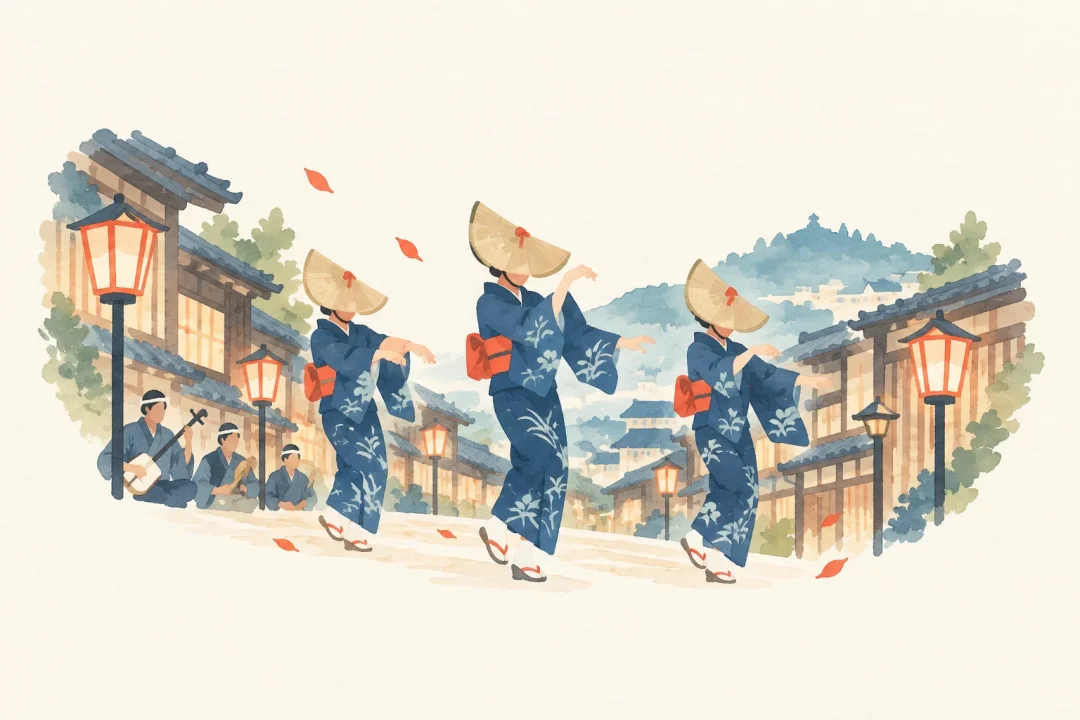
Memories of Obon on Tanegashima, carried on through drums and circle dances
Tanegashima Bon Odori

Festival information
EVENT INFORMATION- Season / frequency
- Every year on the second Sunday of July and on August 16 / Every year
- Location
- Yokoyama, Nishinoomote City; Nishino, Minamitane Town
- Area
- Kagoshima Prefecture・Nishinoomote City, Minamitane Town(From Tokyo: approx. 1 h 50 min–2 h 20 min · flight time only)Prefecture-level estimate to a main station or airport, not the venue. Airport access, check-in and onward travel are extra; remote areas and islands can take much longer.
- Highlights and activities
- Wishes behind the festival
- Last updated
- 2026/10/19
The sound of drums and gongs sets the dancers’ circle in motion at Tanegashima . A folk performing art rich in local character, preserved in Yokoyama, Nishinoomote City, and Nishino, Minamitane Town.
About Tanegashima Bon Odori
Tanegashima Bon Odori is a folk performing art passed down in Yokoyama, Nishinoomote City, and Nishino, Minamitane Town, Kagoshima Prefecture.
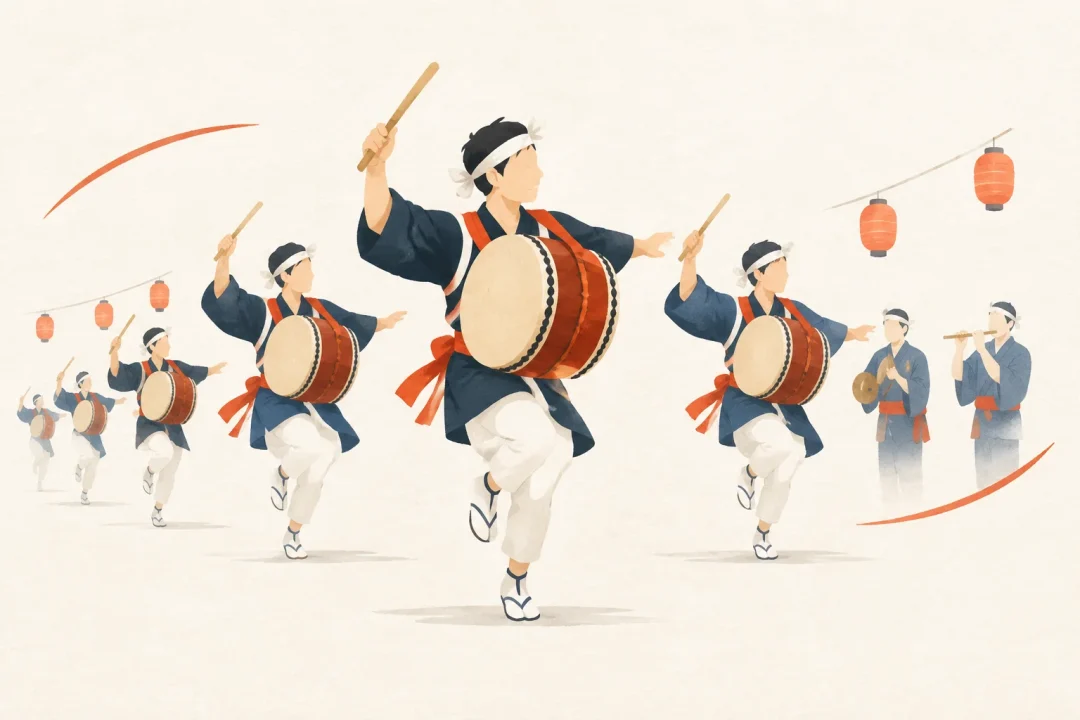
The dance has three parts: Dehata, the entrance into the dance area; the central dance; and Hikihata, the exit. In the center of the dancers’ circle, Gakubyoshi performers play drums and gongs as they dance.
It was once performed across the whole island of Tanegashima, but today the Yokoyama Bon Odori and Nishino Hongok temple Bon Odori have been passed down.
Source: 国指定文化財等データベース
Festival highlights
Highlights include the single circle formed by the dancers and the Gakubyoshi performers, who dance with springing movements while playing drums and gongs in its center.
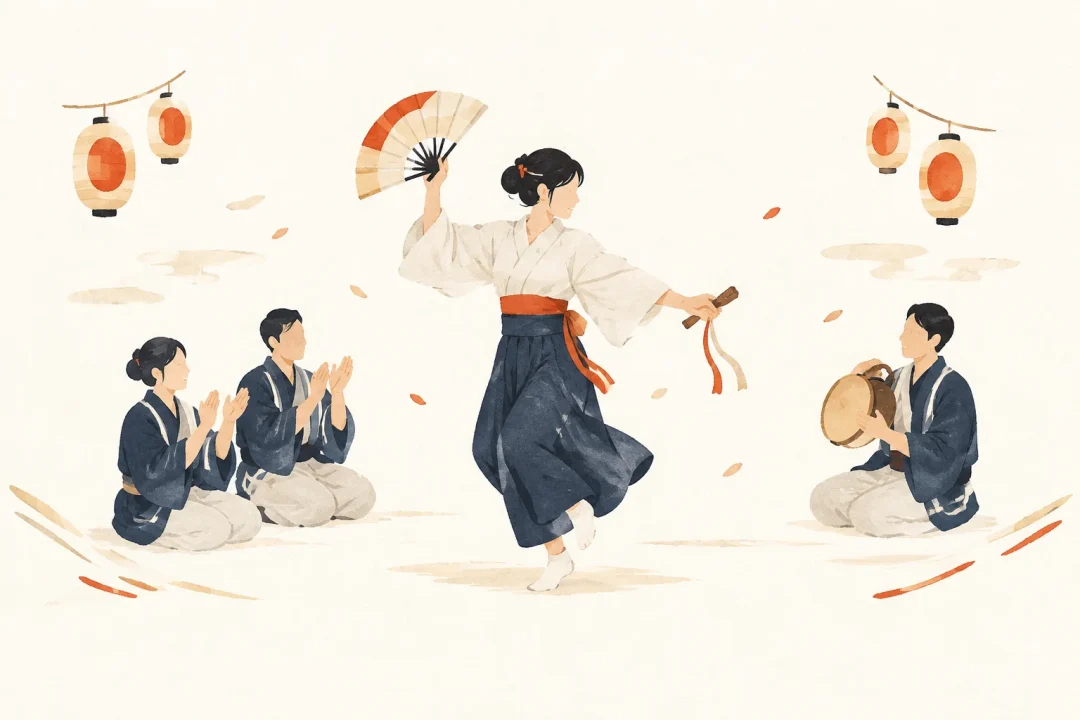
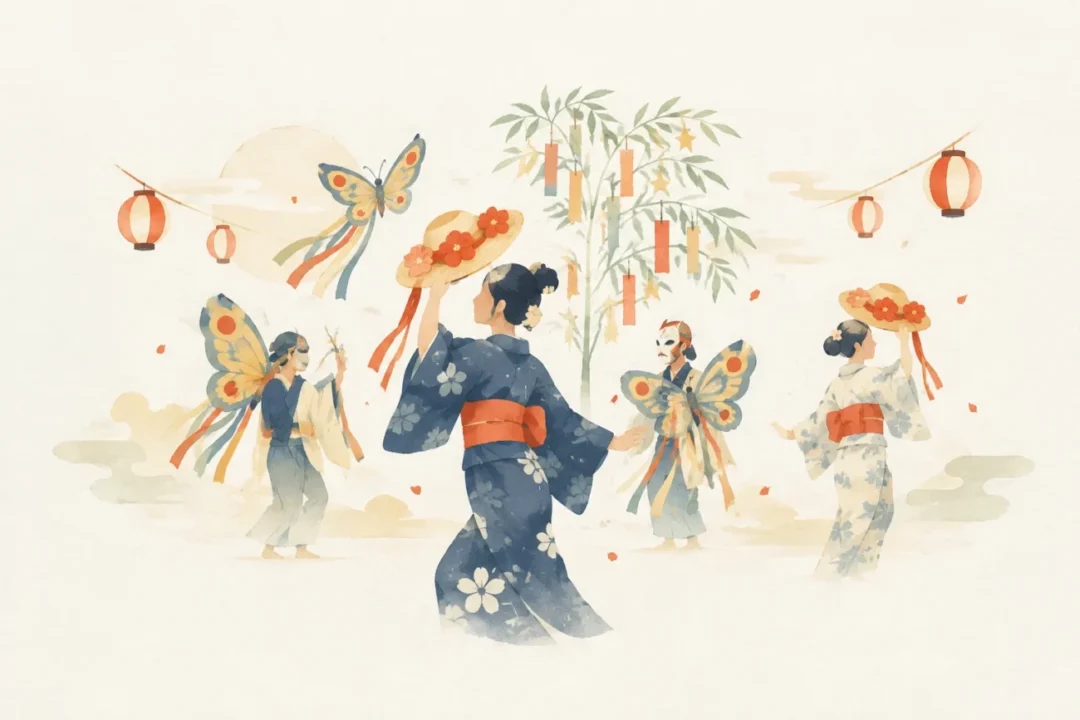
The dancers sing as they perform hand dances and dances with fans, wearing , zori sandals, and headpieces called Kanmoku or Kamuki.
In Yokoyama, traditions also include the Chō role, carrying a roughly 5-meter bamboo pole decorated with colored paper, and kuchidoki songs based on a local tragic love story.
Memories of on Tanegashima, carried on through drums and circle dances
What to expect
The event begins with Dehata, when the performers enter the dance area in a procession. The dancers then form a circle and perform songs, hand dances, and dances with fans.
Gakubyoshi performers beat drums and gongs in the center of the circle, showing distinctive movements alongside the dancers.
Finally, during Hikihata, the procession leaves the venue to the accompaniment of instruments and flutes.
The Nishino Hongok temple Bon Odori has passed down 3 dances: “Takenaga,” “Kinogino,” and “Tsuntan Byoshi.”
How to take part
The event information does not say whether general visitors can join in as dancers.
Nishinomoto Kokujiji Bon Odori is described as a dance performed by men, and Yokoyama Bon Odori is also passed down through the activities of a preservation society.
If you wish to watch, please respect that this is a local traditional event and take care not to disrupt the dance or the offering.
Location and access
- Venue and address
The Yokoyama Bon Odori of Yokoyama, Nishinoomote City, and the Nishino Hongok temple Bon Odori of Nishino, Minamitane Town, have been passed down.
Event venue 鹿児島県西之表市、南種子町 西之表市横山
This map uses the venue name. Check the official guide for the event area and entrances.
Dates and season
It is usually held on the second Sunday of July and on August 16.
In 2026, Yokoyama Bon Odori in Yokoyama, Nishinoomote City, was reportedly performed as an offering at night on July 12 for the first time in 3 years.
Source: ニュース・スポーツ | KTS鹿児島テレビ
Tips for your visit
The dances have been passed down in two areas, Yokoyama and Nishino, so check which dance you want to see and where it will be held before visiting.
As the dances are performed as offerings or as part of preservation society activities, please follow local guidance on whether photography and viewing are permitted and where you may enter.
Avoid getting too close to the dancers’ circle, which features costumes and instruments, and watch quietly from a place where you will not obstruct the proceedings.
Origins and History of Tanegashima Bon Odori
Tanegashima Bon Odori was once performed across the whole island of Tanegashima, but today it is passed down in Yokoyama, Nishinoomote City, and Nishino, Minamitane Town.
Yokoyama Bon Odori has been described as a memorial dance to comfort the spirits of a Shimazu clan chief retainer exiled to Tanegashima in the early Edo period and a woman said to have died by ritual suicide after following him.
In 2018, Yokoyama Bon Odori and Nishino Hongok temple Bon Odori were designated by the national government as Selected Intangible Folk Cultural Properties under the name “Tanegashima Bon Odori.”
Official information
The Agency for Cultural Affairs’ “Database of Nationally Designated Cultural Properties” lists details such as the name, location, traditions, time of year, and preservation organizations.
It is also registered under the same name as a folk performing art in the Cultural Heritage Database, which lists the Yokoyama Bon Odori Preservation Association and Nishino District Autonomous Community Center as preservation organizations.
Tanegashima Bon Odori at a Glance
Tanegashima Bon Odori is an Obon dance passed down in Yokoyama, Nishinoomote City, and Nishino, Minamitane Town, with three parts: Dehata, the dance, and Hikihata.
Enjoy local features such as the Gakubyoshi performers playing drums and gongs in the center of the dancers’ circle, costumes and flower hats, and the Chō role in Yokoyama carrying a bamboo pole.
It is usually held on the second Sunday of July and on August 16. In 2026, Yokoyama Bon Odori was performed as an offering on July 12.
Japanese Festivals.jp Editorial Team
Celebrating local culture and helping you discover a side of Japan you never knew.
Article updated: 2026/10/19
Submit information or a correction Submit photos of this festival