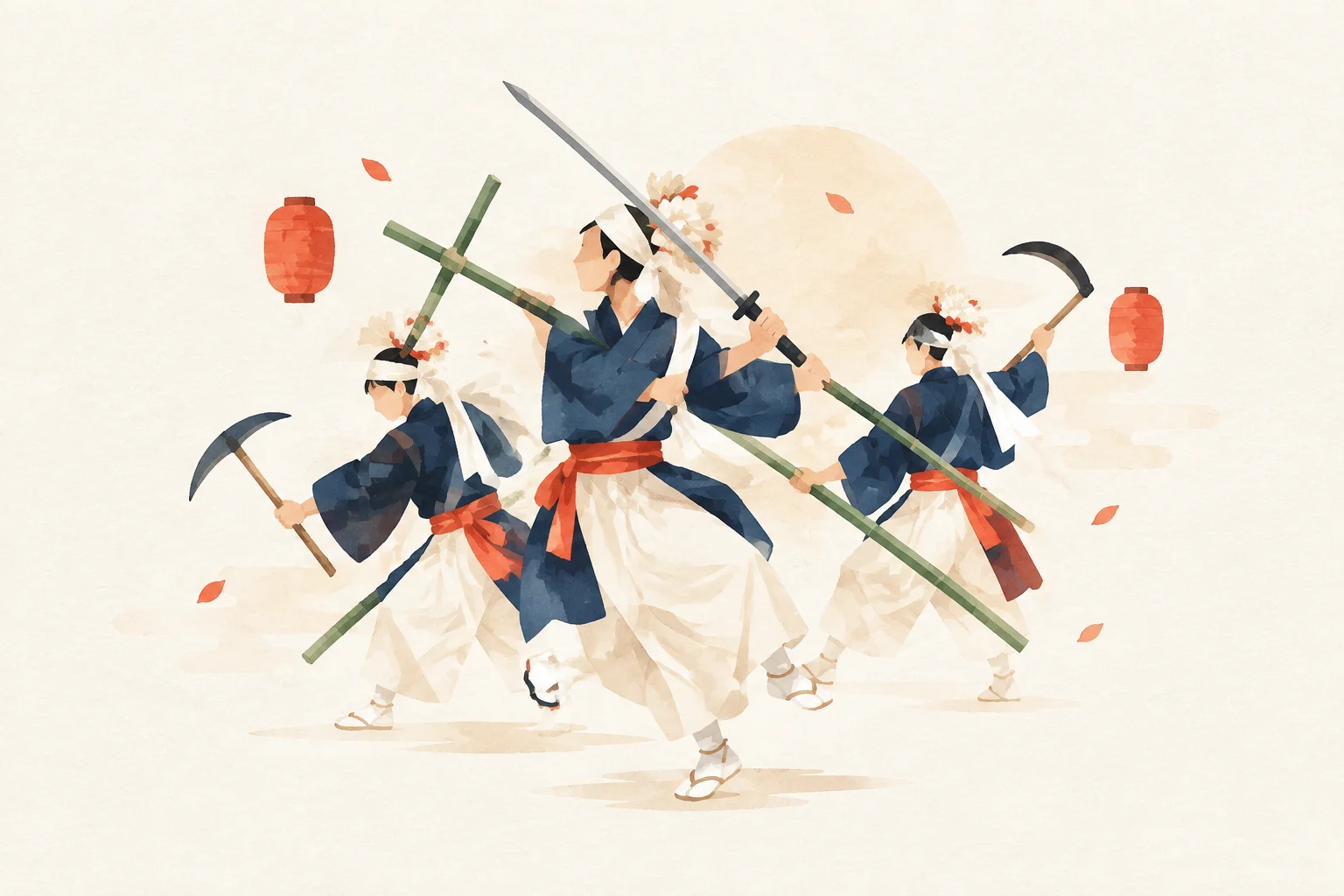
Masuda’s traditional performing art, with swords, sickles, and green bamboo crossed together
Masuda no Hanatori Odori
Festival information
EVENT INFORMATION- Season / frequency
- The 11th day of the old seventh month
- Area
- Ehime Prefecture・Ainan(From Tokyo: approx. 1 h 25 min–1 h 45 min · flight time only)Prefecture-level estimate to a main station or airport, not the venue. Airport access, check-in and onward travel are extra; remote areas and islands can take much longer.
- Highlights and activities
- Wishes behind the festival
- Last updated
- 2026/10/19
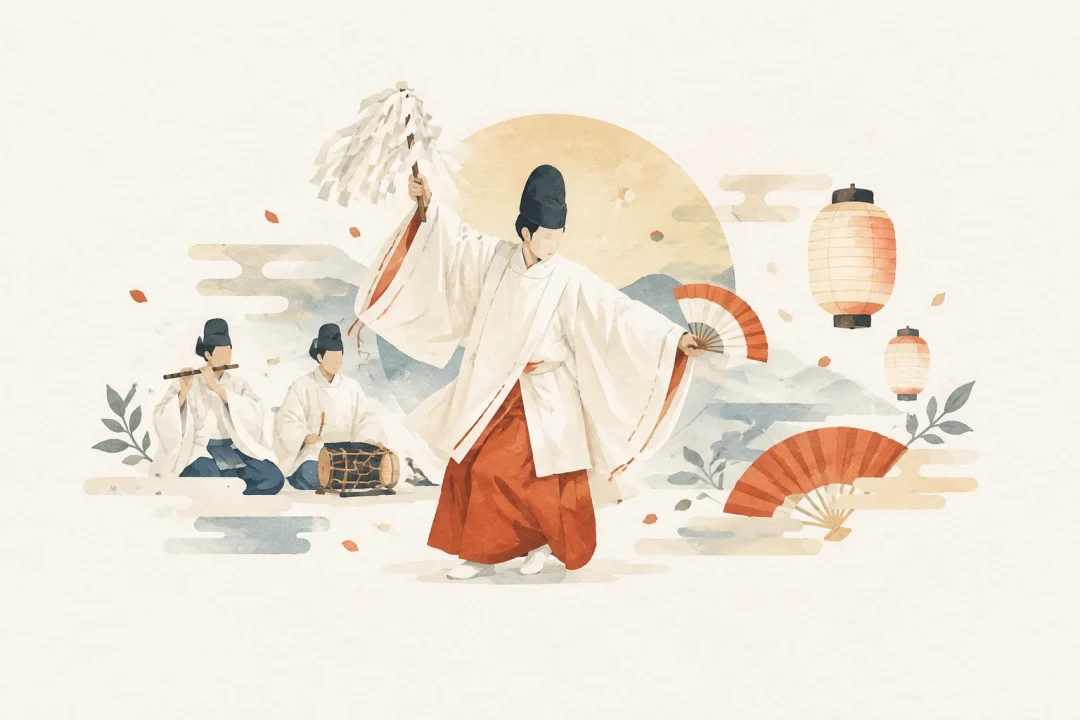
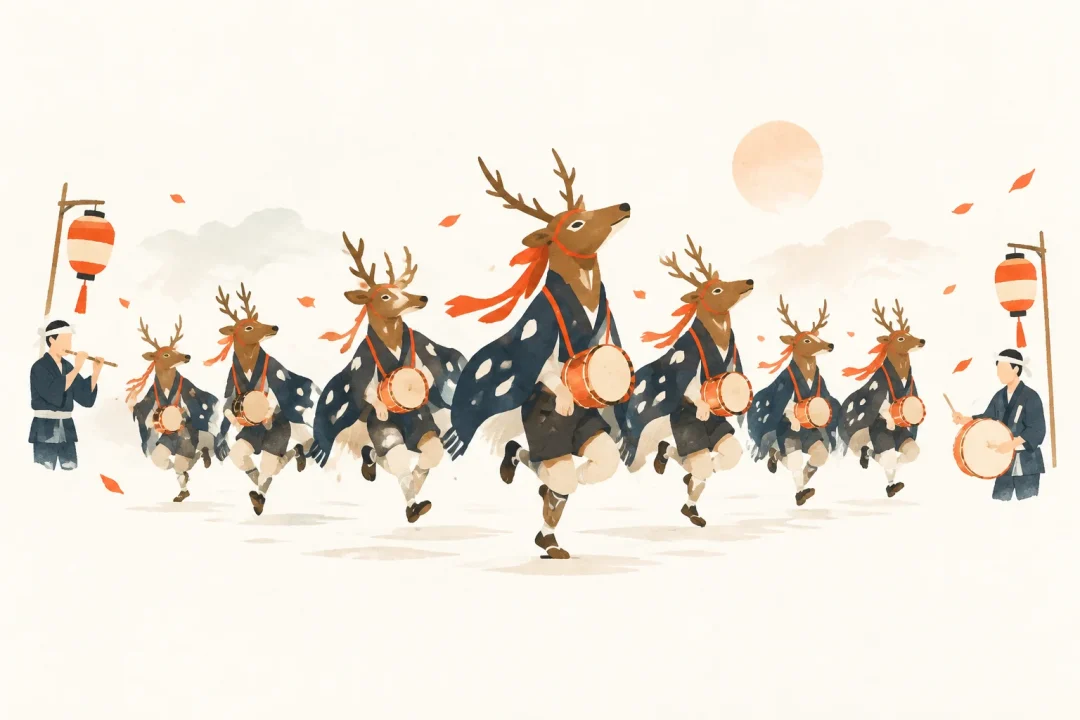
This is a Fūryū-aya dance passed down in Masuda, Ainan, performed while crossing swords, sickles, and green bamboo. At the Takayama Shrine festival, yamabushi dialogues and five sections of performing arts have been passed down.
About Masuda no Hanatori Odori
Masuda no Hanatori Odori is a folk performing art presented at the festival of Takayama Shrine in Masuda, Ainan, Minamiuwa District, Ehime Prefecture.
It is considered a type of Fūryū-aya dance, developed in a distinctive local form from sword dances widespread in the Iyo and Tosa regions.
The dancers’ movements as they cross swords, sickles, and green bamboo express Masuda’s traditions and the distinctive qualities of the performing art.
Source: 国指定文化財等データベース
Festival highlights
A highlight is the distinctive dance movements, in which swords, sickles, and green bamboo are brought together in crossed patterns.
The performance consists of five sections: “Sai-barai,” “Deha,” “Shudachi,” “Kama-kodachi,” and “Hichimede.”
At the beginning, Nankōin and Zenkyūbō engage in a dialogue exchange, also known as a yamabushi dialogue. The overall progression of the performance, not just the dancing, is distinctive.
Masuda’s traditional performing art, with swords, sickles, and green bamboo crossed together
What to expect
At the festival, the performance begins with “Sai-barai,” followed by dances in the prescribed order of the five sections.
In addition to dances using swords, sickles, and green bamboo, there are also exchanges such as the yamabushi dialogue at the beginning.
After the third dance, they perform the dance to conclude the vows, bringing the festival performances to a close.
Location and access
- Address
Ainan
Host municipality 愛媛県愛南町
This map shows the surrounding area, not the exact venue location.
Dates and season
- Season
The 11th day of the old seventh month
Accommodation and hotels PR
Showing nearby accommodation.
Prices and availability are current at the time of retrieval. For multi-night stays, only the first night’s price is shown. Confirm the final price and directions to the venue with the booking provider. Select your dates again when using the area search link. Search area: within 3 km of Central Ehime Prefecture / Ainan (the search is not centered on the festival venue)
Origins and History of Masuda no Hanatori Odori
Masuda no Hanatori Odori is described as a traditional performing art said to have begun in the Sengoku period.
Cultural property information classifies it as a performing art that further developed the elegance of sword dances, and indicates its relationship to performing arts found in Iyo and Tosa.
In 1972, it was selected as an “intangible folk cultural property for which measures such as the creation of a record should be taken.”
Official information
The Agency for Cultural Affairs’ Database of Nationally Designated Cultural Properties introduces Masuda no Hanatori Odori as an “intangible folk cultural property for which measures such as the creation of a record should be taken.”
The preservation group is the Hanatori Odori Preservation Society.
You can also find an overview of the same performing art as an intangible folk cultural property on the Online Cultural Heritage database.
Source: 増田の花取踊 文化遺産オンライン
Masuda no Hanatori Odori at a Glance
Masuda no Hanatori Odori is a traditional Fūryū-aya dance performed at the festival of Takayama Shrine in Masuda, Ainan, Ehime Prefecture.
Its key features are five sections of dance with swords, sickles, and green bamboo crossed together, and the yamabushi dialogue at the beginning.
The performance incorporates prayers for the Takayama deity, memorial services for siblings, and the safety of the community.
Japanese Festivals.jp Editorial Team
Celebrating local culture and helping you discover a side of Japan you never knew.
Article updated: 2026/10/19
Submit information or a correction Submit photos of this festival