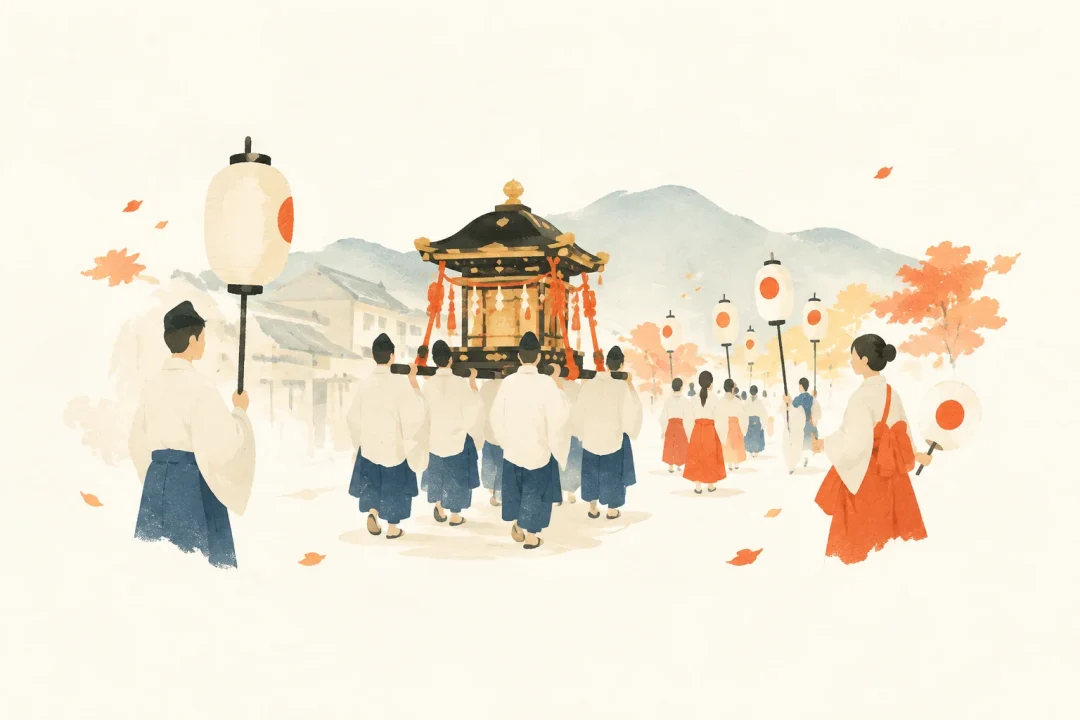
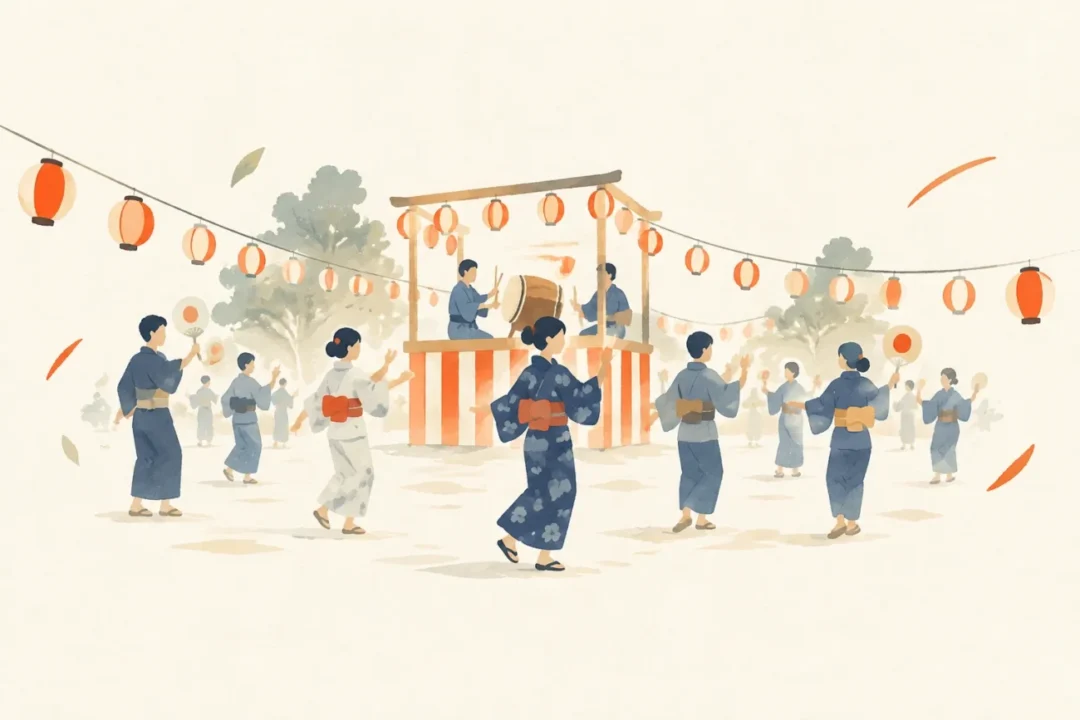
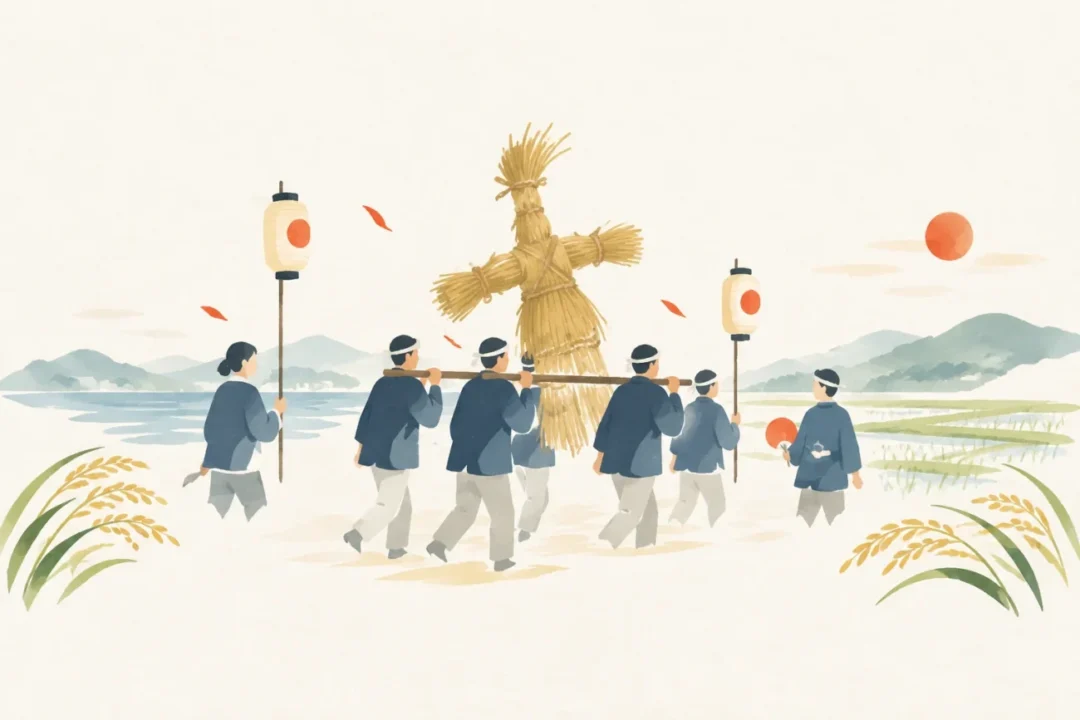
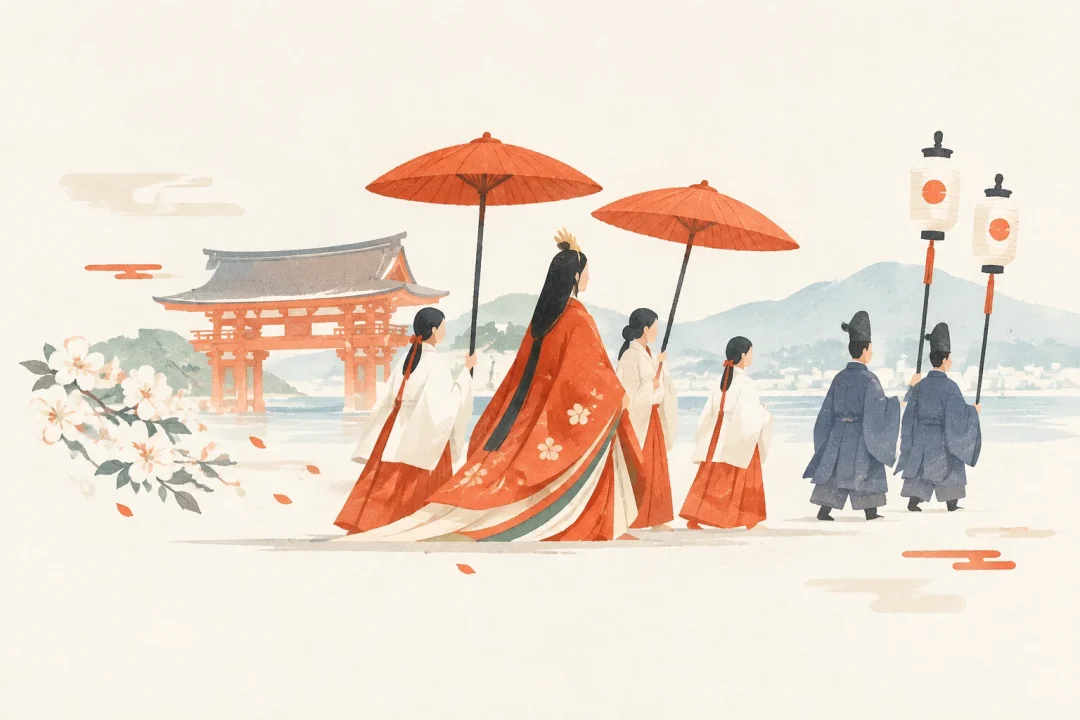
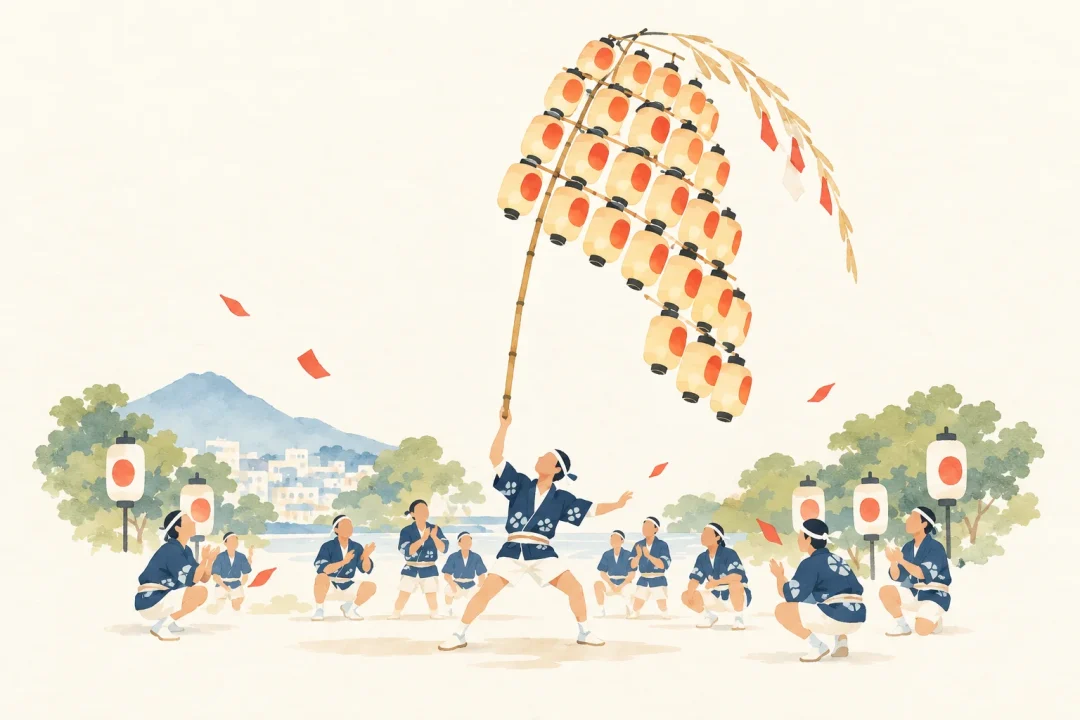
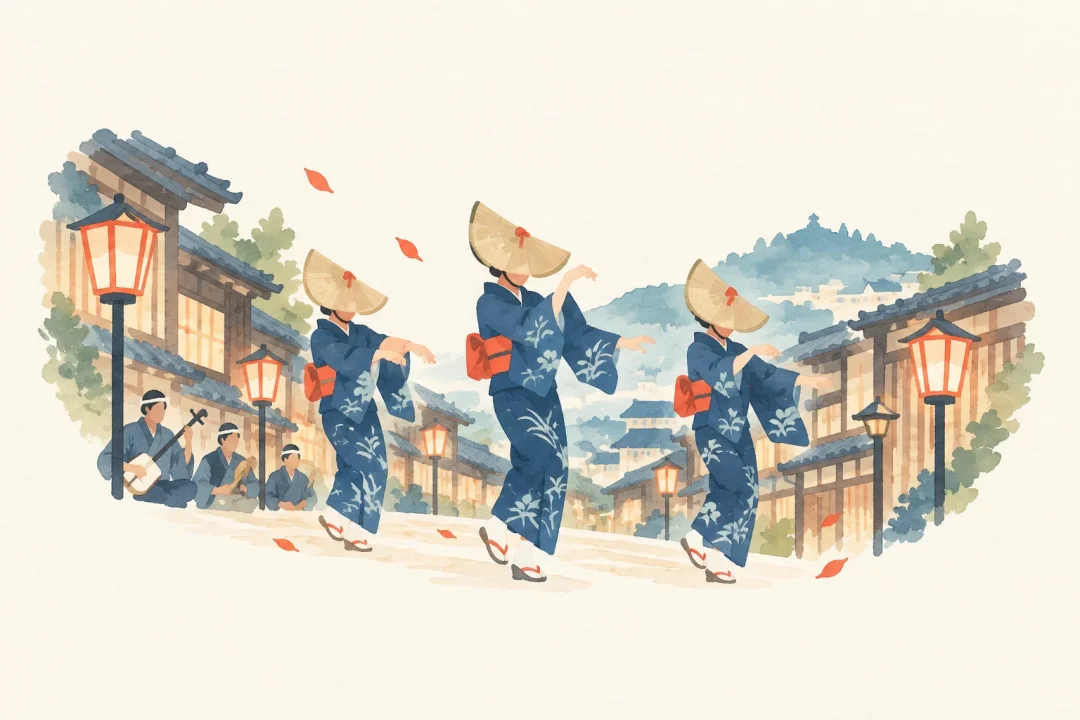
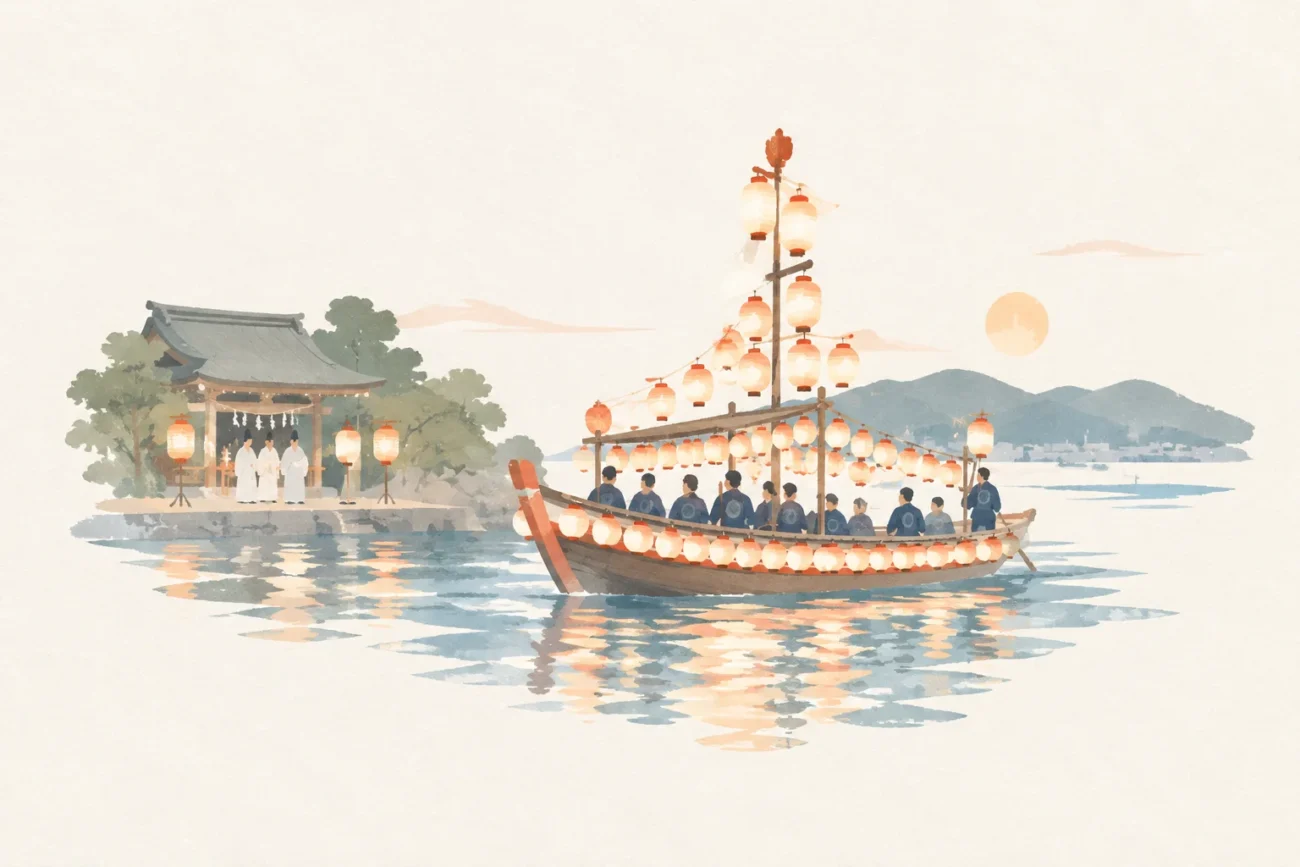
Maruo’s boat festival, with asagao lanterns and shagiri bringing color to the harbor
Maruo Jūshichiya Kangen-sai
Festival information
EVENT INFORMATION- Season / frequency
- A Saturday close to day 17 of lunar month 6
- Location
- Maruo Port
- Area
- Yamaguchi Prefecture・Ube City(From Tokyo: approx. 1 h 35 min–1 h 55 min · flight time only)Prefecture-level estimate to a main station or airport, not the venue. Airport access, check-in and onward travel are extra; remote areas and islands can take much longer.
- Features
- Highlights and activities
- Wishes behind the festival
- Last updated
- 2026/11/11
Maruo Jūshichiya Kangen-sai, passed down in Maruo, Higashi-Kiwa, Ube City. Following the ritual at Ebisu Shrine, a lantern-decorated kangen-bune cruises around Maruo Port.
About Maruo Jūshichiya Kangen-sai
Maruo Jūshichiya Kangen-sai is a maritime festival that has been passed down in Maruo, Higashi-Kiwa, Ube City.
On day 17 of lunar month 6, neighborhood association and fisheries cooperative officials hold a ritual at Ebisu Shrine before sunset, and around high tide the kangen-bune cruises around Maruo Port.
It is now held on a Saturday close to day 17 of lunar month 6 and is also designated as a city-designated intangible folk cultural property.
Festival highlights
A highlight is the sight of about 250 lanterns adorning the approximately 14-meter fishing boat “Okagen-bune.”
Poles measuring 6–7 meters are extended from the bow and stern, with red and blue lanterns arranged in alternating order.
The lanterns, red on the port side and blue on the starboard side, are called “asagao.” The tall mast, tiered large lanterns, and “shagiri” performed on transverse flutes and create the boat’s distinctive appearance.
Maruo’s boat festival, with asagao lanterns and shagiri bringing color to the harbor
What to expect
The festival begins before sunset with a ritual held in front of Ebisu Shrine by neighborhood association and fisheries cooperative officials.
Then, timed for around high tide, a lantern-decorated kangen-bune cruises around Maruo Port.
Musicians aboard the boat play the transverse flute and taiko, performing a piece of gagaku-style music called “shagiri.”
Location and access
- Venue and address
Maruo Port, Maruo, Higashi-Kiwa, Ube City
Address Maruo, Higashi-Kiwa, Ube City
Dates and season
- Season
A Saturday close to day 17 of lunar month 6
Accommodation and hotels PR
Showing nearby accommodation.
Prices and availability are current at the time of retrieval. For multi-night stays, only the first night’s price is shown. Confirm the final price and directions to the venue with the booking provider. Select your dates again when using the area search link. Search area: within 3 km of Central Yamaguchi Prefecture / Ube City (the search is not centered on the festival venue)
Nearby attractions

ときわ公園
山口県宇部市にある公園
写真:Original uploader was Historian at en.wikipedia / CC BY 2.5
Photo source ·
宇部市石炭記念館
山口県宇部市のときわ公園にある博物館

緑と花と彫刻の博物館
山口県宇部市の博物館

逍雲堂美術館
山口県の博物館・美術館のスポットです。
Origins and History of Maruo Jūshichiya Kangen-sai
Maruo Jūshichiya Kangen-sai has traditionally been held on day 17 of lunar month 6 and is now held on a Saturday close to that date.
Ube City designated it a city-designated intangible folk cultural property on August 17, 2006 (Heisei 18), and lists the Maruo Jūshichiya Kangen-sai Preservation Society as its owner and administrator.
Available sources do not provide a detailed account of the festival’s origins, the year it was established, or how it has changed over time.
Official information
The Ube City official website’s “Maruo Jūshichiya Kangen-sai” page provides information on its designation as a city-designated intangible folk cultural property, its location, the festival’s progression, and the boat’s decorations and music.
Maruo Jūshichiya Kangen-sai at a Glance
Maruo Jūshichiya Kangen-sai is a maritime festival traditionally held at Maruo Port on a Saturday close to day 17 of lunar month 6.
Following the ritual at Ebisu Shrine, the “Okagen-bune,” decorated with about 250 lanterns, cruises around the harbor.
The festival’s distinctive features include red and blue lanterns called “asagao,” a large lantern on the mast, and “shagiri,” performed on transverse flutes and taiko. The festival is passed down as a designated intangible folk cultural property.
Sources and references
Japanese Festivals.jp Editorial Team
Celebrating local culture and helping you discover a side of Japan you never knew.
Article updated: 2026/11/11