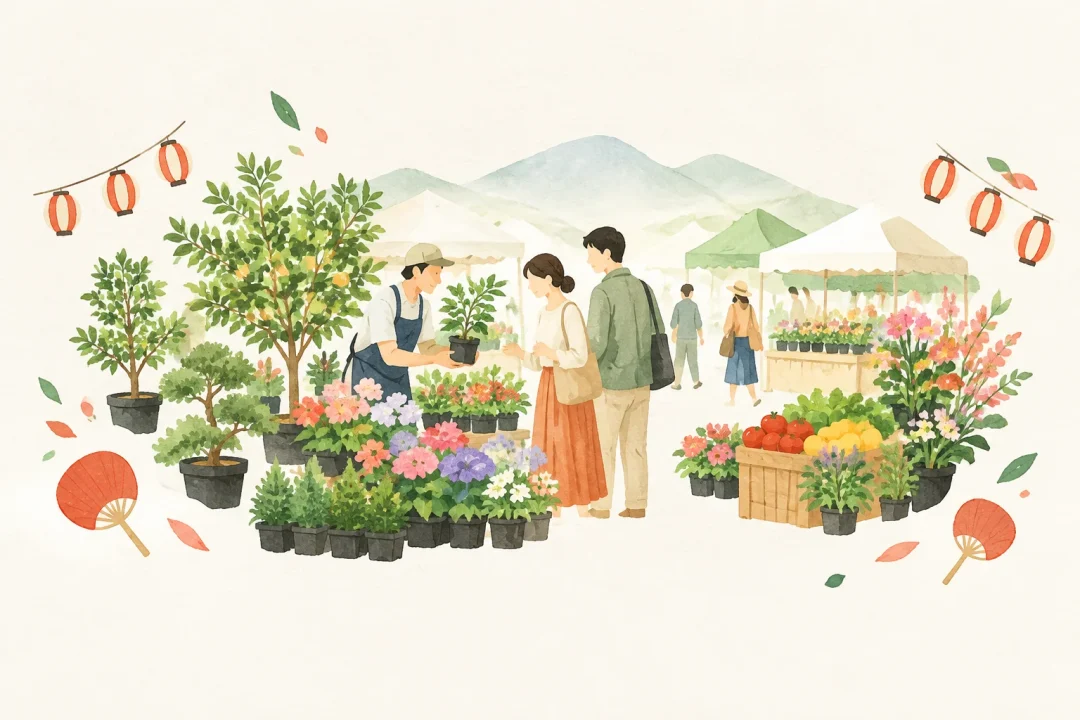
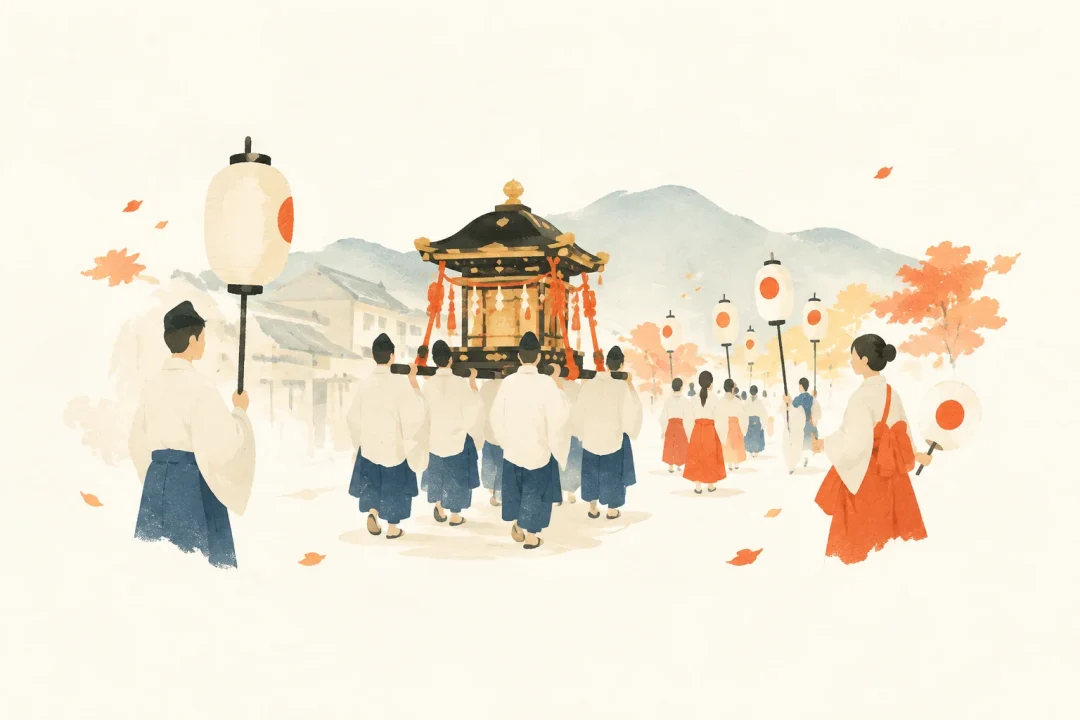
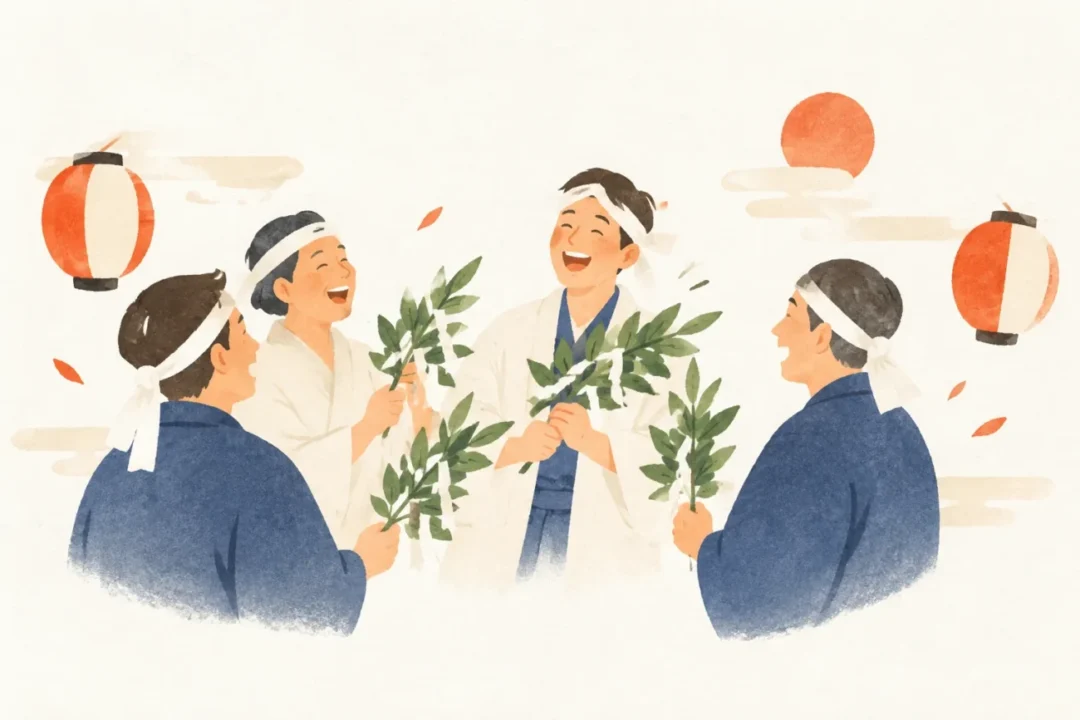
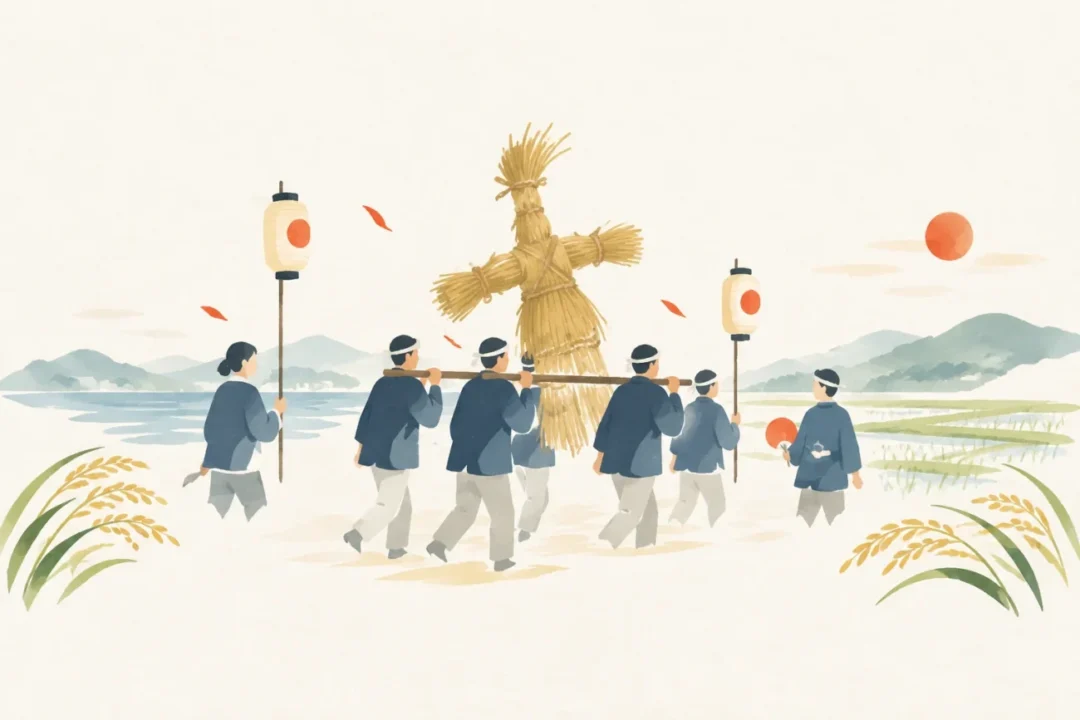
A shinji tracing Ebara’s blessings, found in snakes and frogs, trees and stones
Yowara no Mori Festival
Festival information
EVENT INFORMATION- Season / frequency
- Twice a year (“Natsumōshi” and “Akimōshi”) / Twice a year
- Location
- Ebara district (Upper and Lower areas)
- Area
- Yamaguchi Prefecture・Mine City(From Tokyo: approx. 1 h 35 min–1 h 55 min · flight time only)Prefecture-level estimate to a main station or airport, not the venue. Airport access, check-in and onward travel are extra; remote areas and islands can take much longer.
- Wishes behind the festival
- Last updated
- 2026/11/12
A expressing gratitude for the harvest, passed down since ancient times in the Ebara district on the western plateau of Akiyoshidai. The Upper and Lower areas each worship their own “Morisama,” holding a distinctive festival associated with snakes and frogs, and elm trees and limestone pillars.
About Yowara no Mori Festival
The Yowara no Mori Festival is a shinji that has been held since ancient times in the Ebara district, located on the western plateau of Akiyoshidai.
It is a festival expressing gratitude for the harvest, and it is thought to have arisen against the backdrop of water shortages characteristic of the karst plateau.
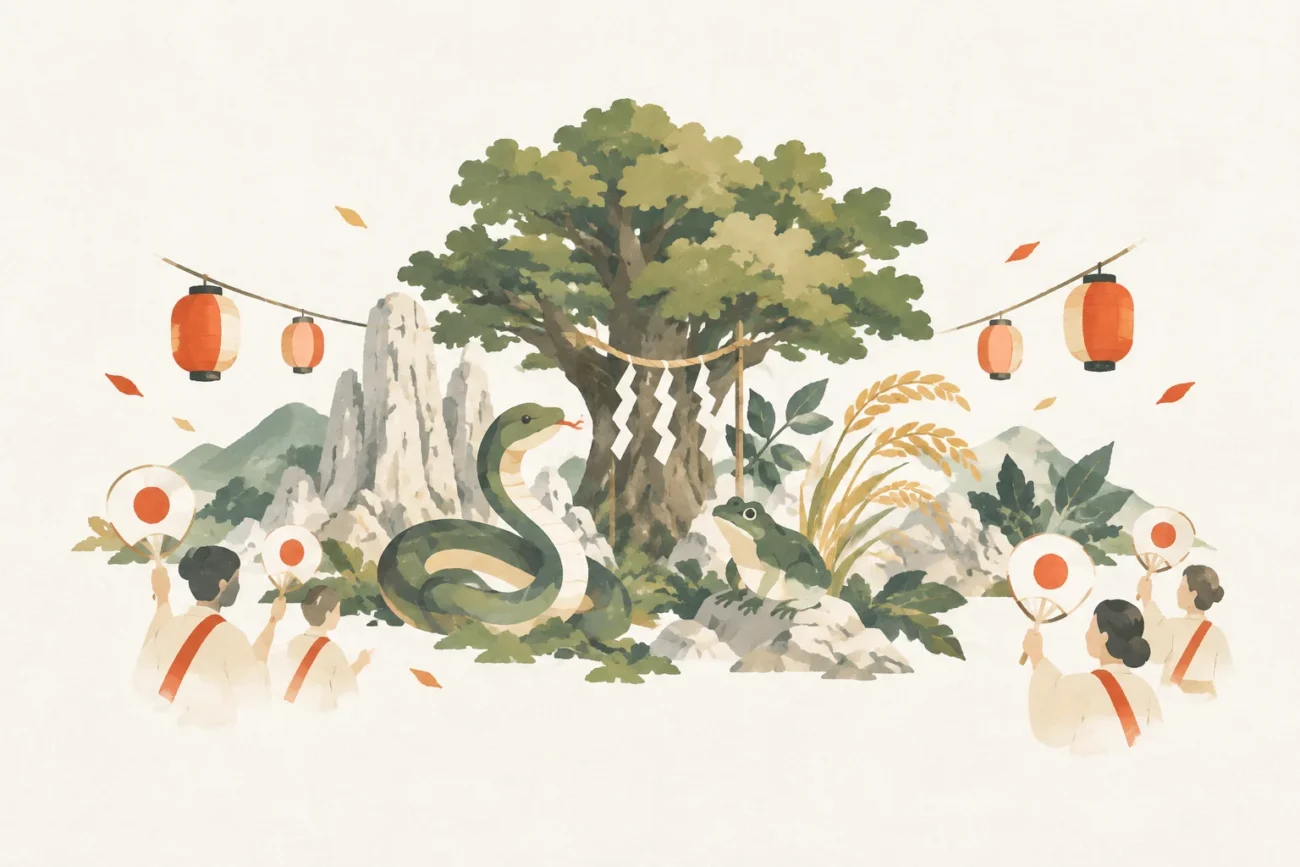
In the Upper area, a snake is the enshrined deity and an elm tree entwined with vines is revered as the ; in the Lower area, a frog is the enshrined deity and a limestone pillar is revered as the shintai.
It is a festival closely tied to the local natural environment, in which the two areas each worship their own “Morisama.”
Festival highlights
The highlights are the different enshrined deities and shintai in the Upper and Lower areas.
In the Upper area, a snake is the enshrined deity, and an elm tree entwined with vines is revered as the shintai.
In the Lower area, a frog is the enshrined deity, and a limestone pillar is revered as the shintai.
A distinctive feature of this festival is that natural trees and stones are worshipped as “Morisama” in the Ebara district, which lies on a karst plateau.
A shinji tracing Ebara’s blessings, found in snakes and frogs, trees and stones
What to expect
In the Ebara district, the Upper and Lower areas each worship their own “Morisama.”
The festival is held twice a year and is called “Natsumōshi” and “Akimōshi.”
In the Upper area, an elm tree entwined with vines is revered as the shintai, while in the Lower area, a limestone pillar is; their enshrined deities are a snake and a frog, respectively.
This is a shinji rooted in the local natural environment and expressing gratitude for the harvest.
Location and access
- Venue and address
Ebara district, Beppu, Shūhō-chō, Mine City
Address Ebara district, Beppu, Shūhō-chō, Mine City
Dates and season
- Season
Twice a year (“Natsumōshi” and “Akimōshi”)
- Frequency
Twice a year
Accommodation and hotels PR
Showing nearby accommodation.
Prices and availability are current at the time of retrieval. For multi-night stays, only the first night’s price is shown. Confirm the final price and directions to the venue with the booking provider. Select your dates again when using the area search link. Search area: within 3 km of Central Yamaguchi Prefecture / Mine City (the search is not centered on the festival venue)
Nearby attractions

美祢市立秋吉台科学博物館
山口県の博物館・美術館のスポットです。

美祢市長登銅山文化交流館
山口県の博物館・美術館のスポットです。
Origins and History of Yowara no Mori Festival
The Yowara no Mori Festival is a shinji that has been held since ancient times in the Ebara district.
Minutes of a Mine City Board of Education meeting describe it as a festival that arose and has survived within Ebara’s distinctive geographical and historical setting, where the two settlements, Upper and Lower, worshipped deities and sustained their communities.
In Heisei 30 May 10, it was designated an Intangible Folk Cultural Property of Mine City.
Official information
Mine City website: “Yowara no Mori Festival (Yowara no Mori Matsuri)”
Yowara no Mori Festival at a Glance
The Yowara no Mori Festival is a shinji that has been held since ancient times in the Ebara district on the western plateau of Akiyoshidai.
Expressing gratitude for the harvest, the Upper area has a snake as its enshrined deity and an elm tree as its shintai, while the Lower area has a frog and a limestone pillar, respectively.
The festival, in which the two areas each worship their own “Morisama,” is held twice a year as “Natsumōshi” and “Akimōshi.”
Sources and references
Japanese Festivals.jp Editorial Team
Celebrating local culture and helping you discover a side of Japan you never knew.
Article updated: 2026/11/12