Mukasa’s time-honored offering rites, passed down by four groups
Religious rites at Kunitsu Shrine
Festival information
EVENT INFORMATION- Season / frequency
- Every year on the 1st Sunday of April / Every year
- Location
- Kunitsu Shrine
- Area
- Fukui Prefecture・Wakasa Town(From Tokyo: approx. 2 h 50 min–3 h 20 min · bullet train)Prefecture-level estimate to a main station or airport, not the venue. Airport access, check-in and onward travel are extra; remote areas and islands can take much longer.
- Highlights and activities
- Wishes behind the festival
- Last updated
- 2026/11/11
At Kunitsu Shrine in Mukasa, Wakasa Town, four groups take charge of the procession and dance offerings in these rites, which have a history of more than 600 years.
About Religious rites at Kunitsu Shrine
The religious rites at Kunitsu Shrine are a prefecture-designated intangible folk cultural property held every year on the 1st Sunday of April in the sacred grove at Mukasa, Wakasa Town.
The four groups each take on their roles in the rites, centered in front of the shrine buildings, where Kunitsu Shrine, Shinmei Shrine, and Tenman Shrine stand side by side.
Connected to prayers and gratitude for a good harvest, the festival conveys the character of medieval rites that have continued for more than 600 years.
Festival highlights
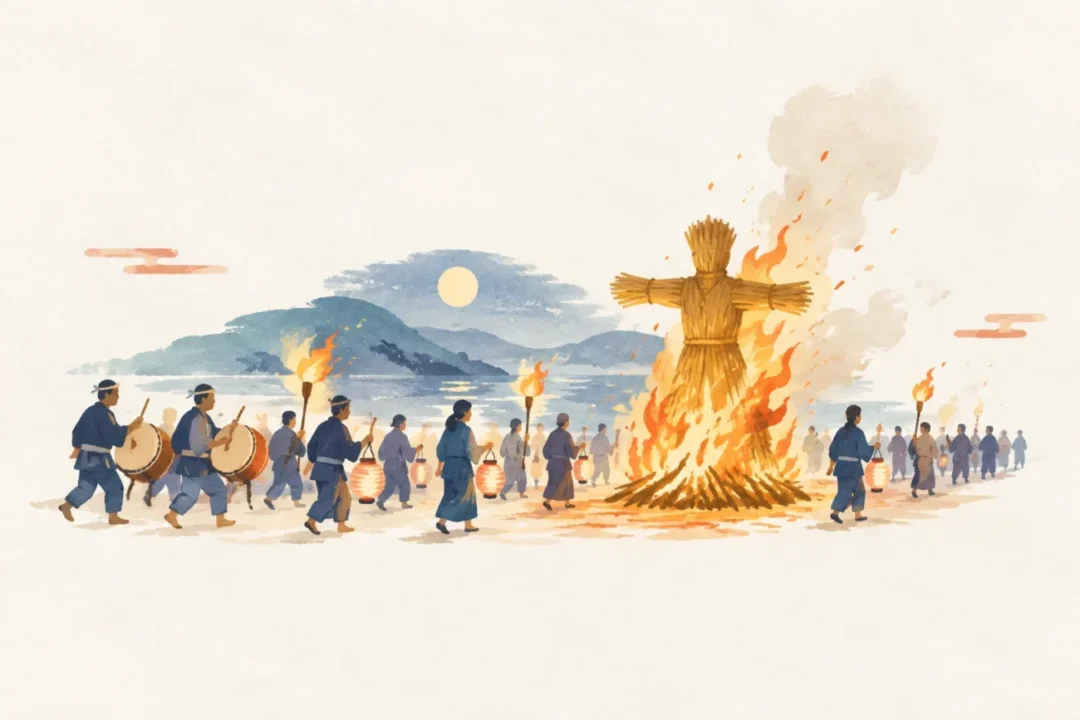
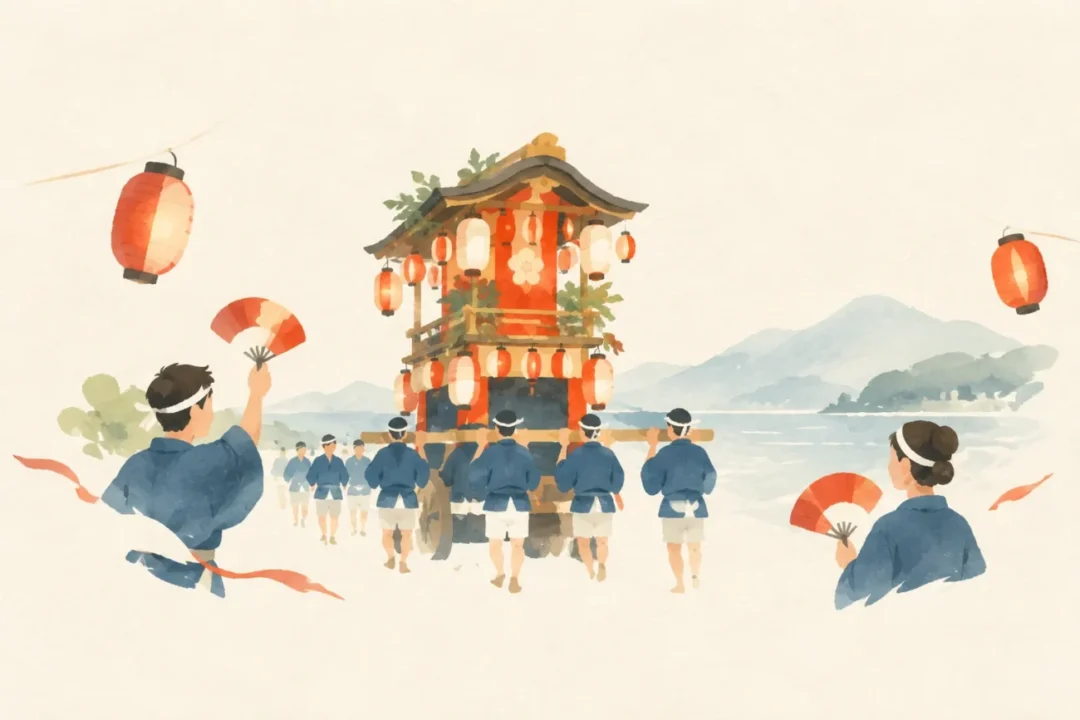
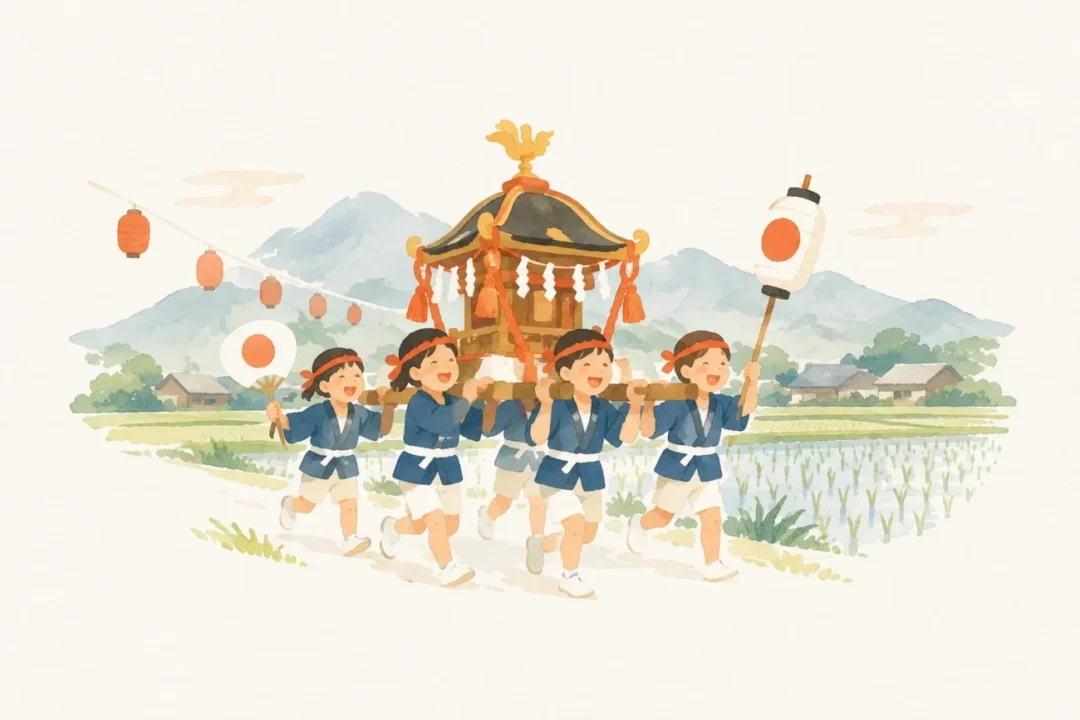
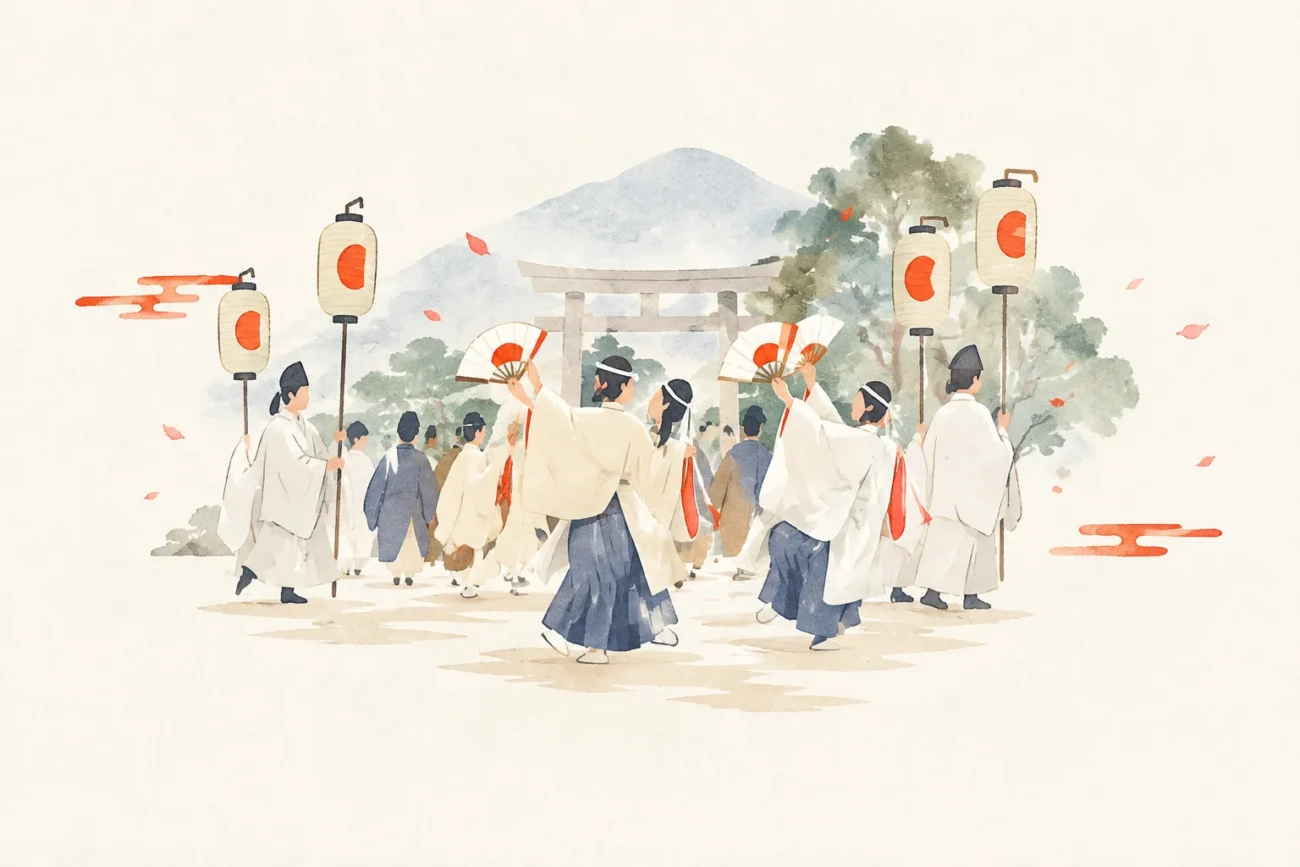
Highlights include the procession of people in eboshi caps and hitatare robes as it travels from the village to the shrine, and the dances offered at the shrine.
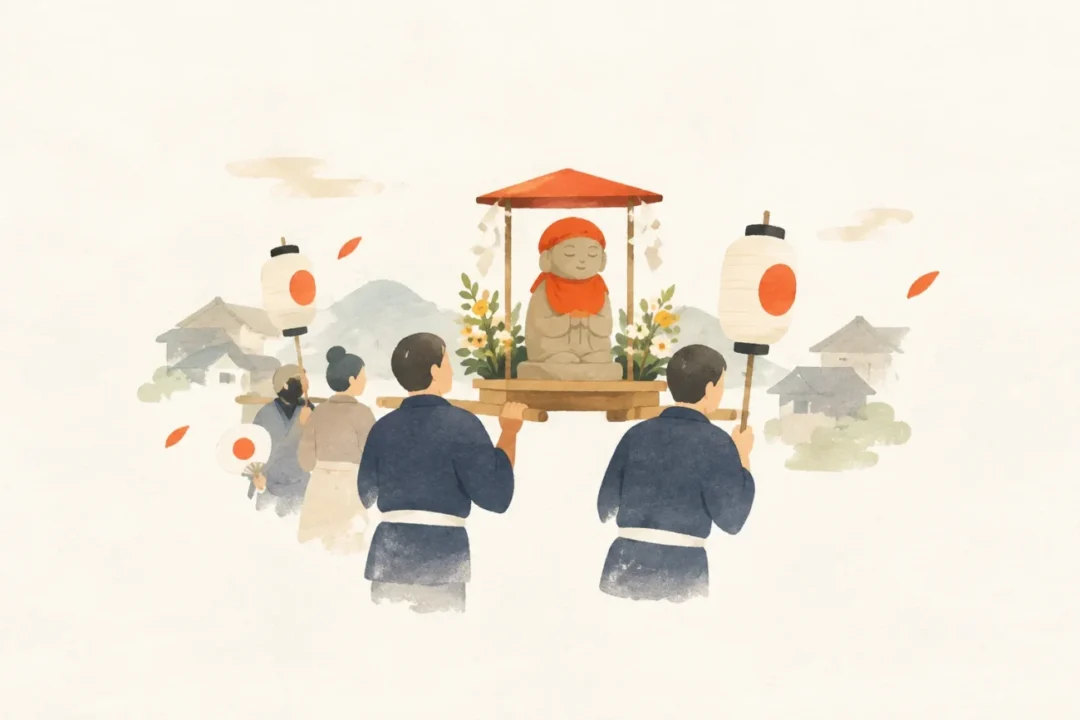
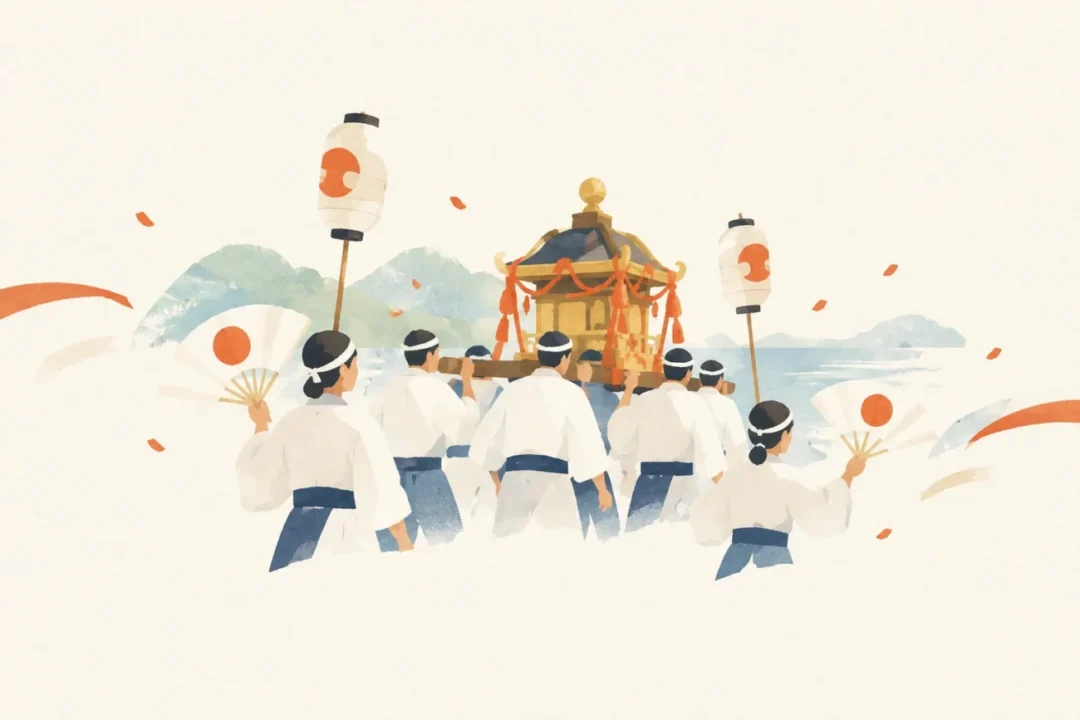
At the head of the procession are the halberd bearer, the Ō no Mai dancer, and the shishi. They are followed by people in roles such as clearing the way, providing security, carrying the large , and playing drums.
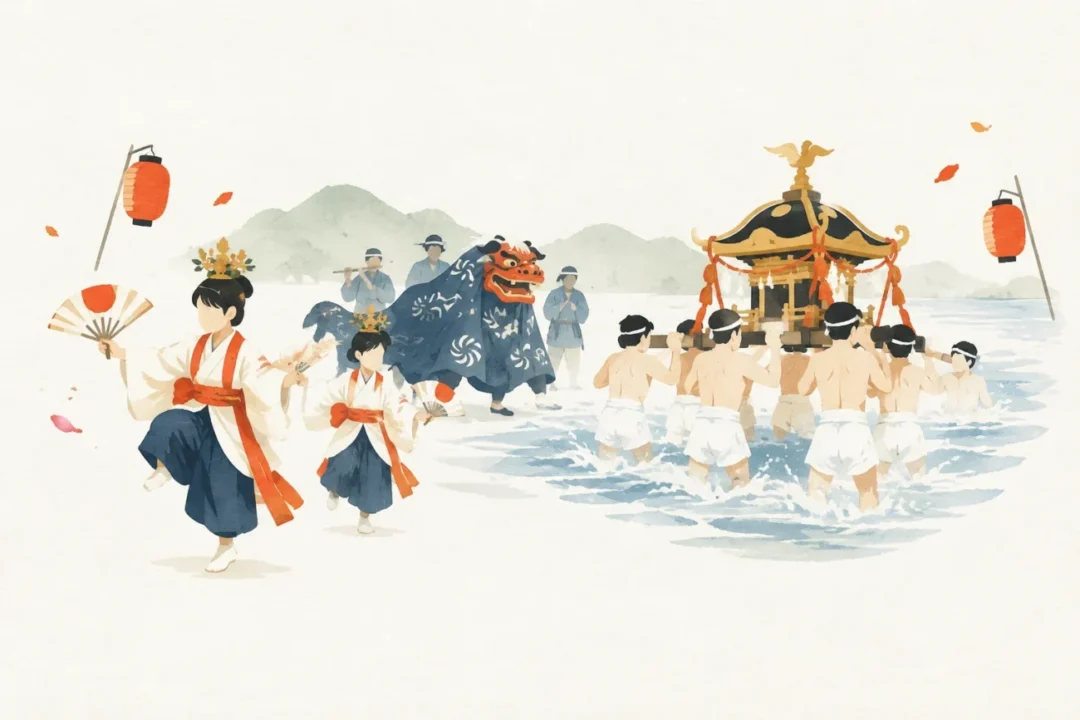
At the , the Ō no Mai and are offered; in front of the shrine, the Ō no Mai, dengaku, and rice-planting dance are performed. An additional ritual in front of Tenman Shrine involves throwing an oshiki tray and sake cup backward.
Mukasa’s time-honored offering rites, passed down by four groups
What to expect
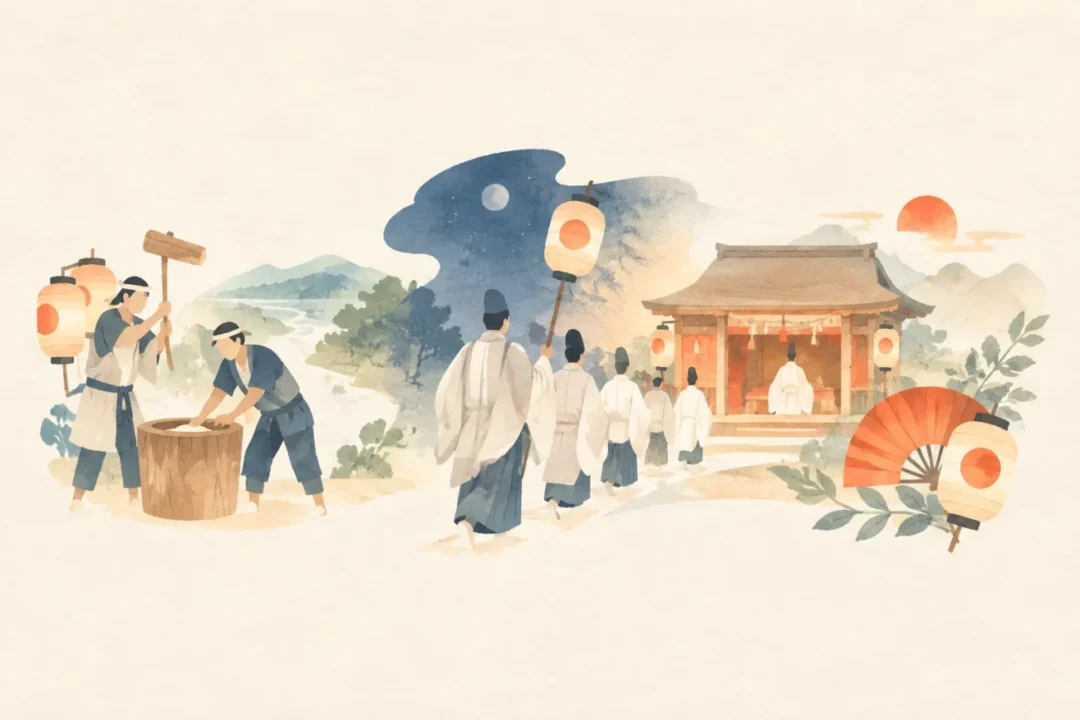
In preparation for the festival, on March 31, 12 head-house stewards from each group purify themselves at the shore. Until the festival day, they prepare gohei, make rice cakes for offerings, and decorate the palanquins.
On the day of the festival, each group holds a meeting at its group’s lodging, then forms the procession in the early afternoon and sets out from the village.
The four groups assemble at the horse-riding grounds and head together to the shrine, proceeding through worship, offerings at the otabisho, and the Ō no Mai, dengaku, and rice-planting dance in front of the shrine.
Location and access
- Venue and address
Kunitsu Shrine (Mukasa, Wakasa Town)
Address Mukasa, Wakasa Town
Dates and season
Every year on the 1st Sunday of April
Accommodation and hotels PR
Showing nearby accommodation.
Prices and availability are current at the time of retrieval. For multi-night stays, only the first night’s price is shown. Confirm the final price and directions to the venue with the booking provider. Select your dates again when using the area search link. Search area: within 3 km of Central Fukui Prefecture / Wakasa Town (the search is not centered on the festival venue)
Nearby attractions

福井県年縞博物館
福井県若狭町にある地誌学の博物館

若狭三方縄文博物館
福井県若狭町にある博物館
Origins and History of Religious rites at Kunitsu Shrine
The religious rites at Kunitsu Shrine are said to date back more than 600 years, though their origins are unclear.
These rites convey the character of medieval festivals, and experts have determined that the dance masks handed down in the village of Koshino were made during the Muromachi period.
is no longer performed, and the rites continue in a solemn, restrained form, with the four groups dividing up the responsibilities.
Official information
Wakasa Town, “Religious Rites at Kunitsu Shrine [Prefecture-Designated]” / Fukui Prefecture, “Cultural Property Details”
Religious rites at Kunitsu Shrine at a Glance
The religious rites at Kunitsu Shrine in Mukasa, Wakasa Town, are a prefecture-designated intangible folk cultural property with a history of more than 600 years, passed down by four groups.
After purification on March 31 and preparations for the festival, each group forms a procession in the early afternoon and heads to the shrine.
The is placed at the otabisho, where the Ō no Mai and dengaku are performed as offerings, followed by the rice-planting dance. This sequence conveys prayers and gratitude for a good harvest, as well as the character of rites dating back to medieval times.
Sources and references
Japanese Festivals.jp Editorial Team
Celebrating local culture and helping you discover a side of Japan you never knew.
Article updated: 2026/11/11