A Jizō worship event connecting homes in Miyake, Kariyā, and Ichiba
Miyake no Shō Meguri Jizō
Festival information
EVENT INFORMATION- Location
- Miyake, Kariya, and Ichiba
- Area
- Fukui Prefecture・Wakasa Town(From Tokyo: approx. 2 h 50 min–3 h 20 min · bullet train)Prefecture-level estimate to a main station or airport, not the venue. Airport access, check-in and onward travel are extra; remote areas and islands can take much longer.
- Wishes behind the festival
- Last updated
- 2026/11/11
Miyake no Shō Meguri Jizō is an intangible folk cultural property of Wakasa Town, in which the Jizō visits homes in turn in Miyake, Kariya, and Ichiba. The custom of worshipping Jizō in each home and then passing it on to the next house has been handed down in the community.
About Miyake no Shō Meguri Jizō
Miyake no Shō Meguri Jizō is a Jizō worship event observed as the Jizō visits Miyake, Kariyā, and Ichiba in Wakasa Town.
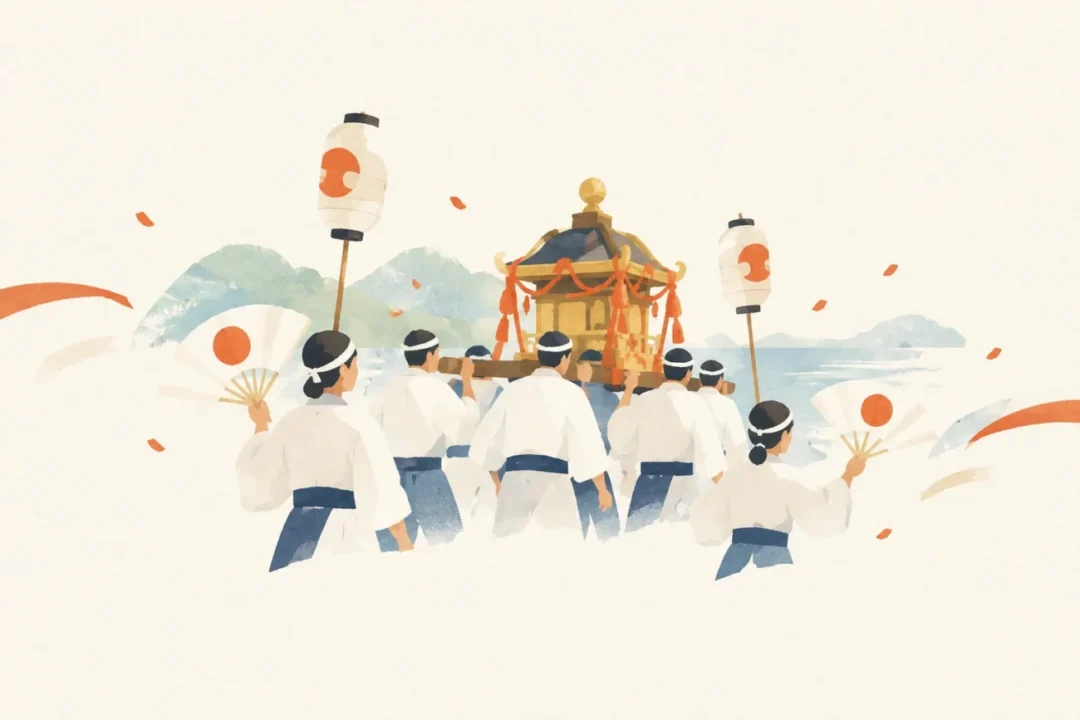
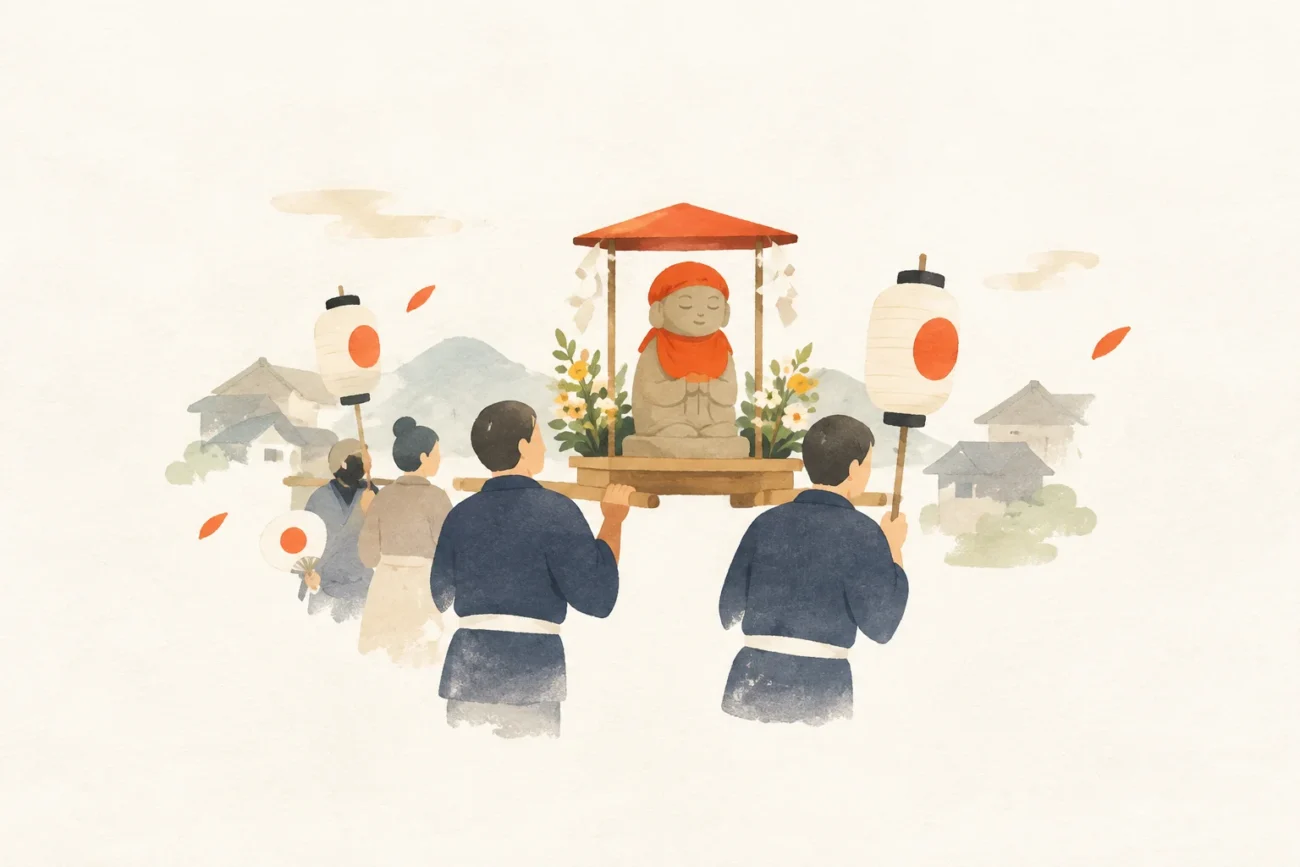
It is said to follow the custom of worshipping the Jizō, housed in a portable shrine, at each home in turn and then sending it on to the next house.
Miyake no Shō Meguri Jizō is listed as an intangible folk cultural property of Wakasa Town.
Festival highlights
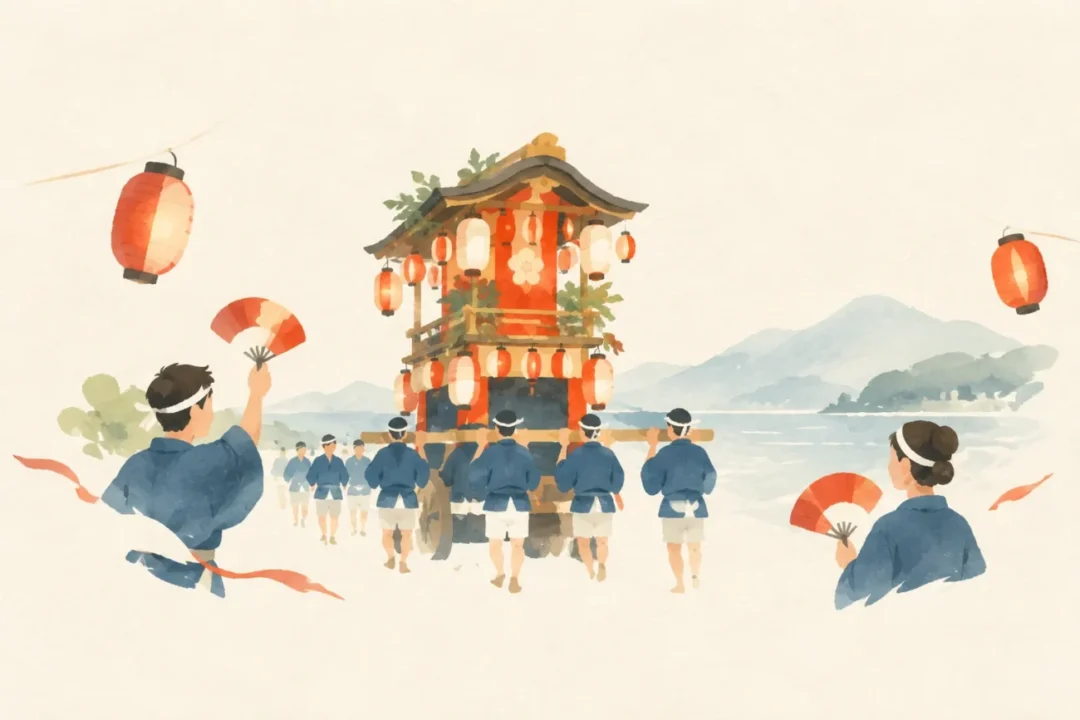
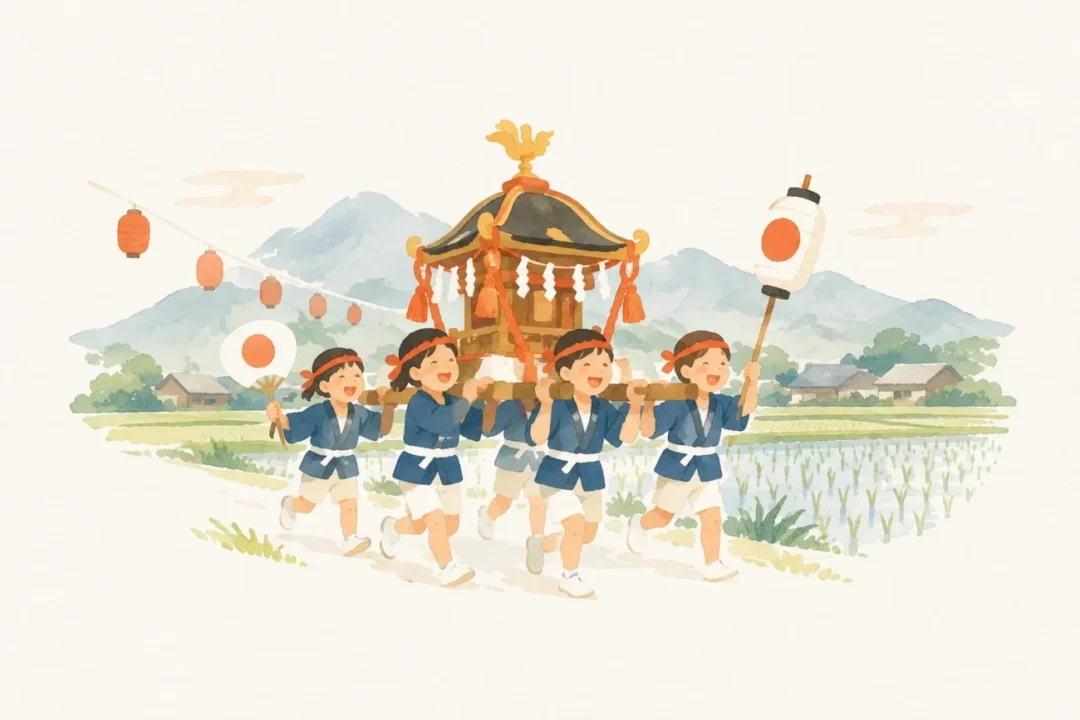
A highlight is seeing the portable shrine enshrining the Jizō move from home to home in Miyake, Kariya, and Ichiba.
Unlike a typical ceremony held inside a temple hall, the Jizō is worshipped in each home for about 1 day and night before being passed on to the next house.
As the Jizō travels through the settlements, the faith of individual households is linked with the bonds between community members.
A Jizō worship event connecting homes in Miyake, Kariyā, and Ichiba
What to expect
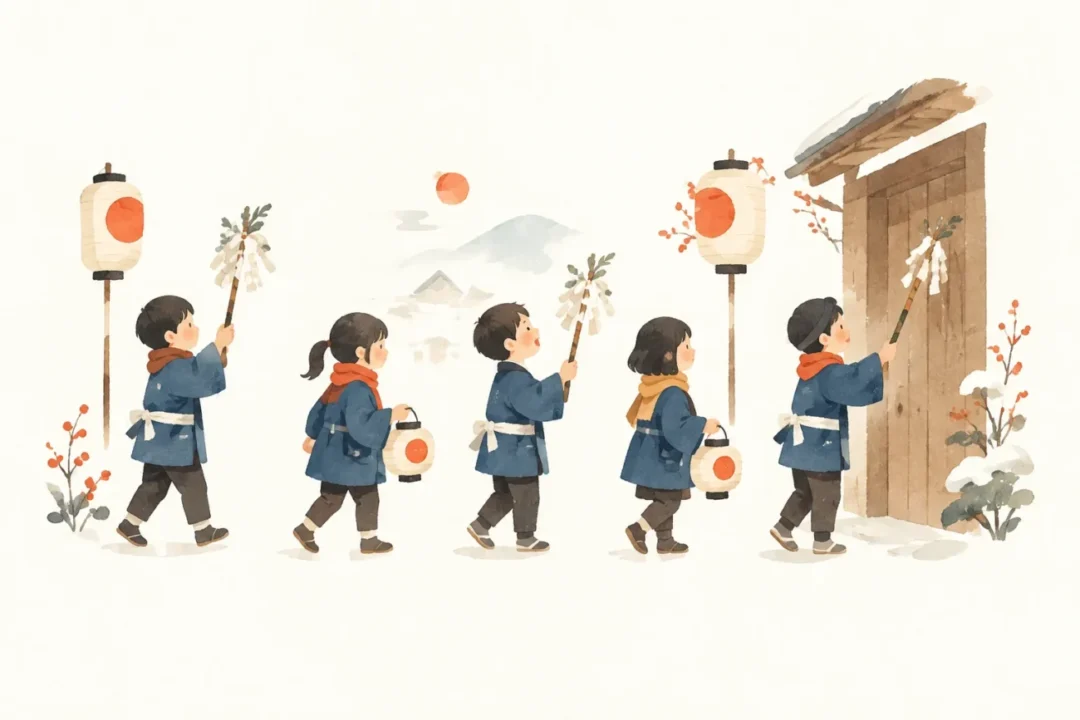
During the event, the Jizō, housed in a portable shrine, is welcomed into a home and worshipped for about 1 day and night before being sent to the next house.
The Jizō moves from one home to another according to the order of houses in the settlements of Miyake, Kariya, and Ichiba.
The act of passing it from house to house is the central part of the Meguri Jizō custom.
Location and access
- Venue and address
Miyake, Kariyā, and Ichiba, Wakasa Town
Address Miyake, Kariyā, and Ichiba, Wakasa Town, Mikatakaminaka District, Fukui Prefecture
Accommodation and hotels PR
Showing nearby accommodation.
Prices and availability are current at the time of retrieval. For multi-night stays, only the first night’s price is shown. Confirm the final price and directions to the venue with the booking provider. Select your dates again when using the area search link. Search area: within 3 km of Central Fukui Prefecture / Wakasa Town (the search is not centered on the festival venue)
Nearby attractions

福井県年縞博物館
福井県若狭町にある地誌学の博物館

若狭三方縄文博物館
福井県若狭町にある博物館
Origins and History of Miyake no Shō Meguri Jizō
Miyake no Shō Meguri Jizō is said to have begun during an epidemic in the late Edo period, with people praying to be saved from the calamity.
Since then, the custom has been handed down of visiting homes in turn in Miyake, Kariya, and Ichiba.
Wakasa Town’s cultural properties list records it as an intangible folk cultural property, dated October 6 in Showa 53 (1978).
Official information
Miyake no Shō Meguri Jizō is listed as an intangible folk cultural property in Wakasa Town’s cultural properties list.
The areas covered are Miyake, Kariya, and Ichiba.
Miyake no Shō Meguri Jizō at a Glance
Miyake no Shō Meguri Jizō is an intangible folk cultural property passed down in Miyake, Kariyā, and Ichiba in Wakasa Town.
A distinctive feature is that each household worships the Jizō, housed in a portable shrine, for about 1 day and night before passing it on to the next house.
It is said to have begun following an epidemic in the late Edo period, and the wish to protect the community from calamity has been handed down through the connections between households.
Sources and references
Japanese Festivals.jp Editorial Team
Celebrating local culture and helping you discover a side of Japan you never knew.
Article updated: 2026/11/11