A Koshogatsu observance that welcomes good fortune into Wakasa homes with celebratory sticks and chants
Toiwai and Kitsunegari
Festival information
EVENT INFORMATION- Season / frequency
- From early to mid-January. Depending on the area, it is held around January 14. / This Koshogatsu observance is held every year.
- Location
- 14 settlements in Wakasa Town
- Area
- Fukui Prefecture・Wakasa Town(From Tokyo: approx. 2 h 50 min–3 h 20 min · bullet train)Prefecture-level estimate to a main station or airport, not the venue. Airport access, check-in and onward travel are extra; remote areas and islands can take much longer.
- Highlights and activities
- Wishes behind the festival
- Age restrictions
- The main participants are children from preschool age through junior high school.
- Last updated
- 2026/10/19
Toiwai and Kitsunegari are observances in which children visit homes in settlements in Wakasa Town, striking doorways and other places with celebratory sticks while singing chants. These local Koshogatsu observances welcome good fortune in the new year, offer prayers for a bountiful harvest and good health, and drive away misfortune.
About Toiwai and Kitsunegari
Toiwai and Kitsunegari are Koshogatsu observances passed down in the Wakasa region of Fukui Prefecture.
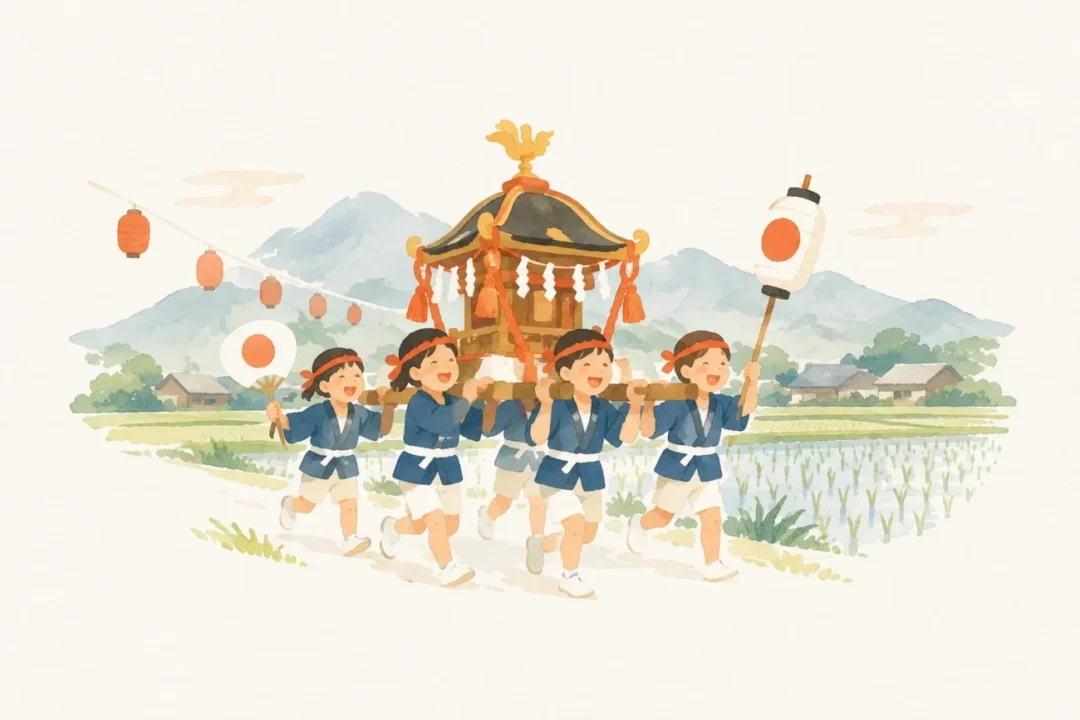
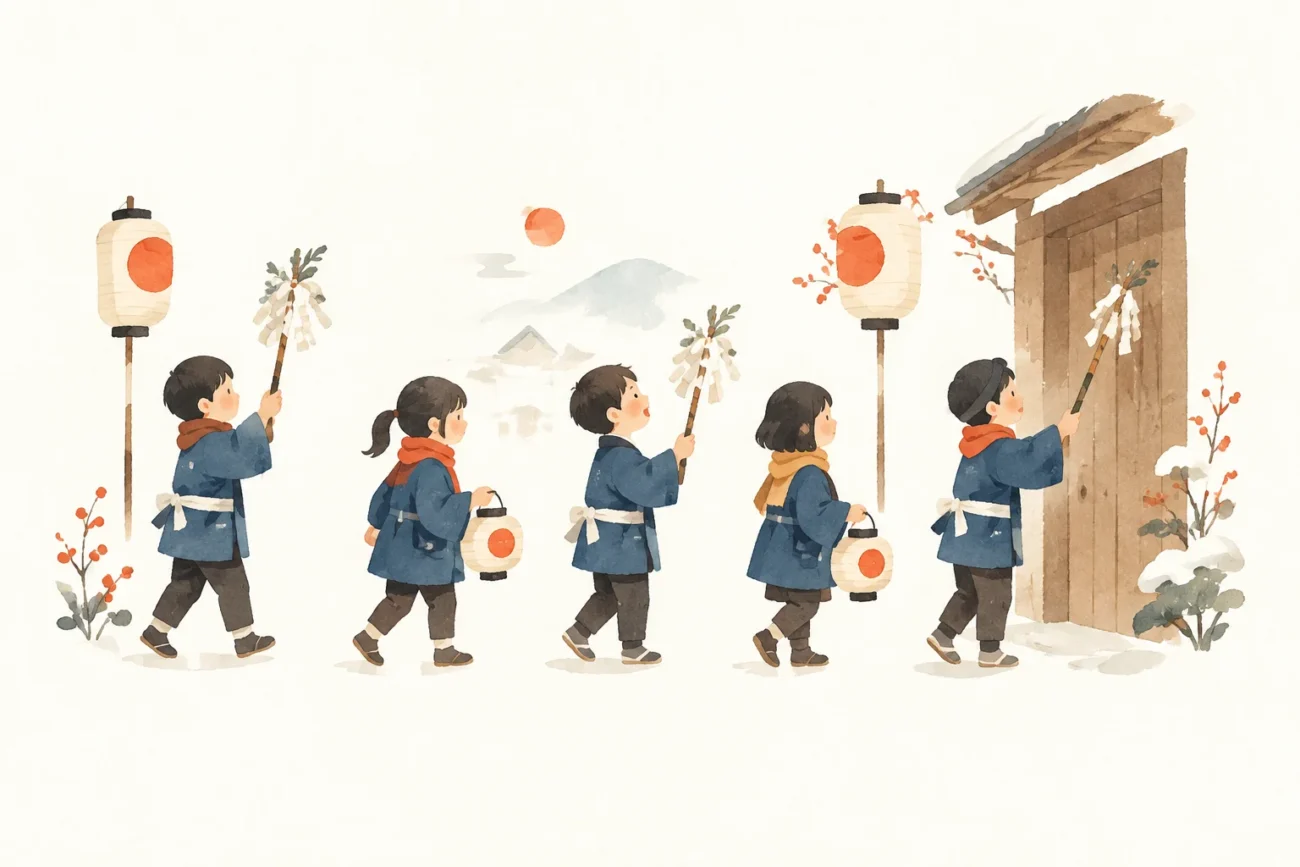
Children carry celebratory sticks as they visit homes in the settlement, striking doorways and singing chants.
This custom, which offers prayers for a bountiful harvest and good health and drives away misfortune, has been passed down in areas including Wakasa Town.
Source: 国指定文化財等データベース / 文化財詳細 | 福井県文化財ページ
Festival highlights
A highlight is watching children energetically strike bamboo, boards, and pieces of lumber with wooden celebratory sticks while singing chants that ring out among the houses in the settlement.
The sticks may be decorated with auspicious motifs such as sacred jewels, pine, bamboo and plum blossoms, or cranes and turtles.
It is also characteristic of the observance for an older child, known as the “taisho,” to lead the group and call out commands.
A Koshogatsu observance that welcomes good fortune into Wakasa homes with celebratory sticks and chants
What to expect
On the day of the observance, the children gather at a shrine or temple hall in the settlement, then visit homes in turn, led by the taisho.
At each entrance, the children announce their visit, strike the sticks in time with the commands, and sing chants while praying for a good harvest and prosperity for the household.
In some areas, the residents offer words of appreciation or sweets when the children finish singing.
How to take part
The observance is mainly carried out by children from preschool age through junior high school.
An older child, known as the “taisho,” leads the group around the village and calls out the chants.
In some areas, girls also take part, or adults accompany the children to help with preparations and running the event. However, no arrangements have been confirmed for general visitors to join in.
Location and access
- Venue and address
It is held in 14 settlements in Wakasa Town.
The setting is the everyday living space of each settlement, including residential lanes and the entrances to individual homes.
Source: 文化財一覧(町)/若狭町 / 福井の戸祝いとキツネガリ | 福井県 | 日本の文化遺産を探す|国宝・重要文化財データベース
Address 14 settlements in Wakasa Town, Fukui Prefecture
Dates and season
- Season
From early to mid-January.
Depending on the area, it is held around January 14.
- Frequency
This Koshogatsu observance is held every year.
Accommodation and hotels PR
Showing nearby accommodation.
Prices and availability are current at the time of retrieval. For multi-night stays, only the first night’s price is shown. Confirm the final price and directions to the venue with the booking provider. Select your dates again when using the area search link. Search area: within 3 km of Central Fukui Prefecture / Wakasa Town (the search is not centered on the festival venue)
Tips for your visit
Toiwai and Kitsunegari are not events held at a venue set up for spectators; they are local observances in which participants visit settlement lanes and the entrances to individual homes.
Dates and practices vary by settlement, so anyone hoping to observe the event should check in advance.
Respect the observance’s tradition of visiting homes, and watch without entering private property or obstructing residents’ routes.
Nearby attractions

福井県年縞博物館
福井県若狭町にある地誌学の博物館

若狭三方縄文博物館
福井県若狭町にある博物館
Origins and History of Toiwai and Kitsunegari
Toiwai and Kitsunegari were originally Koshogatsu observances with distinct purposes.
Toiwai welcomes good fortune and offers prayers for the new year, while Kitsunegari is a purification rite to drive foxes—seen as symbols of animals that damage crops—out to the village boundary.
Because the two observances took place around the same time, some areas of Fukui Prefecture came to pass them down as a single, continuous event.
Official information
The Fukui Prefecture cultural properties website introduces “Fukui’s Toiwai and Kitsunegari” as a nationally selected intangible folk cultural property.
To confirm the locations and dates in Wakasa Town, contact local information offices, such as the town’s cultural properties office.
Toiwai and Kitsunegari at a Glance
Toiwai and Kitsunegari are Koshogatsu (Little New Year) observances passed down in the Wakasa region, including 14 settlements in Wakasa Town.
The children strike doorways and other places with celebratory sticks, sing chants to pray for a good harvest and good health, and drive away misfortune.
Dates and forms vary by settlement, so when observing, it is important to respect local life and check event information in advance.
Japanese Festivals.jp Editorial Team
Celebrating local culture and helping you discover a side of Japan you never knew.
Article updated: 2026/10/19
Submit information or a correction Submit photos of this festival