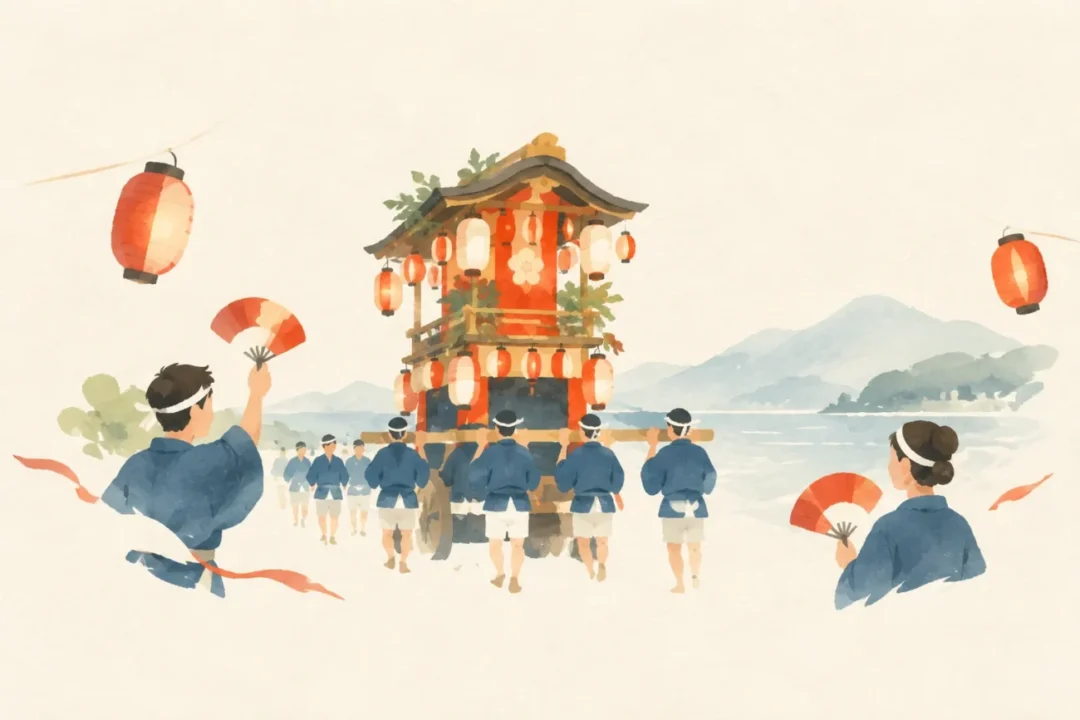
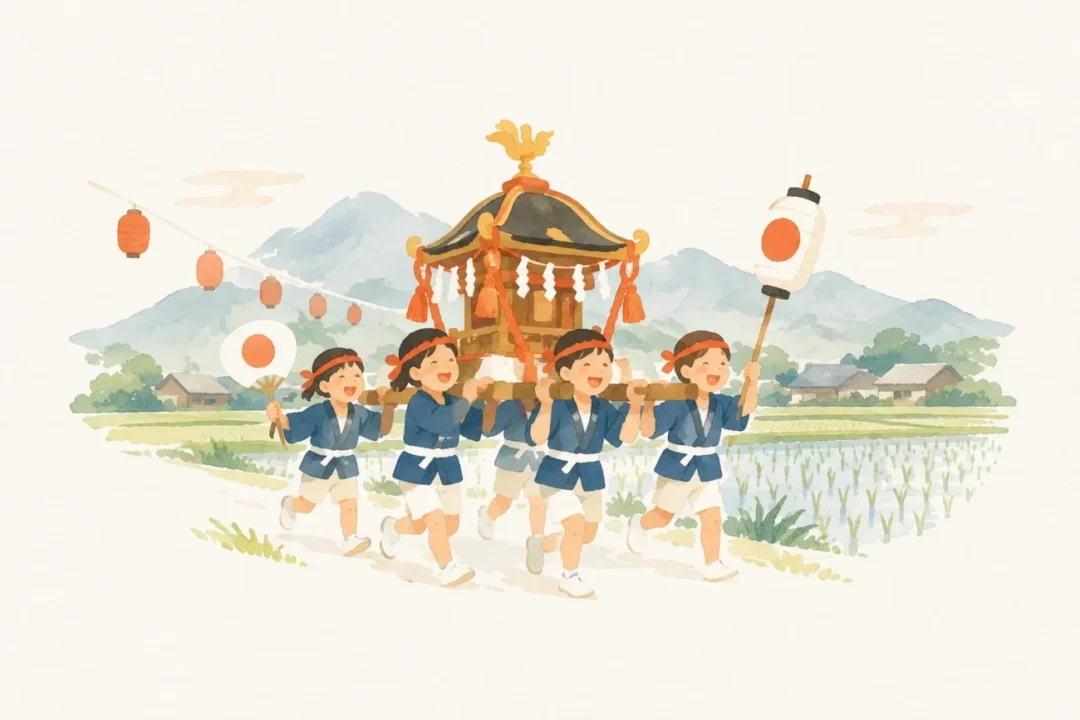
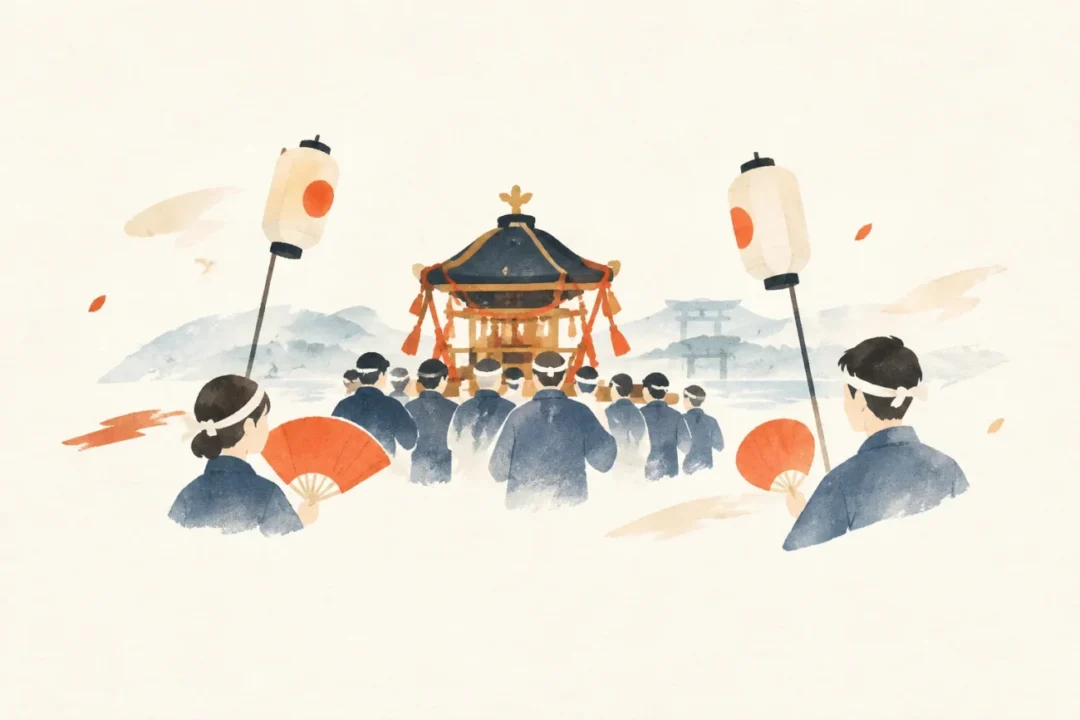
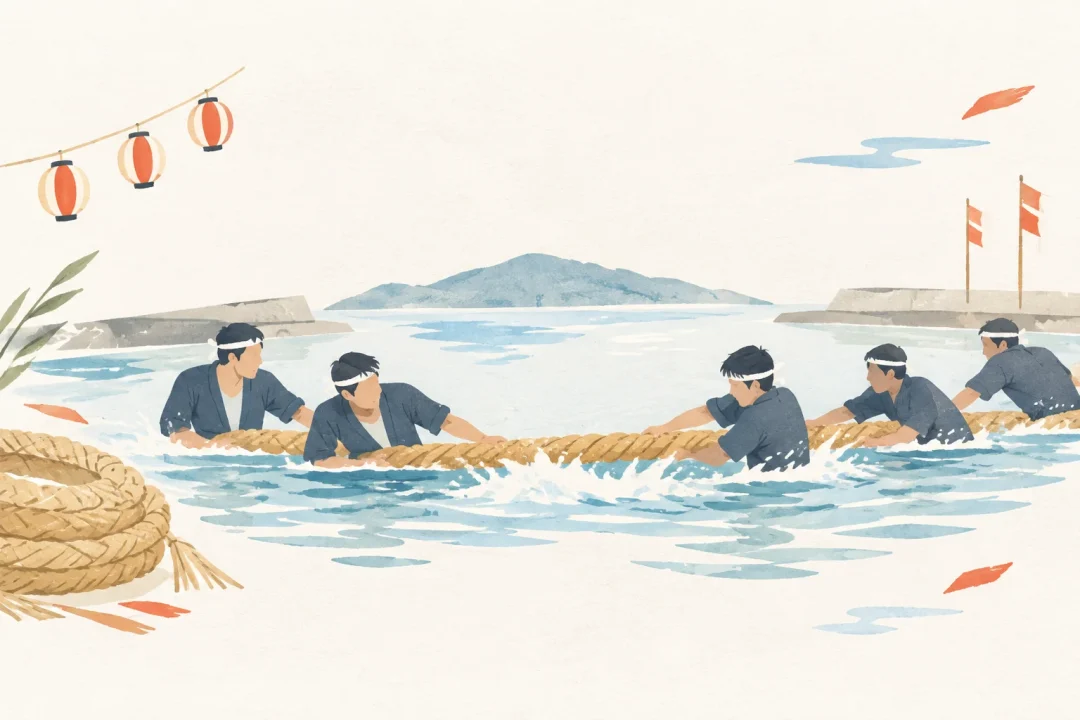
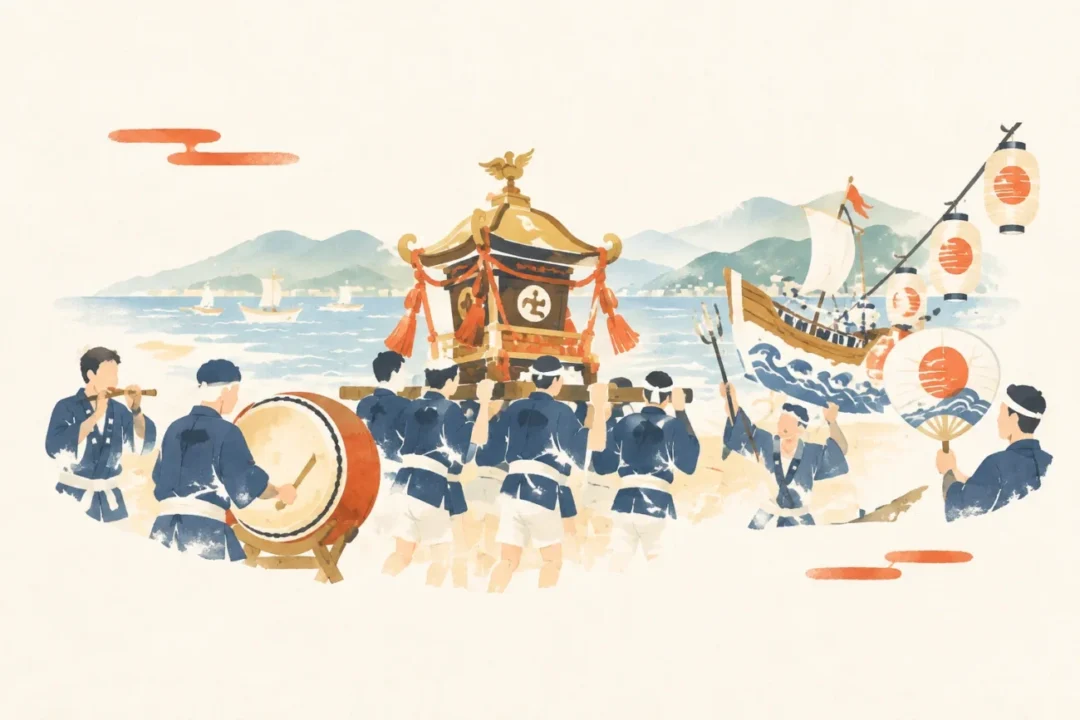
Fujii’s spring festival, where children’s dances and the young people’s mikoshi procession come together
Tenman Shrine Annual Festival Ritual
Festival information
EVENT INFORMATION- Season / frequency
- Early April
- Location
- Tenman Shrine
- Area
- Fukui Prefecture・Wakasa Town(From Tokyo: approx. 2 h 50 min–3 h 20 min · bullet train)Prefecture-level estimate to a main station or airport, not the venue. Airport access, check-in and onward travel are extra; remote areas and islands can take much longer.
- Highlights and activities
- Wishes behind the festival
- Required number of participants
- The is carried by 13 young men.
- Last updated
- 2026/10/19
The Tenman Shrine Annual Festival Ritual, passed down in Fujii, Wakasa Town, Fukui Prefecture, is a local festival that preserves the O no Mai, , , and mikoshi procession. The event is notable for the children’s dances and the mikoshi carried by young people after they perform water purification in the river.
About Tenman Shrine Annual Festival Ritual
The Tenman Shrine Annual Festival Ritual is an intangible folk cultural property designated by Fukui Prefecture and passed down at Tenman Shrine in Fujii, Wakasa Town.
Tenman Shrine enshrines Sugawara no Michizane and is said to have been established by inviting the deity from Kitano Tenmangu in Kyoto.
At the annual festival, people with local roles make preparations centered on the toya, then perform the O no Mai, dengaku, lion dance, and mikoshi procession.
The ritual is also connected to agricultural customs and prayers and expressions of gratitude for a good harvest.
Source: 文化財詳細 | 福井県文化財ページ
Festival highlights
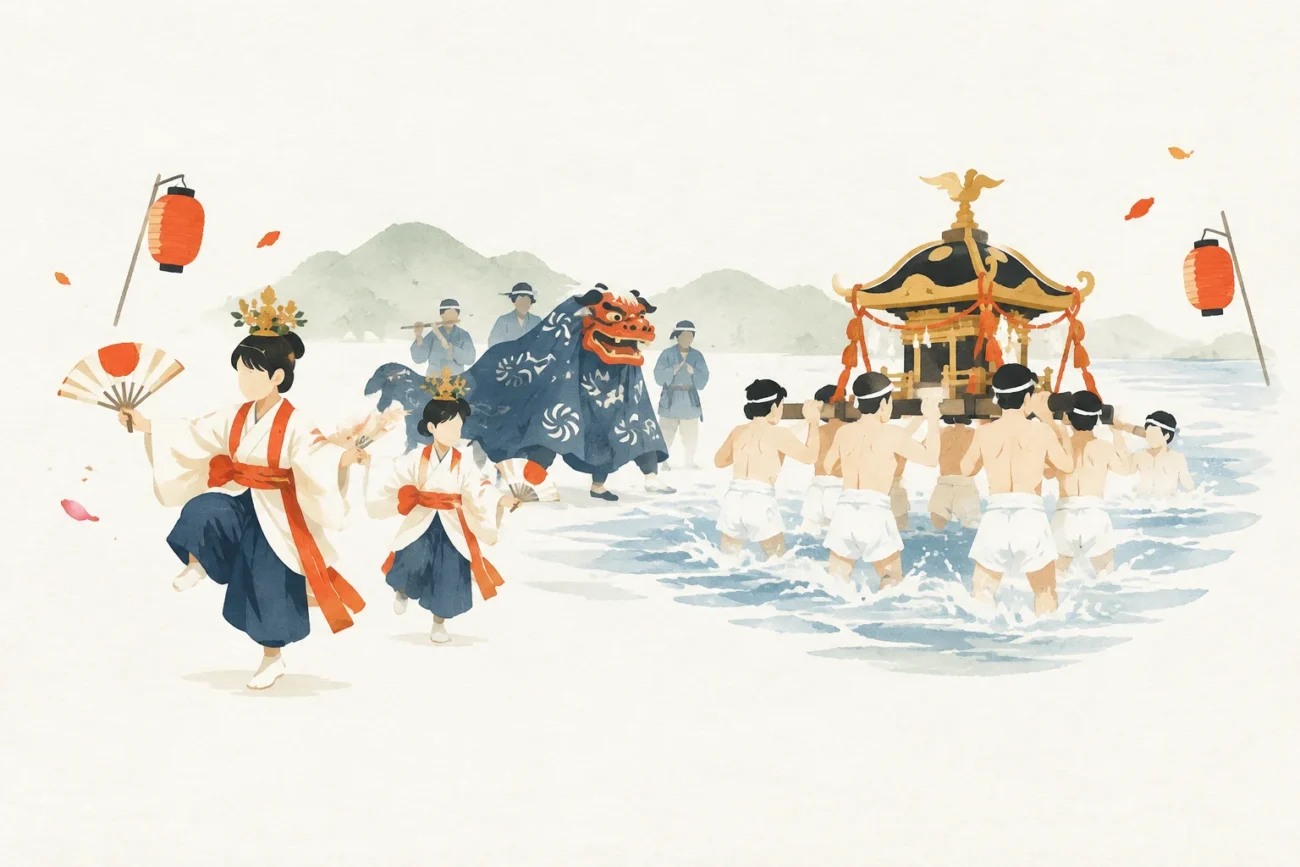
Highlights include the contrast between the children performing the O no Mai and dengaku and the young people carrying the mikoshi.
The young men carrying the mikoshi perform vigorous water purification in the river, shouting “Saiyori Saya,” and demonstrate a gesture of stamping on and driving away demons.
The mikoshi is then carried in procession from the shrine to the lower riding ground, where the O no Mai, lion dance, and dengaku are offered again.
The children’s innocent dances and the young people’s rough-and-tumble mikoshi procession are distinctive features of the festival.
Source: 天満社例祭神事[県指定]/若狭町
Fujii’s spring festival, where children’s dances and the young people’s mikoshi procession come together
What to expect
On the day of the annual festival, the procession visits the small shrines at dawn, then proceeds to the shrine after a ritual at the toya residence.
During the festival rites, the O no Mai, lion dance, and dengaku are offered, while young people carrying the mikoshi perform water purification in the river.
The young people carry the mikoshi in procession to the lower riding ground, where the offerings are performed again.
The annual festival ritual concludes with the mikoshi’s return in the evening.
How to take part
Roles such as carrying the mikoshi, performing dances, and serving as toya are undertaken and passed down by local people.
Children also perform the O no Mai and dengaku, while young adults carry the mikoshi.
The information available does not make it possible to determine whether general visitors can take on these roles.
If you wish to view the festival, please act with respect for the progress of the rituals and local customs.
Festival roles include the toya, -bearers, performers of the O no Mai, and mikoshi bearers. The toya and three other principal roles are selected during the Hatsutenjin ritual, and preparations begin.
People with local roles take part in preparations and rituals at the toya residence, the procession, and the offerings.
Anyone wishing to take part in something other than viewing should consult local people involved in advance.
Location and access
- Venue and address
Tenman Shrine (Fujii, Wakasa Town, Mikatakaminaka District, Fukui Prefecture).
The mikoshi is carried in procession from the shrine to the lower riding ground.
- Train and bus
JR Fujii Station is listed as a transport reference for the Fujii area.
Source: 藤井(福井県三方上中郡若狭町)
Address Fujii, Wakasa Town, Mikatakaminaka District, Fukui Prefecture
Dates and season
- Season
Early April
Accommodation and hotels PR
Showing nearby accommodation.
Prices and availability are current at the time of retrieval. For multi-night stays, only the first night’s price is shown. Confirm the final price and directions to the venue with the booking provider. Select your dates again when using the area search link. Search area: within 3 km of Central Fukui Prefecture / Wakasa Town (the search is not centered on the festival venue)
Tips for your visit
The rituals begin at dawn and take place at several locations, including processions, a mikoshi procession, and water purification in the river.
When visiting or watching, do not obstruct the route of the procession or mikoshi, and watch quietly during offerings and prayers.
Near the riverbank and the horse-riding grounds, be careful not to get too close to the movements of the young men carrying the mikoshi.
Check before your visit for information about whether the event will take place in rainy weather and any temporary traffic guidance.
Nearby attractions

福井県年縞博物館
福井県若狭町にある地誌学の博物館

若狭三方縄文博物館
福井県若狭町にある博物館
Origins and History of Tenman Shrine Annual Festival Ritual
Tenman Shrine is said to have been established by inviting the deity from Kitano Tenmangu in Kyoto.
A record concerning the gakuto position in 1359 is cited in connection with Tenmangu in Fujii Estate, and medieval documents relating to the festival remain.
From the early modern period onward, adjustments continued over parishioners’ roles and control of the festival, and the dispute was resolved following an agreement in 1913.
In 1940, the system was revised so that anyone could take on the roles, and in 1949, a rotation system was established in which six neighborhood groups took charge of the festival in turn.
Official information
Fukui Prefecture’s cultural properties page lists the Tenman Shrine Annual Festival Ritual as an intangible folk cultural property designated by the prefecture.
Wakasa Town’s official page also describes the festival, including the O no Mai, lion dance, dengaku, mikoshi procession, and water purification.
When checking announcements about the festival date or traffic arrangements on the day, Fukui Prefecture’s cultural properties page and information from Wakasa Town’s History and Culture Division may be helpful.
Tenman Shrine Annual Festival Ritual at a Glance
The Tenman Shrine Annual Festival Ritual is an intangible folk cultural property designated by Fukui Prefecture and passed down at Tenman Shrine in Fujii, Wakasa Town.
It begins with visits to the small shrines at dawn, followed by offerings of the O no Mai, lion dance, and dengaku, water purification by young people, and the mikoshi procession and return.
Highlights include the children’s dances and the young people’s vigorous mikoshi procession.
As this festival has been sustained by people taking on local roles, please respect the rituals and local customs when viewing.
Japanese Festivals.jp Editorial Team
Celebrating local culture and helping you discover a side of Japan you never knew.
Article updated: 2026/10/19
Submit information or a correction Submit photos of this festival