A Kanenokuma visiting-deity event that welcomes good fortune in the New Year with water and chants
Kinekuma no Tobi no Mizu

Festival information
EVENT INFORMATION- Season / frequency
- Every year on the morning of January 2 / Every year
- Location
- Kanenokuma Community Center, Kannon Hall, and the Kanenokuma neighborhood in Hakata Ward, Fukuoka City
- Area
- Fukuoka Prefecture・Fukuoka City(From Tokyo: approx. 1 h 50 min–2 h 10 min · flight time only)Prefecture-level estimate to a main station or airport, not the venue. Airport access, check-in and onward travel are extra; remote areas and islands can take much longer.
- Highlights and activities
- Wishes behind the festival
- Age restrictions
- The older participants are junior high school students, along with other children.
- Last updated
- 2026/10/19
Kinekuma no Tobi no Mizu, passed down in Kanenokuma, Hakata Ward, Fukuoka City, is a New Year visiting-deity event in which children wearing straw raincoats and hats walk around the neighborhood and have water poured over them at each home. It is a city-designated Intangible Folk Cultural Property held to pray for good fortune in the New Year, children’s health, protection from fire, and protection from misfortune.
About Kinekuma no Tobi no Mizu
Kinekuma no Tobi no Mizu is one of the visiting-deity events held at New Year and is a city-designated Intangible Folk Cultural Property passed down in Kanenokuma, Hakata Ward, Fukuoka City.
The children, wearing straw raincoats and hats, represent “kites” as they visit homes throughout the neighborhood.
The event is said to welcome good fortune in the New Year and to pray for children’s health, protection from fire, and protection from misfortune.
Source: 福岡市の文化財
Festival highlights
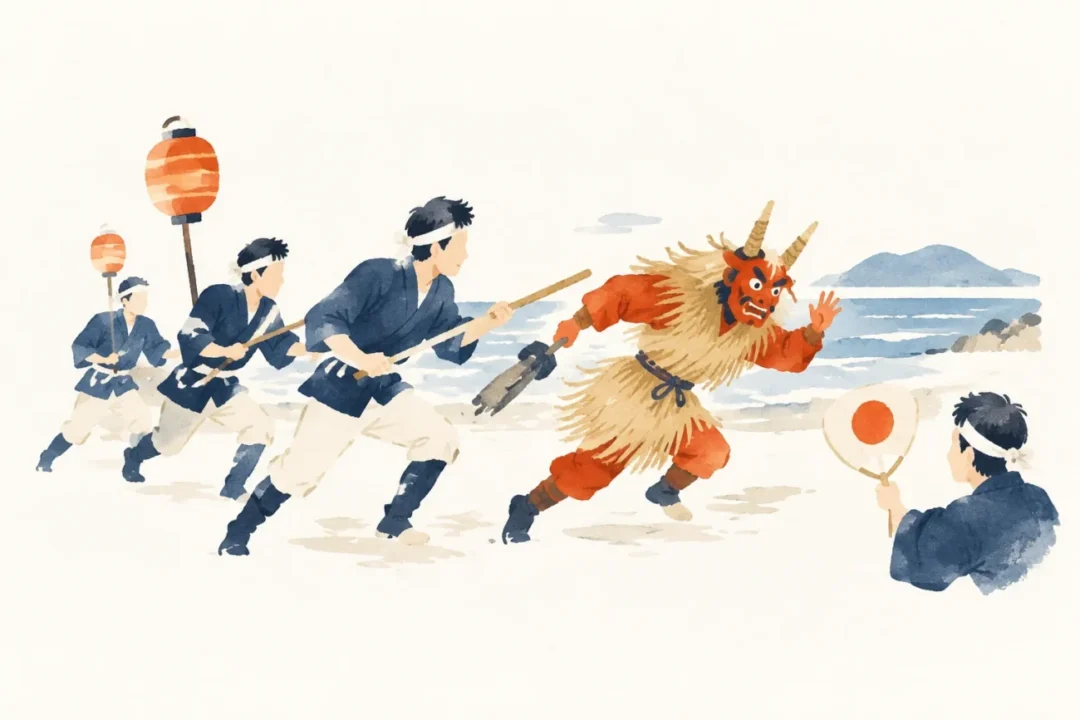
A highlight is seeing children dressed in straw raincoats and hats walk around the neighborhood, calling out “Wasshoi, wasshoi.”
At each home, residents pour water from buckets over the children, who represent kites, and give them a monetary offering in return.
The costumes of the visiting deities, the custom of visiting homes, and the exchange of pouring water come together in this distinctive New Year event of Kanenokuma.
A Kanenokuma visiting-deity event that welcomes good fortune in the New Year with water and chants
What to expect
The event begins with a gathering at Kanenokuma Community Center. Participants set off from Kannon Hall and visit homes throughout the neighborhood.
The older participants and children call out as they visit each house, where residents pour water over them.
After making a circuit of the neighborhood, they return to Kannon Hall to pay their respects once more, bringing the event to a close.
How to take part
The event centers on older participants and children who wear straw raincoats and hats and walk around the neighborhood.
In the past, the event was performed by boys in elementary and junior high school, but girls have also taken part in recent years.
The event involves visiting homes in the neighborhood; there is no information on whether general visitors can join the procession in the same way.
Location and access
- Venue and address
After gathering at Kanenokuma Community Center, participants in Kinekuma no Tobi no Mizu set off from Kannon Hall and visit homes throughout the neighborhood.
It is located at 1-15-1 Kanenokuma, Hakata Ward, Fukuoka City (Kinekuma Community Center).
Address 1-15-1 Kanenokuma, Hakata Ward, Fukuoka City (Kanenokuma Community Center)
Dates and season
It is usually held in the morning on the 2nd day of the New Year.
After gathering at the Kanenokuma Community Center, the group sets out from the Kannon-do Hall, goes around the neighborhood, and finally returns to the Kannon-do Hall to pray.
Accommodation and hotels PR
Showing nearby accommodation.
Prices and availability are current at the time of retrieval. For multi-night stays, only the first night’s price is shown. Confirm the final price and directions to the venue with the booking provider. Select your dates again when using the area search link. Search area: within 3 km of Central Fukuoka Prefecture / Fukuoka City (the search is not centered on the festival venue)
Tips for your visit
As the event involves visiting homes throughout the neighborhood, please be considerate of residents’ daily lives and follow local guidance and conditions when watching.
Since pouring water is part of the custom, your clothes or belongings may get wet if you watch near the event.
Please follow local instructions regarding specific viewing locations and access.
Nearby attractions
Nearby are the nationally designated historic site of the Kinekuma Site and the Kinekuma Site Jar Coffin Exhibition Hall, where visitors can see excavated jar coffins and other artifacts.
This cultural property is located in the same Kanenokuma area as Kinekuma no Tobi no Mizu, and offers a chance to learn about the region’s history alongside the event.
Please check the facility’s information before visiting for details on its opening status and viewing conditions.


Sumiyoshi Shrine
福岡県福岡市博多区住吉にある神社

博多ポートタワー
博多港にあるタワー

Ohori Park
福岡市中央区の公園
写真:Tzuhsun Hsu from Taipei, Taiwan / CC BY-SA 2.0
Photo source ·
志賀海神社
福岡県福岡市東区にある神社

海の中道海浜公園
福岡県福岡市東区にある国営公園

福岡アジア美術館
福岡市博多区にある美術館

福岡タワー
福岡市早良区の電波塔

福岡城
福岡市中央区にある城

福岡市動植物園
福岡市の動物園及び植物園

福岡市博物館
福岡市早良区にある博物館

福岡市美術館
福岡市中央区の大濠公園にある美術館
Origins and History of Kinekuma no Tobi no Mizu
One story about the event’s origins says that many children died in an epidemic, and that people began visiting homes to pray for children’s health and invite good fortune.
It is also said to be a prayer for protection from fire and misfortune.
In the past, people distributed half sheets of Japanese paper bearing a drawing of a “swift horse,” but this is no longer done.
Official information
Information about Kinekuma no Tobi no Mizu is available from Fukuoka City’s cultural properties service.
Information about the event, its location, and its preservation association is provided as part of its designation as a city Intangible Folk Cultural Property.
Kinekuma no Tobi no Mizu at a Glance
Kinekuma no Tobi no Mizu is a visiting-deity event held on the morning of January 2, when children wearing straw raincoats and hats visit homes throughout the neighborhood.
They set off from Kannon Hall with a chant, have water poured over them at each home, and finally return to the hall.
It is a Fukuoka City-designated Intangible Folk Cultural Property that carries on prayers for children’s health, good fortune, protection from fire, and protection from misfortune.
Japanese Festivals.jp Editorial Team
Celebrating local culture and helping you discover a side of Japan you never knew.
Article updated: 2026/10/19
Submit information or a correction Submit photos of this festival