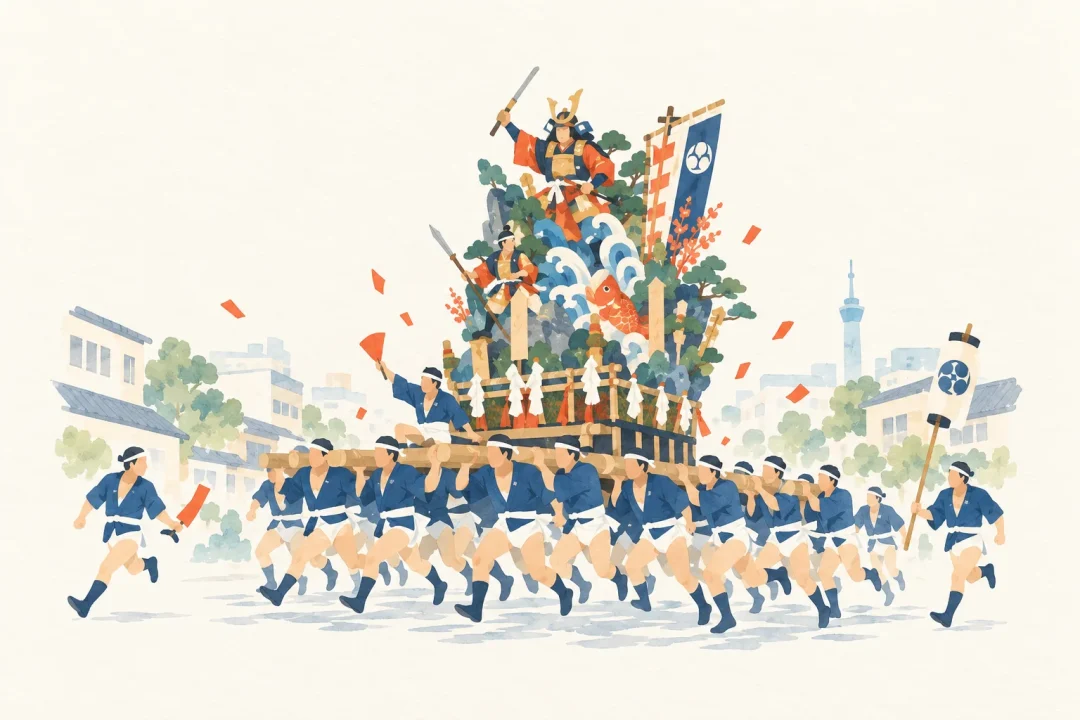
Mikoshi and traditional dances: the shinkō performances that live on in Shikanoshima
Performing Arts of the Shigaumi Shrine Shinkō Festival

Festival information
EVENT INFORMATION- Season / frequency
- The day before Sports Day in odd-numbered Gregorian years / Every other year (odd-numbered Gregorian years)
- Location
- Shigaumi Shrine and the temporary shrine by the beach
- Area
- Fukuoka Prefecture・Fukuoka City(From Tokyo: approx. 1 h 50 min–2 h 10 min · flight time only)Prefecture-level estimate to a main station or airport, not the venue. Airport access, check-in and onward travel are extra; remote areas and islands can take much longer.
- Features
- Highlights and activities
- Last updated
- 2026/10/19
The performing arts of the Shigaumi Shrine Shinkō Festival, handed down in Shikanoshima, Higashi Ward, Fukuoka City, are a traditional event in which the Dragon Dance, Yaotome Dance, and Kakko Dance are offered after the procession. The nighttime procession and traditional dances convey the origins of Shigaumi Shrine, which enshrines the deity of the sea.
About Performing Arts of the Shigaumi Shrine Shinkō Festival
The performing arts of the Shigaumi Shrine Shinkō Festival are traditional performances presented as part of the handed down in Shikanoshima, Higashi Ward, Fukuoka City.
When the mikoshi arrive at the temporary shrine (tongū), the Tongū Festival is held, followed by the Dragon Dance, Yaotome Dance, and Kakko Dance.
As an event that preserves the connection between ancient rituals and performing arts, it is deeply rooted in the faith of the local community.
Source: 国指定文化財等データベース
Festival highlights
The highlight is the three dances offered after the procession descends to the temporary shrine.
The Dragon Dance, in which the dragon head is held at chest height and the performer dances in sinuous movements to flute music, is followed by the miko dance performed by hereditary Yaotome, and the Kakko Dance, in which the performers wear kakko drums on their chests and dance while chanting.
Each has its own distinctive appearance and movements, showcasing the character of these traditional performing arts.
Source: 志賀海神社神幸行事 | 文化財情報検索 | 福岡市の文化財
Mikoshi and traditional dances: the shinkō performances that live on in Shikanoshima
What to expect
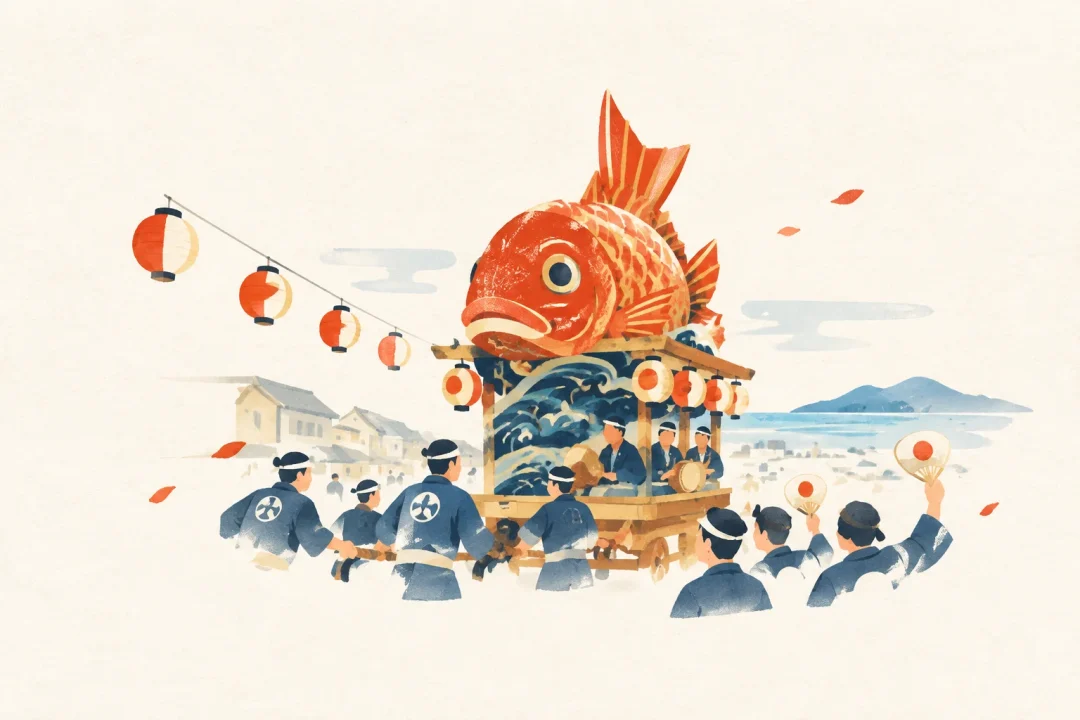
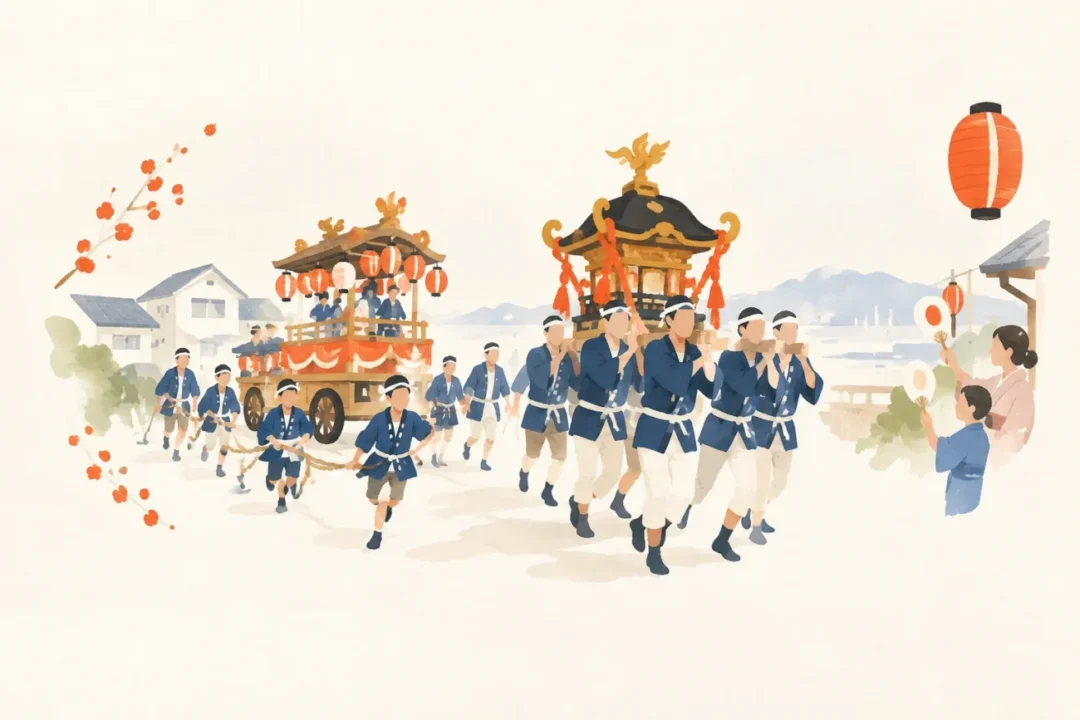
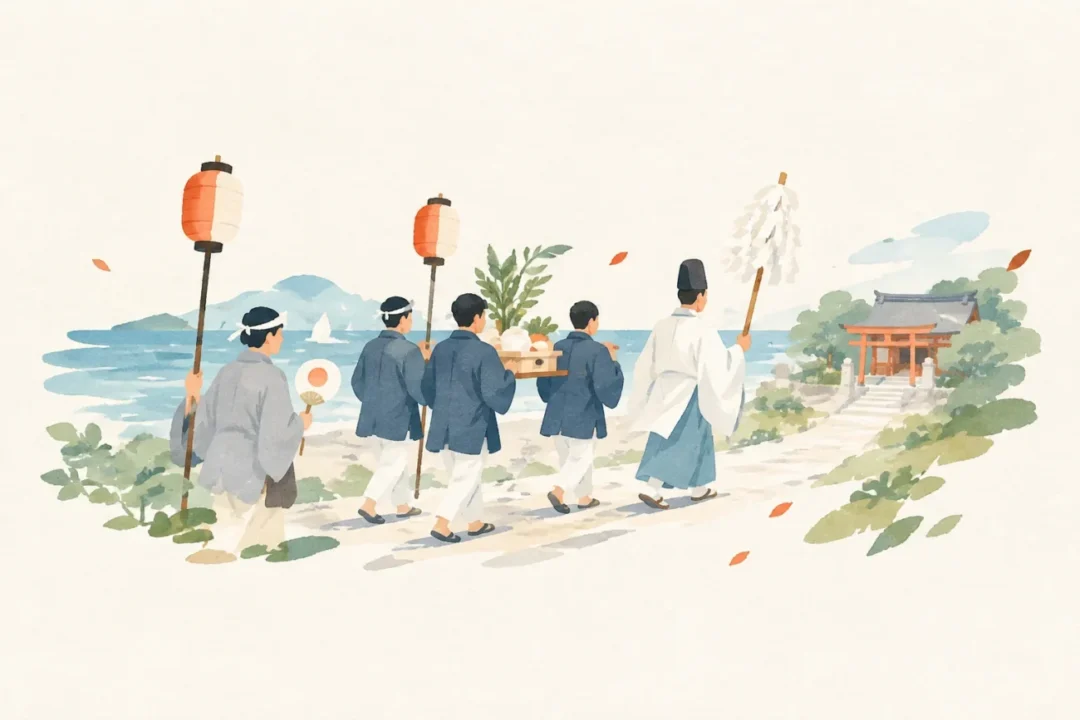
During the event, the three mikoshi are assembled in the heiden for a ceremony, then proceed to the temporary shrine by the beach accompanied by many attendants.
The mikoshi are enshrined at the temporary shrine. After the Tongū Festival, the Dragon Dance, Yaotome Dance, and Kakko Dance are offered.
After the performances, the mikoshi return to the shrine, and the series of events concludes with offerings the following day.
How to take part
The community works together to prepare for the shinkō procession. A sairyō, a role passed down through four families, oversees everything from preparation through completion.
Meanwhile, the dances and mikoshi service are performed by people assigned specific roles, including shrine attendants from each za and hereditary Yaotome.
Check the event information to find out whether members of the public may take part in serving the mikoshi or performing the arts.
Location and access
- Venue and address
Shigaumi Shrine (877 Shikanoshima, Higashi Ward, Fukuoka City, Fukuoka Prefecture) and the temporary shrine by the beach.
- Train and bus
From Saidosaki Station on the JR Kashii Line, take a bus for about 10 minutes to Shikanoshima, then walk about 10 minutes.
- Parking
Shigaumi Shrine has parking for 20–30 regular cars and 5 large vehicles.
Source: 志賀海神社 | 観光スポット | 【公式】福岡県の観光/旅行情報サイト「クロスロードふくおか」
Address 877 Shikanoshima, Higashi Ward, Fukuoka City, Fukuoka 811-0323
Dates and season
The shinkō procession is currently held on the day before Sports Day in odd-numbered Gregorian years.
The date of the procession according to the old lunar calendar is day 8 of lunar month 9. Information says that the three mikoshi assemble in the heiden at 9 p.m.
Accommodation and hotels PR
Showing nearby accommodation.
Prices and availability are current at the time of retrieval. For multi-night stays, only the first night’s price is shown. Confirm the final price and directions to the venue with the booking provider. Select your dates again when using the area search link. Search area: within 3 km of Central Fukuoka Prefecture / Fukuoka City (the search is not centered on the festival venue)
Tips for your visit
A distinctive feature of the shinkō procession is that the deity is transferred to and returned from its temporary shrine at night.
If you attend as a spectator, please follow the guidance of the shrine and event organizers so as not to obstruct the mikoshi procession or the performances.
As this is a nighttime event, it is a good idea to check the footing and your transportation options for the return trip in advance.
Nearby attractions
The venue, Shigaumi Shrine, is on Shikanoshima. Nearby are the Shikanoshima Manyō Poetry Monuments, Kin’in Park, and the Shikanoshima Visitor Center.
Shigaumi Shrine itself is described as a shrine to the sea deity, located at a key point for maritime traffic.
The island is home to the site where the gold seal was discovered and to Manyō poetry monuments, so you can explore Shikanoshima’s history and maritime beliefs along with the shrine.

Sumiyoshi Shrine
福岡県福岡市博多区住吉にある神社

博多ポートタワー
博多港にあるタワー

Ohori Park
福岡市中央区の公園
写真:Tzuhsun Hsu from Taipei, Taiwan / CC BY-SA 2.0
Photo source ·
志賀海神社
福岡県福岡市東区にある神社

海の中道海浜公園
福岡県福岡市東区にある国営公園

福岡アジア美術館
福岡市博多区にある美術館

福岡タワー
福岡市早良区の電波塔

福岡城
福岡市中央区にある城

福岡市動植物園
福岡市の動物園及び植物園

福岡市博物館
福岡市早良区にある博物館

福岡市美術館
福岡市中央区の大濠公園にある美術館
Origins and History of Performing Arts of the Shigaumi Shrine Shinkō Festival
The performing arts of the Shigaumi Shrine Shinkō Festival have been handed down as folk performances that concretely illustrate the relationship between ancient rituals and performing arts.
The Dragon Dance is described as a later adaptation of the original , and the dragon head bears an inscription dated Bunsei 10.
In 1972, the performances were selected as an “intangible folk cultural property for which measures such as documentation should be taken,” in recognition of their importance to the history of performing arts.
Official information
志賀海神社の公式ウェブサイトは、志賀海神社の公式ウェブサイト です。
Please check the event date and information for the day with the latest updates from the shrine.
Performing Arts of the Shigaumi Shrine Shinkō Festival at a Glance
The performing arts of the Shigaumi Shrine Shinkō Festival accompany the procession of the mikoshi to the temporary shrine by the beach, followed by offerings of the Dragon Dance, Yaotome Dance, and Kakko Dance.
Through the nighttime transfer of the deity and return procession, as well as these traditional performances, the event conveys the origins of Shigaumi Shrine and the faith of the local community.
This festival offers a chance to experience the culture and history of Shikanoshima, Higashi Ward, Fukuoka City, and is associated with an intangible folk cultural property.
Japanese Festivals.jp Editorial Team
Celebrating local culture and helping you discover a side of Japan you never knew.
Article updated: 2026/10/19
Submit information or a correction Submit photos of this festival