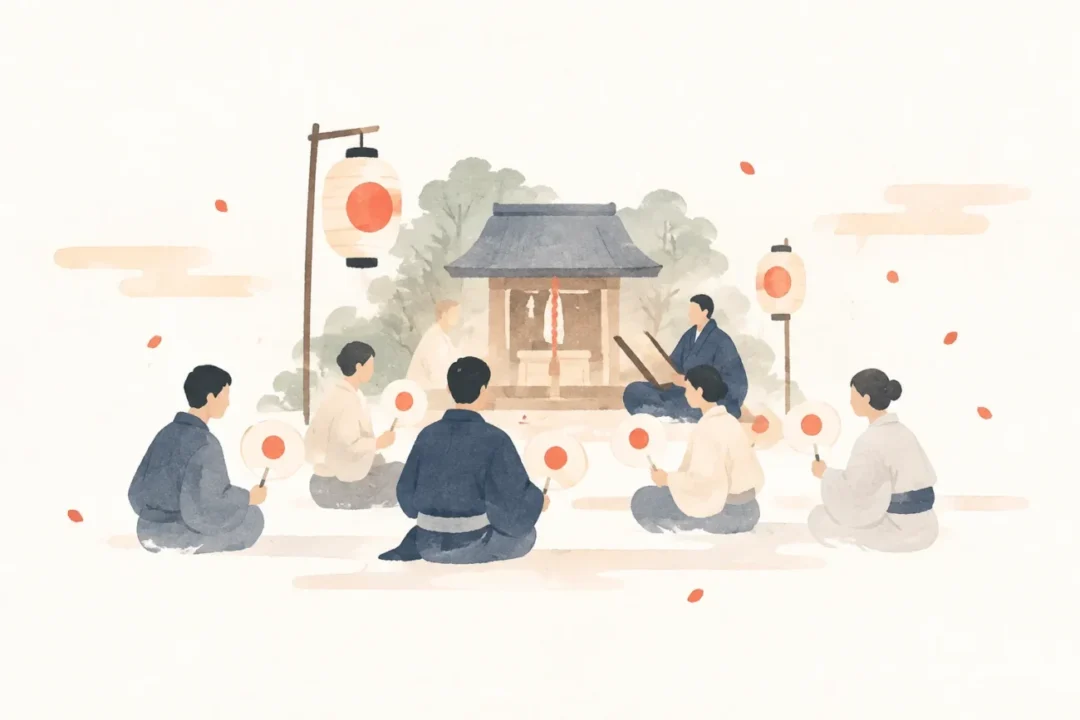
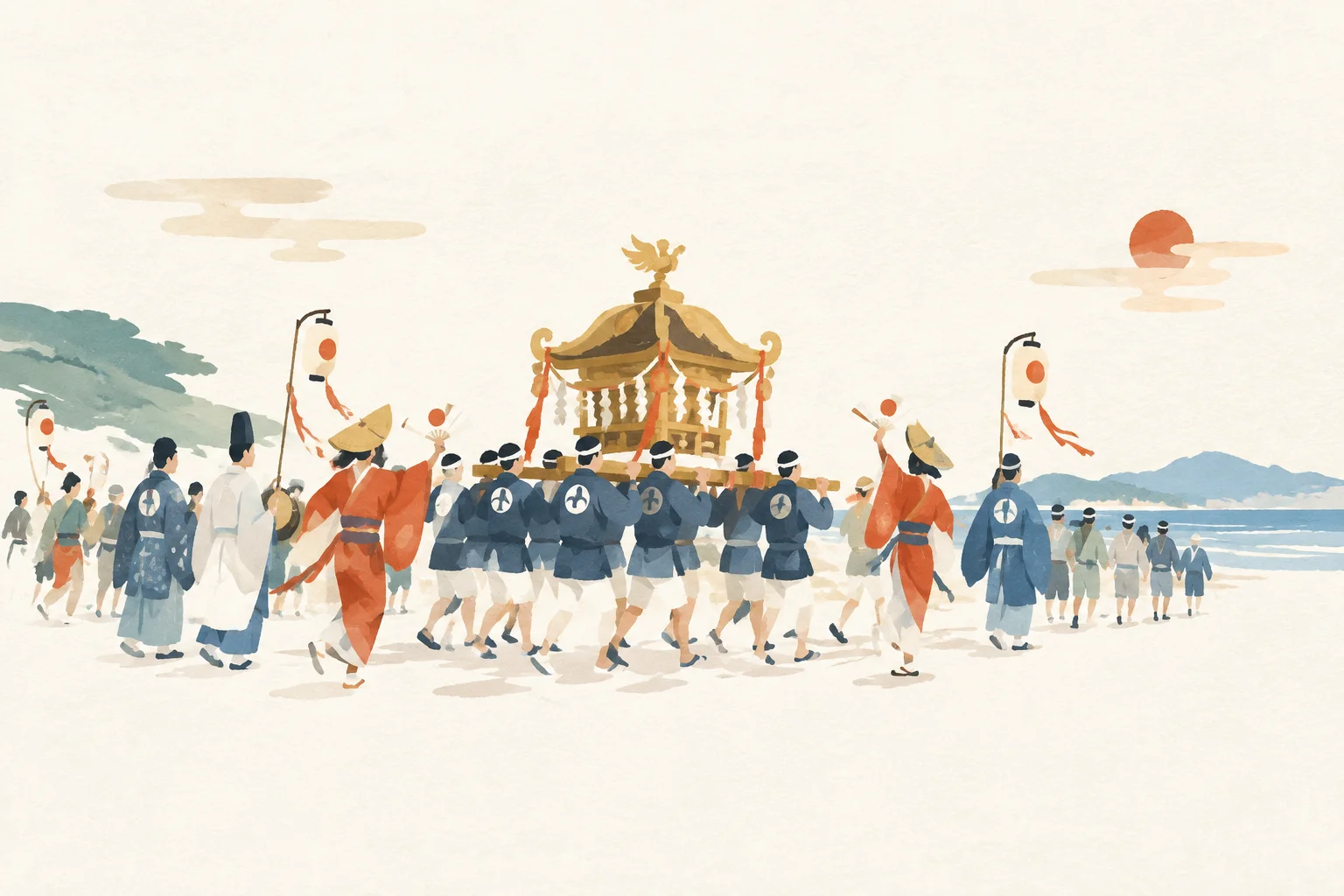
A procession held once every 72 years, with the eastern and western mikoshi heading for the coast
Kinasa Shrine Isode Grand Festival
Festival information
EVENT INFORMATION- Season / frequency
- Festival years: March 22–March 31 / Once every 72 years
- Location
- The procession route from Nishi-Kinasa Shrine and Higashi-Kinasa Shrine to Mizuki Beach in Hitachi City
- Area
- Ibaraki Prefecture・Hitachiota City, Hitachi City(From Tokyo: approx. 1 h 10 min–1 h 30 min · limited express)Prefecture-level estimate to a main station or airport, not the venue. Airport access, check-in and onward travel are extra; remote areas and islands can take much longer.
- Features
- Highlights and activities
- Wishes behind the festival
- Last updated
- 2026/10/19
At the Kinasa Shrine Isode Grand Festival, and grand processions set out from Higashi-Kinasa Shrine and Nishi-Kinasa Shrine, heading for Mizuki Beach in Hitachi City. With dances and processions in period costume, this festival held once every 72 years carries local prayers and traditions along a long route.
About Kinasa Shrine Isode Grand Festival
Photo credits and terms of use
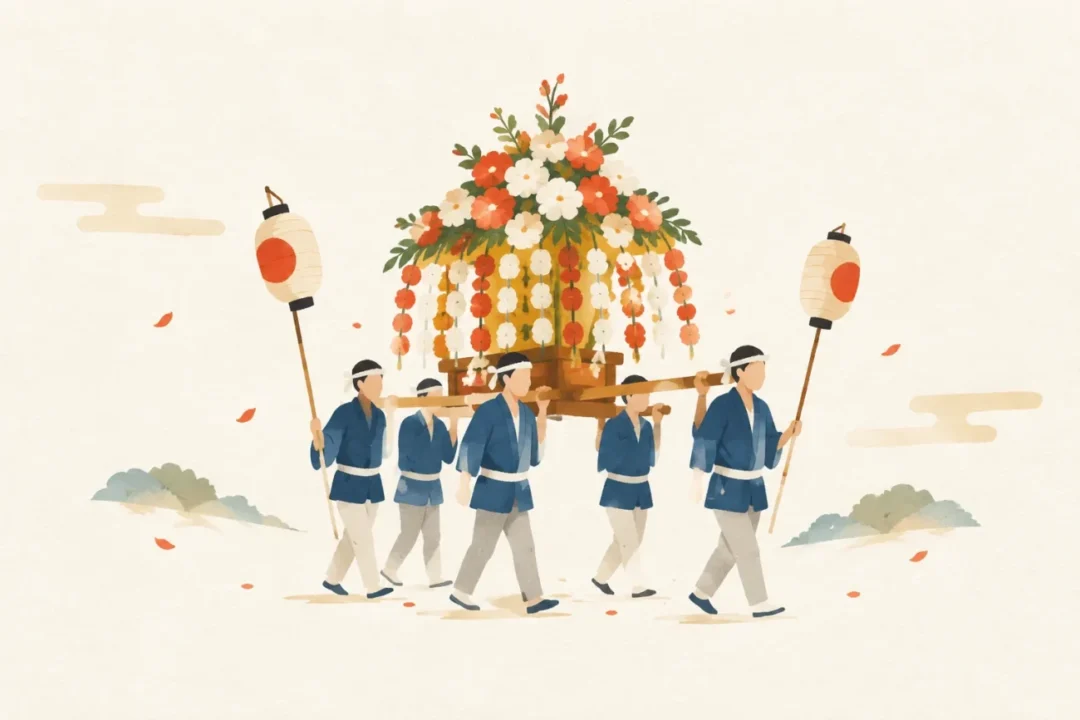
Photographer: Pksem File:十二町田んぼ 常陸太田市岡田町.jpg / Wikimedia Commons / CC BY-SA 4.0 Own work by the contributorDisplay size only adjusted.May differ from the event currently featured.The Kinasa Shrine Isode Grand Festival is a festival in which parishioners of Higashi-Kinasa Shrine and Nishi-Kinasa Shrine form processions with mikoshi and travel from both shrines to Mizuki Beach in Hitachi City.
At Mizuki Beach, rites are held in connection with the tradition that the deity of Kinasa appeared on the shore.
The procession follows a route of approximately 75–80 kilometers connecting Hitachiota City and Hitachi City, praying for peace throughout the realm and abundant harvests.
It is a major local festival associated with an Intangible Folk Cultural Property selected by the national government and an Intangible Folk Cultural Property designated by Ibaraki Prefecture.
Source: 金砂神社磯出大祭礼 - Wikipedia / 西金砂神社・磯出大祭礼:茨城県常陸太田市金砂郷|茨城県|常陸太田市
Festival highlights
The main highlight is the grand procession setting out from the eastern and western Kinasa shrines.
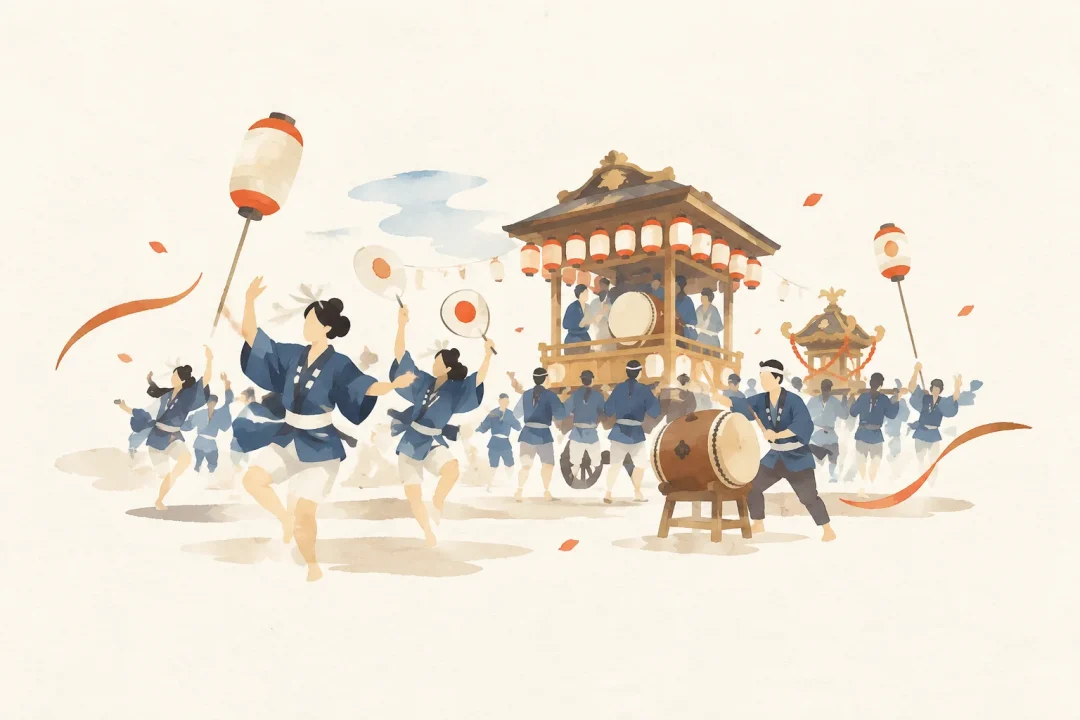
People dressed in costumes from periods such as the Heian and Edo periods join the procession, which travels with the mikoshi to various festival sites.
Along the procession route, dengaku dances associated with cultural properties selected by the national government and designated by the prefecture are performed as offerings, accompanied by Kinasa dengaku music.
At Mizuki Beach, a private rite connected with the Isode legend is held.
A procession held once every 72 years, with the eastern and western mikoshi heading for the coast
What to expect
At the festival, separate processions set out from Nishi-Kinasa Shrine and Higashi-Kinasa Shrine, passing through several festival sites on their way to Mizuki Beach.
The 2 processions do not set out on the same day: the Nishi-Kinasa Shrine procession departs first, and the Higashi-Kinasa Shrine procession sets out 3 days later.
Dengaku dances and other performances are offered along the route, and after rites are held at Mizuki Beach, the mikoshi and processions return to their shrines.
The full route is traditionally described as a long journey lasting approximately 1 week to 10 days.
Source: 【R8集中曝涼】東金砂神社 | 常陸太田市公式ホームページ
Location and access
- Venue and address
This is the procession route from Nishikane-suna Shrine and Higashikane-suna Shrine to Mizukihama in Hitachi City.
Nishikane-suna Shrine is at 1915 Kamimiyakochi-cho, Hitachiota City, and Higashikane-suna Shrine is at 9740 Amagano-cho, Hitachiota City.
On the Mizukihama side, information points to the area around Mizuki Beach in 1-chome, Mizuki-cho, Hitachi City.
水木浜の案内では、駐車場の情報が示されています。
- By car
You can drive to the gate at Nishikane-suna Shrine.
The approach to Higashikane-suna Shrine is narrow, so take care when driving there.
- Parking
Nishikane-suna Shrine has parking beside the torii gate.
Higashikane-suna Shrine and Mizuki Beach are listed as having parking.
Source: ヘルスロード指定一覧(日立市、高萩市、北茨城市)/茨城県
Address From 1915 Kamiyakawachi, Hitachiota City (Nishi-Kinasa Shrine), via 9740 Tenku, Hitachiota City (Higashi-Kinasa Shrine), to 1-chome Mizuki, Hitachi City (Mizuki Beach)
Dates and season
- Season
Festival years: March 22–March 31
- Frequency
Once every 72 years
Tips for your visit
The procession travels a long distance, so start times and passage times vary depending on where you watch.
At Nishikane-suna Shrine, steep stairs lead from the torii gate to the , and the final flight of stairs leading to the is described as particularly steep.
The approach to Higashikane-suna Shrine is narrow, so take care when driving there.
Check the information issued for the event for details on traffic restrictions and temporary parking during the festival.
Nearby attractions
Nishi-Kinasa Shrine, one of the festival’s starting points, stands on the summit of Nishi-Kinasa Mountain. The mountain area is home to notable trees, including old cedars, a large ginkgo, and a large sawara cypress.
Nishi-Kinasa Mountain is 418 meters high, and the views from its summit and its natural environment are also featured.
On the Mizuki Beach side, a Mizuki Beach course starting at Mizuki Beach is listed, where you can walk while looking out over the open sea.
You can explore shrines and coastal areas connected to the festival route through both the region’s history and its natural surroundings.
Origins and History of Kinasa Shrine Isode Grand Festival
The festival is said to date back to ancient times and is linked to the account of the deity of Kinasa appearing at Mizuki Beach, as well as a legend that the deity arrived at Mizuki Beach by sea and traveled upriver toward Mount Kinasa.
However, there are differing theories about its origins.
According to historical records, the 1st festival was held in 851, and Kinasa dengaku is said to have begun around 1139.
In recent years, the 17th festival was held in 2003. It has been passed down as a festival held once every 72 years.
Official information
The official Hitachiota City website has information about the “Kinasa Shrine Festival.”
The city’s cultural and tourism guide introduces the Arashi-yoke Festival, the Machida Fire Brigade Procession, the Nishi-Kinasa Shrine Small Festival, and the Grand Festival as related events.
You can also consult information from the Hitachiota City Board of Education about the history of Higashi-Kinasa Shrine, the Isode Grand Festival route, and cultural properties.
Source: 金砂神社の祭礼 | 常陸太田市公式ホームページ
Kinasa Shrine Isode Grand Festival at a Glance
The Kinasa Shrine Isode Grand Festival is a large-scale festival held once every 72 years, in which mikoshi and processions travel from Higashi-Kinasa Shrine and Nishi-Kinasa Shrine to Mizuki Beach.
Along the long procession route, you can see processions in period costume and dengaku dances. The rites are connected with prayers for peace throughout the realm and abundant harvests.
The next festival after the 17th, held in 2003, is listed as taking place in 2075; there is no schedule for a 2026 event.
Japanese Festivals.jp Editorial Team
Celebrating local culture and helping you discover a side of Japan you never knew.
Article updated: 2026/10/19
Submit information or a correction Submit photos of this festival