Rokuji-sama: carrying flower decorations through the settlement and preserving prayers for protection from epidemics
Rokuji-sama
Festival information
EVENT INFORMATION- Season / frequency
- It is held for 18 days beginning on day 1 of lunar month 7, around the Bon period. Today, many districts hold it on a holiday close to the traditional date, in the lunar-calendar equivalent of August. / Annual event
- Location
- Maeya and Ōgai settlements, Kobune area, Ogawa region
- Area
- Ibaraki Prefecture・Hitachiōmiya City(From Tokyo: approx. 1 h 10 min–1 h 30 min · limited express)Prefecture-level estimate to a main station or airport, not the venue. Airport access, check-in and onward travel are extra; remote areas and islands can take much longer.
- Features
- Highlights and activities
- Wishes behind the festival
- Last updated
- 2026/10/19
Rokuji-sama, passed down in the Kobune area of Hitachiōmiya City, is an annual event in which people carry flower-decorated ornaments through the settlement and pray for protection from epidemics. Rokuji-sama, jointly held by the Maeya and Ōgai settlements, is designated an Intangible Folk Cultural Property of the city.
About Rokuji-sama
Rokuji-sama is an annual event in the Hitachiōmiya City area, named after the six-character sacred name “Namu Amida Butsu.”
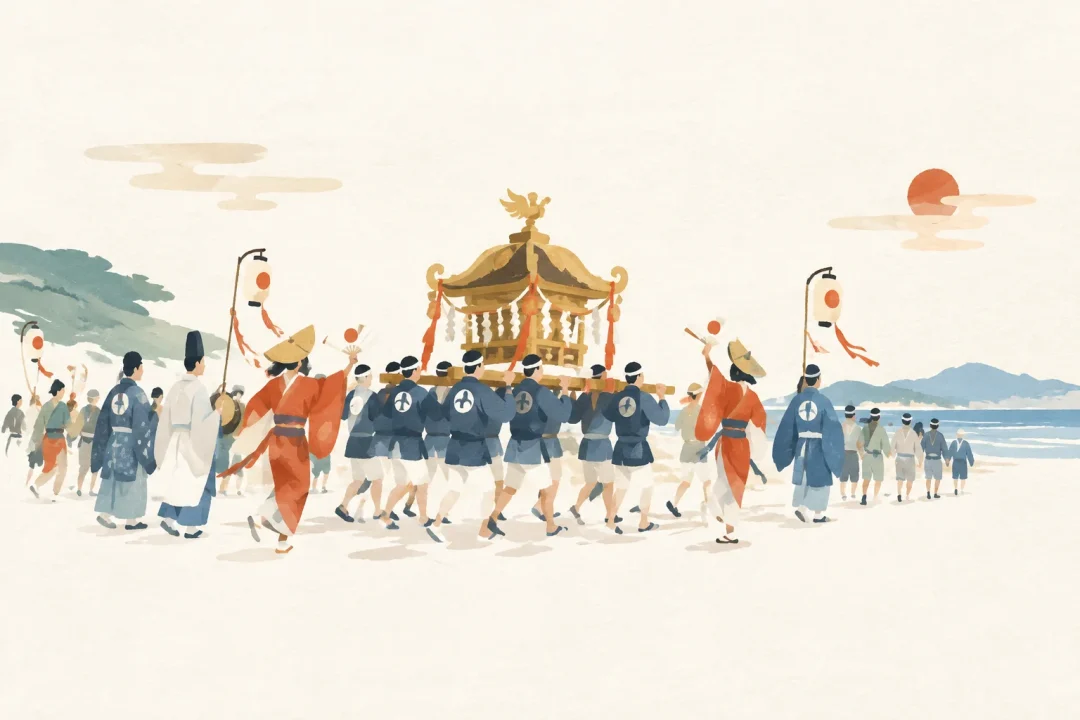
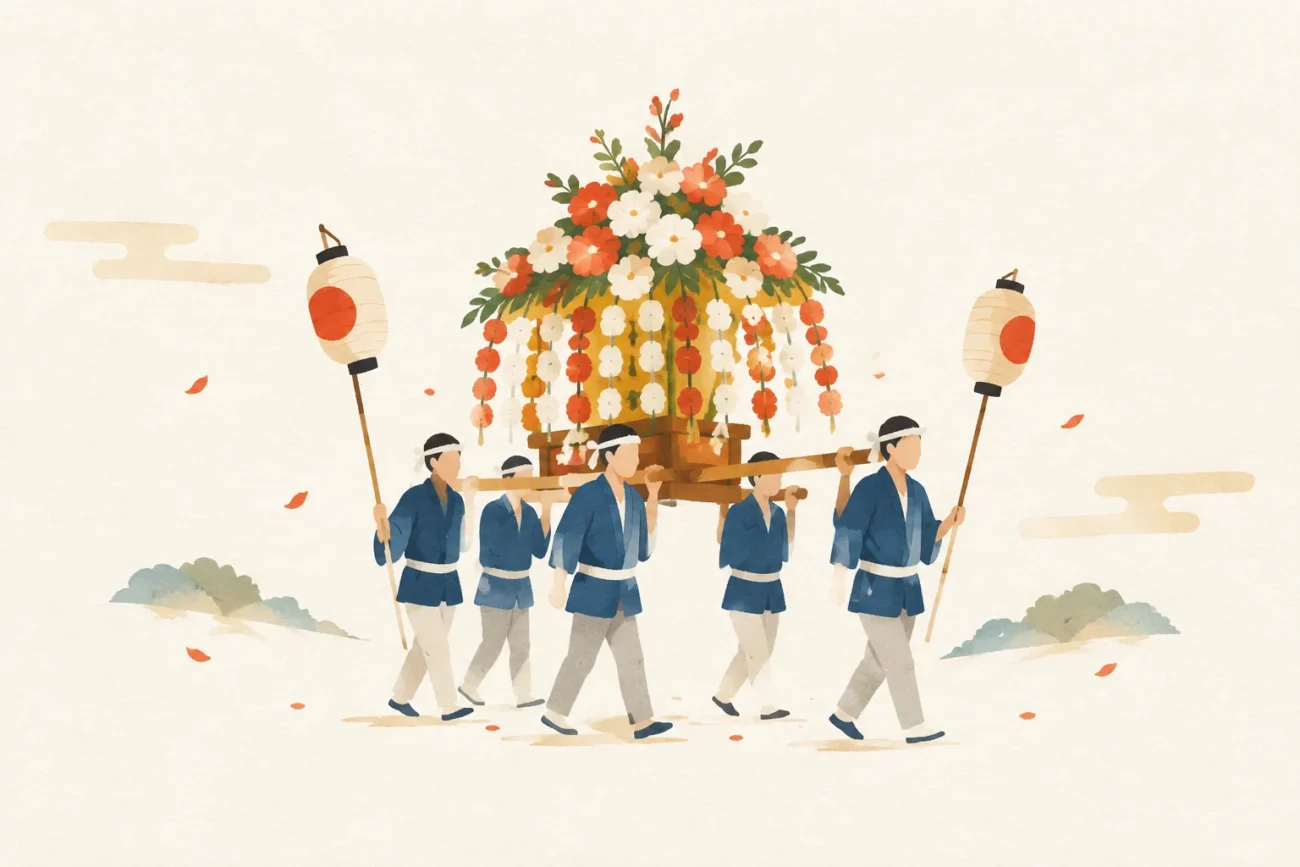
People decorate lanterns bearing the sacred name and a banner displaying the Sanskrit character for Amida Buddha with flowers, then carry them through the settlement while praying for protection from epidemics.
The event jointly held by the Maeya and Ōgai settlements in the Kobune area is designated an Intangible Folk Cultural Property of the city.
Source: 六字様 - 常陸大宮市ふるさと文化で人と地域を元気にする事業
Festival highlights
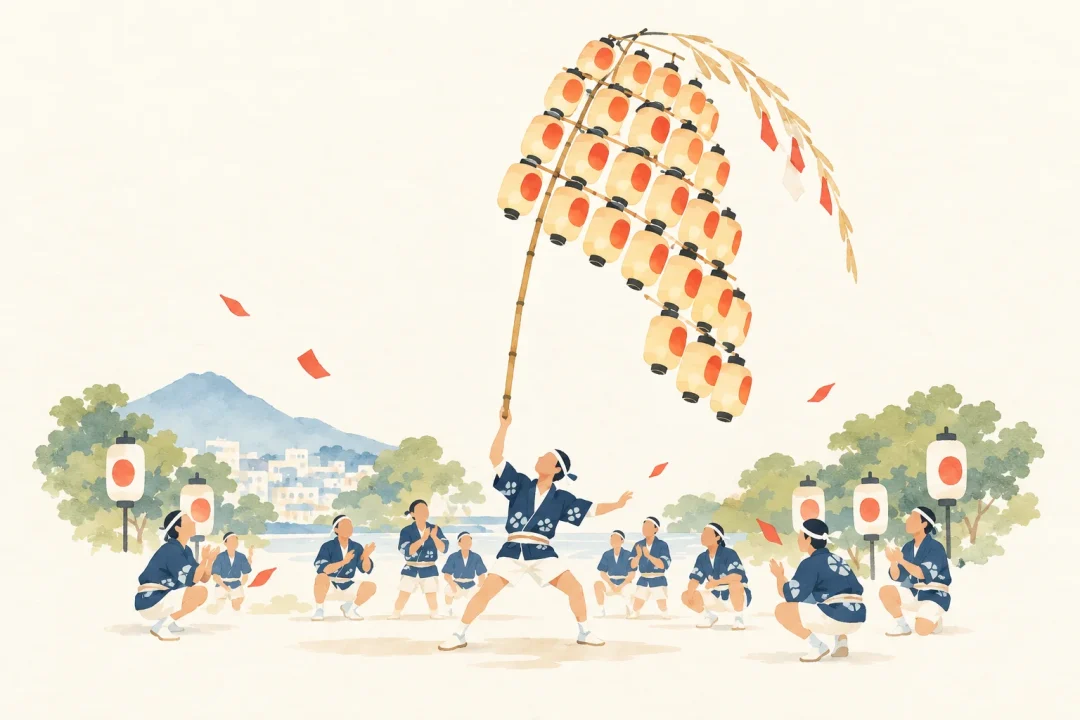
Highlights include shinai and horo flower decorations adorned with cherry blossoms made of paper and attached to split bamboo.
After preparing the flower decorations and talismans, the procession walks from house to house through the settlement.
In the evening, local residents pay their respects to the flower decorations set up in the yard of the yado, and the village procession carrying the decorations is at the heart of the event.
Rokuji-sama: carrying flower decorations through the settlement and preserving prayers for protection from epidemics
What to expect
During the event, people first make flower decorations and talismans. Then a procession carrying the flower decorations makes its way through the settlement.
Today, the procession takes place in Kobune-Maeya, Ōgai, and Ōiwa, with light trucks used for transport.
In the evening, local residents pay their respects to the flower decorations set up in the yard of the yado, bringing the event to a close as a local religious observance.
Location and access
- Venue and address
It is held in the Maeya and Ōgai settlements of the Kobune area in the Ogawa region of Hitachiōmiya City.
This is not held at a single venue; it is an event that travels through the settlement.
Event venue 茨城県常陸大宮市 緒川地域小舟地区の前屋集落
This map uses the venue name. Check the official guide for the event area and entrances.
Dates and season
- Season
For 18 days beginning on day 1 of lunar month 7, around the Bon period.
Today, many districts hold it on a holiday close to the traditional date, in the lunar-calendar equivalent of August.
- Frequency
Annual event
Accommodation and hotels PR
Showing nearby accommodation.
Prices and availability are current at the time of retrieval. For multi-night stays, only the first night’s price is shown. Confirm the final price and directions to the venue with the booking provider. Select your dates again when using the area search link. Search area: within 3 km of Central Ibaraki Prefecture / Hitachiōmiya City (the search is not centered on the festival venue)
Tips for your visit
Rokuji-sama is a local religious observance in which people travel through the settlement with flower decorations.
If you attend, please respect local customs and watch quietly so as not to disturb residents at prayer or interfere with the event.
The event takes place across an area within the settlement rather than at a facility, so please check the location and arrangements for visitors before going.
Origins and History of Rokuji-sama
No historical records detailing the origins of Rokuji-sama have been found. However, in Maeya and Ōgai in Kobune, it is said to have begun after an epidemic spread through the area.
An inscription on a Myōgōtō dates to Hōreki 10 (1760), and one on a Hyakudō Nenbutsu Kuyōtō dates to Kansei 5 (1793), suggesting that the event was held by the middle to late Edo period.
Myōgōtō and Nenbutsu towers in various places also preserve the event’s history.
Official information
The “Rokuji-sama” page of Hitachiōmiya City’s Furusato Culture project, which aims to revitalize people and communities, introduces the event’s meaning, timing, flower decorations, procession through the village, and historical background.
Rokuji-sama, held in the Maeya and Ōgai settlements of the Kobune area, is recognized as an Intangible Folk Cultural Property of the city.
Rokuji-sama at a Glance
Rokuji-sama is an event praying for protection from epidemics, passed down in the Maeya and Ōgai settlements of the Kobune area in Hitachiōmiya City.
People make shinai and horo adorned with cherry blossoms, then carry the flower decorations through the settlement in a village procession and gather for evening prayers.
Thought to have begun in the middle to late Edo period, it continues to convey the area’s faith and culture today.
Japanese Festivals.jp Editorial Team
Celebrating local culture and helping you discover a side of Japan you never knew.
Article updated: 2026/10/19
Submit information or a correction Submit photos of this festival