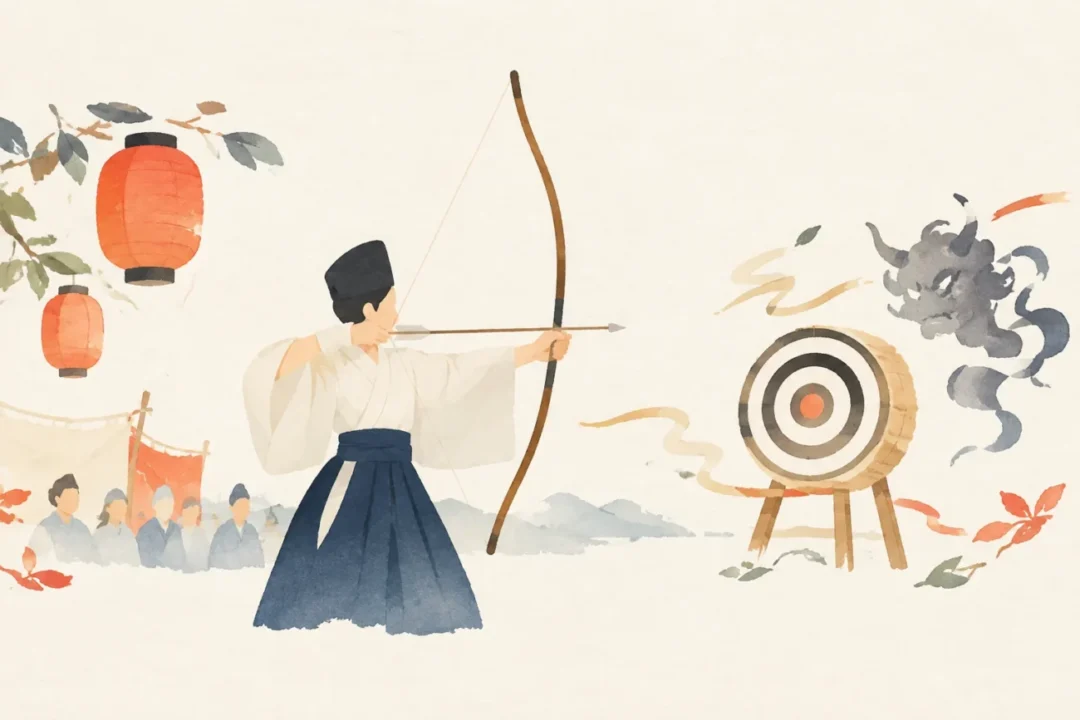
A ritual in Saijo Town, passed down through the sound of the bow and kagura songs
Shinkyusai
Festival information
EVENT INFORMATION- Location
- The inner room of the hosting household
- Area
- Hiroshima Prefecture・Shobara City(From Tokyo: approx. 3 h 50 min–4 h 20 min · bullet train)Prefecture-level estimate to a main station or airport, not the venue. Airport access, check-in and onward travel are extra; remote areas and islands can take much longer.
- Highlights and activities
- Last updated
- 2026/11/21
The Shinkyusai, passed down in Saijo Town, Shobara City, is a folk performing art in which the bowstring is sounded and ritual texts and songs are performed. It consists of 3 scenes: welcoming, entertaining, and seeing off the gods.
About Shinkyusai
The Shinkyusai is a bow ritual passed down in Saijo Town, Shobara City, Hiroshima Prefecture.
The bowstring is struck to sound it as a ritual text is recited and kagura songs are sung to welcome, entertain, and see off the gods.
It was once passed down in 5 districts of Nuka County: Yawata, Onuka, Saijo, Mikoto, and Yahoko, but today it remains in Saijo Town.
Festival highlights
Highlights include the bow platform set up in front of the altar and the action of striking the bow to sound it.
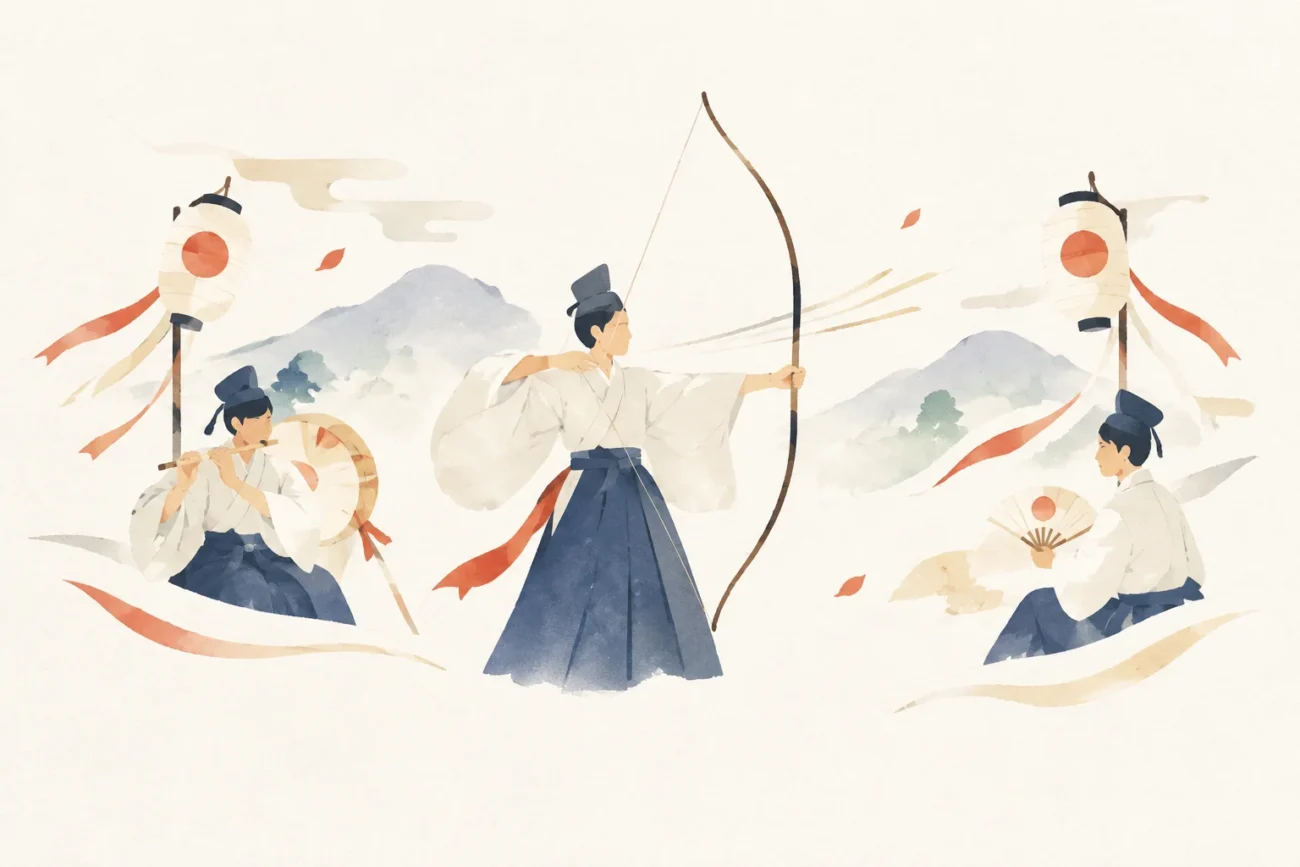
The chief officiant recites a ritual text while sounding the bow with two uchi-dake sticks, and the participants in the music section sing the sacred song in unison, accompanied by , flute, and clapping.
Research reports also describe how many instruments are played energetically when welcoming and seeing off the gods, while the scene in which wishes are conveyed features fewer instruments and a more monotonous vocal tone.
A ritual in Saijo Town, passed down through the sound of the bow and kagura songs
What to expect
The ritual space is set up in the inner room of the hosting household. A shrine is arranged and decorated with , and a masu measure is placed at the center of the altar.
A yusuriwa is placed in front of it, and a bow is tied to it to form the bow platform.
The Shinkyusai consists of 3 parts: welcoming the gods, entertaining them, and seeing them off. It unfolds through ritual texts, kagura songs, and the sounds of the bow and musical instruments.
Location and access
- Venue and address
Saijo Town, Shobara City (the ritual is held in the inner room of the hosting household)
Event venue 広島県庄原市 当屋の奥の間
This map uses the venue name. Check the official guide for the event area and entrances.
Origins and History of Shinkyusai
The Shinkyusai was once called “Yumi -shiki” or “Meigen Shinji-shiki,” and was also colloquially known as “having the bow laid down for you.”
It was once passed down in 5 districts of Nuka County: Yawata, Onuka, Saijo, Mikoto, and Yahoko, but today it remains in Saijo Town.
This folk performing art, in which the bowstring is sounded and ritual texts and kagura songs are performed, was once practiced throughout Bingo Province and is now considered a rare tradition preserved in places including the Saijo area.
Shinkyusai at a Glance
The Shinkyusai is a bow ritual preserved in Saijo Town, Shobara City. The bowstring is struck to sound it as a ritual text is recited and kagura songs are sung to welcome, entertain, and see off the gods.
The ritual space is furnished with a shrine, a divine seat, and a bow platform, and is accompanied by taiko, flute, and clapping.
With a history of being passed down in 5 districts of Nuka County, this event keeps alive a folk performing art featuring ritual texts and music performed with a bow.
Sources and references
Accommodation and hotels PR
Showing nearby accommodation.
Prices and availability are current at the time of retrieval. For multi-night stays, only the first night’s price is shown. Confirm the final price and directions to the venue with the booking provider. Select your dates again when using the area search link. Search area: within 3 km of Central Hiroshima Prefecture / Shobara City (the search is not centered on the festival venue)
Japanese Festivals.jp Editorial Team
Celebrating local culture and helping you discover a side of Japan you never knew.
Article updated: 2026/11/21