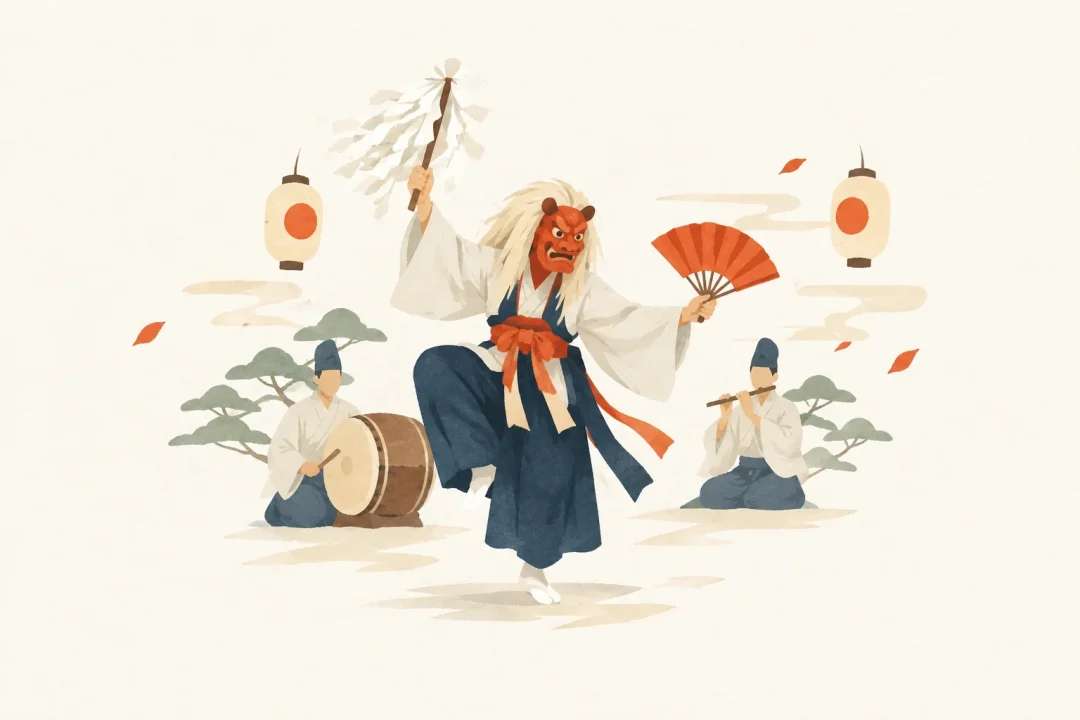
Shobara’s autumn festival, with drums and flutes and schoolchildren dancing as warriors
Nishihara Hachiman Shrine Shingi
Festival information
EVENT INFORMATION- Season / frequency
- Last Sunday of September / 1 time per year
- Location
- Nishihara Hachiman Shrine
- Area
- Hiroshima Prefecture・Shobara City(From Tokyo: approx. 3 h 50 min–4 h 20 min · bullet train)Prefecture-level estimate to a main station or airport, not the venue. Airport access, check-in and onward travel are extra; remote areas and islands can take much longer.
- Highlights and activities
- Last updated
- 2026/10/23
The Nishihara Hachiman Shrine Shingi is a municipal-designated intangible folk cultural property passed down in Itabashi-cho, Shobara City. At the autumn , a procession with drums, bells, flutes, and clapping is performed, along with dances by schoolchildren dressed as warriors.
About Nishihara Hachiman Shrine Shingi
The Nishihara Hachiman Shrine Shingi is an intangible folk cultural property passed down at Nishihara Hachiman Shrine in Itabashi-cho, Shobara City.
It is held each year at the autumn reisai as a festive event accompanying the shin’ko procession, with a procession formed by drums, bells, flutes, and clapping.
The event is carried on in the community, passing down the parishioners’ division of roles and traditional forms.
Source: 民俗文化財 | 広島県庄原市のホームページへようこそ
Festival highlights
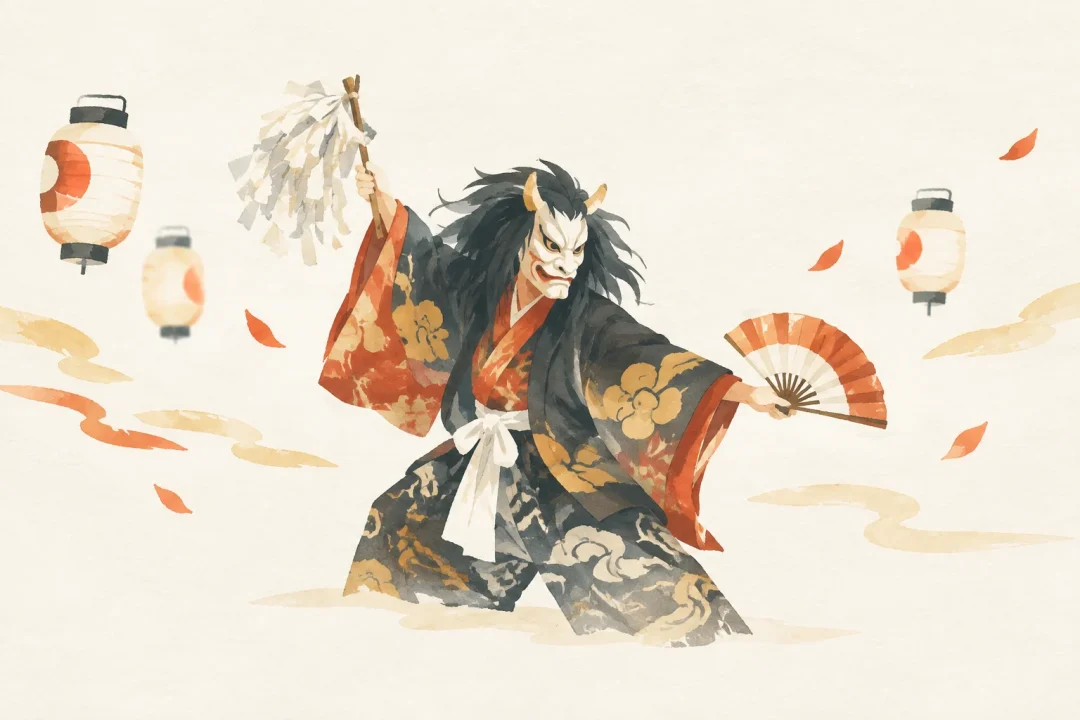
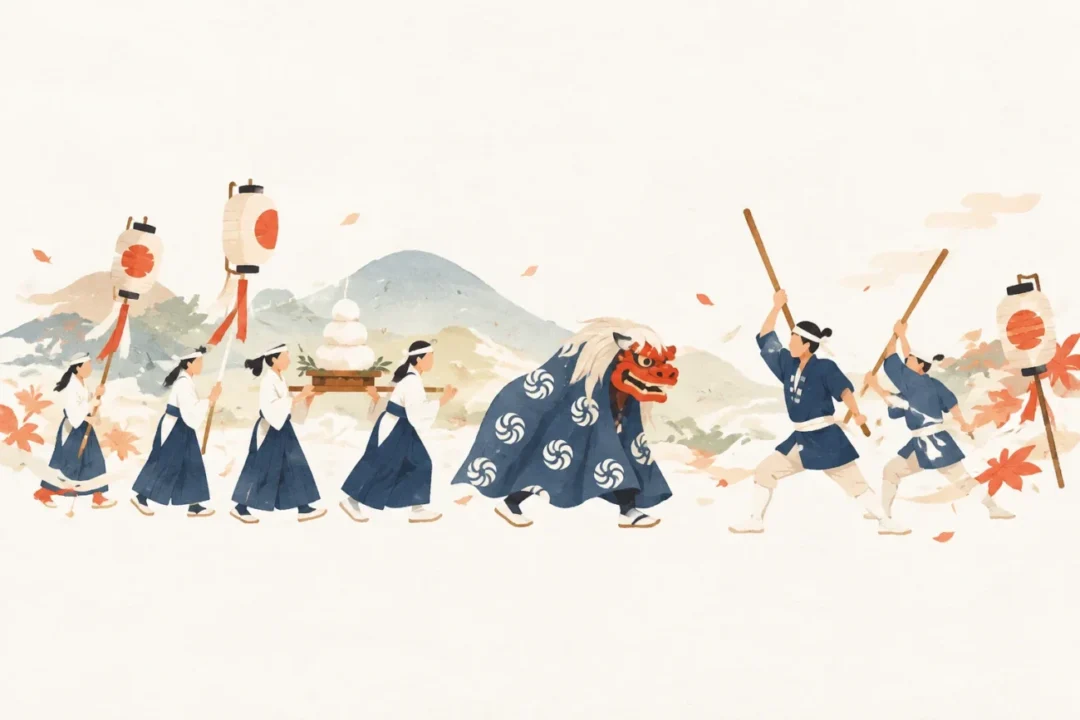
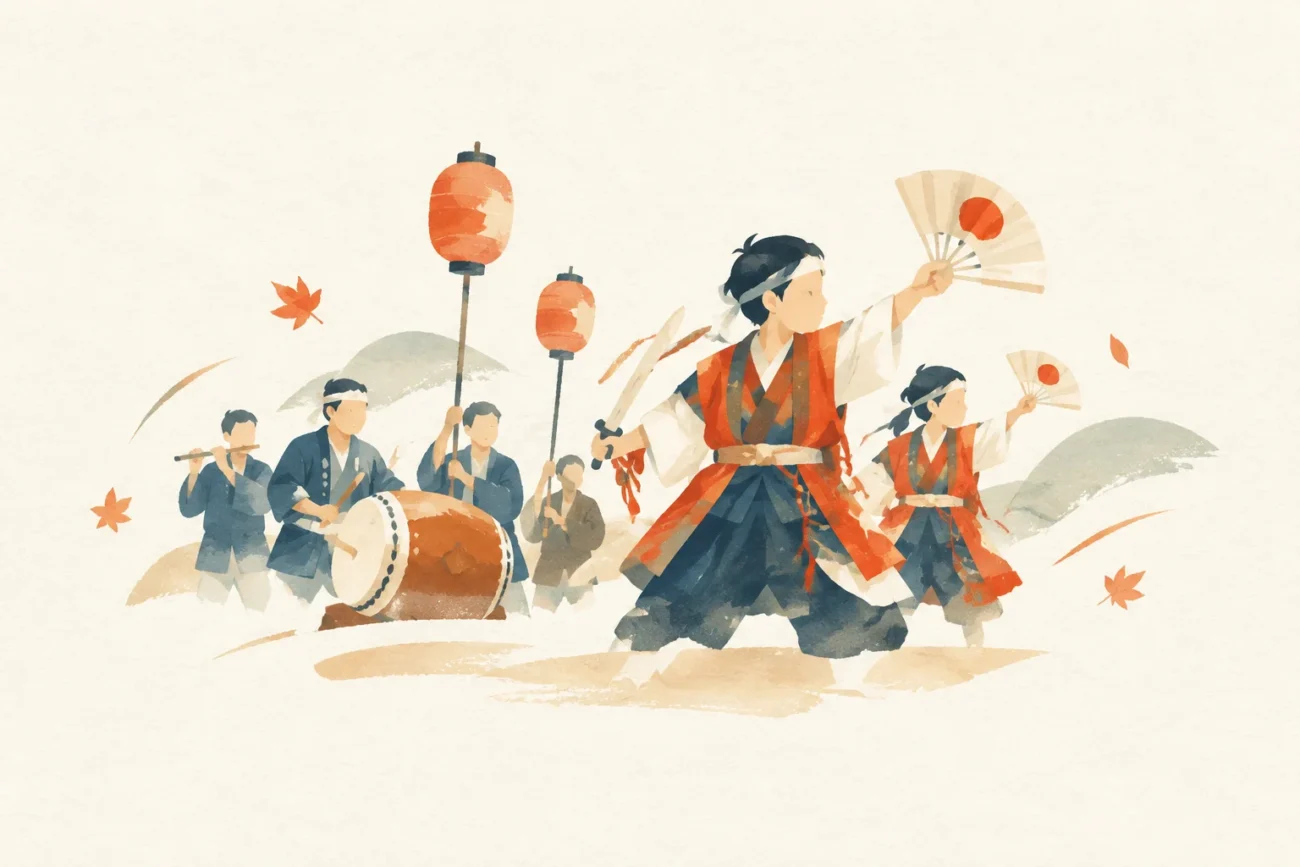
Highlights include a procession in which drums, clapping, bells, and flutes proceed in order, and scenes of schoolchildren dressed as warriors dancing.
The young men wear montsuki haori and wave ritual batons, while the schoolchildren wear items such as helmet-shaped headgear, conical hats, colorful silk cloth, and straw sandals.
The performance is characterized by varied, vigorous movements in time with the young men’s calls and baton-waving.
Shobara’s autumn festival, with drums and flutes and schoolchildren dancing as warriors
What to expect
For the event, parishioners are assigned roles carrying the drums and bells, while the young men and schoolchildren each take on their respective roles.
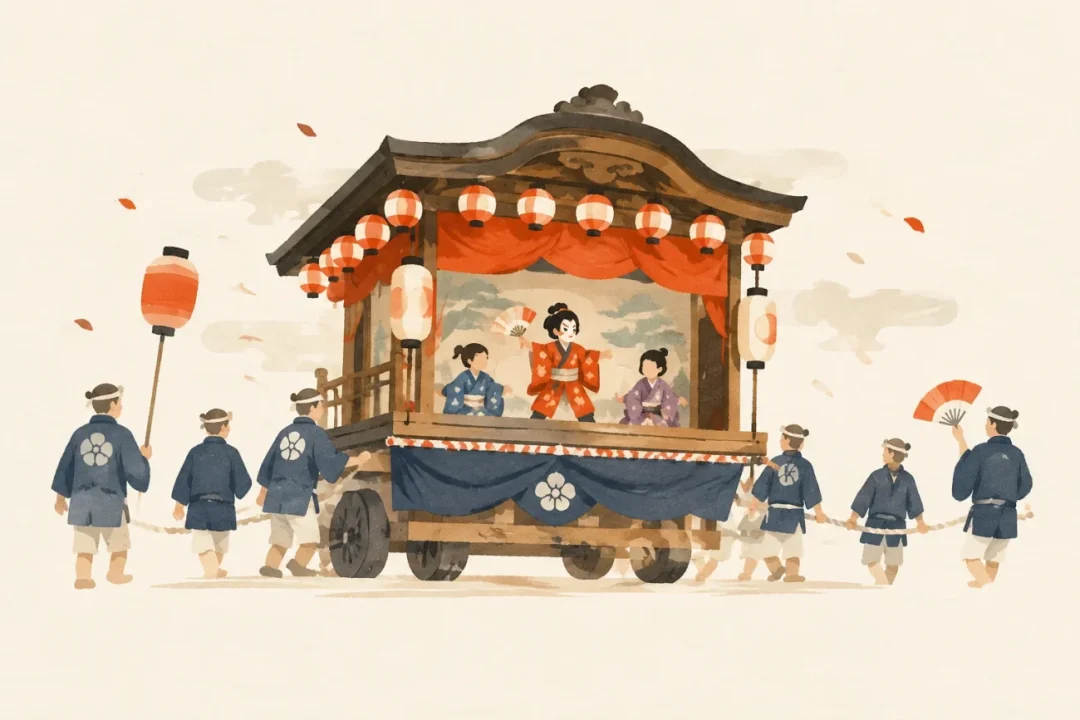
The procession forms in the order of drums, clapping, bells, and flutes, while the schoolchildren dance to the young men’s calls and baton-waving.
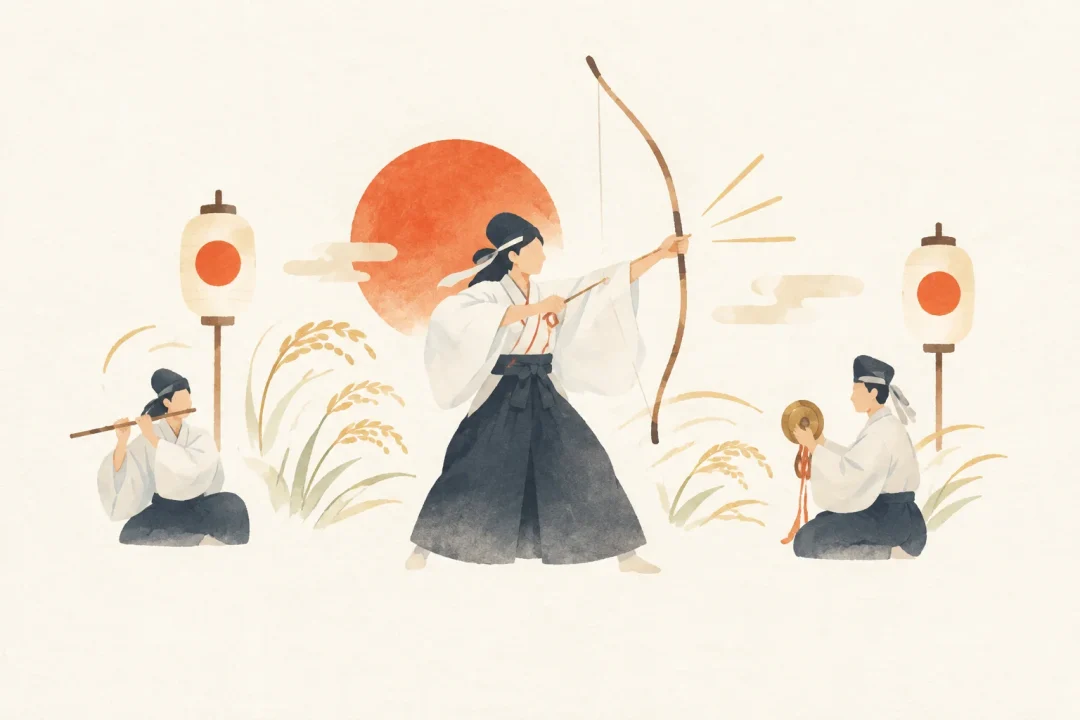
The section features 2 young men playing shime-ondo, while 12 schoolchildren split into left and right wings to strike 6 shells.
Location and access
- Venue and address
Nishihara Hachiman Shrine (Itabashi-cho, Shobara City)
Address Itabashi-cho, Shobara City
Dates and season
- Season
Last Sunday of September
- Frequency
1 time per year
Accommodation and hotels PR
Showing nearby accommodation.
Prices and availability are current at the time of retrieval. For multi-night stays, only the first night’s price is shown. Confirm the final price and directions to the venue with the booking provider. Select your dates again when using the area search link. Search area: within 3 km of Central Hiroshima Prefecture / Shobara City (the search is not centered on the festival venue)
Origins and History of Nishihara Hachiman Shrine Shingi
The Nishihara Hachiman Shrine Shingi preserves an account that it was founded in Tensho 11 by Taga Goro Michitoshi, lord of Yamauchi Castle.
It is said to have begun in the mid-Edo period, gradually taking shape over the years before being passed down to the present day.
It rigorously preserves traditional forms as a festive event accompanying the shin’ko procession, and is recognized for its value as a folk performing art.
Official information
Municipal-designated intangible folk cultural property listed on Shobara City’s official website under “Folk Cultural Properties”
Nishihara Hachiman Shrine Shingi at a Glance
The Nishihara Hachiman Shrine Shingi is a municipal-designated intangible folk cultural property performed at the autumn reisai in Itabashi-cho, Shobara City.
Parishioners support the procession of drums, clapping, bells, and flutes, while schoolchildren dressed as warriors dance to the young men’s waving of ritual batons and calls.
The event preserves an account of its founding in Tensho 11 and is said to have taken shape from the mid-Edo period onward before being passed down to the present day.
Japanese Festivals.jp Editorial Team
Celebrating local culture and helping you discover a side of Japan you never knew.
Article updated: 2026/10/23
Submit information or a correction Submit photos of this festival