We found these festivals, too! 5 December festivals praying for a good harvest

Looking for festivals in December with clues such as new rice, rice ears, and gratitude for the harvest will reveal a remarkable variety of local prayers. There is no single way to pray for a good harvest: customs range from offering food at the household kamidana to smearing white shitogi on faces and laughing together in a .
This article introduces five events held in December on the theme of good harvests and an abundant harvest of the five grains. Looking at the meaning of the shinji and its ties to ways of life passed down through generations reveals not only the colorful performances, but also the region’s work and food culture.
You’re sure to find an event that catches your interest, even if you’re looking for a festival that’s a little different.
Shogatsu-zakana (Nishiizu Town, Shizuoka Prefecture)
- Dates
- 2026/12/01 〜 2026/12/31
- Season / frequency
- New Year
- Area
- Shizuoka Prefecture・Nishiizu Town
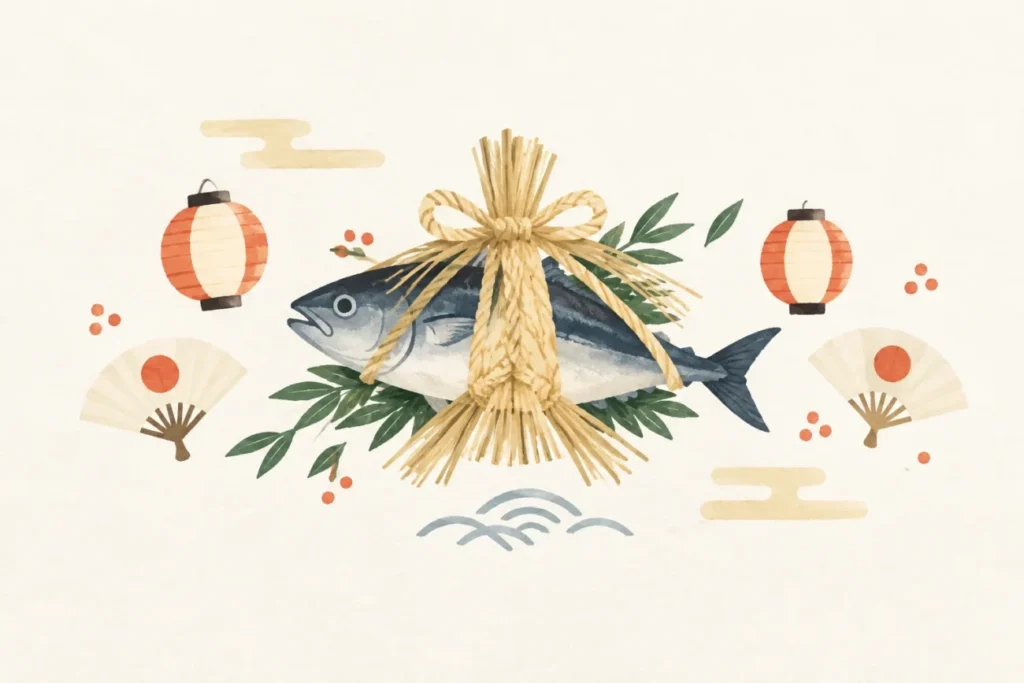
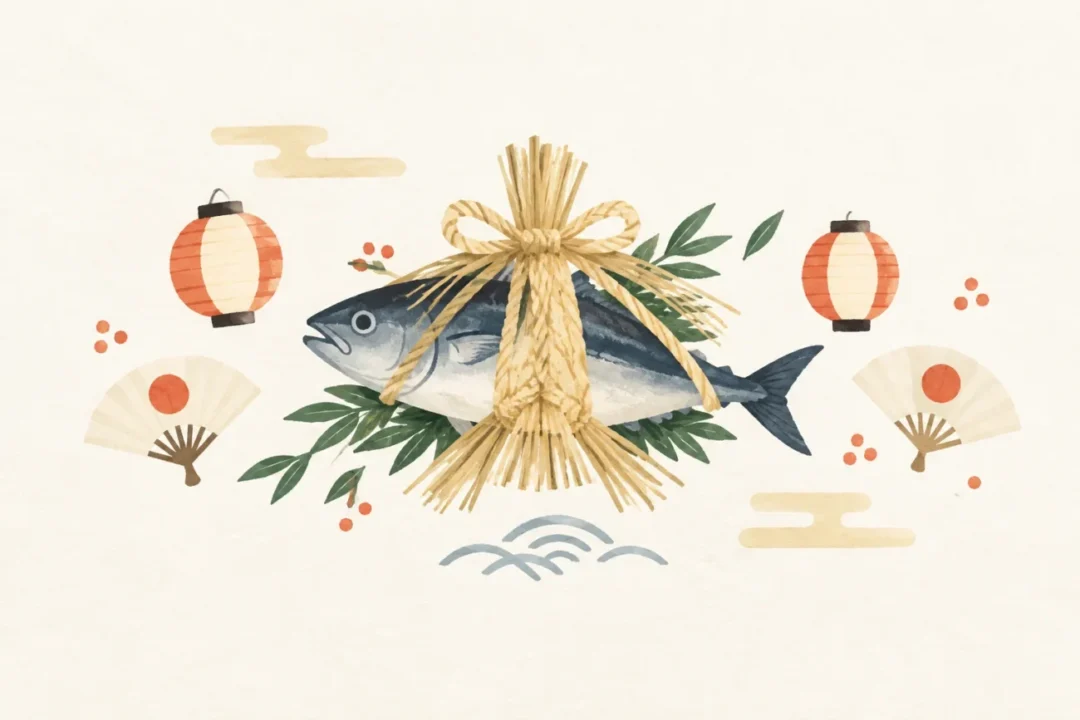
Shogatsu-zakanaOffering salted bonito decorated with straw ornaments at the household kamidana, a local custom rooted in everyday life. It is offered in prayers for safe voyages andPrayers for bountiful catches and harvests, and prosperity for descendantsThough it is an offering, after the first three days of the New Year it returns to the table, served to those involved or kept as preserved food.
Its appeal lies in the way prayers for a good harvest and the wisdom of food preserved for the winter are united in a single custom.
Highlights of Shogatsu-zakana
A highlight is the distinctive New Year arrangement of the Tago area: salted bonito decorated with straw ornaments and offered at the household kamidana. While it is a New Year offering, after the first three days it is passed around as a treat or kept as preserved food, illustrating the close connection between prayers and everyday meals.
Shogatsu-zakana is said to be made today only in the Tago area, anywhere in Japan.

You can also sense how closely prayer and everyday life are linked in the way offerings return as preserved food.
Location and access
- Venue and address
-
Tago area, Nishiizu Town
Venue静岡県西伊豆町 西伊豆町田子地区
A map searched by venue name.実際の開催範囲はお祭りの案内をご確認ください。
Oshiroi Festival (Asakura City, Fukuoka Prefecture)

- Dates
- 2026/12/02
- Season / frequency
- Every year December 2 / Every year
- Location
- Oyamazumi Shrine
- Area
- Fukuoka Prefecture・Asakura City
- Participation / viewing
- Open to public participation / spectators welcome
- Participation fee
- Free
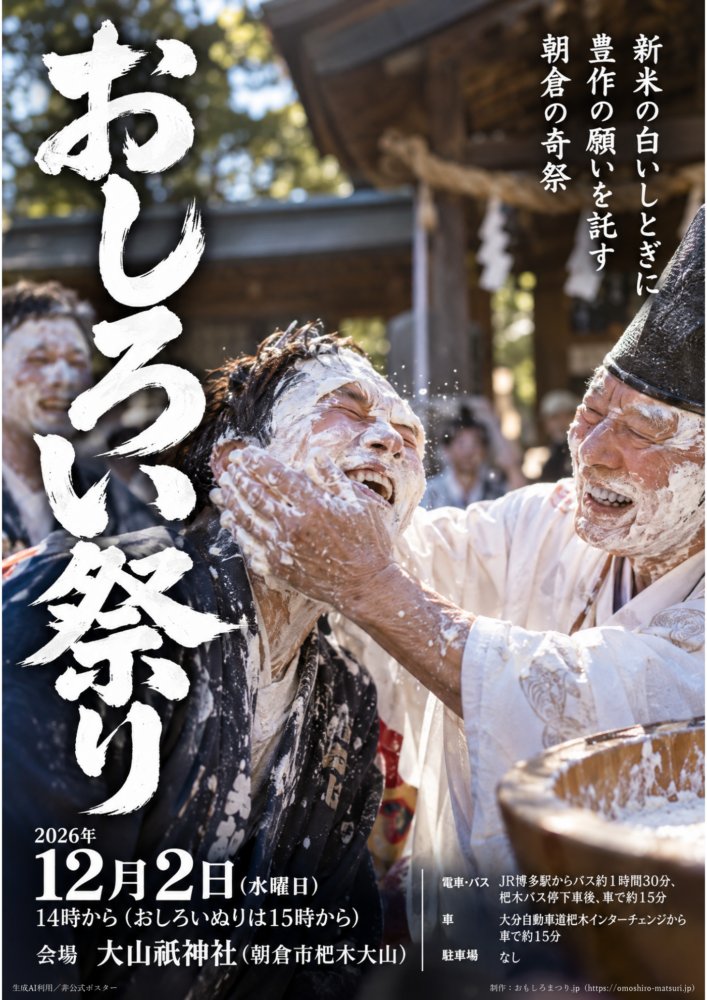
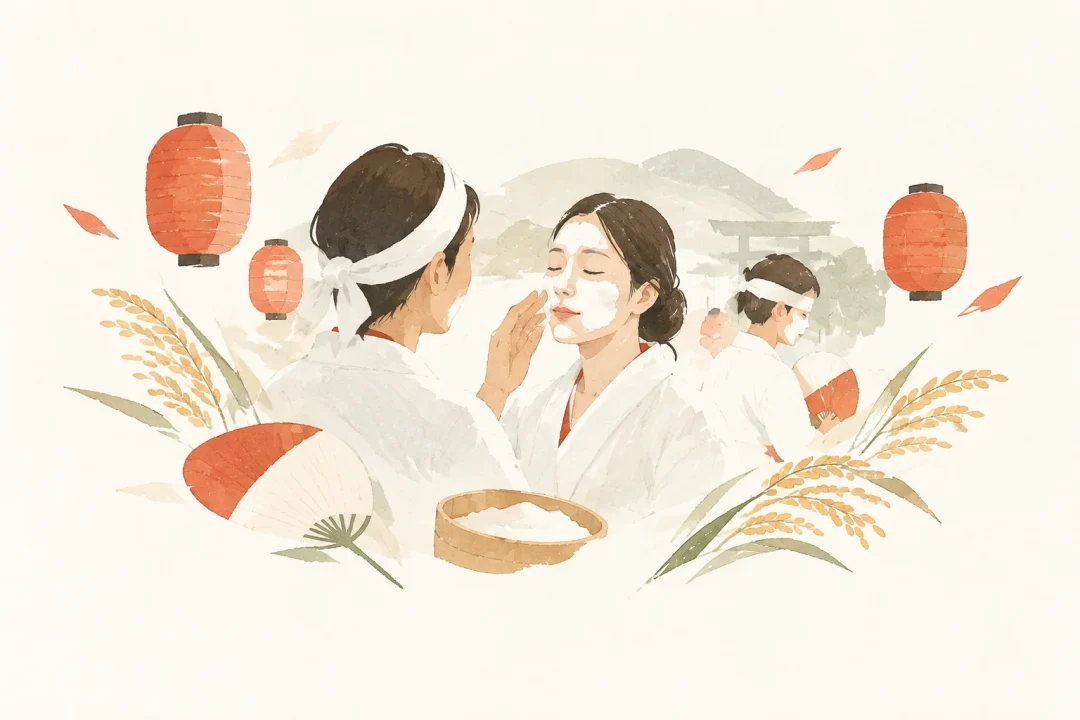
Oshiroi FestivalSmearing white shitogi made from new rice on the faces of , a distinctive festival. Meaning “the mountain deity’s makeup,” it expresses gratitude for the new harvest andprayers for a plentiful harvest of the five grains in the coming year. The way the oshiroi adheres is said to foretell the next year’s crops; this festival is especially fascinating for making hopes for agriculture visible.
Highlights of Oshiroi Festival
The main highlight is the moment when white shitogi made from new rice is smeared on the faces of ujiko. The way the oshiroi adheres to the face is said to foretell the next year’s crops. After the priest’s purification and recitation of , members of the organizing household bring out a large bowl of shitogi and begin by applying it to the priest’s face.
It is a distinctive festival passed down as a rare custom with no parallel elsewhere in Japan.

It sounds fun to imagine the hopes for agriculture expressed by the way the white shitogi sticks to people’s faces!
Location and access
- Venue and address
-
Oyamazumi Shrine (527 Oyamazaki, Haki, Asakura City)
- Train and bus
-
About 15 minutes by taxi from Chikugo-Oishi Station
- By car
-
15 minutes by car from the Haki IC on the Oita Expressway
- Parking
-
None
Address527 Ooyama, Haki, Asakura City
Warai-ko (Shinji) (Hofu City, Yamaguchi Prefecture)
- Dates
- 2026/12/06
- Location
- Omata Hachimangu Shrine
- Area
- Yamaguchi Prefecture・Hofu City
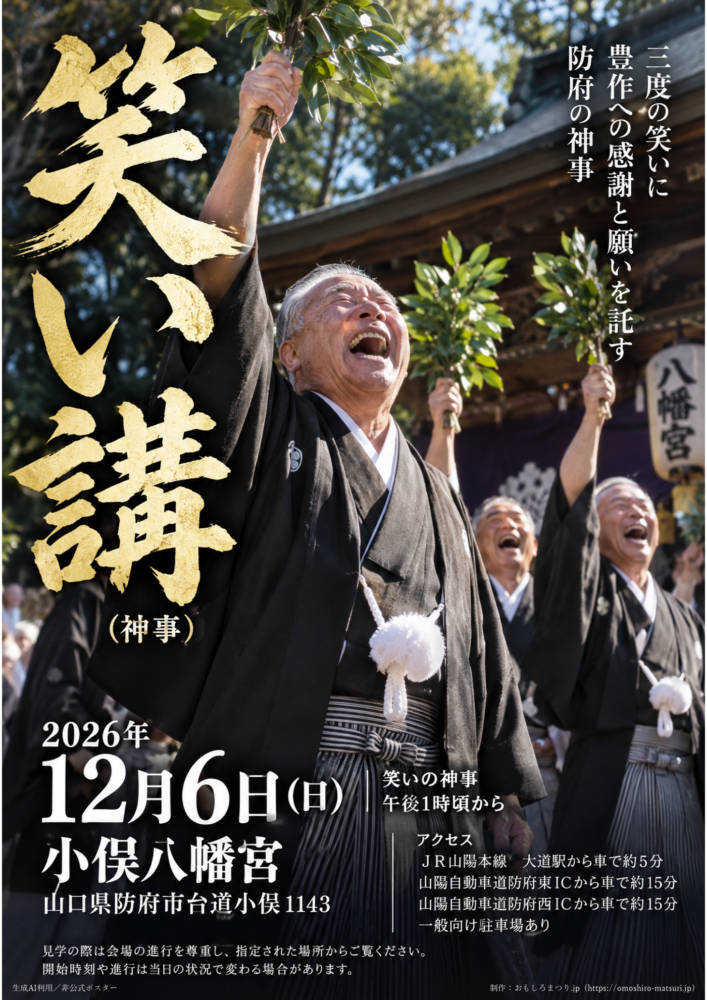
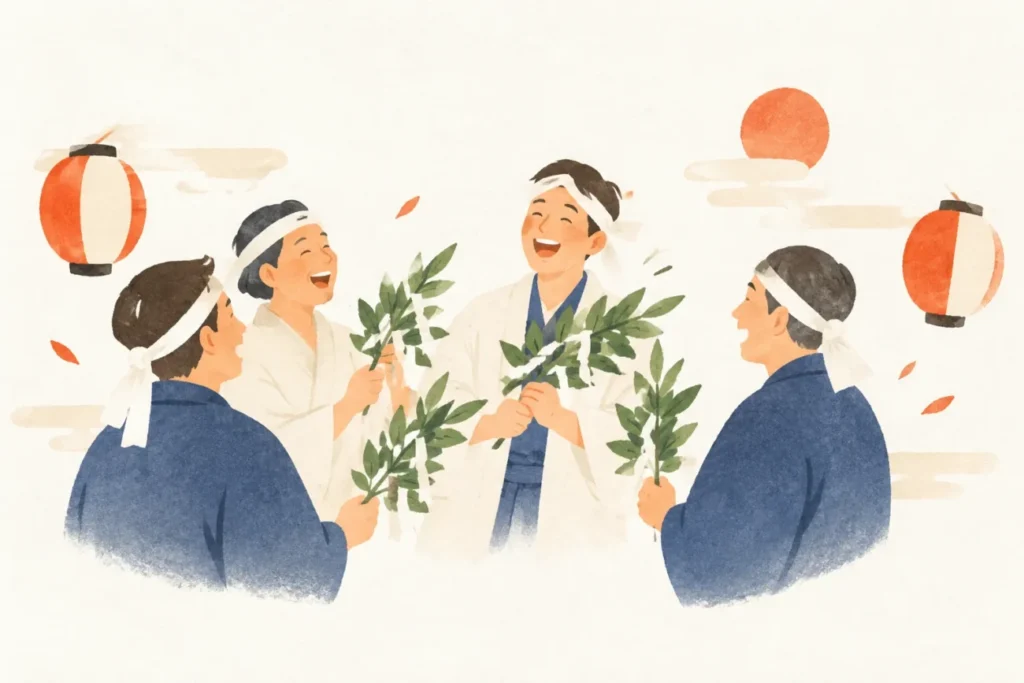
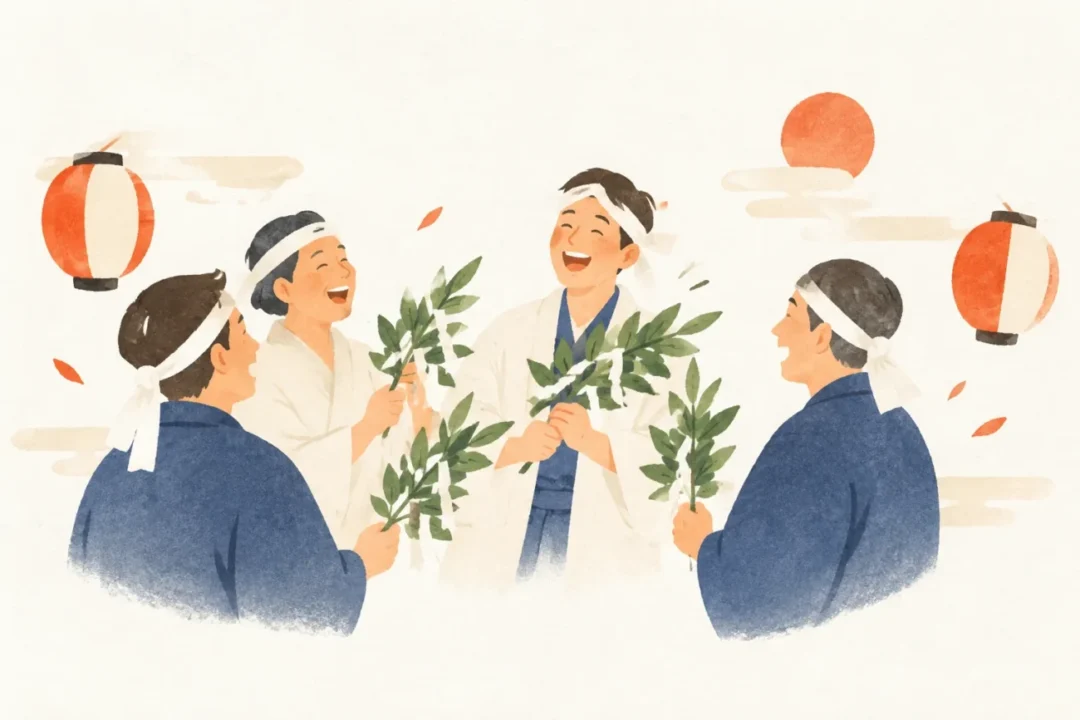
Warai-ko is a shinji in which participants dressed in formal kimono and hakamaHolding a branch and laughing loudly, gratitude for the harvest andA shinji expressing hopes for a good harvest next yearIt features a distinctive call-and-response of laughter three times, also expressing the hope of forgetting the year’s hardships and sorrows.
This event expresses prayers for a good harvest—which can often be a serious matter—through the powerful, memorable form of laughter.
Highlights of Warai-ko (Shinji)
The main highlight is when participants dressed in formal kimono and hakama hold sakaki branches and burst into laughter all together. The distinctive custom of exchanging “Wa-ha-ha-ha!” laughter three times is a memorable feature of this shinji.
Gratitude and prayers for a good harvest, along with the desire to forget the hardships of the year, are expressed through laughter.

Listen closely to the gratitude and hopes expressed in the three rounds of laughter, meow~
Location and access
- Venue and address
-
1143 Omata, Daido, Hofu City, Yamaguchi Prefecture
- Train and bus
-
About 5 minutes by car from Daido Station on the JR Sanyo Main Line
- By car
-
About 15 minutes by car from the Hofu-higashi IC on the Sanyo Expressway / About 15 minutes by car from the Hofu-nishi IC on the Sanyo Expressway
- Parking
-
Public parking available
Address1143 Omata, Daido, Hofu City, Yamaguchi Prefecture
Shimai Konpira Festival (Higashiyama Ward, Kyoto City, Kyoto Prefecture)
- Dates
- 2026/12/10
- Season / frequency
- Every year December 10 / Every year
- Location
- Yasui Konpiragu Shrine
- Area
- Kyoto Prefecture・Higashiyama Ward, Kyoto City
- Participation fee
- Inaho Horai: ¥4,500 (limited quantity)
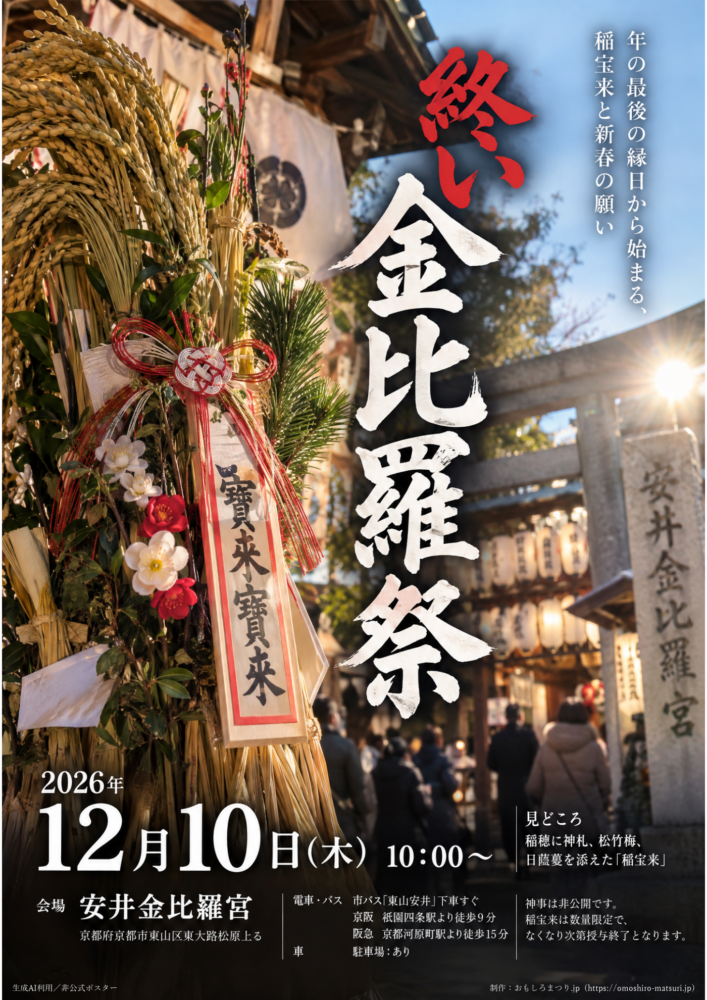
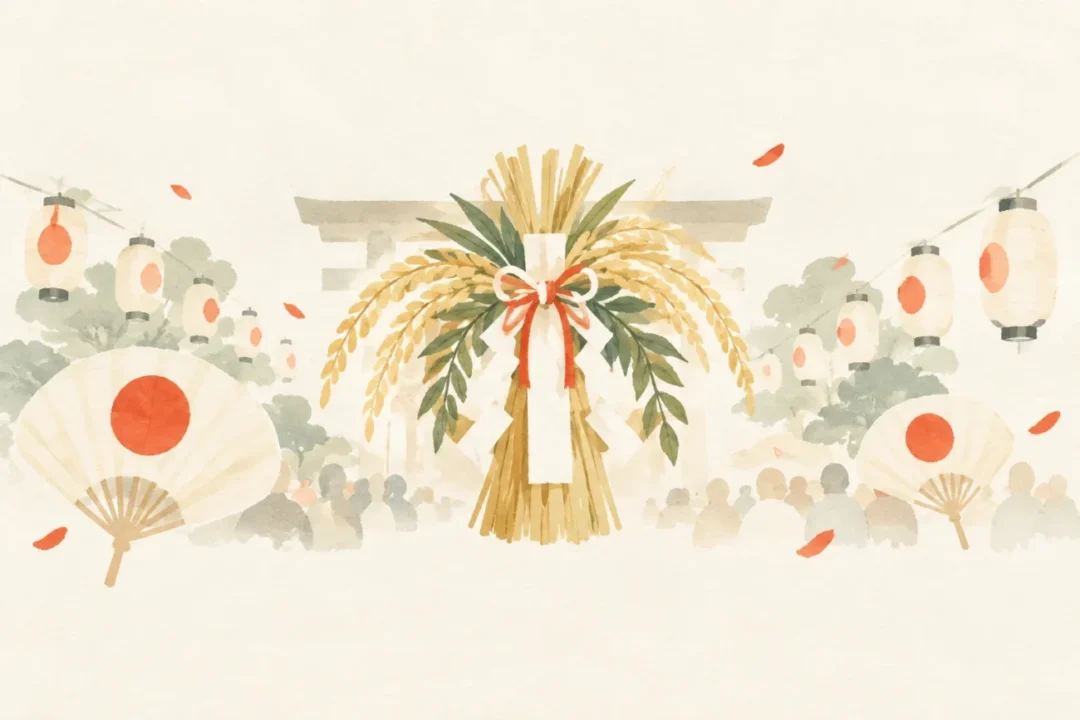
Shimai Konpira Festival is held on the last ennichi of the year, when“Inaho Horai,” decorated with rice ears, sacred talismans, pine, bamboo, and plumis distributed. The rice ears symbolizeHopes for a bountiful harvest in the New Yearand also include prayers for good health and good fortune.
Through these auspicious objects used to welcome the New Year, you can sense how rice cultivation is connected to New Year life.
Highlights of the Shimai Konpira Festival
A highlight is “Inaho Horai,” decorated with rice ears, sacred talismans, pine, bamboo, plum, and hikage-kazura. Rice ears symbolize abundance, while hikage-kazura has long been regarded as a sign of purity. Together with the traditional sacred talisman “Horai Horai,” they form a New Year decoration.
As a traditional auspicious item for welcoming the New Year in Kyoto, it is distributed from the festival day through the first Konpira Festival of the year.
Learning what the rice-ear-centered decorations mean can make the prayers for the coming New Year feel closer.
Location and access
- Venue and address
-
Yasui Konpiragu Shrine / Higashiyama-dori, Matsubara-agaru, Higashiyama Ward, Kyoto City, Kyoto Prefecture
- Train and bus
-
A short walk from the Higashiyama Yasui bus stop / 9 minutes on foot from Gion-Shijo Station on the Keihan Line / 15 minutes on foot from Kyoto-Kawaramachi Station on the Hankyu Line
- Parking
-
Yes
AddressHigashioji Matsubara-agaru, Higashiyama-ku, Kyoto, Kyoto Prefecture
Ise Daikagura (Kuwana City, Mie Prefecture)
- Dates
- 2026/12/24
- Season / frequency
- Usually December 24 / Every year
- Location
- Masuda Shrine
- Area
- Mie Prefecture・Kuwana City
- Participation / viewing
- Spectators welcome
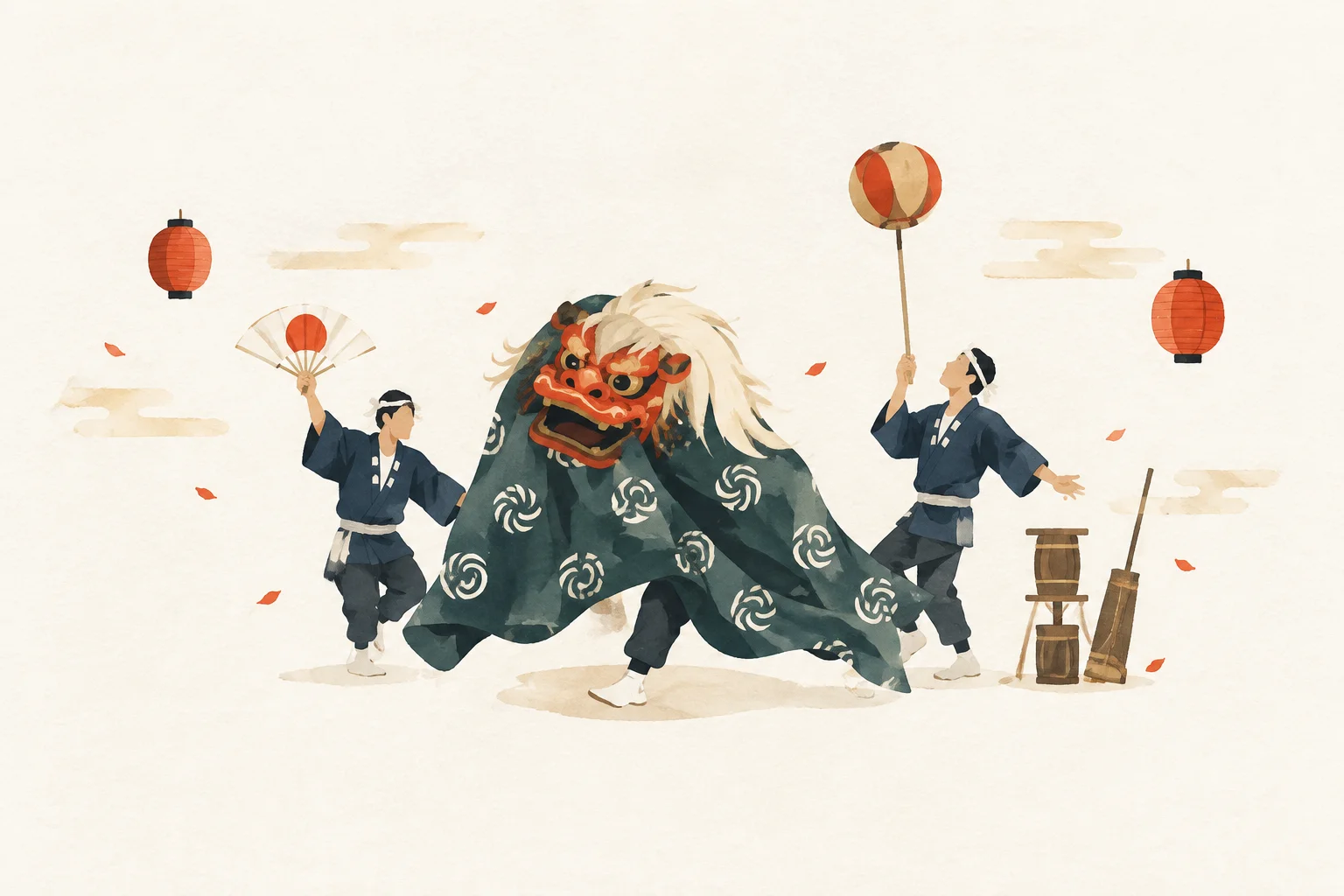
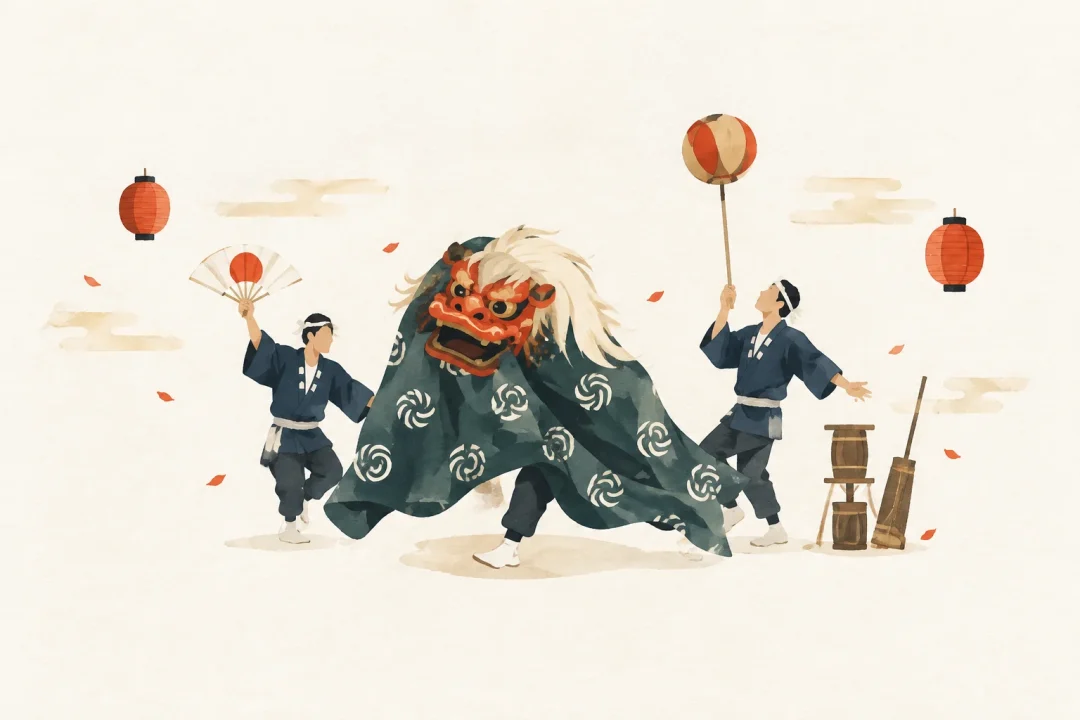
Ise Daikagura drives away evil spirits through whileHoka performances using plates, poles, balls, and swordsIt is a traditional performing art that features. Dances by shishi, songs, and comic acts follow one after another, bringing sacred rites and entertainment together.
It connects with the community through practices such as purifying the hearths of individual households, andPrayers for a prosperous lifeIt presents
Highlights of Ise Daikagura

Photo credits and terms of use
S20400343 / Own work / Photo source / CC BY-SA 4.0(The event shown may differ from the current year’s edition.)

Photo credits and terms of use
S20400343 / Own work / Photo source / CC BY-SA 4.0(The event shown may differ from the current year’s edition.)

Photo credits and terms of use
S20400343 / Own work / Photo source / CC BY-SA 4.0(The event shown may differ from the current year’s edition.)
Highlights include a dance featuring two shishi and hoka performances in which performers skillfully manipulate props. The varied program includes “Plate Acrobatics,” spinning a plate on a pole; juggling with poles and balls; and dances using swords to drive away evil spirits.
With manzai performances by comic characters called chari and hoka performers, the event offers both sacred rites and entertainment.
Look beyond the shishimai and watch for the acrobatics and comic characters, too—you’ll see just how much there is to this festival!
Location and access
- Venue and address
-
Masuda Shrine (1155 Taifu, Kuwana City, Mie Prefecture).
- Train and bus
-
Details are being confirmed.
- By car
-
Details are being confirmed.
- Parking
-
Details are being confirmed.
Address1155 Daifu, Kuwana, Mie Prefecture
At a glance
The five events introduced here each carry on, in a different way, gratitude for the harvest and hopes for the next year’s bounty. Some entrust these hopes to food and offerings such as salted bonito and rice ears; others express them by smearing shitogi on faces, raising laughter, or using shishimai and acrobatics toSome express their prayers.
Many ways to pray for a plentiful harvestComparing these
Festivals related to this article
Shogatsuyo
Tago’s traditional Shogatsuyo: linking prayers and preserved food
Oshiroi Festival
Asakura’s unusual festival, where white shitogi made from new rice carries hopes for a bountiful harvest
Warai-ko (Shinto Ritual)
A Hofu ritual entrusting gratitude and hopes for a good harvest to 3 rounds of laughter
Shimai Konpira Festival
Inahohōrai and New Year wishes, beginning on the year’s final monthly festival day


Ise Daikagura
A prayerful Sōmai adorned with lion dances and acrobatics passed down in Kuwana
