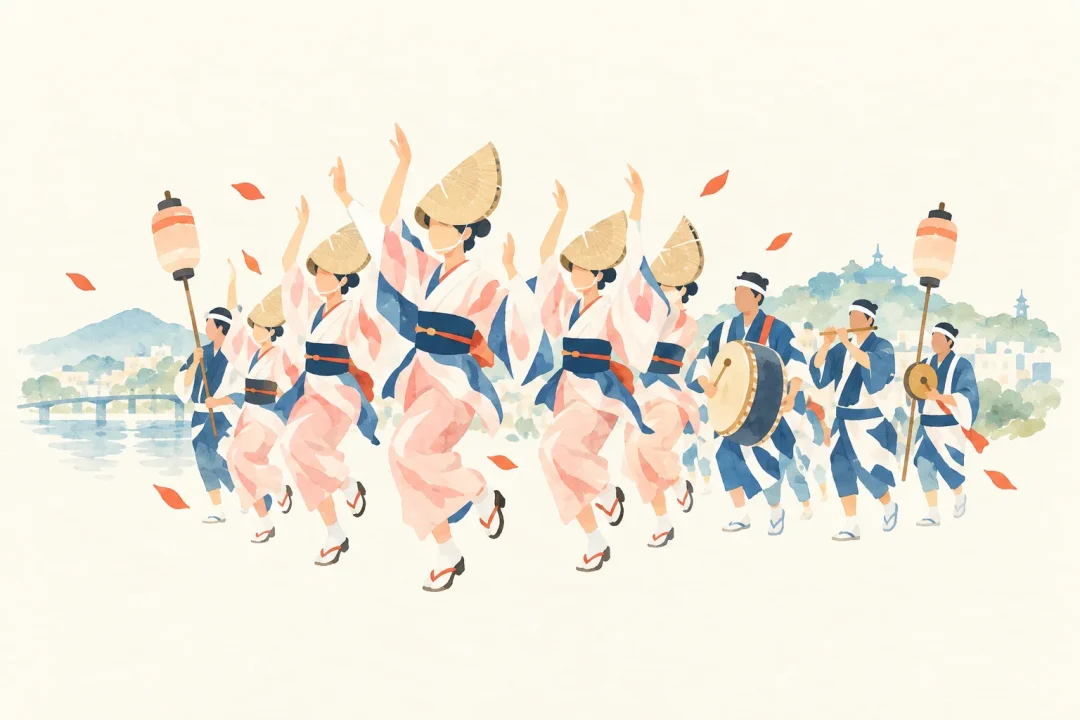
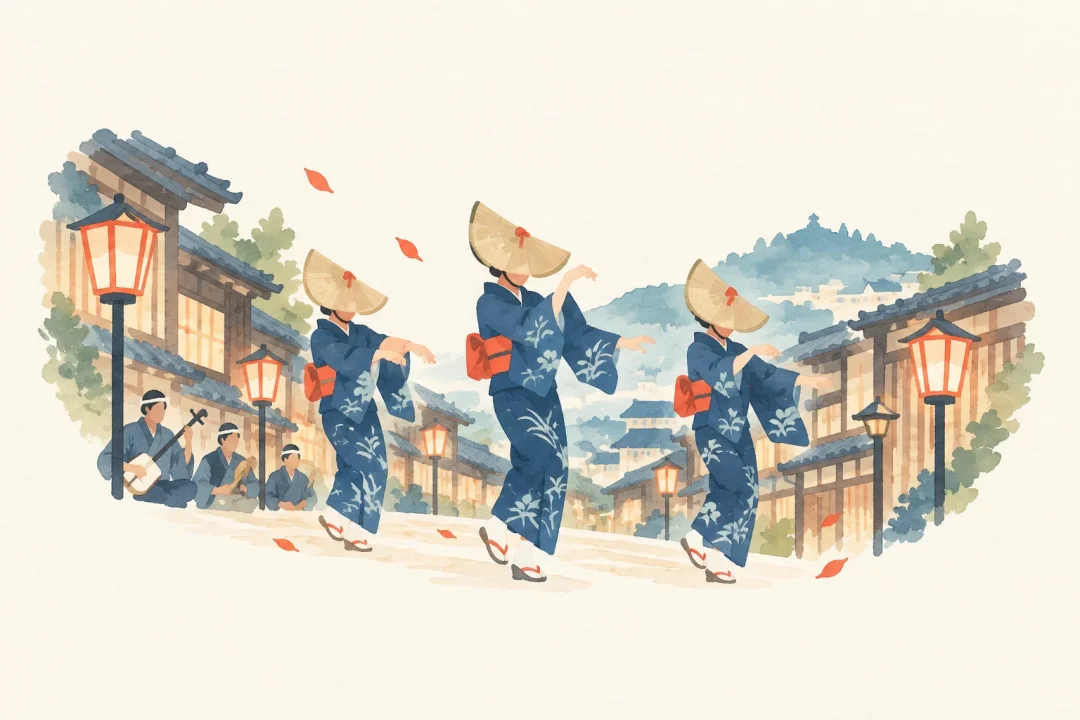
An Obon dance passed down in Yuki, sending off the spirits and praying for a good harvest
Yuki Bon Odori
Festival information
EVENT INFORMATION- Season / frequency
- During the period / It is held as an Obon observance.
- Location
- The grounds of Hōrinji and Meishōji temples (traditional performance locations)
- Area
- Hiroshima Prefecture・Shobara City(From Tokyo: approx. 3 h 50 min–4 h 20 min · bullet train)Prefecture-level estimate to a main station or airport, not the venue. Airport access, check-in and onward travel are extra; remote areas and islands can take much longer.
- Highlights and activities
- Wishes behind the festival
- Participation / viewing
- Open to public participation
- Last updated
- 2026/10/19
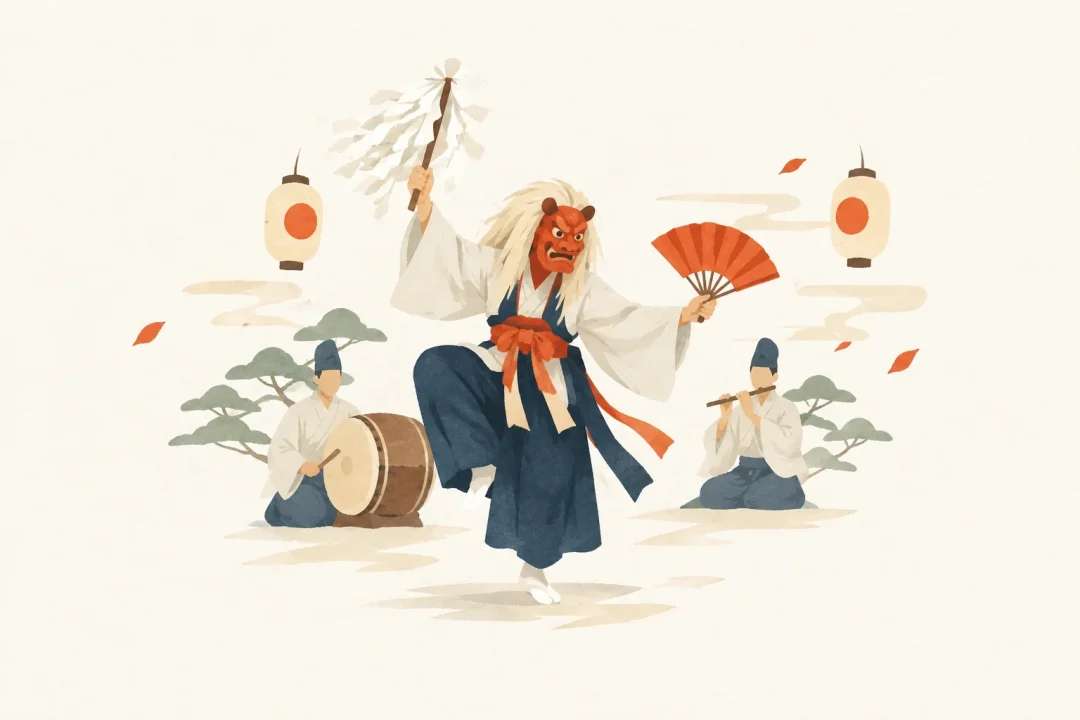
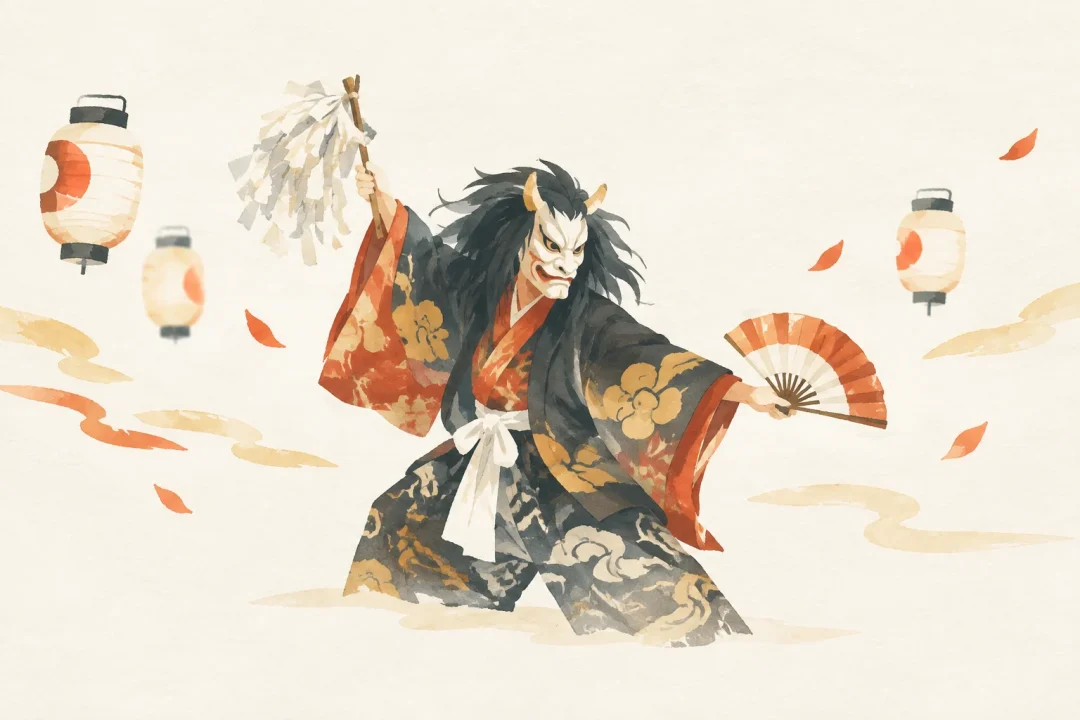
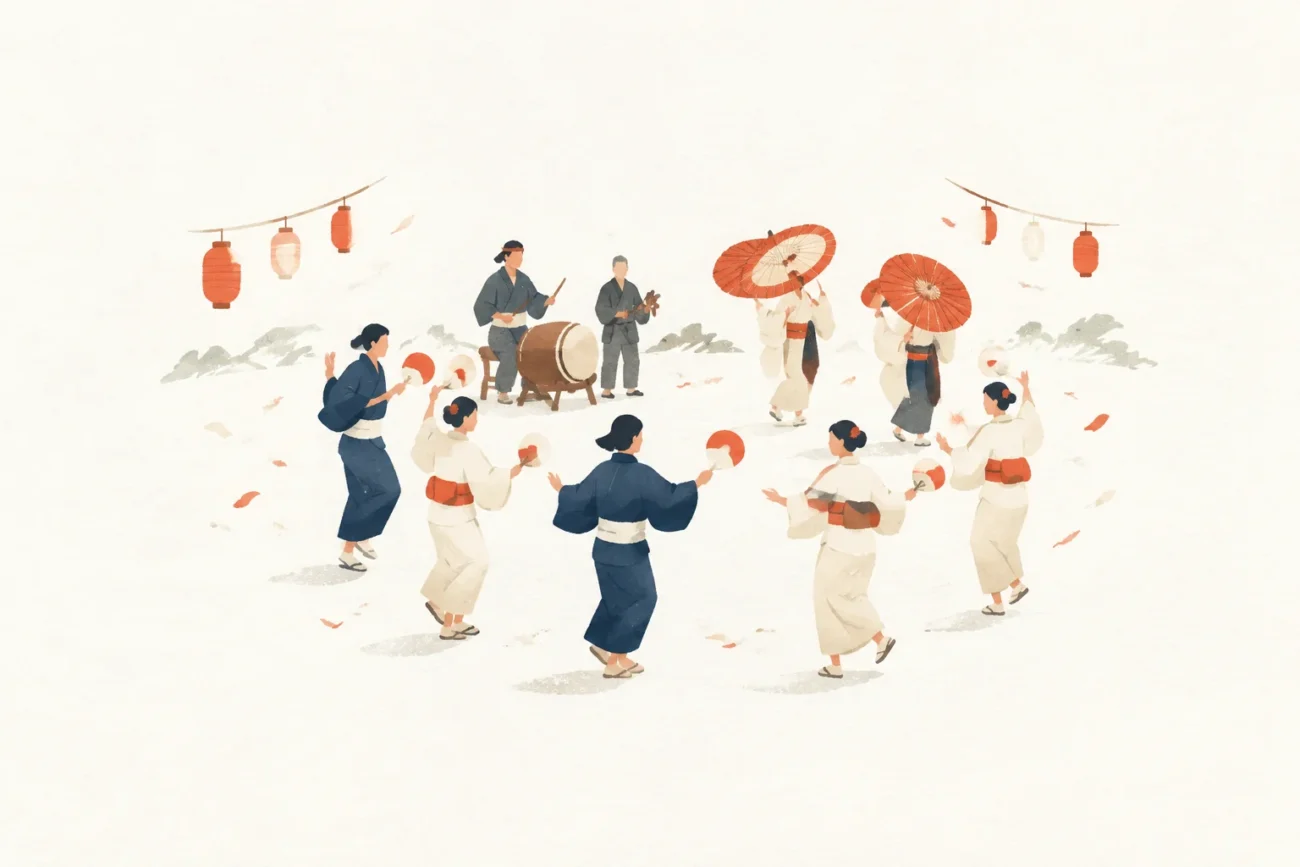
The Yuki , passed down in Yuki, Kuchiwa-cho, Shobara City, is a folk performing art made up of te-odori, a hand dance to console the spirits of those killed in battle, and kasa-odori, an umbrella dance praying for a good harvest. As people form a circle and dance to the ondo, , and hyoshigi clappers, local Obon observances and prayers for the harvest are carried on.
About Yuki Bon Odori
The Yuki Bon Odori is an Obon observance passed down in Yuki, Kuchiwa-cho, Shobara City, and a folk performing art made up of te-odori and kasa-odori.
Te-odori began as a dance to console and send off the spirits of those killed in battle, while kasa-odori carries prayers for a good harvest.
It has been passed down through generations as local Obon observances and farmers’ entertainment came together.
Source: 民俗文化財 | 広島県庄原市のホームページへようこそ
Festival highlights
One highlight is that 2 distinct dances have been passed down: te-odori (hand dance) and kasa-odori (umbrella dance).
Te-odori includes “Yamazukushi,” “Banba,” “Sekishū,” “Yumihiki,” and “Maneki.” Kasa-odori features dance sequences using umbrellas and fans, as well as pieces such as “Kazaguruma.”
The dances are also characterized by people forming a circle and dancing to the rhythm of the ondo, accompanied by taiko and hyoshigi clappers.
An Obon dance passed down in Yuki, sending off the spirits and praying for a good harvest
What to expect
The dancers circle a platform placed in the middle and dance as they move around it to the ondo.
Te-odori features several pieces, while kasa-odori includes dances performed with umbrellas or fans.
Songs and accompaniment played on taiko and hyoshigi clappers support the dancing, bringing together prayers for the spirits during Obon and wishes for a good harvest in a single event.
How to take part
The dances are considered relatively simple and easy for anyone to pick up, and in the past people of all ages and genders took part.
It is said that people also danced in whatever clothing they liked, such as with a headband or a cloth covering their head and cheeks.
Current information about recruiting participants and eligibility is being confirmed, but the dance has traditionally been an event where local people join the circle.
Participation generally involves joining the dance circle and dancing to the ondo and hayashi.
Te-odori and kasa-odori have been passed down, and some dances use umbrellas or fans.
Location and access
- Venue and address
This Bon Odori has been passed down in Yuki, Kuchiwa-cho, Shobara City.
Historically, the dances were performed in the grounds of Horinji and Meishoji temples in Yuki Village.
湯木市場バス停から周辺施設への案内があります。
Source: 湯木市場バス停|口和線|広島の神社・寺院 - 八百万の神
Event venue 広島県庄原市 法林寺
This map uses the venue name. Check the official guide for the event area and entrances.
Dates and season
- Season
During the Obon period
- Frequency
It is held as an Obon observance.
Accommodation and hotels PR
Showing nearby accommodation.
Prices and availability are current at the time of retrieval. For multi-night stays, only the first night’s price is shown. Confirm the final price and directions to the venue with the booking provider. Select your dates again when using the area search link. Search area: within 3 km of Central Hiroshima Prefecture / Shobara City (the search is not centered on the festival venue)
Tips for your visit
If you join the dance circle, it is best to keep pace with those around you while following the ondo and hayashi.
Te-odori and kasa-odori use different props and feature different pieces, so you can also look out for transitions between them.
Origins and History of Yuki Bon Odori
According to local tradition, the Yuki Bon Odori began around 220 years ago, in summer during the Hōreki era of the Edo period.
On a day during Obon, te-odori began as a dance to console and send off the spirits of the many people killed in battle, including the retainers of Yuki Shirō.
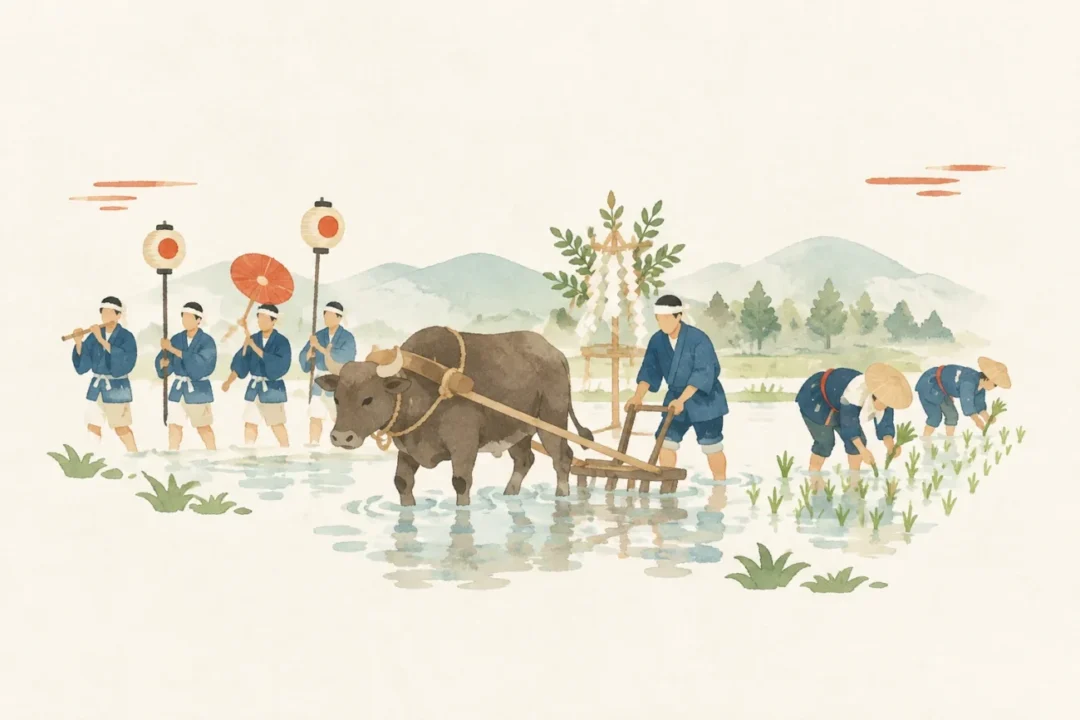
Later, kasa-odori was added to pray for an abundant autumn harvest, and the art has been passed down as both an Obon observance and a form of entertainment for farmers.
Official information
Shobara City introduces the Yuki Bon Odori as an intangible folk cultural property designated by the city.
The date of its designation as a cultural property was Showa 60May 27, and its location is Yuki, Kuchiwa-cho, Shobara City.
Yuki Bon Odori at a Glance
The Yuki Bon Odori is a folk performing art passed down in Yuki, Kuchiwa-cho, Shobara City, featuring te-odori and kasa-odori.
The Obon te-odori, which consoles the spirits of those killed in battle, and the kasa-odori, which prays for a good harvest, are accompanied by taiko, hyoshigi clappers, and the ondo.
This event offers a chance to experience, through both its dance forms and the hopes behind them, a local performing art said to have begun around 220 years ago.
Japanese Festivals.jp Editorial Team
Celebrating local culture and helping you discover a side of Japan you never knew.
Article updated: 2026/10/19
Submit information or a correction Submit photos of this festival