A stage art from Edo, depicting myths with masks and instrumental music
Edo no Sato Kagura
The 2026 edition of Edo no Sato has ended.
Festival information
EVENT INFORMATION- Dates
- 2026/06/13Ended
- Location
- Edo-Tokyo Museum
- Area
- Tokyo Metropolis・Sumida City(Within Tokyo: approx. 15 min–1 h by train (central areas))Prefecture-level estimate to a main station or airport, not the venue. Airport access, check-in and onward travel are extra; remote areas and islands can take much longer.
- Highlights and activities
- Participation / viewing
- Spectators welcome
- Participation fee
- Free
- Last updated
- 2026/10/19
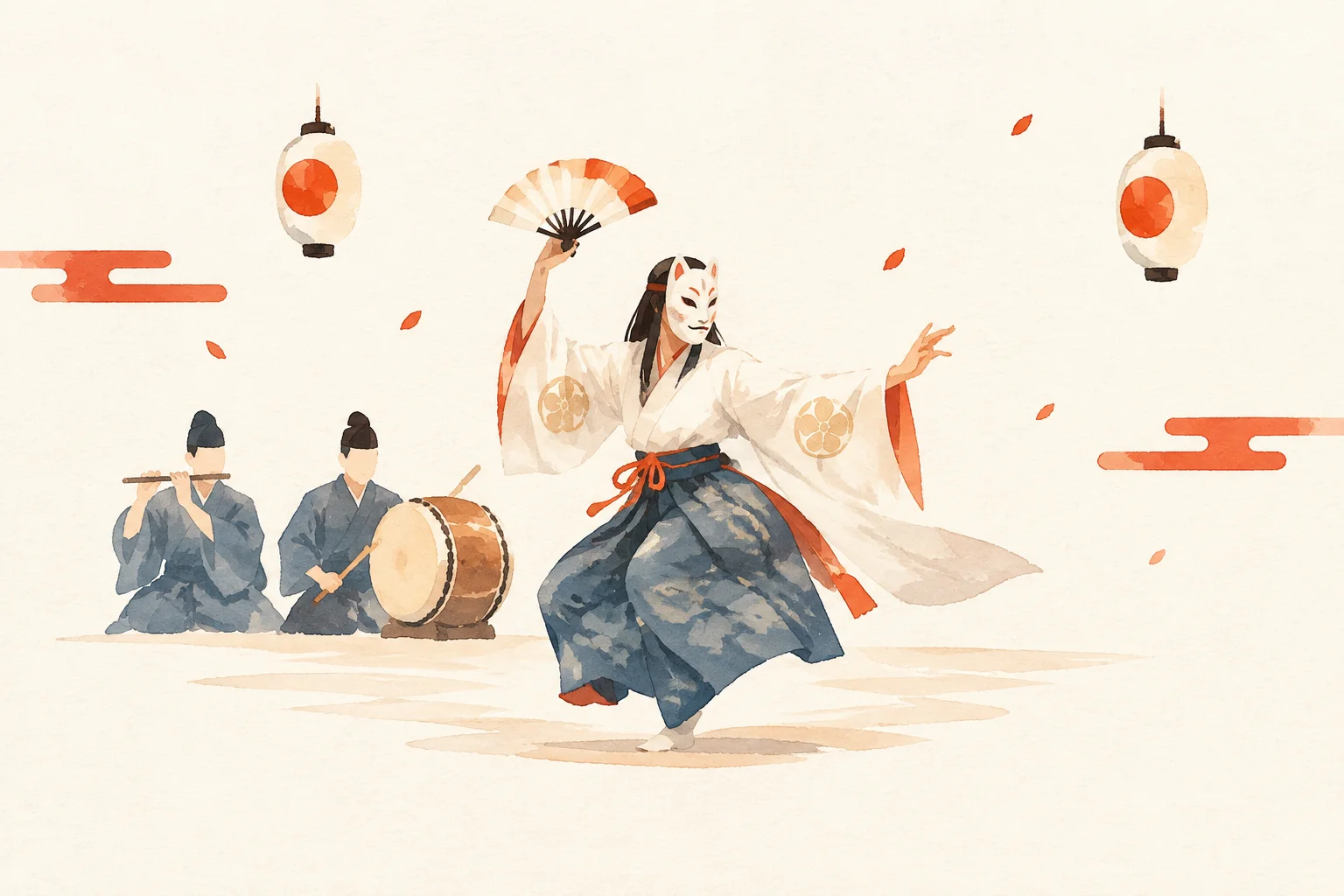
Edo no Sato Kagura features masked performers dancing to flute and drum music to portray myths and stories. Experience a performing art designated as an Intangible Folk Cultural Property, with roots dating back to the Edo period.
About Edo no Sato Kagura
Edo no Sato Kagura is a wordless drama-style form of kagura performed in masks, with stories drawn from mythology and other sources.
Since the Edo period, it has been performed at shrine festivals in Edo and nearby areas by shinjimai tayu, performers specializing in kagura.
It is not an art form associated with any one particular shrine; it has been passed down as festival entertainment at festivals in many places.
Today, four groups carry on the tradition.
Source: 国指定文化財等データベース
Festival highlights
Highlights include masked, wordless drama-style performances based on mythology.
In addition to pieces such as “Ame-no-Ukihashi” and “Ame-no-Kaeriya,” the repertoire includes “Tsuri Onna,” “Momiji-gari,” and “Urashima Taro,” based on kabuki, Noh, and folktales.
This performing art is distinctive for conveying stories through physical expression and masks, accompanied by flute, drums, and other instruments.
The number of pieces passed down varies from group to group.
Source: 東京都文化財保護審議会の答申について|2月|東京都教育委員会
A stage art from Edo, depicting myths with masks and instrumental music
What to expect
Edo no Sato Kagura is performed to instrumental music on stages at shrine festivals and other events. These stages are called maidono, kaguraden, or kagurado.
Performers wear masks and use dance in a wordless drama style to portray myths and stories.
In the 2026 event information, a performance by the Wakayama Shachu was scheduled as one of the stage events at the Edo-Tokyo Museum. Visitors could watch the 30-minute performance.
Source: Edo Tokyo キャンペーン 2026 春 | Edo Tokyo キャンペーン | Edo Tokyo
How to take part
Visitors can watch the event.
参加費:無料
Location and access
- Venue and address
Listed as a stage event at the Edo-Tokyo Museum.
Event venue 東京都墨田区 江戸東京博物館
This map uses the venue name. Check the official guide for the event area and entrances.
Dates and season
2026 Event Information (The listed dates have passed)
In 2026, Edo no Sato Kagura by the Wakayama Shachu was listed as a stage event at the Edo-Tokyo Museum from 11:45 a.m. to 12:15 p.m. on June 13 (Saturday).
The stage event information states that it can be watched without an advance reservation and with free admission.
Accommodation and hotels PR
Showing nearby accommodation.
Prices and availability are current at the time of retrieval. For multi-night stays, only the first night’s price is shown. Confirm the final price and directions to the venue with the booking provider. Select your dates again when using the area search link. Search area: within 3 km of Central Tokyo Metropolis / Sumida City (the search is not centered on the festival venue)
Tips for your visit
The 2026 performance was listed as a 30-minute stage event, with no advance reservation required and free admission.
The performance is part of the Edo-Tokyo Museum’s overall stage-event schedule, so arriving in time for the start should make it easier to watch.
When it is performed at a shrine festival, the venue and time vary by performance, so check the event information before visiting.
Nearby attractions

東京スカイツリー
東京都墨田区の電波塔

東京都江戸東京博物館
東京都墨田区にある博物館
Origins and History of Edo no Sato Kagura
Edo no Sato Kagura is said to trace its roots to the kagura of Washinomiya Shrine, which was introduced in the early Edo period.
It reached its height during the Bunka-Bunsei period. Many groups dispersed during the Meiji Restoration, but 37 families remained in Edo in the early Meiji period.
The tradition later declined, and today four groups—Wakayama, Mamiya, Matsumoto, and Yamamoto—carry it on.
It was designated an Important Intangible Folk Cultural Property in 1994.
Official information
The Agency for Cultural Affairs’ database of nationally designated cultural properties introduces Edo no Sato Kagura as an Important Intangible Folk Cultural Property.
The 2026 performance information was published in Tokyo’s “Edo Tokyo Campaign 2026 Spring” and lists the Wakayama Shachu as a stage performer.
Edo no Sato Kagura at a Glance
Edo no Sato Kagura is a traditional performing art that portrays myths and stories through masked, wordless drama-style dances and instrumental music, including flute and drums.
It has been performed at shrine festivals since the Edo period, and four groups continue to pass it down today.
In 2026, a performance by the Wakayama Shachu was listed as a stage event at the Edo-Tokyo Museum on June 13. It could be watched without an advance reservation and with free admission.
Japanese Festivals.jp Editorial Team
Celebrating local culture and helping you discover a side of Japan you never knew.
Article updated: 2026/10/19
Submit information or a correction Submit photos of this festival