Bangaku passed down in a region where faith in Mount Chokai and lion dances thrive
Lion Dance Bangaku of the Northern Foothills of Mount Chokai
Festival information
EVENT INFORMATION- Season / frequency
- Varies by district. In some districts, the curtain season opens around New Year or from mid-June through July, and closes between September and December.
- Location
- Shrine worship halls, rooms in private homes, community centers, and other locations in districts across the northern foothills of Mount Chokai
- Area
- Akita Prefecture・Yurihonjo City, Nikaho City(From Tokyo: approx. 3 h 40 min–4 h 10 min · bullet train)Prefecture-level estimate to a main station or airport, not the venue. Airport access, check-in and onward travel are extra; remote areas and islands can take much longer.
- Features
- Highlights and activities
- Wishes behind the festival
- Last updated
- 2026/10/19
The bangaku of the northern foothills of Mount Chokai is a form of passed down in Yurihonjo City and Nikaho City, rooted in the mountain worship of Mount Chokai. Lion dances and a diverse repertoire of bangaku pieces are dedicated at festivals and during Bon in each district.
About Lion Dance Bangaku of the Northern Foothills of Mount Chokai
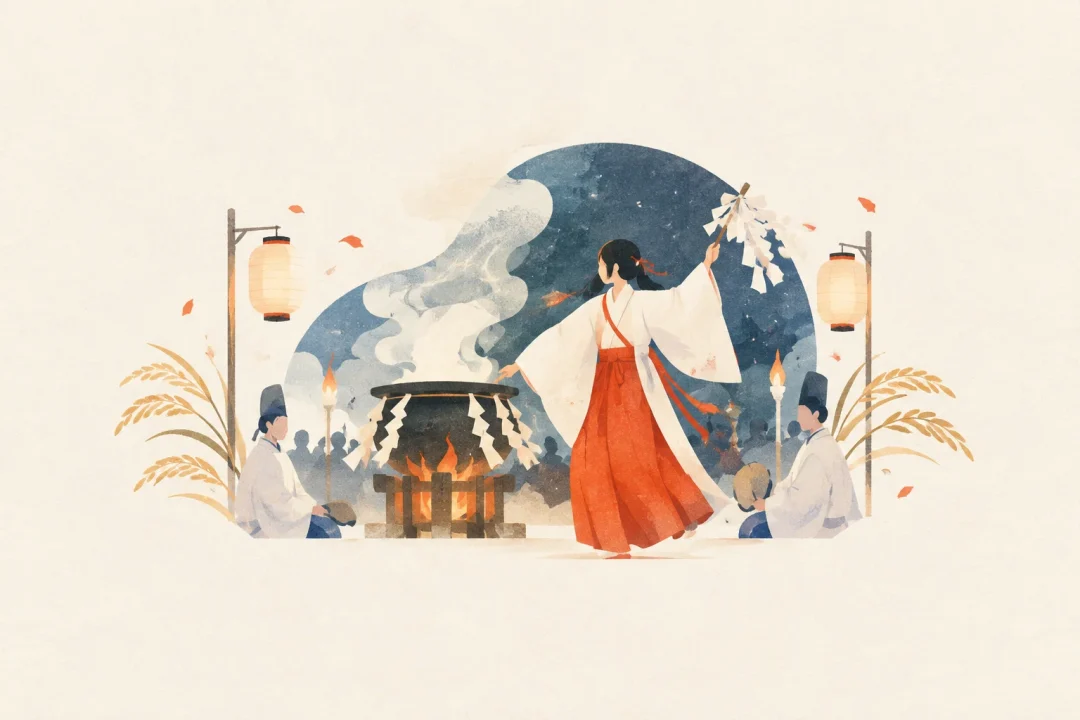
The lion dance bangaku of the northern foothills of Mount Chokai is a form of kagura passed down against the backdrop of mountain worship centered on Mount Chokai.
It is found in districts across Yurihonjo City and Nikaho City in Akita Prefecture, and is known by names including lion dance bangaku, lion dance, and bangaku.
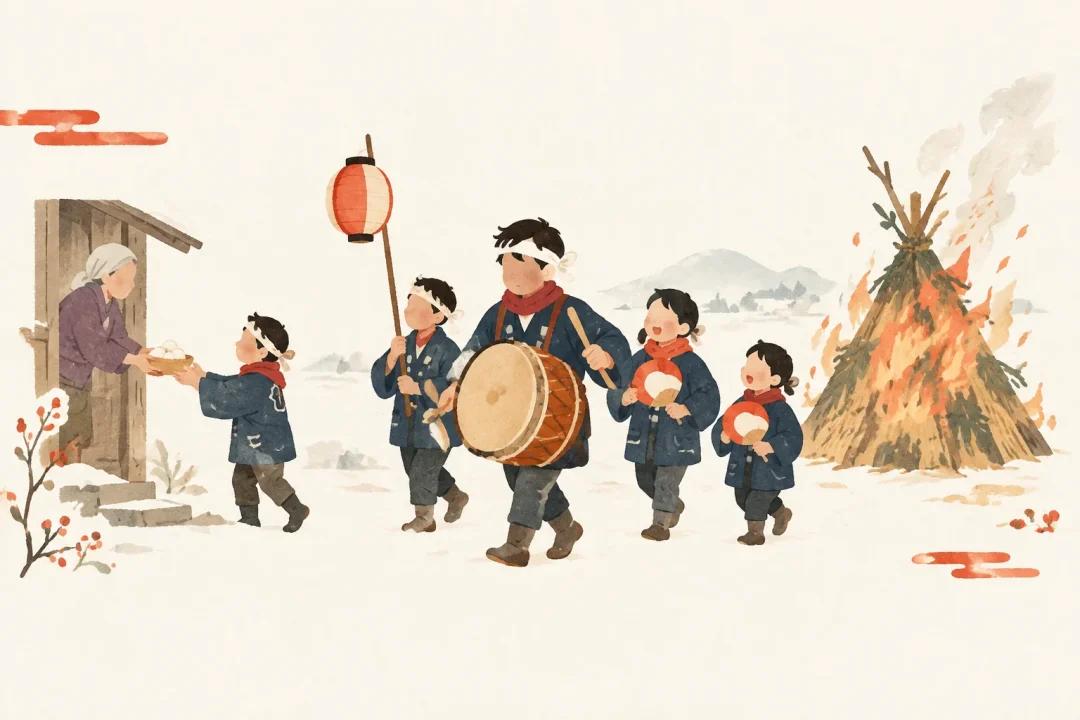
Performances take place during shrine festivals and Bon celebrations in each district. In some districts, performers visit homes and dedicate a lion dance at the household shrine; this practice is called kadashishi.
Each district has its own distinctive repertoire and ways of passing down the tradition.
Source: 鳥海山北麓の獅子舞番楽 | まいーれ
Festival highlights
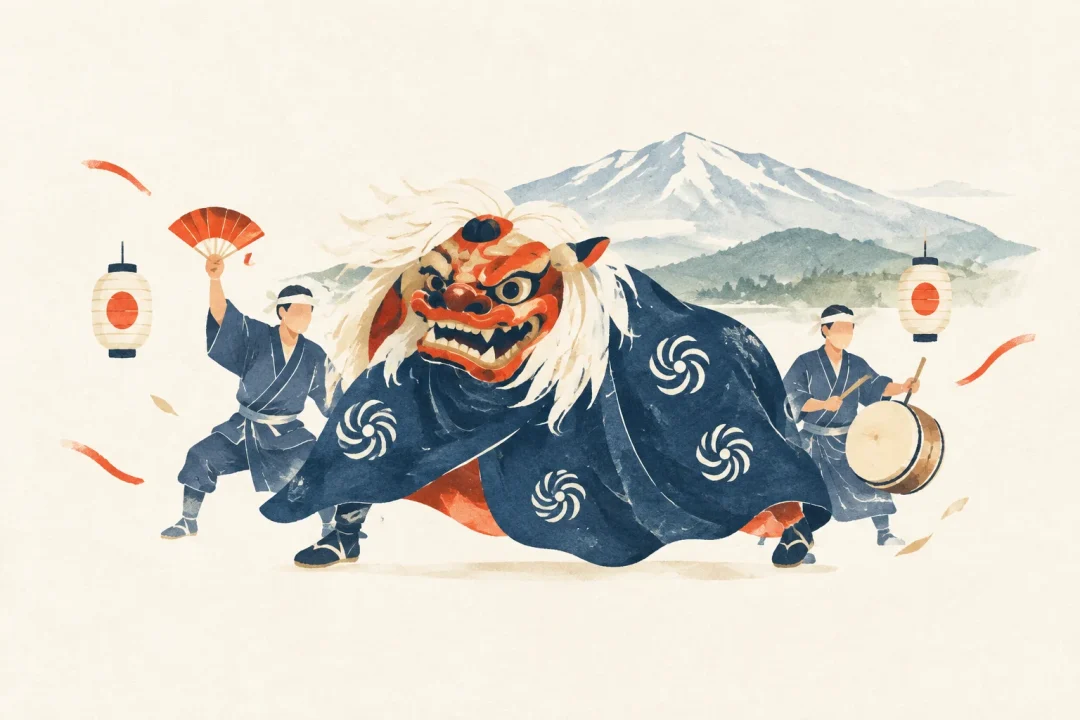
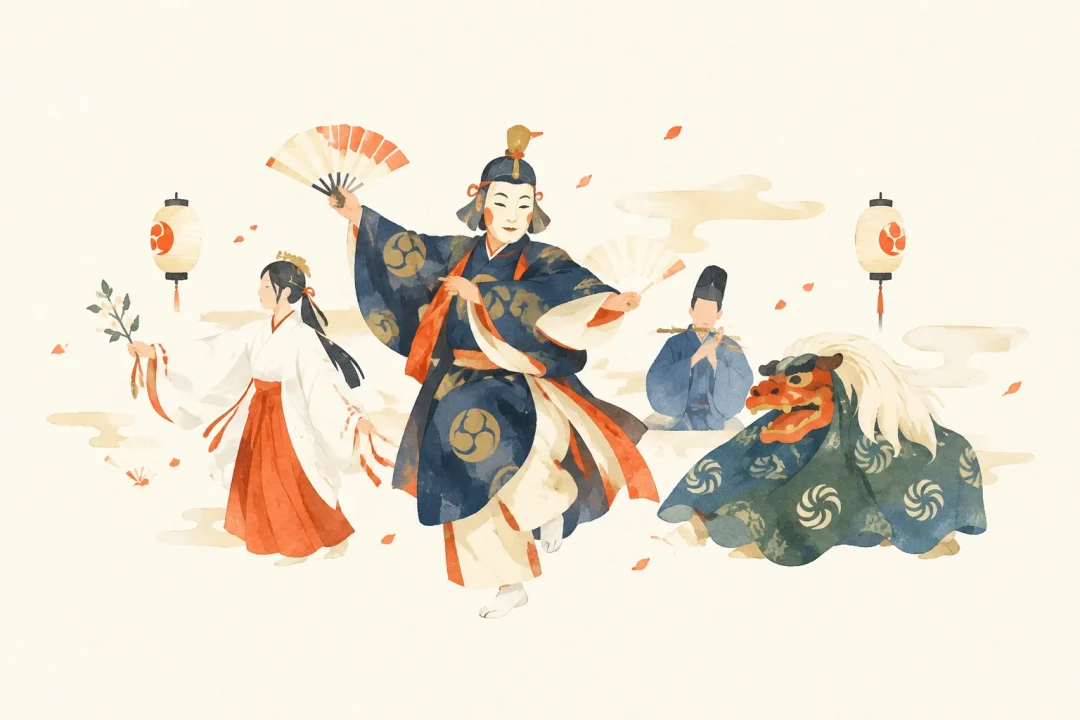
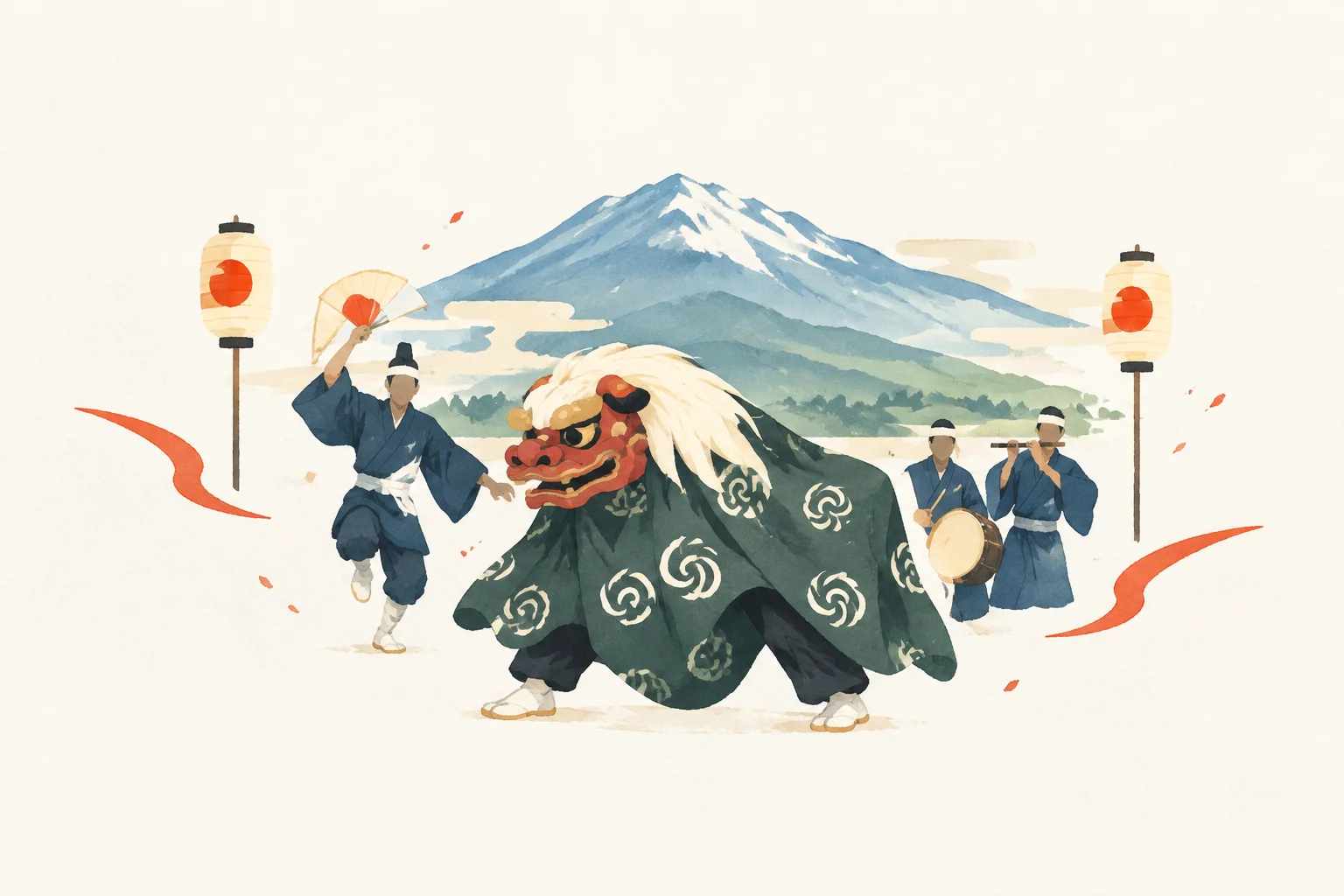
A highlight is the lion dance, in which the performer holding the lion head moves in time with another performer behind them who manipulates the lion’s cloth.
The dancers repeatedly bring the lion’s teeth together and swing its head vigorously from side to side.
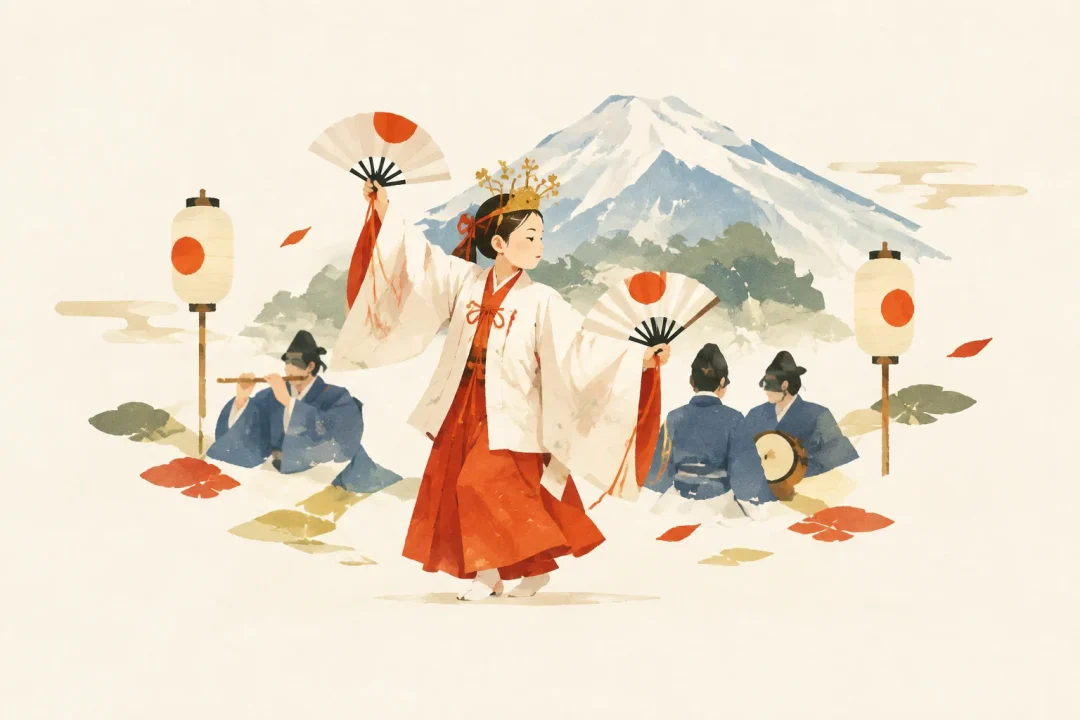
After the lion dance, each district passes down around twenty pieces, including formal dances, sacred dances, warrior dances, women’s dances, and comic dances.
The dance is also accompanied by drums, flutes, and cymbals.
Source: 国指定文化財等データベース
Bangaku passed down in a region where faith in Mount Chokai and lion dances thrive
What to expect
Performances take place on a stage set up in places such as a shrine’s , a room in a private home, or a community center.
A curtain is hung behind the stage, with the backstage area behind it. Performers move between the stage and backstage, raising and lowering the curtain as they go.
The usual order is to perform the lion dance first, followed by several bangaku pieces passed down in each district.
In some districts, performers also parade through the settlement after dedicating a performance at the festival, visiting homes to perform kadashishi.
Location and access
- Venue and address
Performances take place in shrine worship halls, rooms in private homes, community centers, and other locations in districts across the northern foothills of Mount Chokai.
There is no single venue; locations vary by district.
Event venue 秋田県由利本荘市,にかほ市 鳥海山北麓の各地区にある神社の拝殿
This map uses the venue name. Check the official guide for the event area and entrances.
Dates and season
- Season
Varies by district.
In some districts, the curtain season opens around New Year or from mid-June through July, and closes between September and December.
Tips for your visit
This bangaku is not an event held all at once at a single venue. It is performed in conjunction with shrine festivals and Bon celebrations in different districts.
If you plan to attend, check in advance which district you will visit and where the performance will be dedicated.
The performance space may be part of everyday community life, such as a shrine’s worship hall, a room in a private home, or a community center.
Follow the guidance at each venue regarding viewing and photography.
Nearby attractions
The surrounding area offers opportunities to experience the nature and history centered on Mount Chokai.
Yurihonjo City lies south of Mount Chokai and west of the Sea of Japan. The Koyoshi River flows along the mountain’s foothills.
Tourism resources are promoted mainly around Chokai Quasi-National Park, including natural scenery, hot springs, seasonal outdoor activities, and historical sites.
Source: 周辺の観光スポット | まいーれ
Origins and History of Lion Dance Bangaku of the Northern Foothills of Mount Chokai
The origins of lion dance bangaku itself are unclear. However, many districts have traditions that they learned and passed down Honkai Shishimai Bangaku, which was spread by the monk Honkai around the Kan’ei era.
Mount Chokai became an object of mountain worship, and bangaku was passed down around several pilgrimage routes on the Akita side.
Kotaki preserves a bangaku mask inscribed with the year 1659, and records from various places indicate that the tradition was already thriving in the 19th century.
Official information
The Agency for Cultural Affairs’ Database of Nationally Designated Cultural Properties describes the lion dance bangaku of the northern foothills of Mount Chokai as an “intangible folk cultural property for which measures such as documentation should be undertaken.”
The official website of Maire, the Yurihonjo City Folk Performing Arts Tradition Center, provides information on bangaku preservation societies in Yurihonjo City and Nikaho City, as well as district repertoires and dedication performances.
Lion Dance Bangaku of the Northern Foothills of Mount Chokai at a Glance
The lion dance bangaku of the northern foothills of Mount Chokai is a form of kagura passed down in districts across Yurihonjo City and Nikaho City, rooted in the mountain worship of Mount Chokai.
Around twenty pieces are passed down, including the lion dance, formal dances, sacred dances, and warrior dances. The tradition is closely tied to local life through performances dedicated at shrine festivals and during Bon, as well as kadashishi.
Dates and venues vary by district, so it is best to decide which place you plan to visit and check its details.
Japanese Festivals.jp Editorial Team
Celebrating local culture and helping you discover a side of Japan you never knew.
Article updated: 2026/10/19
Submit information or a correction Submit photos of this festival