Yuza’s Little New Year: Visitors in straw kendan and masks
Yuza’s Little New Year events

Festival information
EVENT INFORMATION- Season / frequency
- Every year on January 1, the 3rd, and the 6th / Every year
- Location
- The hamlets of Medaka, Takinoura, and Torisaki in the Fukura area of Yuza Town
- Area
- Yamagata Prefecture・Yuza Town(From Tokyo: approx. 2 h 30 min–3 h · bullet train)Prefecture-level estimate to a main station or airport, not the venue. Airport access, check-in and onward travel are extra; remote areas and islands can take much longer.
- Features
- Highlights and activities
- Wishes behind the festival
- Last updated
- 2026/10/19
This Little New Year event features Amahage wearing straw kendan visiting homes in the Fukura area of Yuza Town. Customs such as distinctive masks and gestures in each hamlet, as well as Tori Oi, have been passed down through generations.
About Yuza’s Little New Year events
Yuza’s Little New Year events are folk customs for Little New Year passed down in Medaka, Takinoura, and Torisaki in the Fukura area of Yuza Town.
Amahage wearing straw rain capes called kendan and masks of ogres or old men visit homes.
The event has been passed down as a way to chide children for laziness and wish older people a long life. It also incorporates Tori Oi and Honde-yaki.
It is a National Important Intangible Folk Cultural Property and is also registered as a UNESCO Intangible Cultural Heritage as a visiting-deity ritual.
Festival highlights
A highlight is seeing Amahage wearing masks of red or blue ogres, old men, and other figures, and wrapped in straw kendan, visit homes.
The masks’ expressions and the Amahage’s behavior inside homes vary by hamlet; in Takinoura, they perform distinctive gestures in silence.
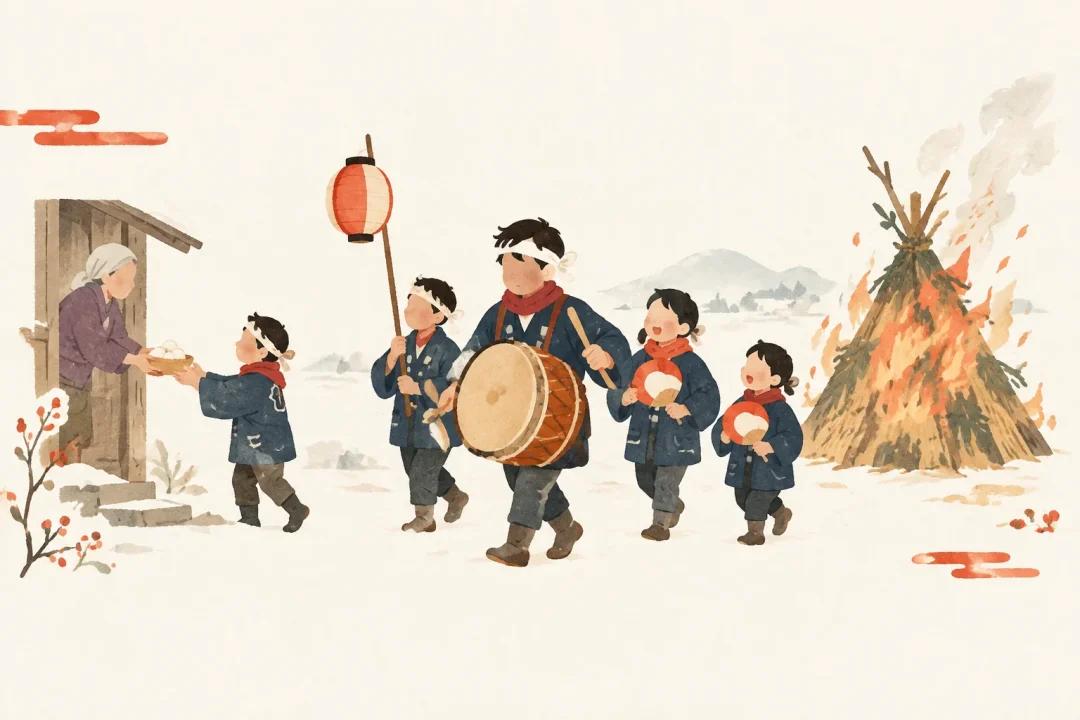
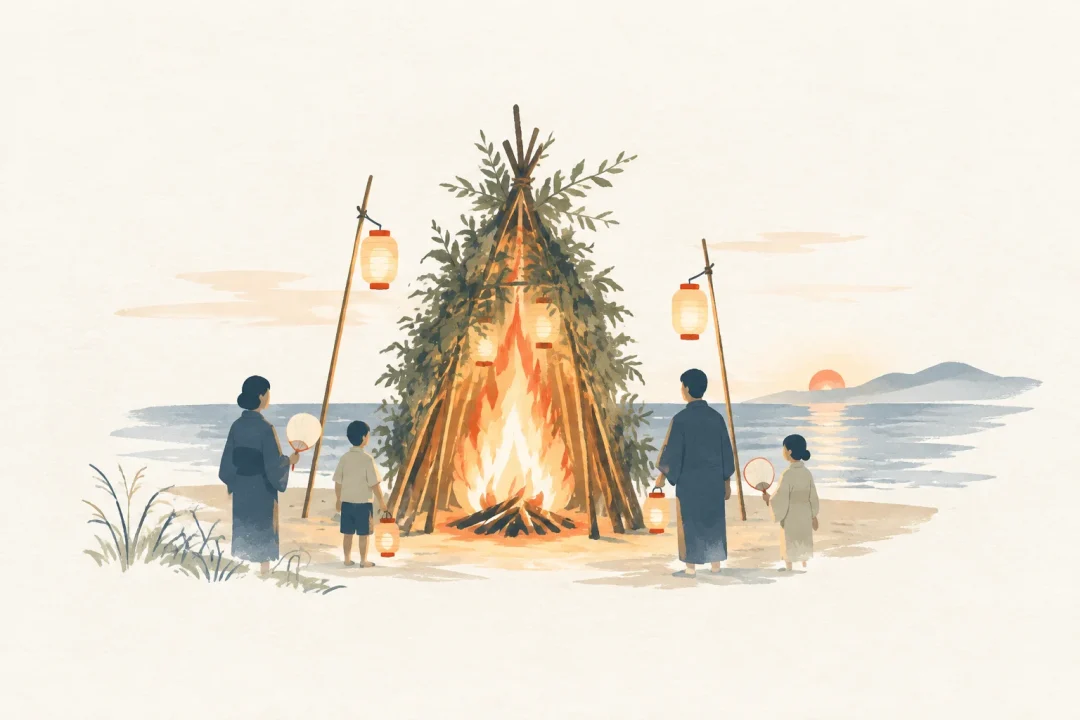
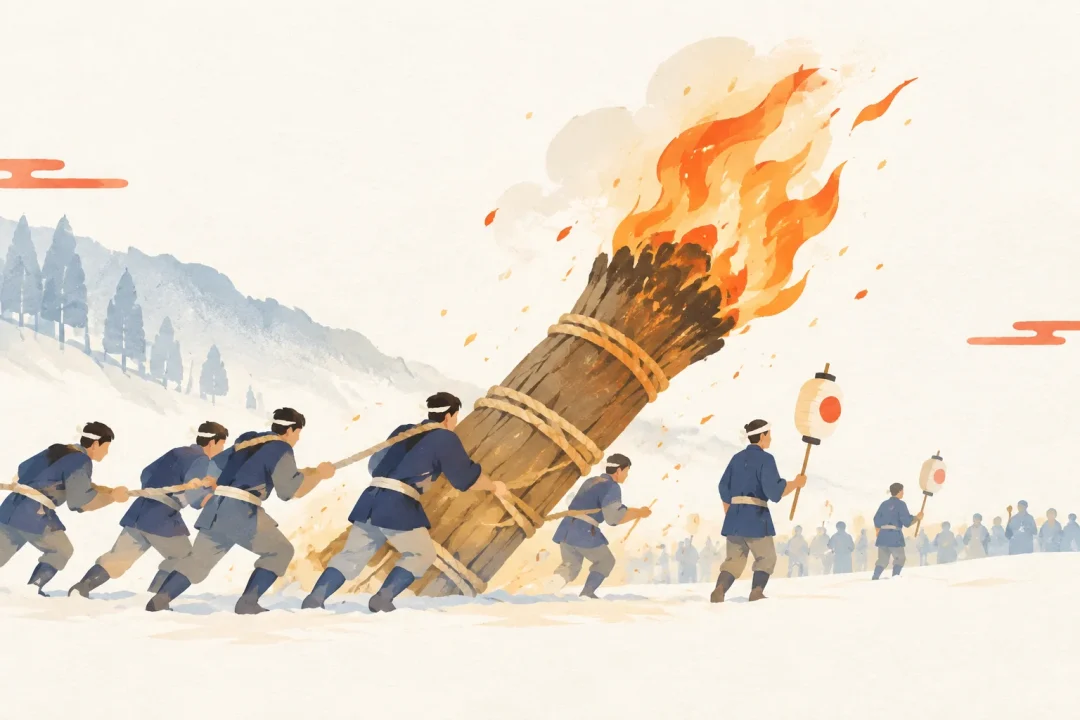
Tori Oi, in which people make the rounds of the hamlet singing Tori Oi songs to the beat of drums, and Honde-yaki, in which kadomatsu decorations, , and kendan are burned, are also distinctive features of the event.
Source: 国指定文化財等データベース
Yuza’s Little New Year: Visitors in straw kendan and masks
What to expect
On the day of the event, prayers are offered at each hamlet’s shrine. The masks are then decorated, and the kendan are put on.
In the evening, the Amahage visit homes throughout the hamlets, admonishing or blessing family members and exchanging rice cakes.
In Medaka and Takinoura, they proceed from the lower to the upper part of the hamlet; in Torisaki, they go in the opposite direction.
In Torisaki, children still make the rounds of the hamlet to the sound of drums and Tori Oi songs, in a custom known as Tori Oi.
Location and access
- Venue and address
The hamlets of Medaka, Takinoura, and Torisaki in the Fukura area of Yuza Town.
The starting points are Hachiman Shrine in Medaka, Otori Shrine in Takinoura, and Mikami Shrine in Torisaki.
Address Medaka, Takinoura, and Torisaki, Fukura, Yuza Town, Akumi District, Yamagata Prefecture
Dates and season
The event is held each year in Takinoura on January 1, in Mega on January 3, and in Torisaki on January 6.
In each settlement, after preparations at the , Amahage visit homes from early evening.
Approximate departure times are 16:30 for Mega, around 18 for Takinoura, and around 18:30 for Torisaki.
Times may vary depending on the weather and other circumstances.
Accommodation and hotels PR
Showing nearby accommodation.
Prices and availability are current at the time of retrieval. For multi-night stays, only the first night’s price is shown. Confirm the final price and directions to the venue with the booking provider. Select your dates again when using the area search link. Search area: within 3 km of Central Yamagata Prefecture / Yuza Town (the search is not centered on the festival venue)
Tips for your visit
The departure time is an approximate guide for when preparations are complete and the participants leave the shrine; it may vary depending on the weather and other circumstances.
As the event involves visits to individual homes, please take care not to disturb daily life in the hamlet or the progress of the religious rites while watching.
Masks and behavior inside homes differ in Medaka, Takinoura, and Torisaki, so please respect the character of each hamlet as you watch.
Nearby attractions

鳥海山大物忌神社
山形県飽海郡遊佐町にある神社
写真:ChiefHira / CC BY-SA 3.0(resized and reformatted)
Photo source ·Origins and History of Yuza’s Little New Year events
The origins of the event are unclear.
In the past, the three hamlets held the event on the same day, day 15 of lunar month 1. The dates later changed, and since the beginning of the Showa 50s, the event has been held on January 1, the 3rd, and the 6th.
In Heisei 11, the event was designated a National Important Intangible Folk Cultural Property, together with Tori Oi and Honde-yaki, among other customs. In Heisei 30, it was registered as a UNESCO Intangible Cultural Heritage as a visiting-deity ritual.
Official information
The official Yuza Town website provides an overview of the event, its origins, and the dates and departure times for each hamlet under “National Important Intangible Folk Cultural Property: Yuza’s Little New Year Events (Amahage).”
Yuza’s Little New Year events at a Glance
Yuza’s Little New Year events are visiting-deity rituals passed down in Medaka, Takinoura, and Torisaki in the Fukura area of Yuza Town.
Amahage wearing kendan and masks visit homes, exchanging rice cakes while offering blessings and admonitions.
Held in different hamlets every year on January 1, the 3rd, and the 6th, the event is a National Important Intangible Folk Cultural Property associated with Tori Oi and Honde-yaki.
Source: 山形の文化財検索サイト「山形の宝 検索navi」
Japanese Festivals.jp Editorial Team
Celebrating local culture and helping you discover a side of Japan you never knew.
Article updated: 2026/10/19
Submit information or a correction Submit photos of this festival