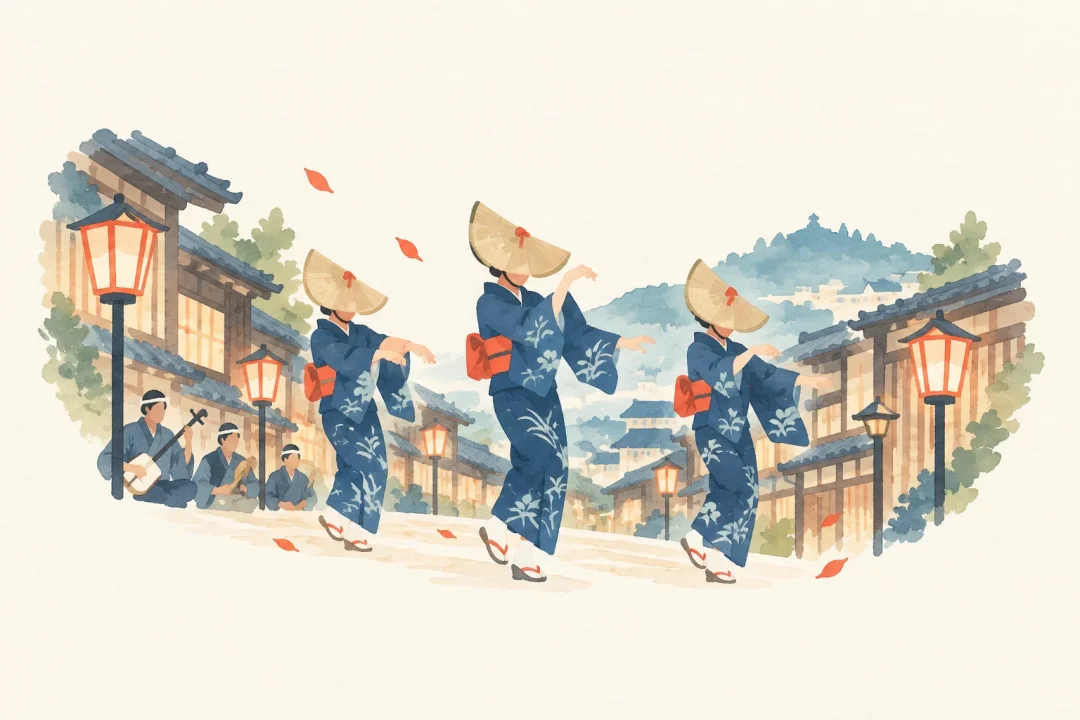
A Bon dance of fans and drums passed down in Tsushima’s villages
Tsushima Bon Odori
Festival information
EVENT INFORMATION- Season / frequency
- Mid-August (Bon in lunar calendar: July)
- Location
- Villages throughout Tsushima City
- Area
- Nagasaki Prefecture・Tsushima City(From Tokyo: approx. 1 h 50 min–2 h 20 min · flight time only)Prefecture-level estimate to a main station or airport, not the venue. Airport access, check-in and onward travel are extra; remote areas and islands can take much longer.
- Highlights and activities
- Wishes behind the festival
- Required number of participants
- Around 6–12 dancers
- Last updated
- 2026/10/19
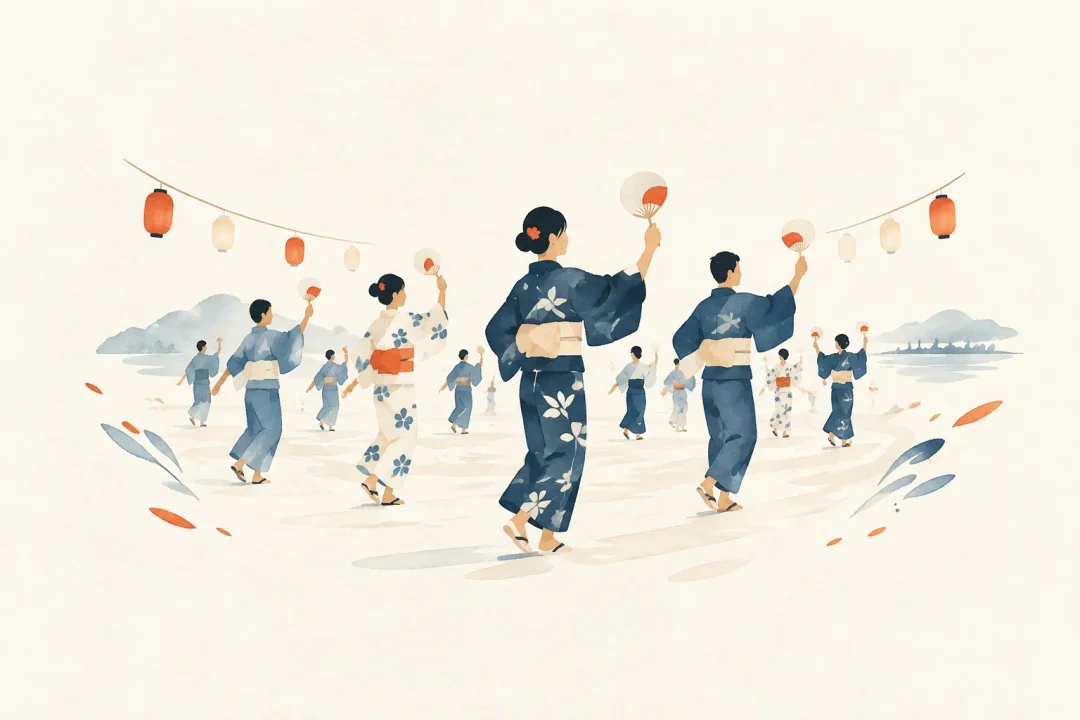
This , performed in villages throughout Tsushima City, features distinctive fan movements and footwork. Local traditions live on in the two-line dances, accompanied by drums and songs.
About Tsushima Bon Odori
Tsushima Bon Odori is a folk performing art performed in villages throughout Tsushima City, Nagasaki Prefecture, during Bon in lunar calendar: July and during Bon in the present-day August.
Its features are said to include traditional songs that differ by district and performances known as shugen.
Some performances are believed to date from the early modern period, while others are thought to have been added in its later years, conveying the layered origins of Tsushima Bon Odori.
It was designated an Important Intangible Folk Cultural Property in 2021 and inscribed on UNESCO’s Representative List of the Intangible Cultural Heritage of Humanity in 2022 as one of the “Furyu-odori” dances.
Source: 国指定文化財等データベース
Festival highlights
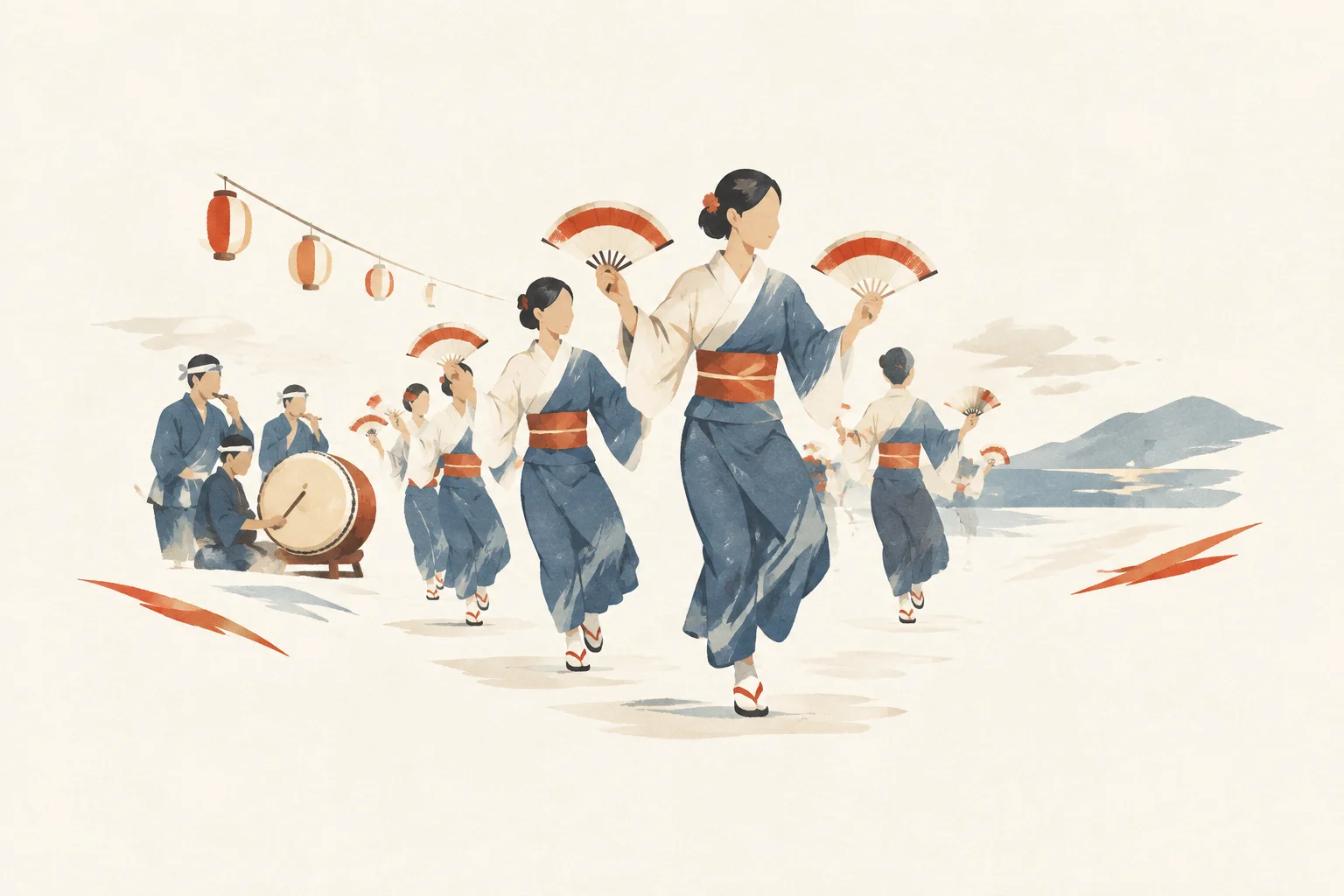
A highlight is the shugen, a celebratory dance in which performers maintain a low stance while making gestures with both hands extended forward, turning their wrists, and pinching the fan’s spine.
The distinctive footwork, which involves gliding forward, is another hallmark of Tsushima Bon Odori.
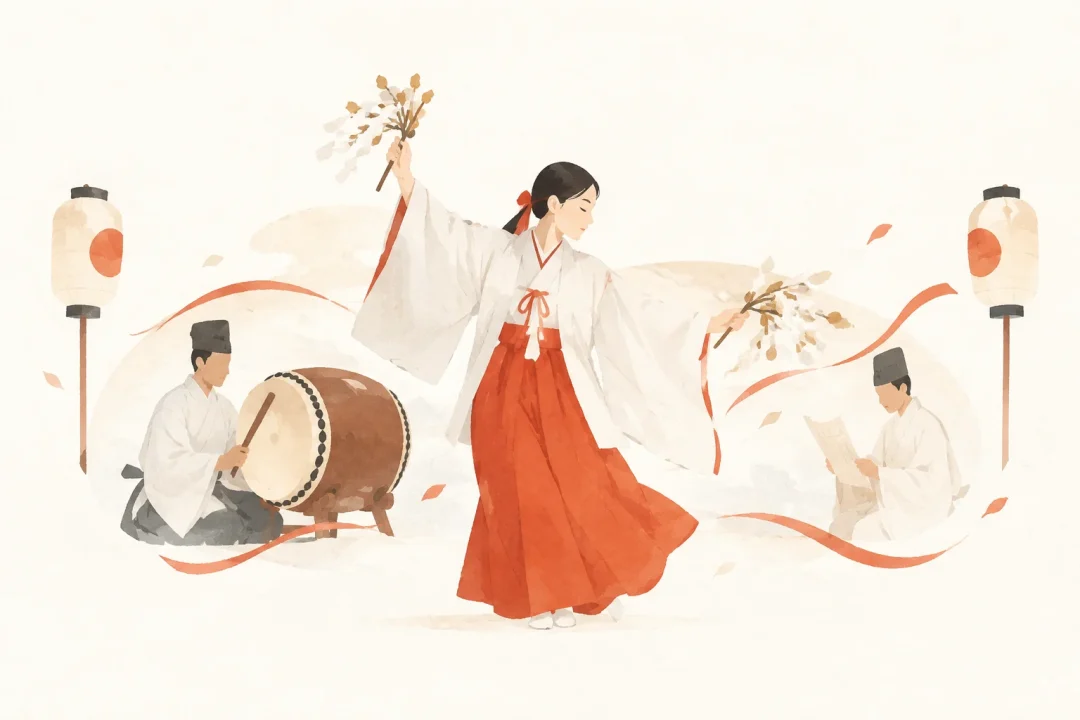
Alongside fan dances and dances performed by hand, traditions include dances using objects such as bamboo sticks, naginata and staffs, as well as narrative dances in which performers take on roles and enact a story.
Songs and performances differ by district, giving the dance’s structure distinctive local characteristics.
A Bon dance of fans and drums passed down in Tsushima’s villages
What to expect
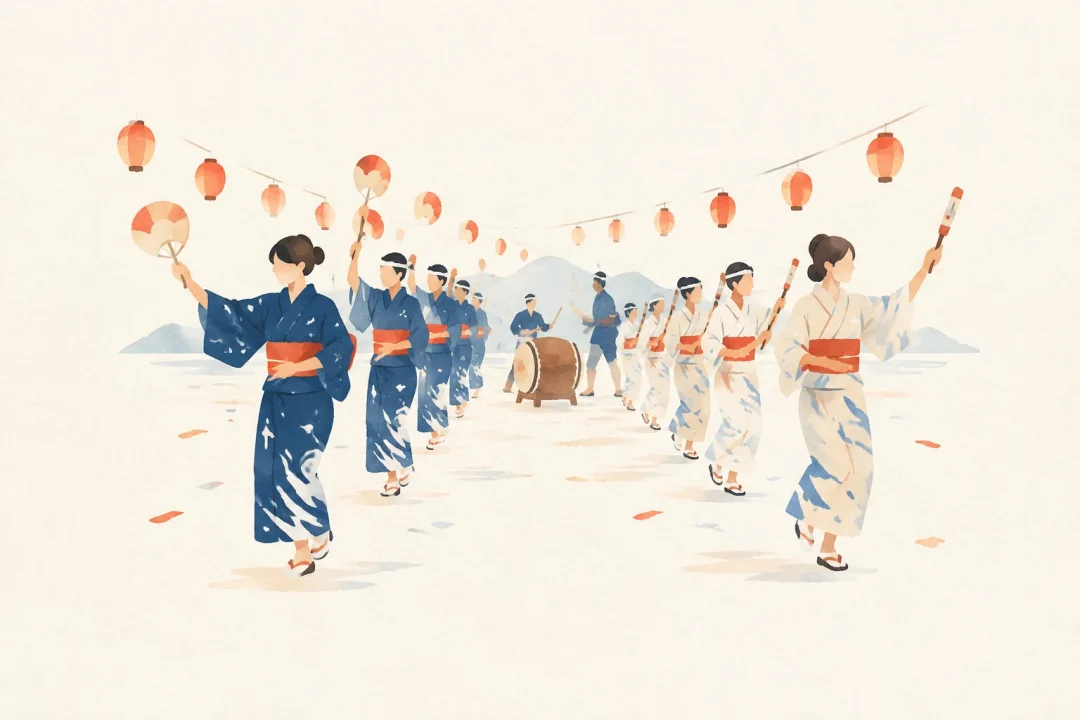
At the dance site, performers generally line up in two lines and dance to the studded drums and songs of the lead singers.
There are around 6–12 dancers; in some districts, people sing while playing the drums or while dancing.
In the procession heading to the dance site, an ezuri—a bamboo pole decorated with cloth ornaments and colored paper—is carried at the front.
After the dance, the ezuri is placed in a designated location or sent floating down a river.
How to take part
必要人数:踊り子は6〜12名ほど
Location and access
- Venue and address
Held in villages throughout Tsushima City, Nagasaki Prefecture.
No single venue is listed.
Address Villages throughout Tsushima City, Nagasaki Prefecture
Dates and season
- Season
Mid-August (Bon in lunar calendar: July)
Accommodation and hotels PR
Showing nearby accommodation.
Prices and availability are current at the time of retrieval. For multi-night stays, only the first night’s price is shown. Confirm the final price and directions to the venue with the booking provider. Select your dates again when using the area search link. Search area: within 3 km of Central Nagasaki Prefecture / Tsushima City (the search is not centered on the festival venue)
Tips for your visit
The event is held in villages throughout Tsushima City, with traditional songs and repertoire varying by district.
If you wish to watch, you should check in advance which district the dance will take place in.
At the dance venue, processions, taiko drumming, and performances by the singers take place, so it is important to watch quietly from a spot that does not obstruct the proceedings.
For the specific venues and times in 2026, check the information provided by the district hosting the event.
Nearby attractions

上対馬町歴史民俗資料室
長崎県対馬市にある博物館

対馬博物館
長崎県対馬市にある博物館

対馬野生生物保護センター
長崎県の動物園・水族館のスポットです。

峰町歴史民俗資料館
長崎県対馬市にある博物館

豊玉町郷土館
長崎県対馬市にある博物館

長崎県立対馬歴史民俗資料館
長崎県対馬市にあった博物館
Origins and History of Tsushima Bon Odori
Tsushima Bon Odori includes performances believed to date from the early modern period and others thought to have been added in the later early modern period.
For this reason, its origins are thought to be complex, with dances from different periods layered together rather than stemming from a single background.
The movements of the fans and hands, as well as the footwork, also have distinctive local characteristics. This folk performing art shows how Bon dancing developed on Tsushima, a remote island at the northernmost end of Kyushu.
It was designated an Important Intangible Folk Cultural Property in 2021 and inscribed on UNESCO’s Representative List of the Intangible Cultural Heritage of Humanity in 2022.
Official information
The Agency for Cultural Affairs’ Database of Nationally Designated Cultural Properties introduces Tsushima Bon Odori as an Important Intangible Folk Cultural Property.
Tsushima City’s cultural properties guide also has a page about “Tsushima Bon Odori.”
Source: 文化財/対馬市
Tsushima Bon Odori at a Glance
Tsushima Bon Odori is a folk performing art of the Bon season, passed down in villages throughout Tsushima City.
Local characteristics are reflected in the two-line dance formations, performances using fans and other objects, and the musical accompaniment of studded drums and lead singers.
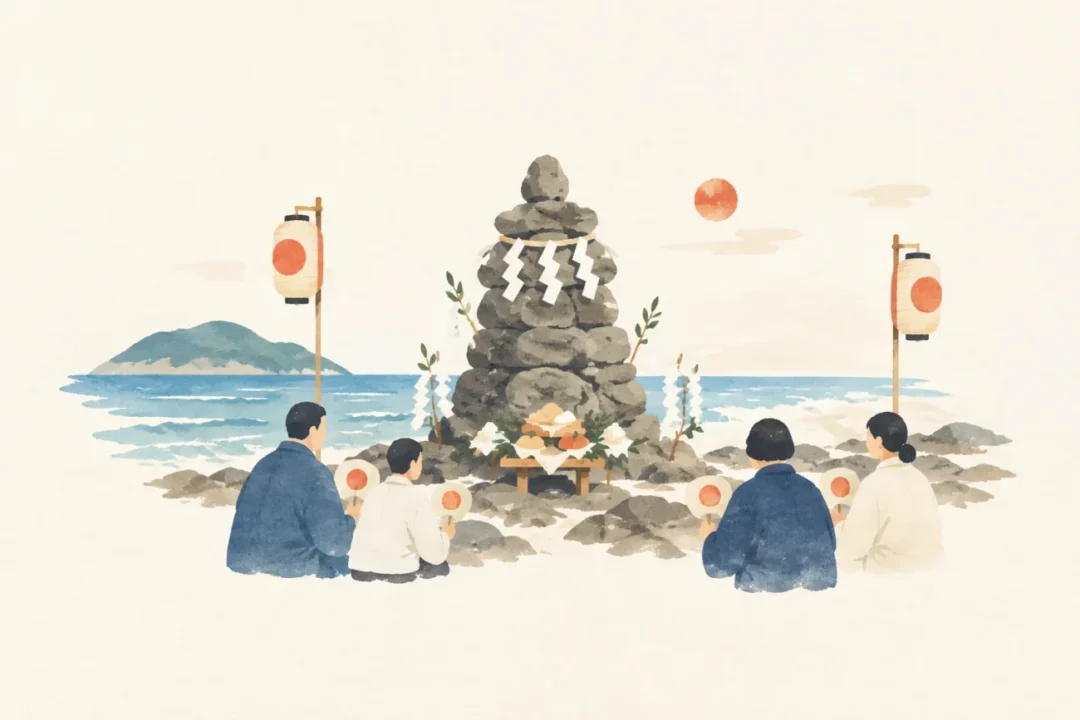
The ezuri carried at the head of the procession is thought to serve as a yorishiro, or vessel for ancestral spirits, linking the dance site with Bon customs.
As a cultural property that conveys changes dating back to the early modern period, this dance is worth observing with respect for local traditions.
Japanese Festivals.jp Editorial Team
Celebrating local culture and helping you discover a side of Japan you never knew.
Article updated: 2026/10/19
Submit information or a correction Submit photos of this festival