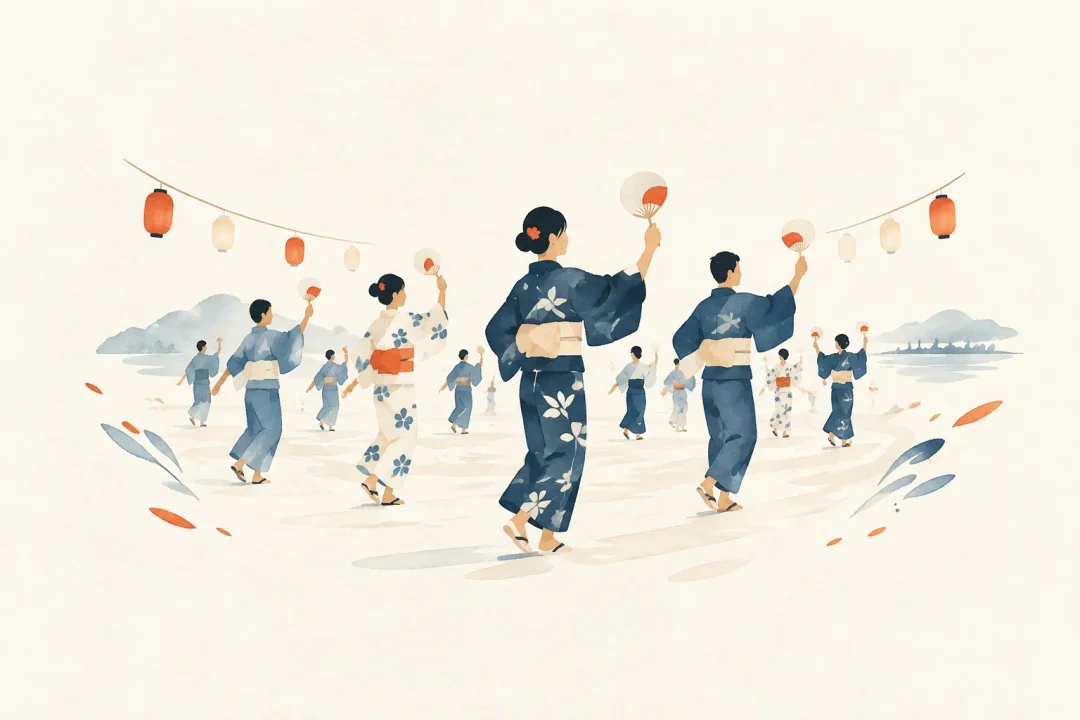
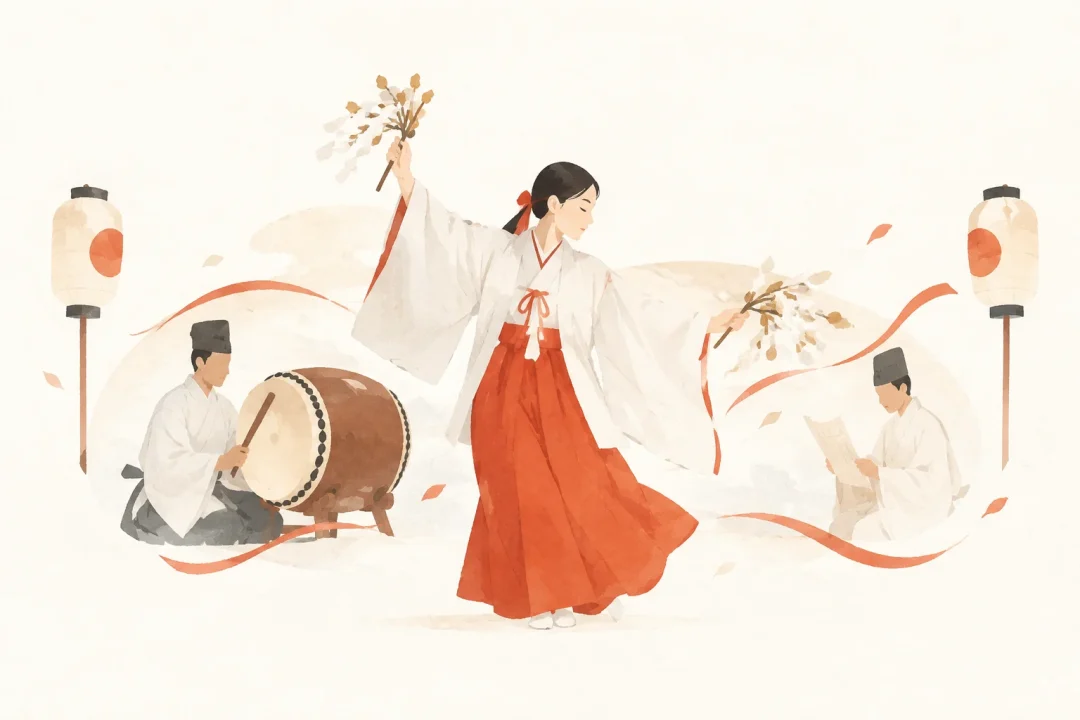
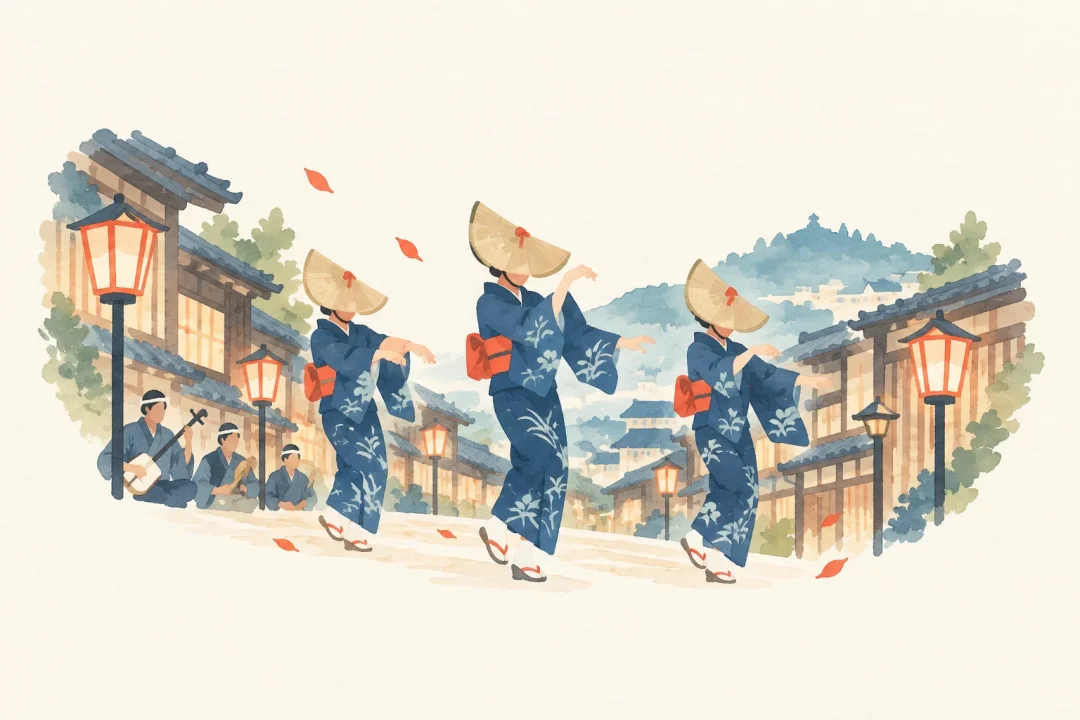
The Bon season in Mitsushima, carried on through dances in two lines and lively music
Tsushima Mitsushima Bon Odori

Festival information
EVENT INFORMATION- Season / frequency
- day 14 of lunar month 7–15, during the Urabon-e season
- Location
- Shrines, temples, and the gardens of homes in settlements throughout Mitsushima Town, Tsushima City
- Area
- Nagasaki Prefecture・Tsushima City(From Tokyo: approx. 1 h 50 min–2 h 20 min · flight time only)Prefecture-level estimate to a main station or airport, not the venue. Airport access, check-in and onward travel are extra; remote areas and islands can take much longer.
- Highlights and activities
- Wishes behind the festival
- Required number of participants
- About 6–12 people
- Last updated
- 2026/10/19
A traditional passed down in settlements throughout Mitsushima Town, Tsushima City, distinguished by its striking formation of two parallel lines. A variety of dances accompanied by drums and songs, along with props such as fans and ayatake bamboo, enliven the local Bon celebrations.
About Tsushima Mitsushima Bon Odori
Tsushima Mitsushima Bon Odori is a fūryū dance passed down in settlements throughout Mitsushima Town, Tsushima City, primarily during the Urabon-e season.
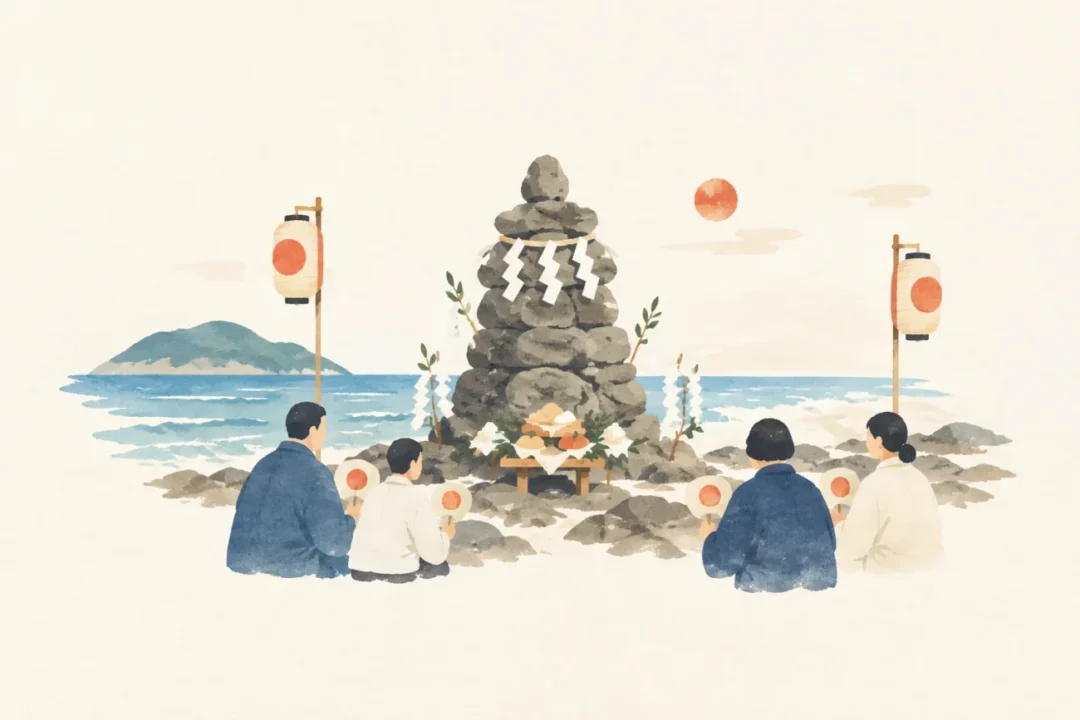
The dances are performed as a way to comfort the spirits of ancestors, with shrines, temples, and the gardens of homes serving as venues.
A distinctive feature is the use of elaborate costumes, decorations, props, and musical instruments, and the dancers form two parallel lines rather than the circle typical of Bon Odori.
Source: 「対馬の盆踊」について/対馬市 / 長崎県の文化財
Festival highlights
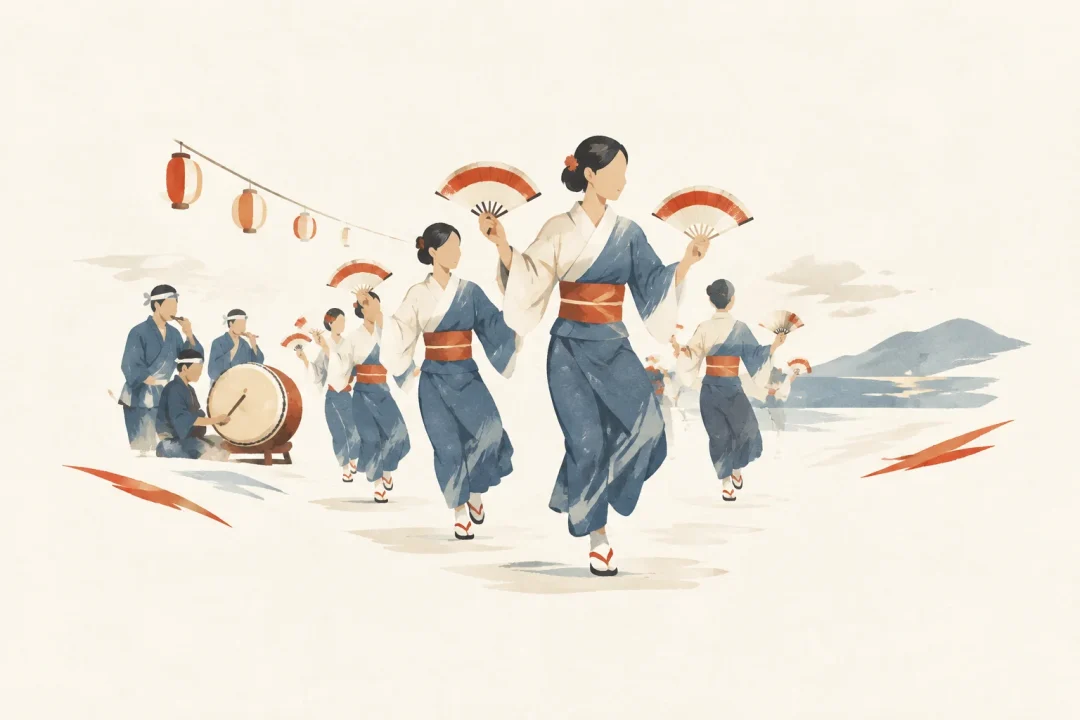
A highlight is watching around 6 to 12 dancers form two parallel lines and move to the accompaniment of drums and singers.
In “Shugen,” dancers perform hand and foot movements, use fans, and hold a low posture with bent knees to a distinctive melody.
There are also prop dances using items such as ayatake bamboo, naginata polearms, and staffs, as well as staged dances that portray stories. You can enjoy traditional songs and dances that vary from settlement to settlement.
The Bon season in Mitsushima, carried on through dances in two lines and lively music
What to expect
Dancers line up in two rows and perform to music and songs accompanied by drums, flutes, gongs, and other instruments.
Tradition holds that the program begins with “Shugen,” followed by several other dances.
In some areas, dancers carry an elaborately decorated bamboo branch called an “Ezuri” at the front of the procession as they head to the dance venue. Afterwards, it is either floated down a river or placed in a designated location.
Source: 国指定文化財等データベース
How to take part
必要人数:6~12人ほど
Location and access
- Venue and address
The dances take place at shrines, temples, and in the gardens of homes in settlements throughout Mitsushima Town, Tsushima City.
Event venue 長崎県対馬市 対馬市美津島町の各集落にある社寺や家々の庭先
This map uses the venue name. Check the official guide for the event area and entrances.
Dates and season
Traditionally, it has been passed down in each settlement, mainly from day 14 of lunar month 7 to the 15th, during the time of the Urabon-e observances.
Records from the Minokata district describe events spanning several days of the old lunar calendar, from the start of practice through the main performance to the final Sougan-hodoki.
Accommodation and hotels PR
Showing nearby accommodation.
Prices and availability are current at the time of retrieval. For multi-night stays, only the first night’s price is shown. Confirm the final price and directions to the venue with the booking provider. Select your dates again when using the area search link. Search area: within 3 km of Central Nagasaki Prefecture / Tsushima City (the search is not centered on the festival venue)
Nearby attractions

上対馬町歴史民俗資料室
長崎県対馬市にある博物館

対馬博物館
長崎県対馬市にある博物館

対馬野生生物保護センター
長崎県の動物園・水族館のスポットです。

峰町歴史民俗資料館
長崎県対馬市にある博物館

豊玉町郷土館
長崎県対馬市にある博物館

長崎県立対馬歴史民俗資料館
長崎県対馬市にあった博物館
Origins and History of Tsushima Mitsushima Bon Odori
Tsushima’s Bon Odori has ancient origins and is said to date back to the Nenbutsu dances of the Muromachi period.
There was a period when the dance in Mitsushima was performed mainly by the eldest sons of long-established families in each settlement. Dancers were taught strict rules and proper conduct.
It was close to dying out in the 1930s, but gradually revived thereafter. It is now subject to documentation and preservation as a folk performing art connected to local society and customs.
Official information
Tsushima City’s cultural heritage guide introduces Tsushima’s Bon Odori as an Important Intangible Folk Cultural Property.
The National Register of Cultural Properties database lists the dance as “Tsushima Mitsushima Bon Odori” and names the Mitsushima Bon Odori Preservation Association as its preservation group.
Tsushima Mitsushima Bon Odori at a Glance
Tsushima Mitsushima Bon Odori is a fūryū dance passed down in each settlement as a way to comfort the spirits of ancestors.
It is known for its two-line formation, drums and songs, props such as fans and naginata polearms, and “Ezuri”—bamboo branches decorated with colorful ornaments.
例年は旧暦7月14日から15日を中心に行われます。
Japanese Festivals.jp Editorial Team
Celebrating local culture and helping you discover a side of Japan you never knew.
Article updated: 2026/10/19
Submit information or a correction Submit photos of this festival