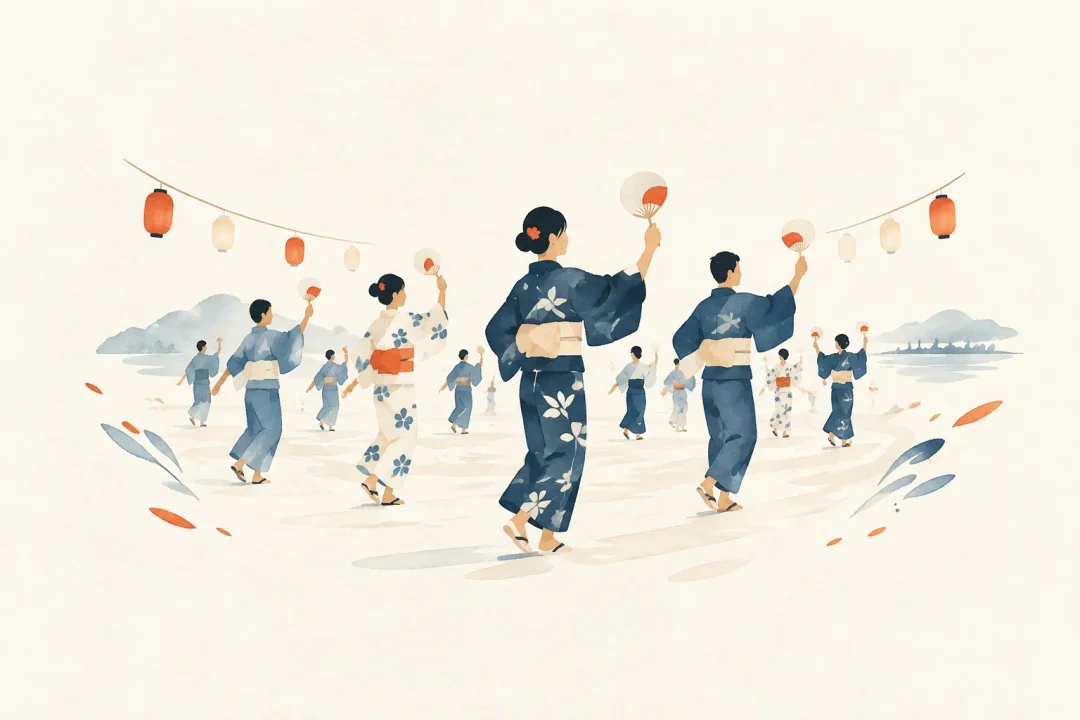
A shrine maiden dance of drums and kagura songs passed down in Tsushima
Mibu no Mai
Festival information
EVENT INFORMATION- Season / frequency
- day 1 of lunar month 8, day 5 of lunar month 8 / Every year
- Area
- Nagasaki Prefecture・Tsushima City(From Tokyo: approx. 1 h 50 min–2 h 20 min · flight time only)Prefecture-level estimate to a main station or airport, not the venue. Airport access, check-in and onward travel are extra; remote areas and islands can take much longer.
- Highlights and activities
- Last updated
- 2026/10/19
Performed at annual shrine festivals in Tsushima, the Mibu no Mai is a traditional shrine maiden dance combining drums, prayers, songs, and a dance facing the four directions.
About Mibu no Mai
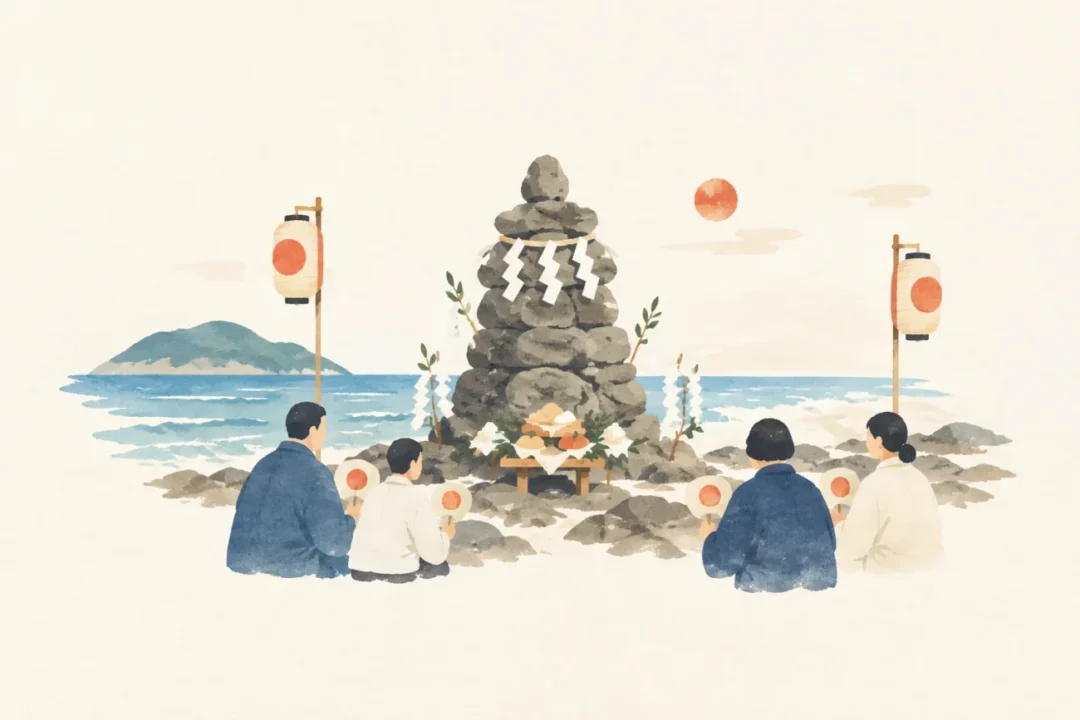
The Mibu no Mai is a shrine maiden dance handed down in Tsushima, Nagasaki Prefecture. It is performed at festivals such as the annual festival at Watatsumi Shrine in Toyotama and the annual festival at Kaijin Shrine in Mine.
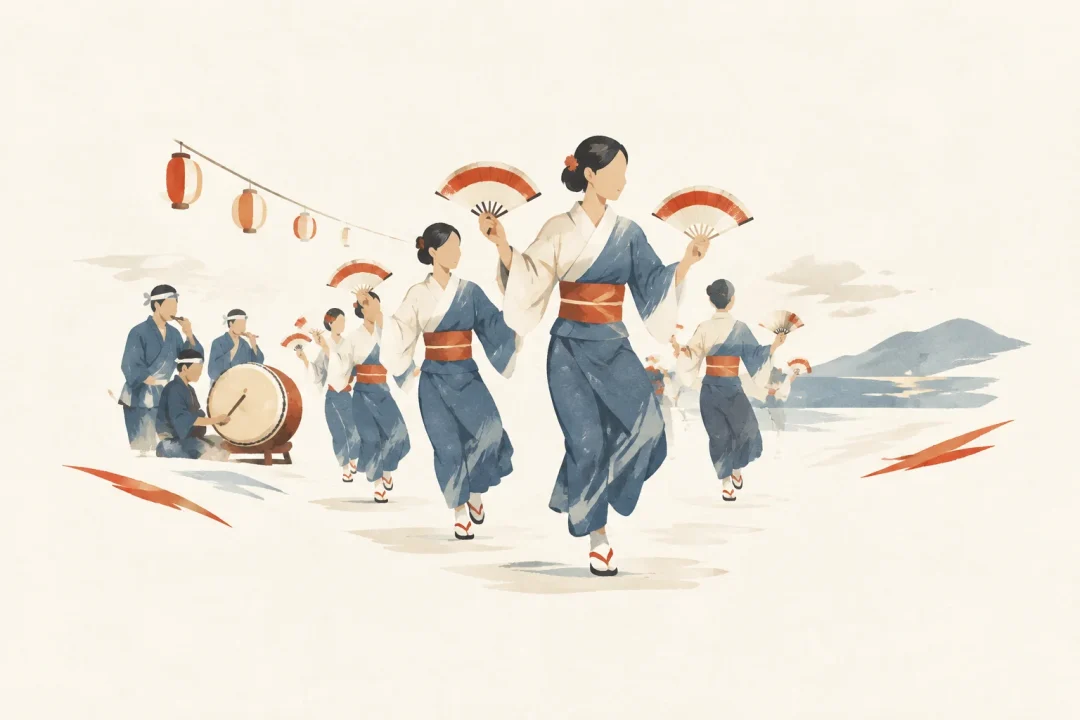
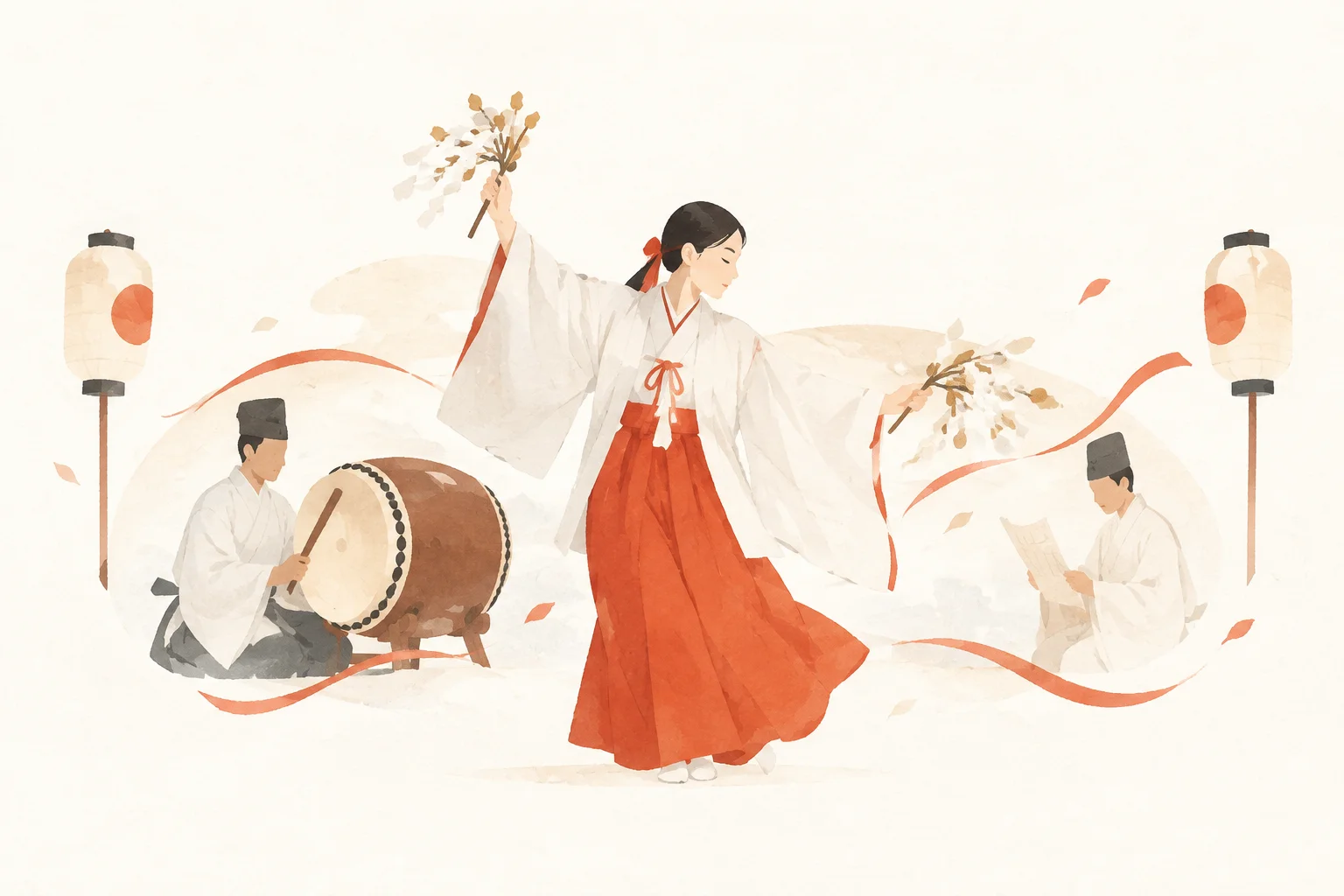
This folk performing art preserves an old form of kagura, performed by a myōbu wearing white robes, scarlet hakama, and a chihaya jacket.
In Heisei 8, it was designated a Nationally Selected Intangible Folk Cultural Property.
Source: 国指定文化財等データベース / 長崎県の文化財
Festival highlights
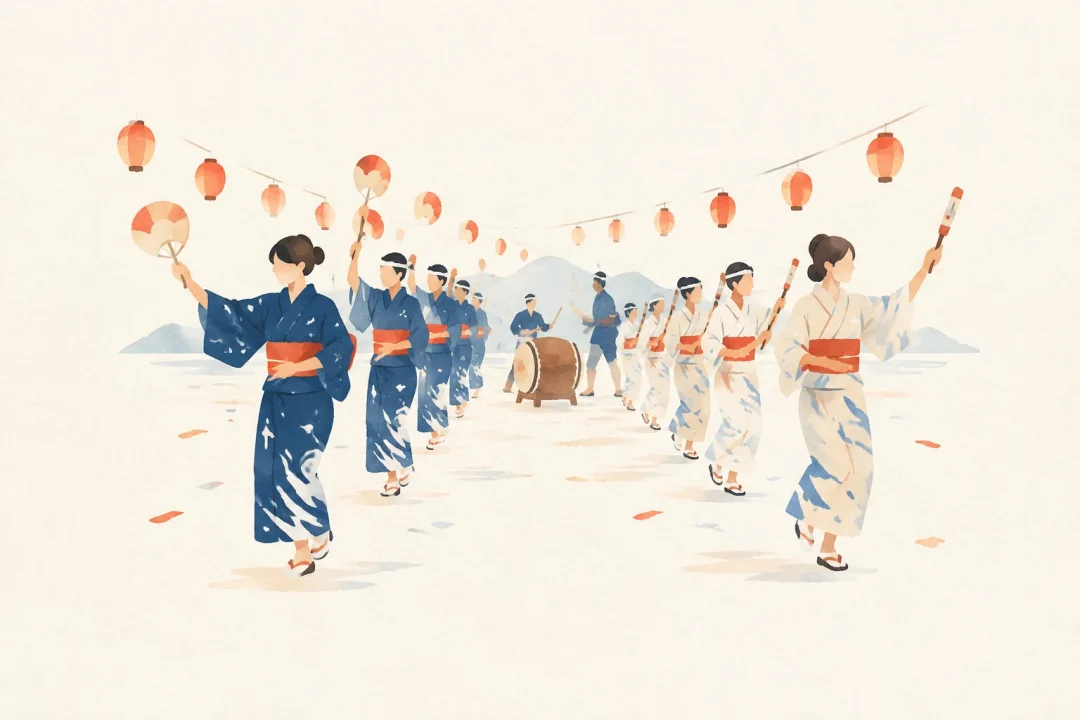
The highlight is the myōbu beating a drum while chanting a kagura norito, then taking up the kagura bells and performing the four-direction dance while singing an old-style kagura song.
The drum, norito, song, and dance come together in a sequence of movements, evoking an original form of kagura.
A distinctive feature is the long norito chanted while beating the drum.
A shrine maiden dance of drums and kagura songs passed down in Tsushima
What to expect
During the offering, the myōbu wears white robes, white tabi, a scarlet hakama, and a chihaya, while beating a hayashi drum and chanting a kagura norito.
Next, holding kagura bells in her right hand, she performs the four-direction dance while singing an old-style kagura song.
It has been passed down as a dance connected with shrine festivals, including the at Watatsumi Shrine and Kaijin Shrine.
Location and access
- Address
Tsushima City
Host municipality 長崎県対馬市
This map shows the surrounding area, not the exact venue location.
Dates and season
- Season
day 1 of lunar month 8, day 5 of lunar month 8
- Frequency
Every year
Accommodation and hotels PR
Showing nearby accommodation.
Prices and availability are current at the time of retrieval. For multi-night stays, only the first night’s price is shown. Confirm the final price and directions to the venue with the booking provider. Select your dates again when using the area search link. Search area: within 3 km of Central Nagasaki Prefecture / Tsushima City (the search is not centered on the festival venue)
Nearby attractions

上対馬町歴史民俗資料室
長崎県対馬市にある博物館

対馬博物館
長崎県対馬市にある博物館

対馬野生生物保護センター
長崎県の動物園・水族館のスポットです。

峰町歴史民俗資料館
長崎県対馬市にある博物館

豊玉町郷土館
長崎県対馬市にある博物館

長崎県立対馬歴史民俗資料館
長崎県対馬市にあった博物館
Origins and History of Mibu no Mai
The origins of the Mibu no Mai are unclear, but records confirm that it was passed down hereditarily in the early modern period. Its origins are believed to date back to before the medieval period.
During the Edo period, families known as myōbu families, in which the role of myōbu was passed down hereditarily, existed in various places.
The number of tradition-bearers declined from the modern era through the postwar period, and the tradition is now at risk of being lost.
Official information
You can find cultural property information about the Mibu no Mai in the Database of National Cultural Properties.
The Nagasaki Prefecture Cultural Properties Database also provides information on its location, preservation group, performance style, and history.
Mibu no Mai at a Glance
The Mibu no Mai is a shrine maiden dance performed at annual shrine festivals in Tsushima, preserving an old form of kagura.
A distinctive feature is the performance: the dancer beats a drum while reciting norito prayers, then performs a dance facing the four directions to kagura songs.
This cultural property preserves a tradition believed to date back to before the medieval period, passed down through ritual festivals.
Japanese Festivals.jp Editorial Team
Celebrating local culture and helping you discover a side of Japan you never knew.
Article updated: 2026/10/19
Submit information or a correction Submit photos of this festival