A New Year ritual in Miko, with messages from crows and wishes entrusted to the bow
Miko New Year Ritual
Festival information
EVENT INFORMATION- Season / frequency
- From mid-December to January 2
- Location
- Hamamiya, Miko Shrine, Keiunji Temple
- Area
- Fukui Prefecture・Wakasa Town(From Tokyo: approx. 2 h 50 min–3 h 20 min · bullet train)Prefecture-level estimate to a main station or airport, not the venue. Airport access, check-in and onward travel are extra; remote areas and islands can take much longer.
- Features
- Highlights and activities
- Wishes behind the festival
- Last updated
- 2026/10/19
This New Year ritual, passed down in Miko, Wakasa Town, Fukui Prefecture, is a prayer for safety at sea and a bountiful catch. Through Senjiki, when crows peck at offerings, the bow-shooting ritual, and the Dō no Kō gathering, it conveys the prayers and bonds of the local community.
About Miko New Year Ritual
The Miko New Year Ritual is a traditional New Year folk event passed down in Miko, Wakasa Town, Fukui Prefecture.
Preparations begin in mid-December, followed after the New Year by Senjiki, the bow-shooting ritual, and the Dō no Kō gathering.
Prayers for a bountiful catch and safety at sea are intertwined with rituals involving households throughout the community.
Source: 神子の正月神事 文化遺産オンライン
Festival highlights
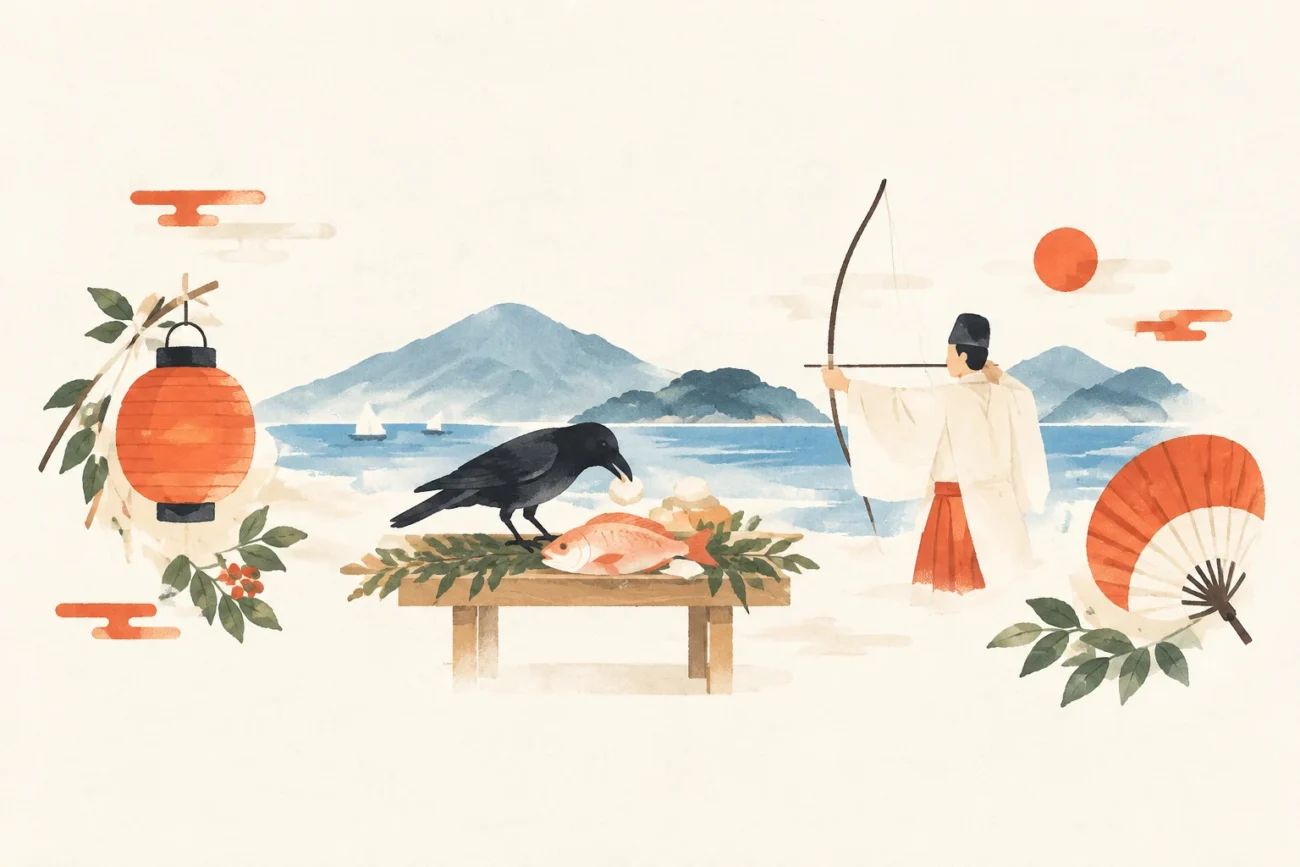
The highlight is Senjiki, when crows peck at the offerings.
When crows peck at the offerings, it is said that “Senjiki has risen”; the assembled household heads applaud and shout “Banzai!”
After a scene in which the year’s catch is divined, a bow-shooting ritual is held to pray for safety at sea and a bountiful catch.
A New Year ritual in Miko, with messages from crows and wishes entrusted to the bow
What to expect
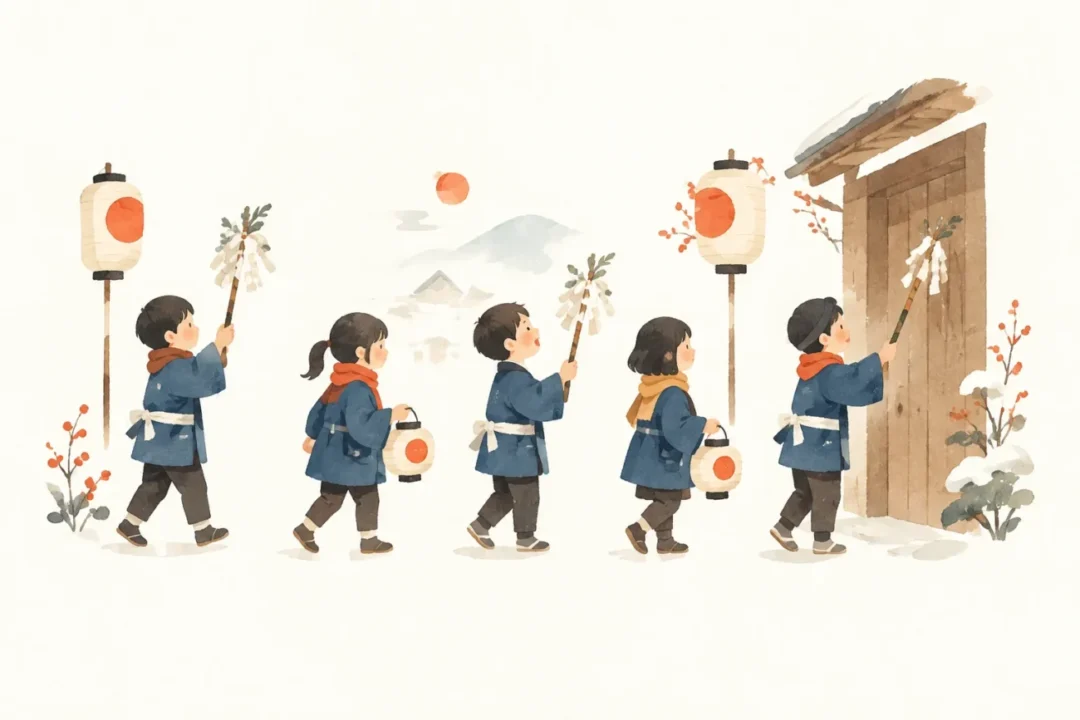
The events begin in mid-December with Matsu-, the construction of a temporary shelter for Senjiki, and the ritual pounding of mochi.
On January 1, Senjiki and the bow-shooting ritual take place, followed by the Hamamiya ceremony and then ceremonies and the transfer of the asatō role at Miko Shrine.
On January 2, the household heads gather in the main hall of Keiunji Temple and hold ceremonies including the transfer of the dōtō role.
How to take part
Each household head in the community is involved in the central events.
At Senjiki, the household heads gather and react to what happens; at the Dō no Kō gathering on January 2, they also gather in the main hall of Keiunji Temple.
Location and access
- Venue and address
The events take place at Hamamiya, Miko Shrine, Keiunji Temple, and other locations in Miko, Wakasa Town, Mikatakaminaka District, Fukui Prefecture.
Address Miko, Wakasa Town, Mikatakaminaka District, Fukui Prefecture
Dates and season
- Season
From mid-December to January 2
Accommodation and hotels PR
Showing nearby accommodation.
Prices and availability are current at the time of retrieval. For multi-night stays, only the first night’s price is shown. Confirm the final price and directions to the venue with the booking provider. Select your dates again when using the area search link. Search area: within 3 km of Central Fukui Prefecture / Wakasa Town (the search is not centered on the festival venue)
Nearby attractions

福井県年縞博物館
福井県若狭町にある地誌学の博物館

若狭三方縄文博物館
福井県若狭町にある博物館
Origins and History of Miko New Year Ritual
The origins and detailed history of how the Miko New Year Ritual was established have not been clarified.
Today, it is designated an intangible folk cultural property by Wakasa Town.
The designation date is April 20, 2011.
Source: 文化財一覧(町)/若狭町
Official information
Basic information about this cultural property is available through the Agency for Cultural Affairs’ Cultural Heritage Online.
Wakasa Town’s cultural properties list also includes the Miko New Year Ritual as a town-designated intangible folk cultural property.
Miko New Year Ritual at a Glance
The Miko New Year Ritual is a New Year event in Miko, Wakasa Town, with preparations beginning in mid-December and rituals continuing on January 1 and 2.
The events include Senjiki, when crows peck at offerings; a bow-shooting ritual praying for safety at sea and a bountiful catch; and the Dō no Kō gathering, attended by household heads.
As an intangible folk cultural property designated by Wakasa Town, it conveys the community’s beliefs and way of life.
Japanese Festivals.jp Editorial Team
Celebrating local culture and helping you discover a side of Japan you never knew.
Article updated: 2026/10/19
Submit information or a correction Submit photos of this festival