A Shichinen Festival where mikoshi and performances carry on Nishizu’s fishing-village culture
Nishizu Shichinen Festival
Festival information
EVENT INFORMATION- Season / frequency
- Once every 7 years (in the Years of the Snake and the Boar)
- Location
- Munakata and the Nishizu district
- Area
- Fukui Prefecture・Obama City(From Tokyo: approx. 2 h 50 min–3 h 20 min · bullet train)Prefecture-level estimate to a main station or airport, not the venue. Airport access, check-in and onward travel are extra; remote areas and islands can take much longer.
- Features
- Highlights and activities
- Wishes behind the festival
- Required number of participants
- Some performances are performed by groups of 2–5. Bo-furi Da features 2 or 3 boys; in biwa, 2 children play taiko
- Last updated
- 2026/10/22
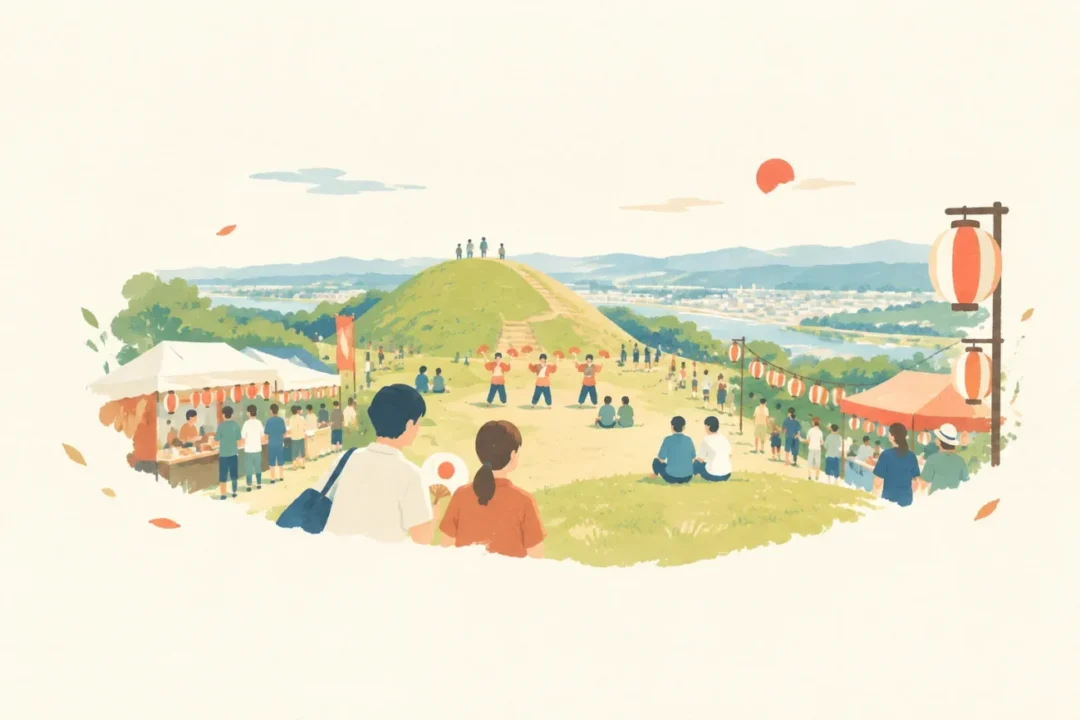
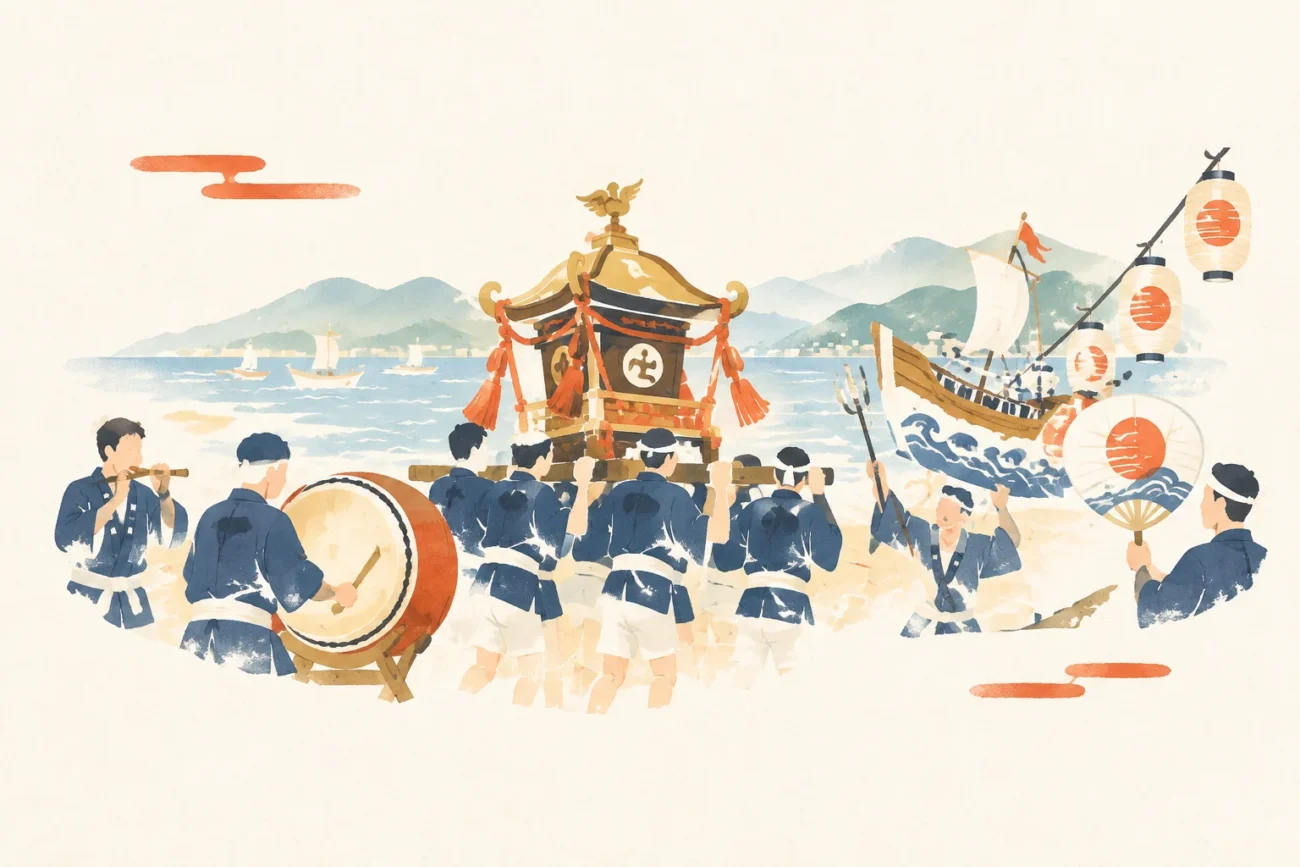
This regular grand festival unfolds in Nishizu, a district facing Obama Bay, with a procession and a variety of performances handed down locally. Through taiko, flutes, sword displays, and funadama models, it conveys faith in fishing and safety at sea, as well as the performing arts of each town.
About Nishizu Shichinen Festival
The Nishizu Shichinen Festival is the regular grand festival of Munakata Jinja in Nishizu, north of central Obama City.
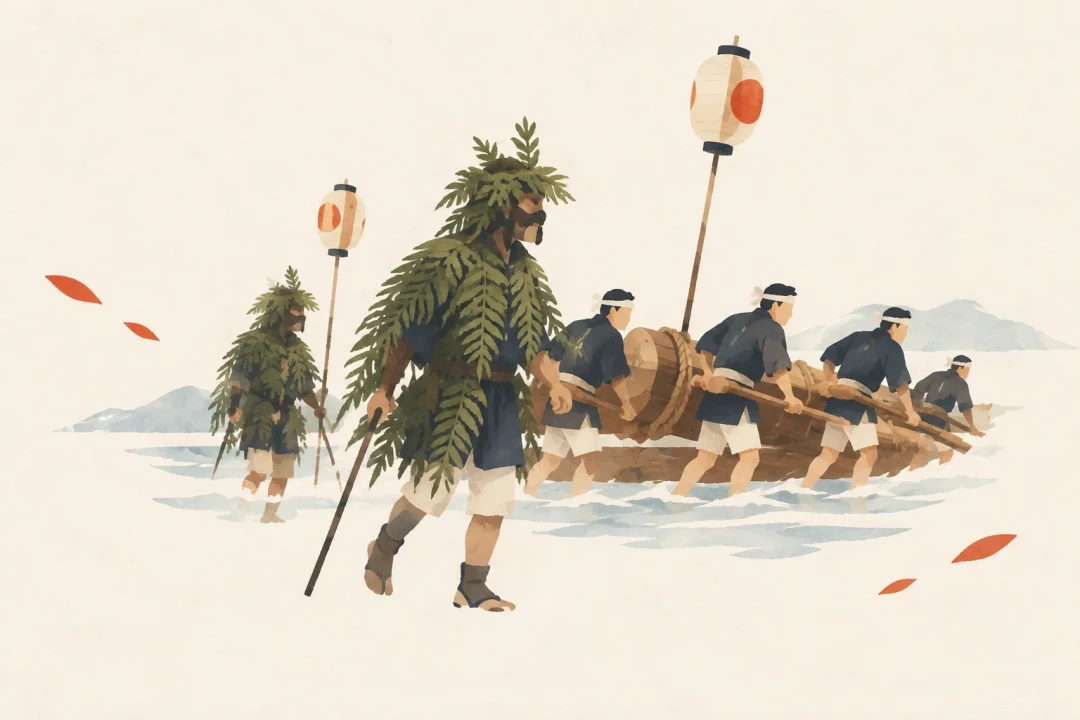
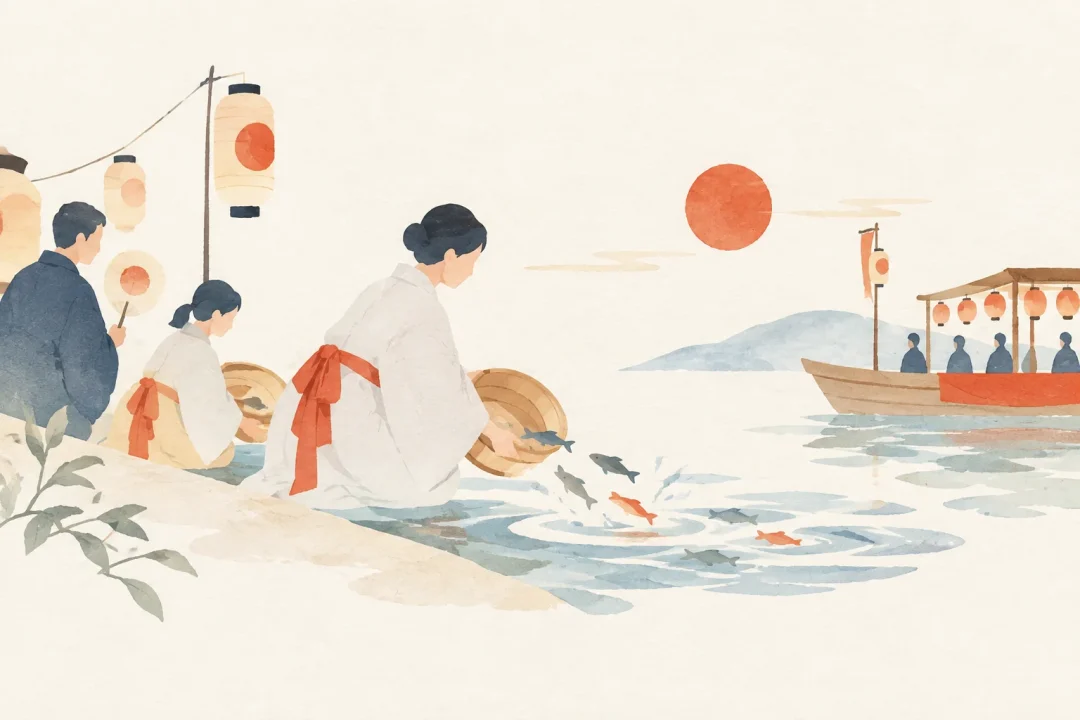
Held in the Years of the Snake and the Boar, the festival reflects Nishizu’s history as a prosperous fishing village and the local faith in fishing and safety at sea.
The mikoshi procession is accompanied by festival performances known as “entertainments,” presented by . Each neighborhood showcases traditions handed down locally, including taiko, , sword displays, and biwa.
It is one of the largest early-modern urban-style festivals still held in the prefecture and is designated an Intangible Folk Cultural Property by the prefecture.
Source: 文化財詳細 | 福井県文化財ページ
Festival highlights
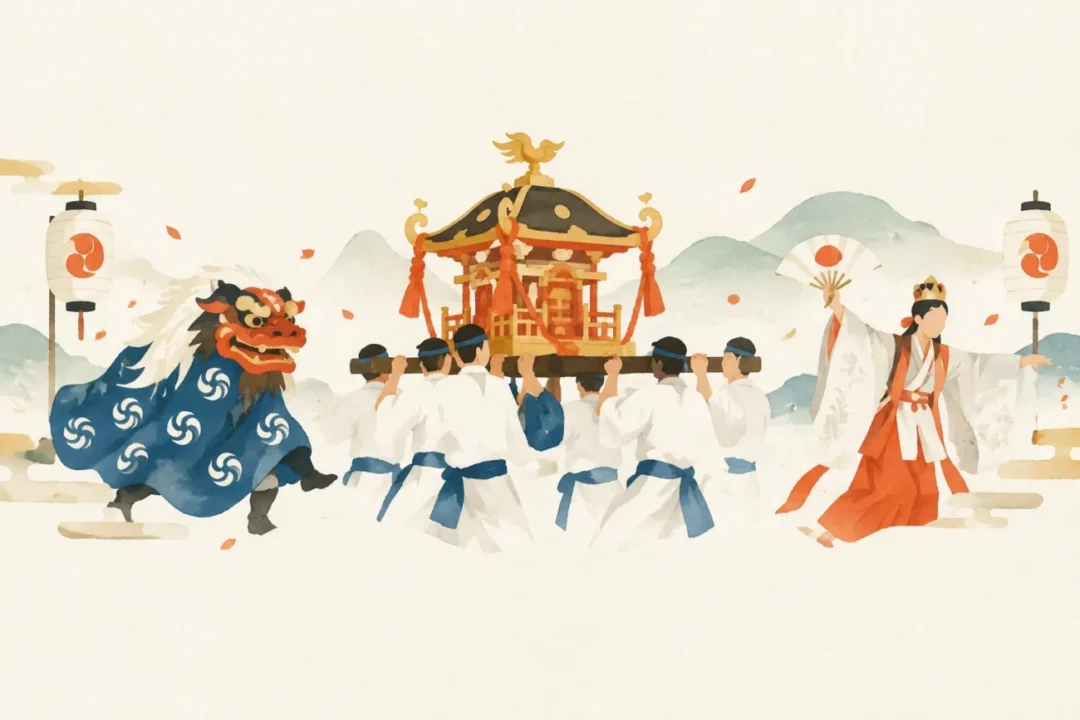
A highlight is the variety of performances presented alongside the procession of the mikoshi and funadama models.
In Bo-furi Da taiko, 2 or 3 boys strike at each other with poles. There is also kagura accompanied by taiko and flute, as well as biwa, in which children play taiko while adults play flutes.
In the sword displays, groups of 2–5 wield swords, poles, kusarigama, boat oars, and other items. A distinctive feature is “Gonin-kai,” in which 4 people form a unit and lift the person standing on the oars.
The colors and patterns of the clothing also vary by district.
Source: GWは若狭・小浜へGO!7年毎に一度の「西津七年祭」で伝統芸能を体感せよ!|ふく旅記事|【公式】福井県 観光/旅行サイト | ふくいドットコム
A Shichinen Festival where mikoshi and performances carry on Nishizu’s fishing-village culture
What to expect
During the festival, mikoshi travel through the ujiko districts, and performances are presented at , jinja, and other locations.
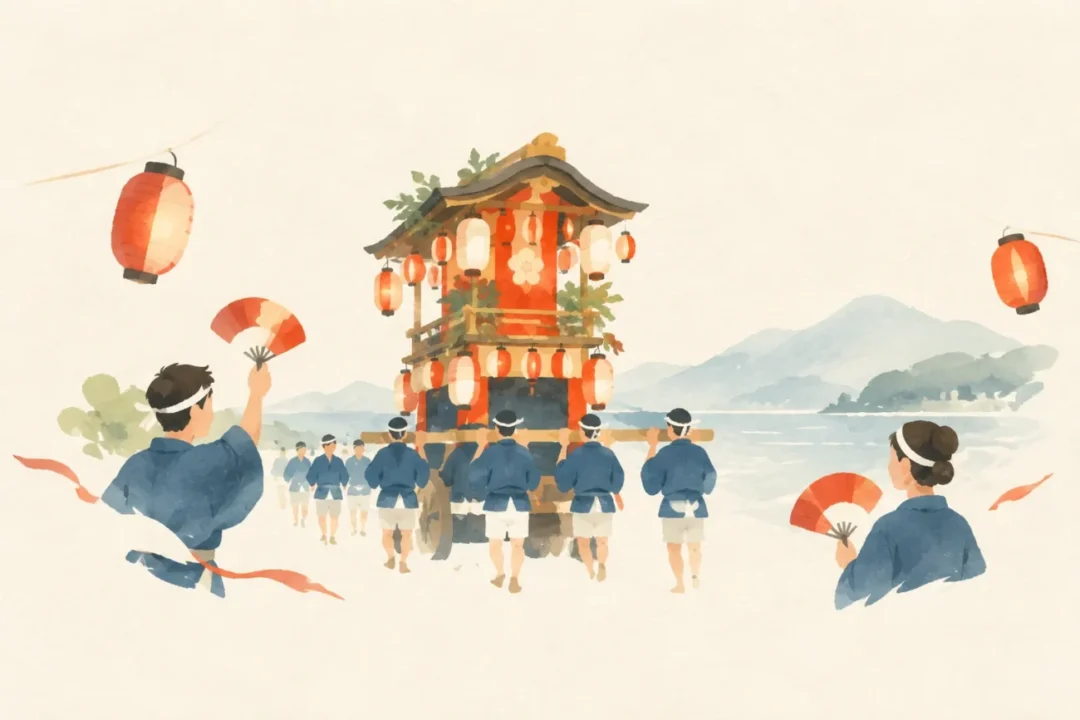
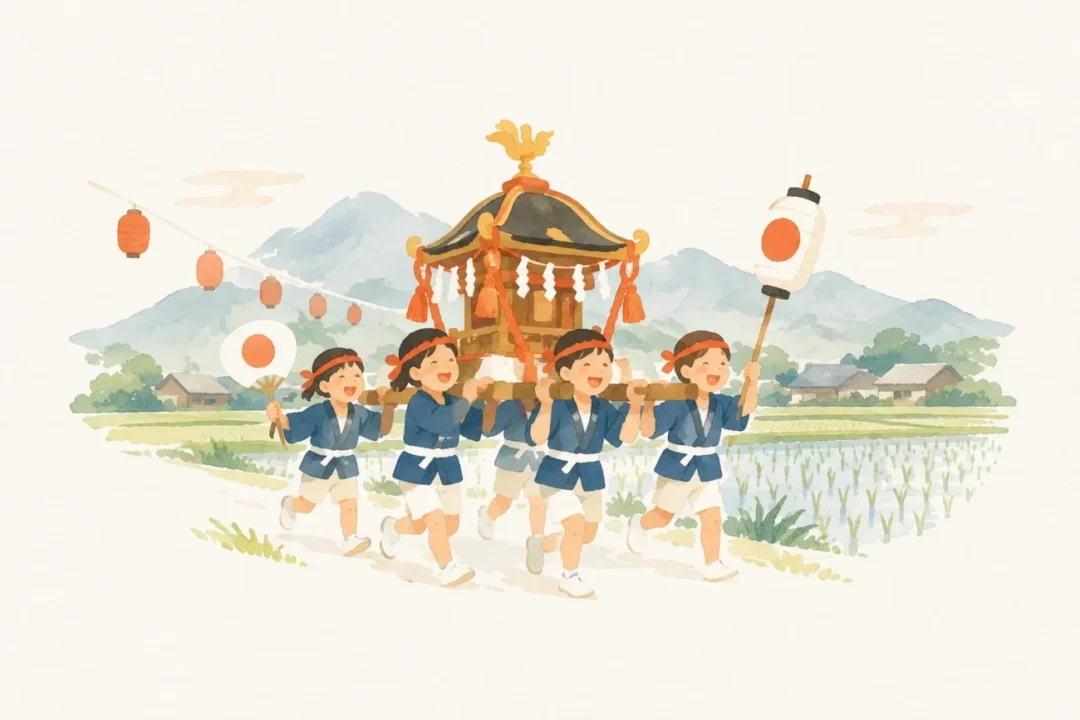
The mikoshi procession features 2 adult mikoshi from the Komatsubara and Shin-Komatsubara districts, along with a children’s mikoshi. Funadama models and boat-shaped performance floats called Tachimarus also travel through their respective districts.
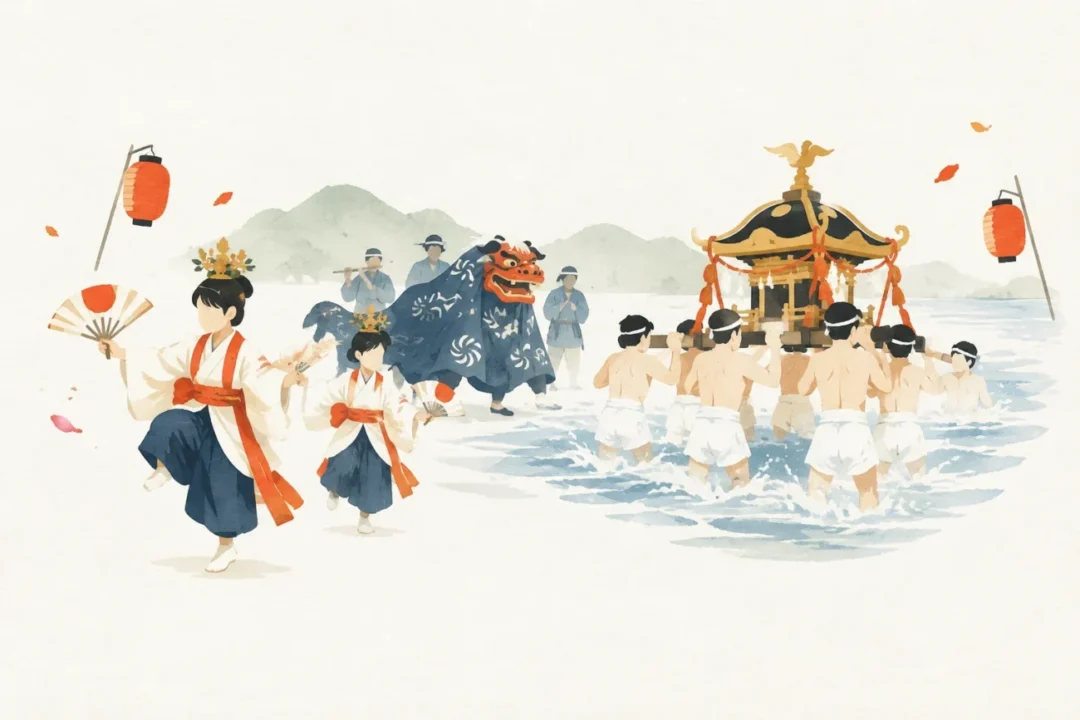
The performances include Bo-furi Da taiko, kagura, biwa, and sword displays, accompanied by on taiko, flutes, and kane, as well as acts using various props.
The procession through the town’s narrow lanes and the at the jinja and otabisho together shape the course of the festival.
How to take part
必要人数:余興の一部は2~5人ひと組。
Bo-furi Da taiko features 2 or 3 boys; in biwa, 2 children play taiko
Location and access
- Venue and address
Munakata Jinja and the Nishizu district (Komatsubara and Shin-Komatsu, Obama City)
Address Komatsubara and Shin-Komatsu, Obama City (Nishizu district)
Dates and season
- Frequency
Once every 7 years (in the Years of the Snake and the Boar)
Accommodation and hotels PR
Showing nearby accommodation.
Prices and availability are current at the time of retrieval. For multi-night stays, only the first night’s price is shown. Confirm the final price and directions to the venue with the booking provider. Select your dates again when using the area search link. Search area: within 3 km of Central Fukui Prefecture / Obama City (the search is not centered on the festival venue)
Tips for your visit
The mikoshi and performances travel through the district, so you can follow the festival not only at the jinja but also in the lanes of Nishizu and around the otabisho.
Because the performances and the colors and patterns of the clothing differ by district, comparing the arts accompanying the mikoshi with each town’s attire gives you a clearer picture of how the festival is structured.
Nearby attractions

山川登美子記念館
福井県小浜市にある文学館

御食国若狭おばま食文化館
福井県小浜市にある博物館

福井県立若狭歴史博物館
福井県小浜市にある博物館
Origins and History of Nishizu Shichinen Festival
The Nishizu Shichinen Festival is a regular grand festival handed down in Nishizu, a district that prospered as a fishing town, against a backdrop of faith in abundant catches and safety at sea.
Tourist information describes it as a festival with a history of about 300 years.
The festival was formerly held over 3 days and, in recent years, had been held for 2 days on May4 and 5; in Heisei 25 (2013), it was held for 3 days, May3–5, for the first time in 30 years.
It is designated an Intangible Folk Cultural Property by the prefecture and conveys the connection between early-modern urban-style festivals and local livelihoods.
Official information
The Fukui Prefecture cultural properties page lists the name, place of transmission, public viewing status, festival structure, and details of the performances.
Information about the Nishizu Shichinen Festival is also available on Obama City’s Japan Heritage-related page.
Nishizu Shichinen Festival at a Glance
The Nishizu Shichinen Festival is a regular grand festival held in the Nishizu district of Obama City in the Years of the Snake and the Boar.
The mikoshi and funadama models travel through the districts, while performances such as Bo-furi Da taiko, kagura, biwa, and sword displays are presented at the jinja and otabisho.
Distinctive acts such as Gonin-kai, along with floats and clothing that differ by district, show how the life and faith of a fishing village are connected to the festival.
As an Intangible Folk Cultural Property designated by the prefecture, the festival conveys local history and performing arts.
Japanese Festivals.jp Editorial Team
Celebrating local culture and helping you discover a side of Japan you never knew.
Article updated: 2026/10/22
Submit information or a correction Submit photos of this festival