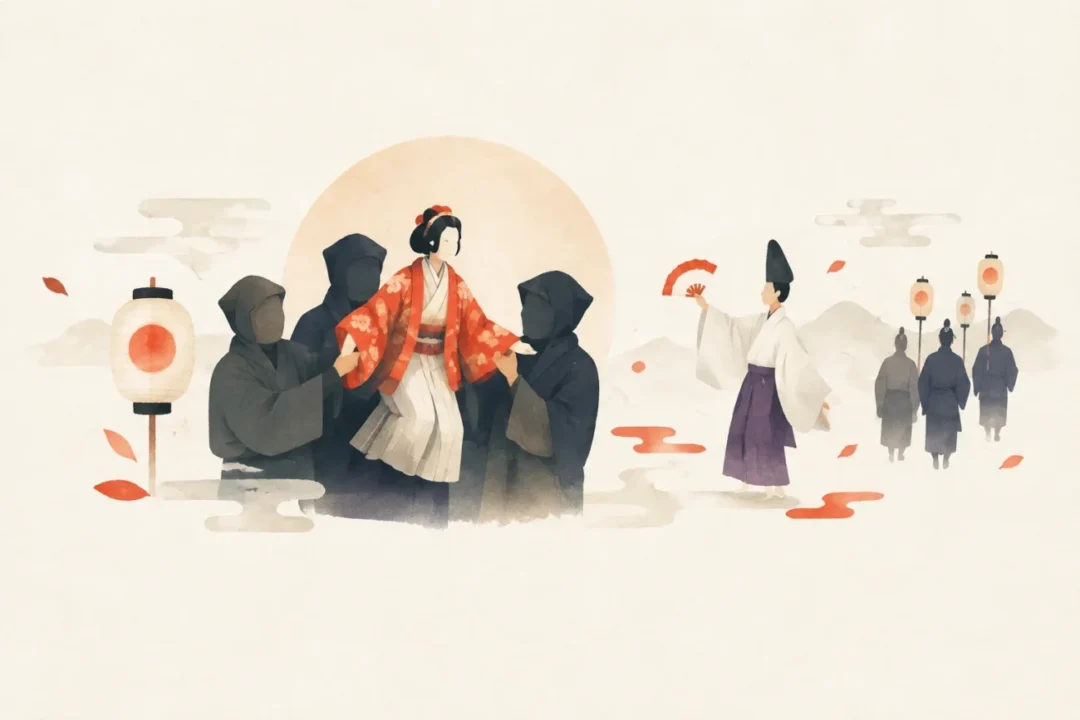
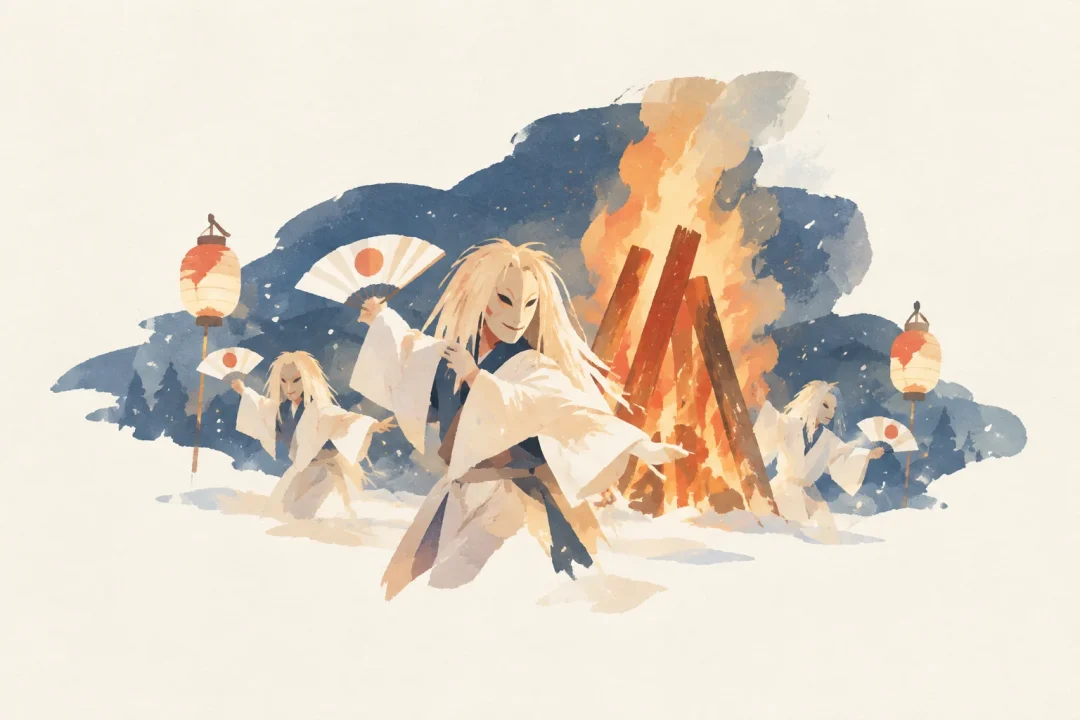
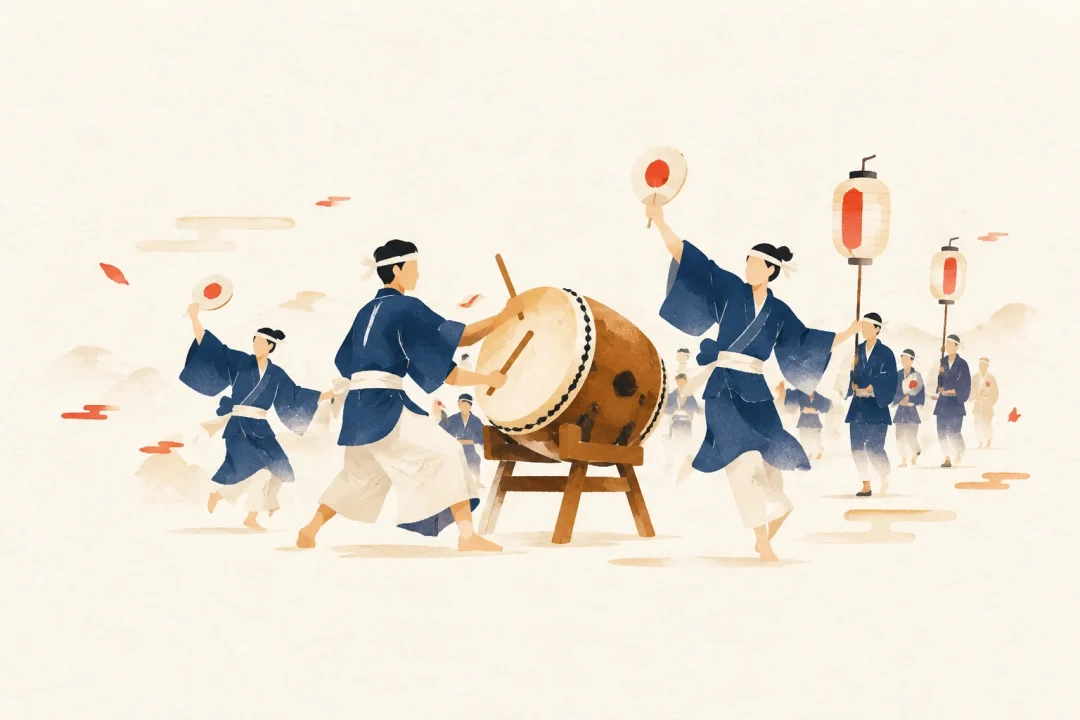
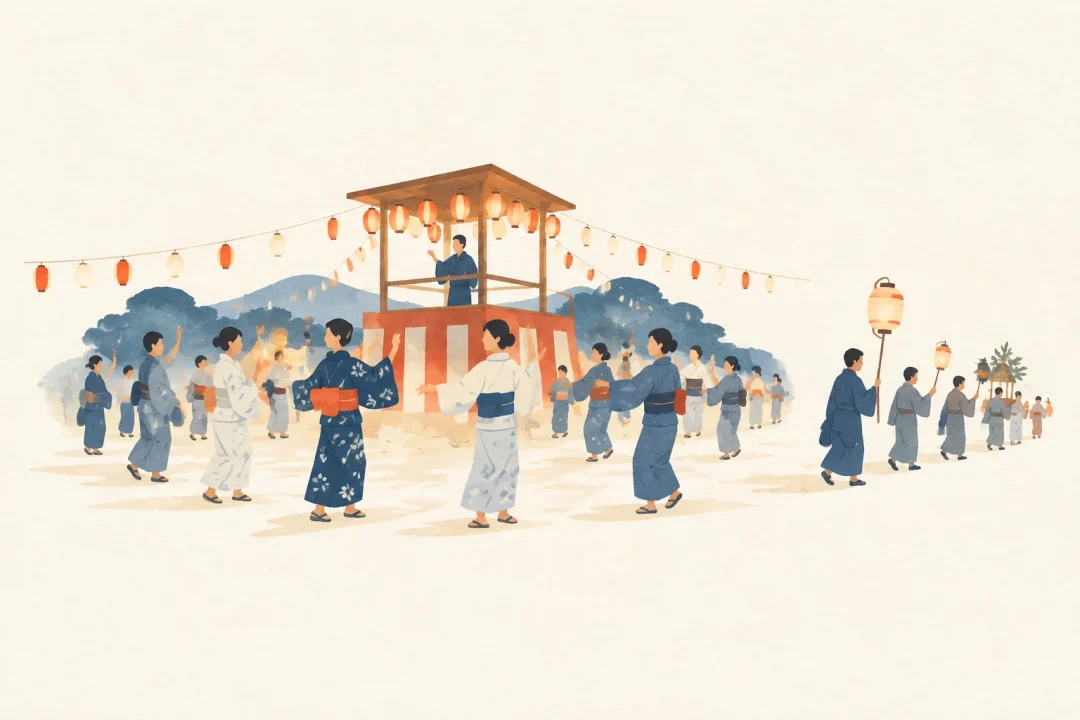
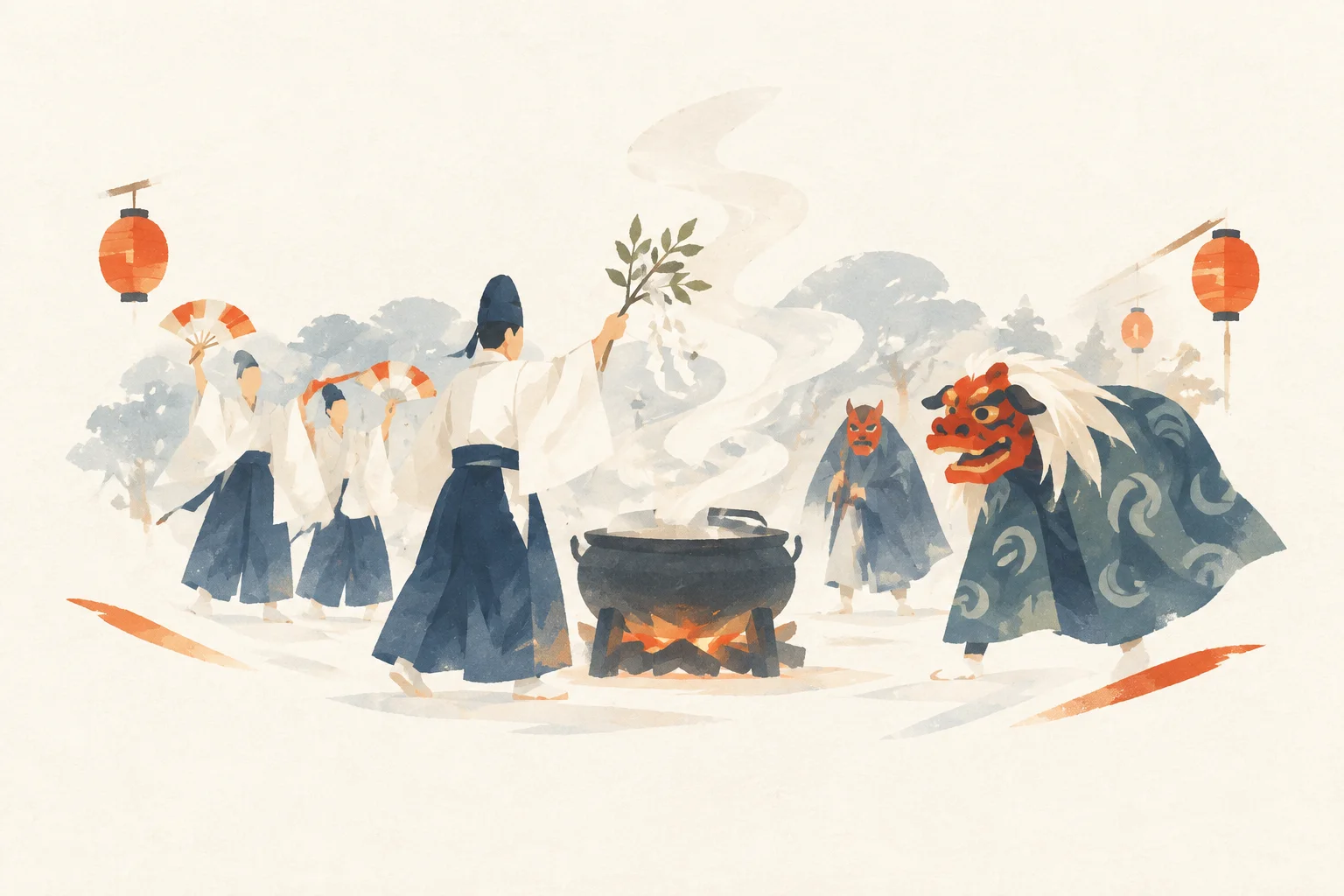
Sakabe Winter Festival, with flames, hot water, and masked dances continuing until dawn
Performing arts of Sakabe Winter Festival
Festival information
EVENT INFORMATION- Season / frequency
- Every year on January 4 and 5 / Every year
- Location
- Omoriyama Suwa Shrine
- Area
- Nagano Prefecture・Tenryu Village(From Tokyo: approx. 1 h 20 min–1 h 50 min · bullet train)Prefecture-level estimate to a main station or airport, not the venue. Airport access, check-in and onward travel are extra; remote areas and islands can take much longer.
- Highlights and activities
- Wishes behind the festival
- Participation / viewing
- Spectators welcome
- Last updated
- 2026/10/19
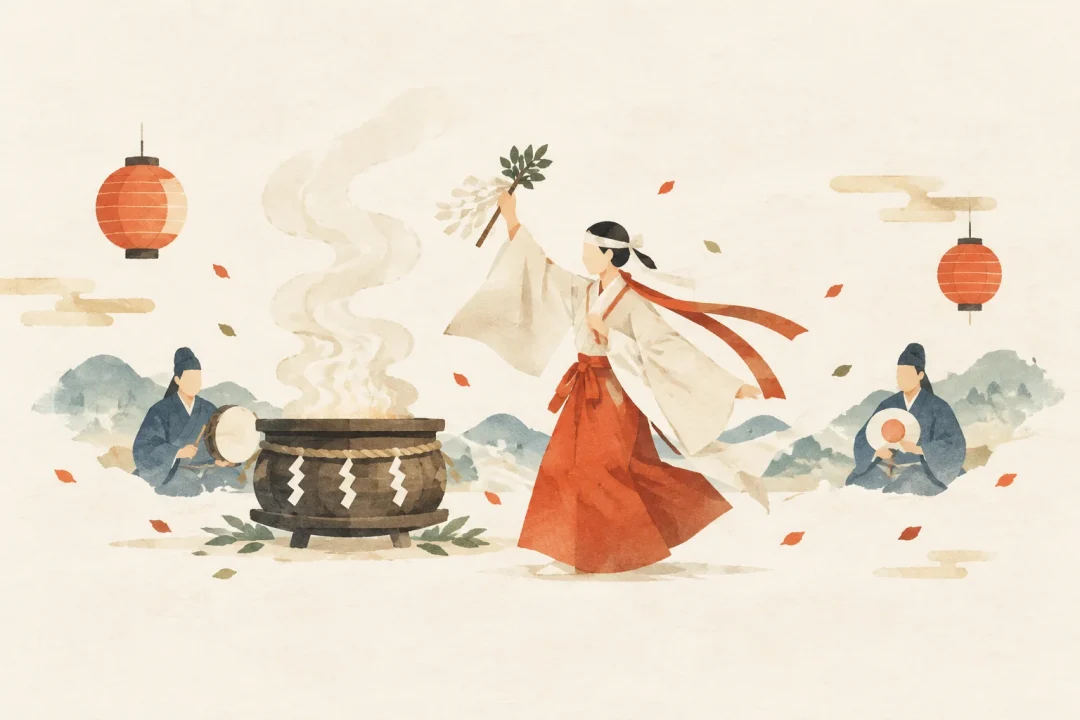
A winter festival centered on boiling-water , passed down at Omoriyama Suwa Shrine in Sakabe, Tenryu Village. A wide variety of performances are dedicated throughout the night, from dances around the cauldron to masked dances by demons and lions.
About Performing arts of Sakabe Winter Festival
The performing arts of Sakabe Winter Festival are boiling-water kagura held at Suwa Shrine in Sakabe, Tenryu Village, Nagano Prefecture.
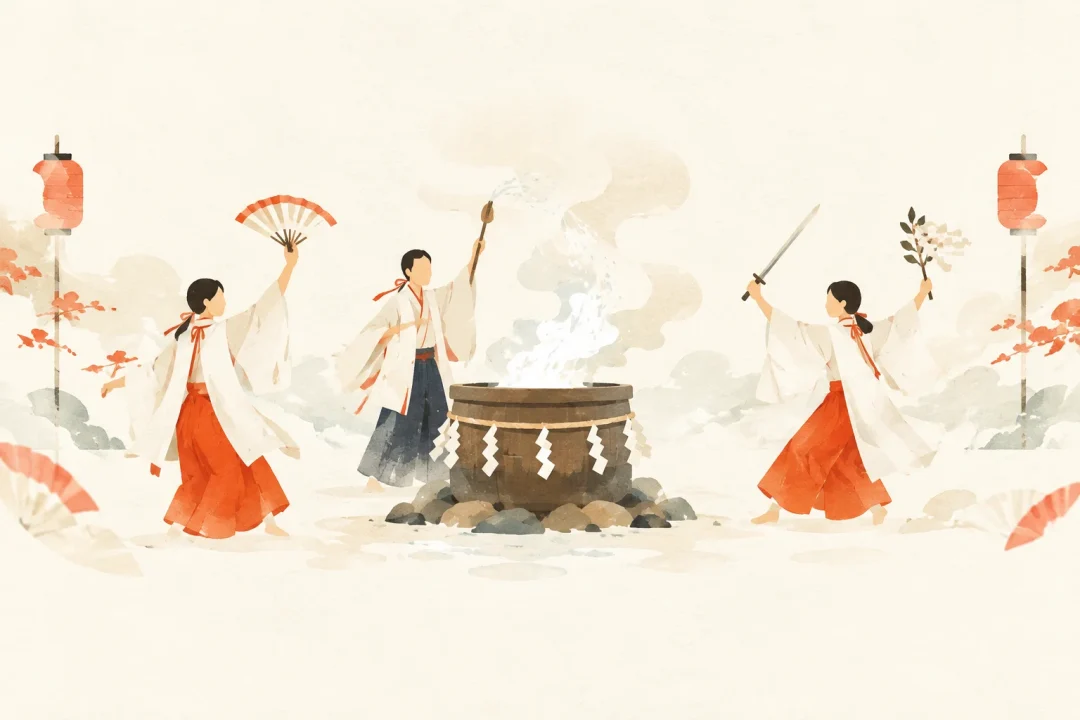
A hearth is built in the , a cauldron is set over it and the water brought to a boil, and dances and rituals are performed around it.
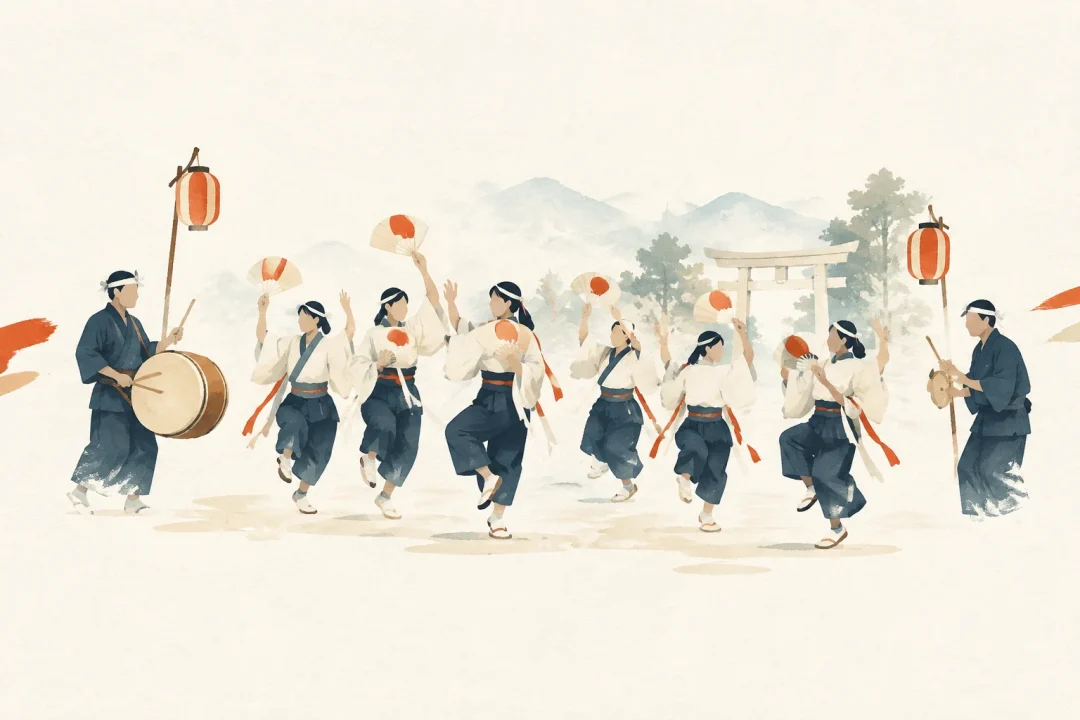
The performances include the boys’ Flower Dance, the young men’s main dance, and dances by figures wearing demon and lion masks, conveying the local faith and performing arts together.
It is one of the festivals that represent Tenryu Village’s Shimotsuki kagura.
Source: 国指定文化財等データベース / 南信州で楽しむ民俗芸能|長野の観光でふれる地域文化 | Go! NAGANO 長野県公式観光サイト
Festival highlights
The main highlight is the “Taikiri mask,” which appears at dawn.
The red demon swings a large axe, and sparks fly each time it cuts through the torch offered by a shrine attendant, heightening the tension of the festival.
After that come masked dances featuring the lion, the Water King, the Fire King, and the old man, as well as -style performances such as “Kaido Kudari” and “Fishing.”
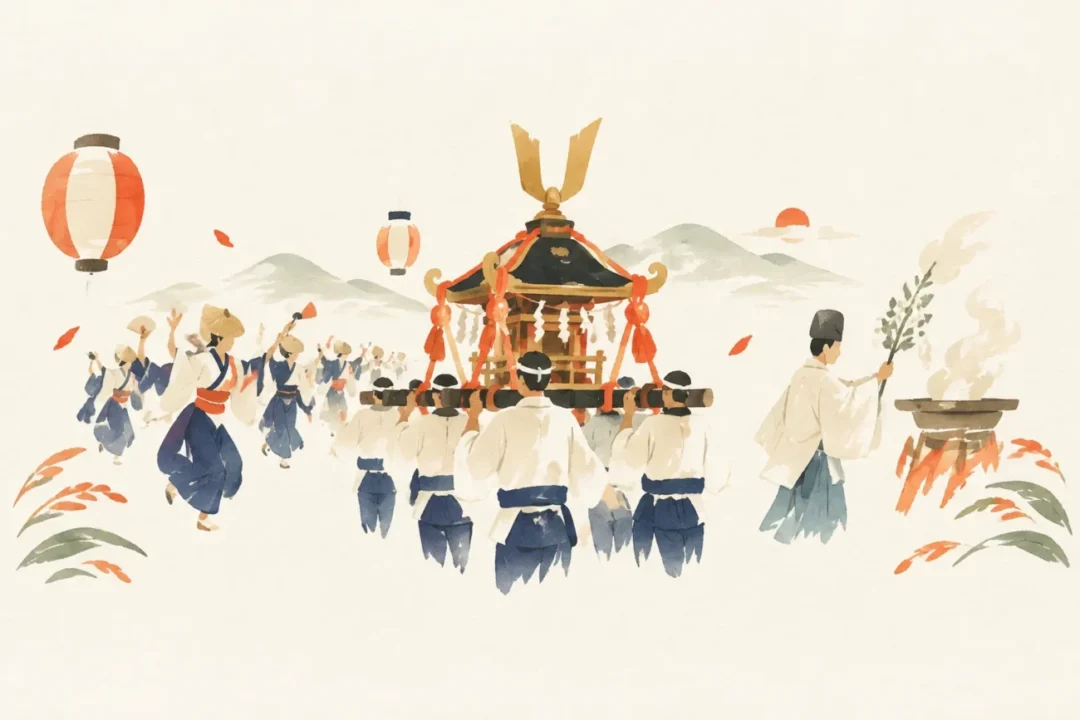
Another distinctive feature is the performance’s interplay of solemnity and humor, as flames, steam, drums, and masked dances come together.
Sakabe Winter Festival, with flames, hot water, and masked dances continuing until dawn
What to expect
The festival proceeds from preliminary rituals such as zatagame and shimehiki, followed by Obani sake, to mōshiage, yubarei, and the boiling-water rite.
The shrine priest circles the cauldron while singing kagura songs, stirring and splashing the water with a bundle of stalks.
This is followed by repeated performances of the boys’ Flower Dance and the young men’s main dance, before the masked dances begin near dawn.
An all-night festival running from the evening of January 4 through noon the following day.
How to take part
Visitors can enjoy the festival by watching the rites and performances held at the shrine.
When watching the Mask Dance or yudate up close, it is important to worship and watch quietly from a spot that does not obstruct the progress of the shrine rites.
Location and access
- Venue and address
Omoriyama Suwa Shrine (Sakabe, Kambara, Tenryu Village, Shimoina District, Nagano Prefecture)
- Train and bus
It is about 20 minutes by taxi from Hiraoka Station on the JR Iida Line.
- Parking
There is parking for 20 cars.
Source: 坂部の冬祭り / 長野県 -【JAPAN 47 GO】
Address Sakabe, Kambara, Tenryu Village, Shimoina District, Nagano Prefecture
Dates and season
- Season
Every year on January 4 and 5
- Frequency
Every year
Accommodation and hotels PR
Showing nearby accommodation.
Prices and availability are current at the time of retrieval. For multi-night stays, only the first night’s price is shown. Confirm the final price and directions to the venue with the booking provider. Select your dates again when using the area search link. Search area: within 3 km of Central Nagano Prefecture / Tenryu Village (the search is not centered on the festival venue)
Tips for your visit
The festival is an all-night event that runs from evening until noon the following day, so you will be spending a long time in the winter mountains.
If you plan to watch from late at night until dawn in particular, make sure you are well prepared for the cold.
Since the rituals involve sparks from torches and hot water from the boiling-water rite, avoid getting too close to the dance hall or procession area.
When taking photos or moving around, take care not to obstruct worshippers or participants.
Nearby attractions
Tenryu Village, where Sakabe Winter Festival is held, has nearby attractions such as Kawawakadono Falls, the Hayakido River Gorge, and Tenryu Onsen Okiyome no Yu.
The same village also hosts the Mukai-kata Okiyome Festival and the annual festival at Okawachiike Shrine.
However, no information is provided about the distance from the festival venue, walking time, or opening status on the day.
Origins and History of Performing arts of Sakabe Winter Festival
Sakabe Winter Festival is said to have a history of about 600 years.
Another guide says that, according to the Kumagai-ke Denki, the festival began in the first year of the Shōchō era, and introduces it as a festival featuring masked dances.
Cultural property descriptions note that it includes performing arts reminiscent of sarugaku and , and has characteristics in common with the Hana Festival in nearby Mikawa.
In 1971, it was selected as an intangible folk cultural property for which measures such as documentation should be undertaken.
Official information
The official information page is listed as the Sakabe Winter Festival official website of Tenryu Village.
You can check the latest information about the festival dates, venue, and viewing arrangements alongside the guide for the year it is held.
Performing arts of Sakabe Winter Festival at a Glance
Sakabe Winter Festival is a boiling-water kagura passed down at Omoriyama Suwa Shrine in Sakabe, Tenryu Village.
Beginning with dances around the cauldron and the boiling-water rite, a dramatic scene featuring a demon and torches unfolds at dawn during the Taikiri mask performance.
Masked dances by the lion and the old man, along with kyogen-style performances, follow, offering a wide variety of performing arts throughout the long night.
A fire-and-water festival passed down in the winter mountains.
Japanese Festivals.jp Editorial Team
Celebrating local culture and helping you discover a side of Japan you never knew.
Article updated: 2026/10/19
Submit information or a correction Submit photos of this festival