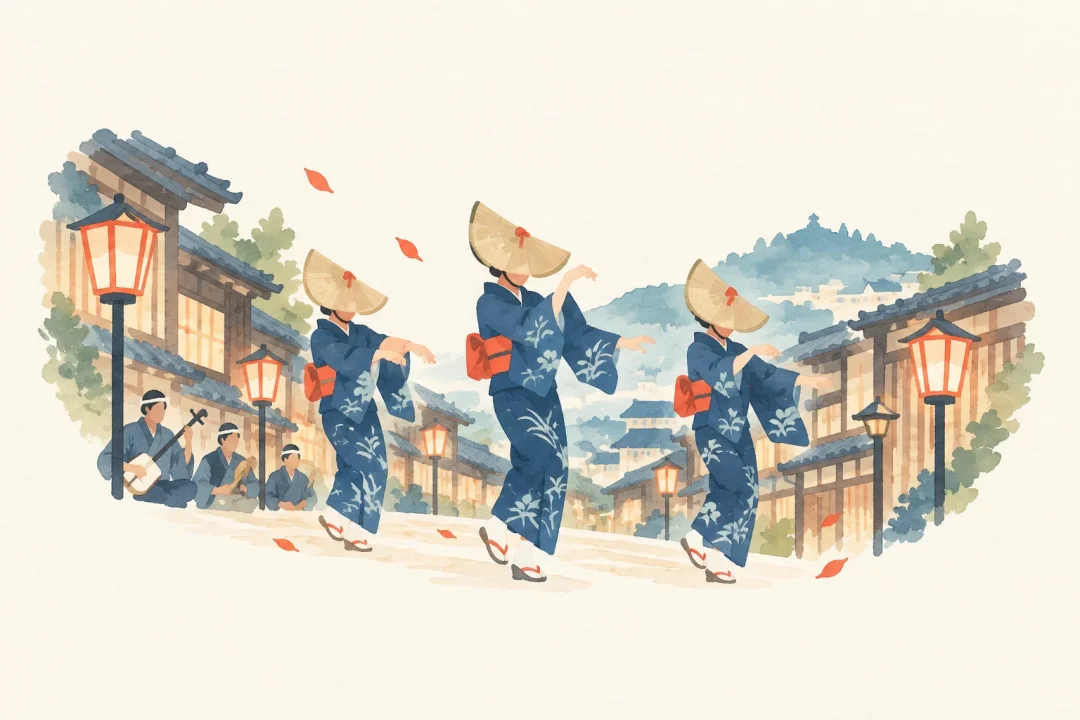
A Bon dance passed down in Wago, where drums and nenbutsu bring the mountain village together
Wago no Nenbutsu Odori
Festival information
EVENT INFORMATION- Season / frequency
- Every year, from August 13 through the 16th / Every year
- Location
- Kumano Shrine, the Miyashita family home, and Rinsyoji Temple
- Area
- Nagano Prefecture・Anan Town(From Tokyo: approx. 1 h 20 min–1 h 50 min · bullet train)Prefecture-level estimate to a main station or airport, not the venue. Airport access, check-in and onward travel are extra; remote areas and islands can take much longer.
- Highlights and activities
- Wishes behind the festival
- Participation / viewing
- Spectators welcome
- Last updated
- 2026/10/19
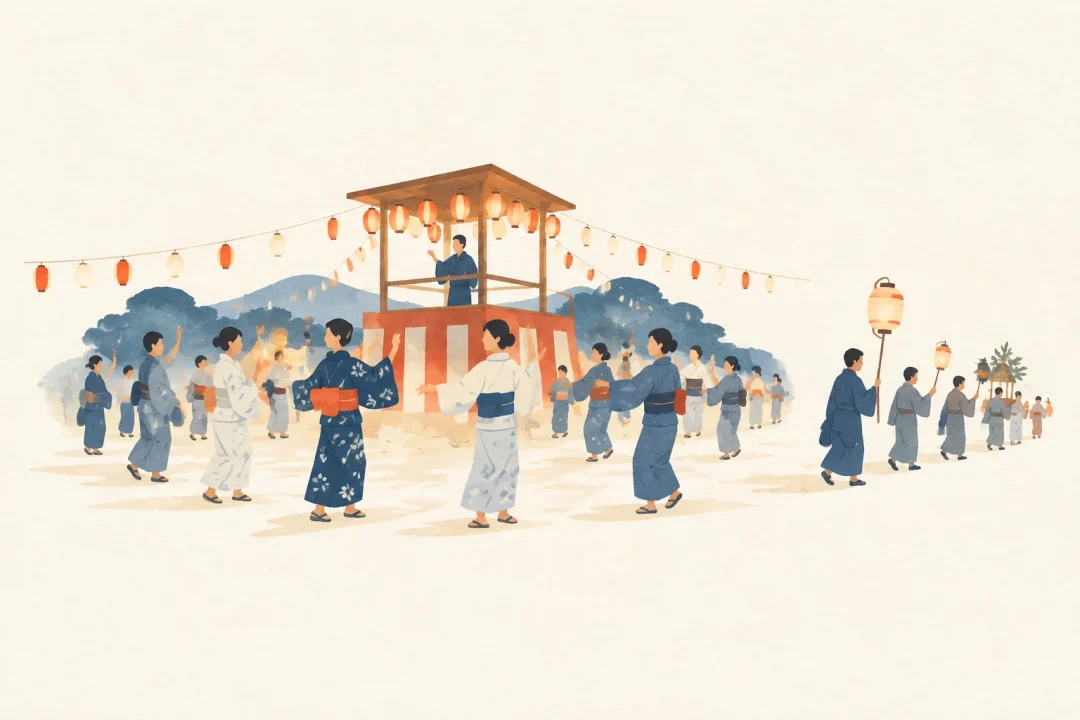
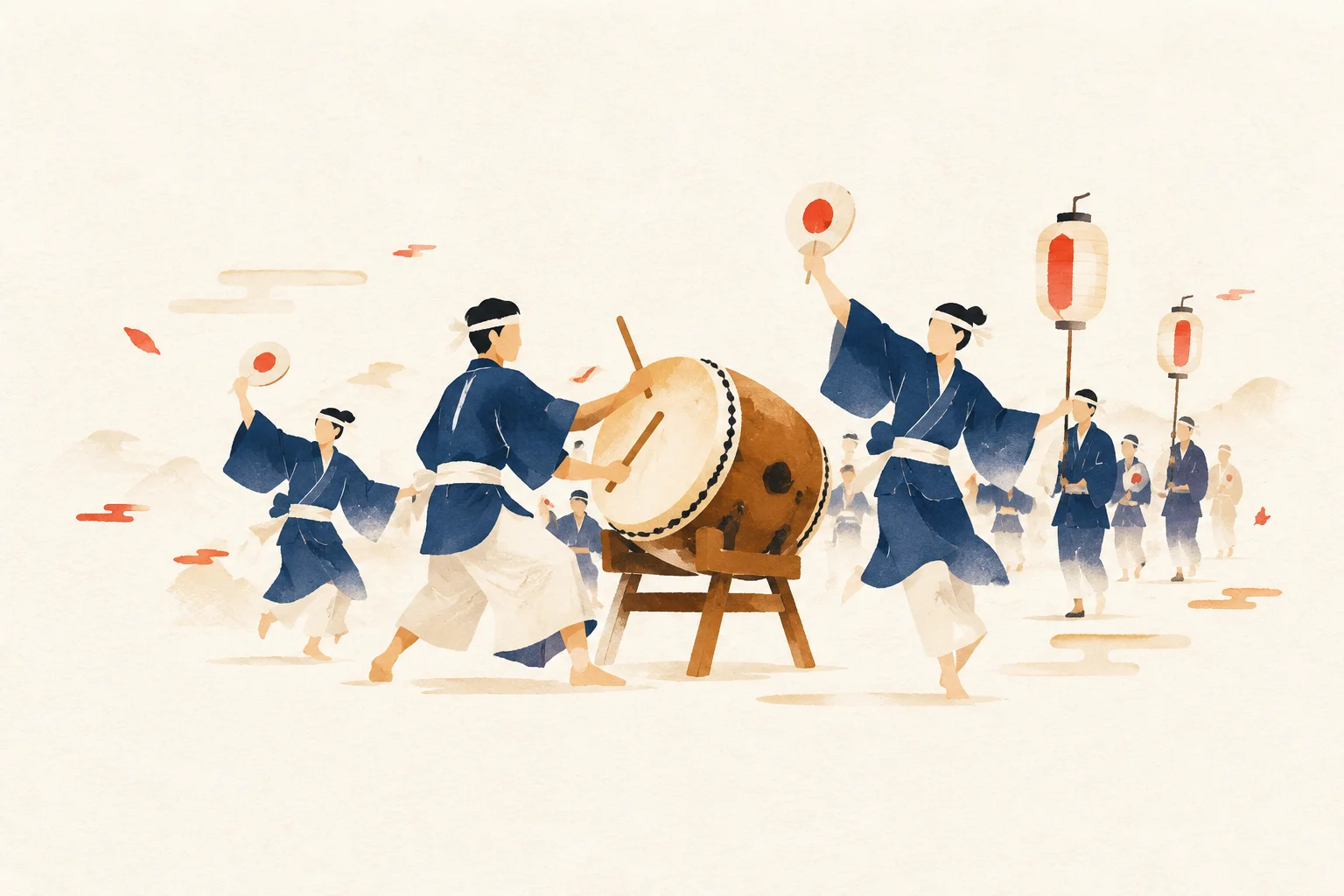
A Bon-season nenbutsu dance passed down in the Wago district of Anan Town, centered on drums. Processions, vigorous dancing, nenbutsu, and wasan are performed at different locations, and the dance is also connected with honoring the newly deceased.
About Wago no Nenbutsu Odori
Photo credits and terms of use
Photographer: Hiroi_Yamaguchi File:Nenbutsu-odori in Wagoh.jpg / Wikimedia Commons / CC BY-SA 4.0 Own work by the contributorDisplay size only adjusted.May differ from the event currently featured.Wago no Nenbutsu Odori is a Bon-season nenbutsu dance passed down in Wago, Anan Town, Nagano Prefecture, and is designated a National Important Intangible Folk Cultural Property.
The dance consists of “niwa-iri,” dancing to musical accompaniment including drums, gongs, and flutes; “nenbutsu,” drumming to the nenbutsu recited by an elder; and “wasan,” in which the drummers repeat verses chanted by the lead singer.
The dance moves among Kumano Shrine, the Miyashita family home, and Rinsyoji Temple in the Wago district, and is also connected with honoring the newly deceased.
In 2022, it was inscribed on the UNESCO Intangible Cultural Heritage list as one of the “Furyu Odori” dances.
Source: 国指定文化財等データベース
Festival highlights
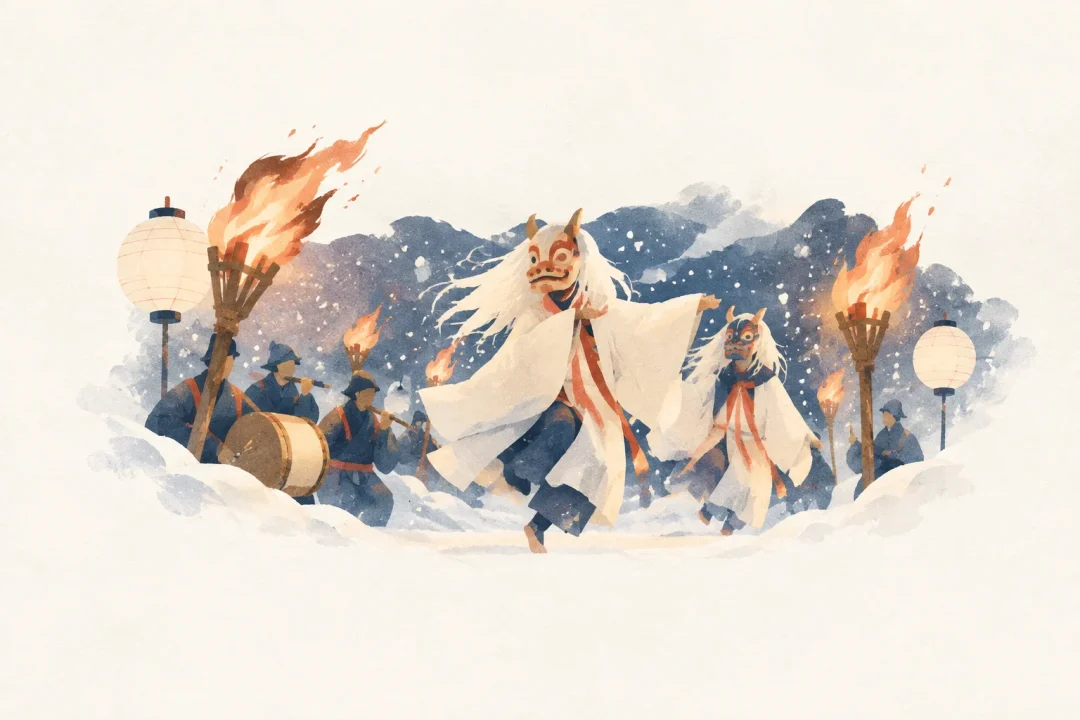
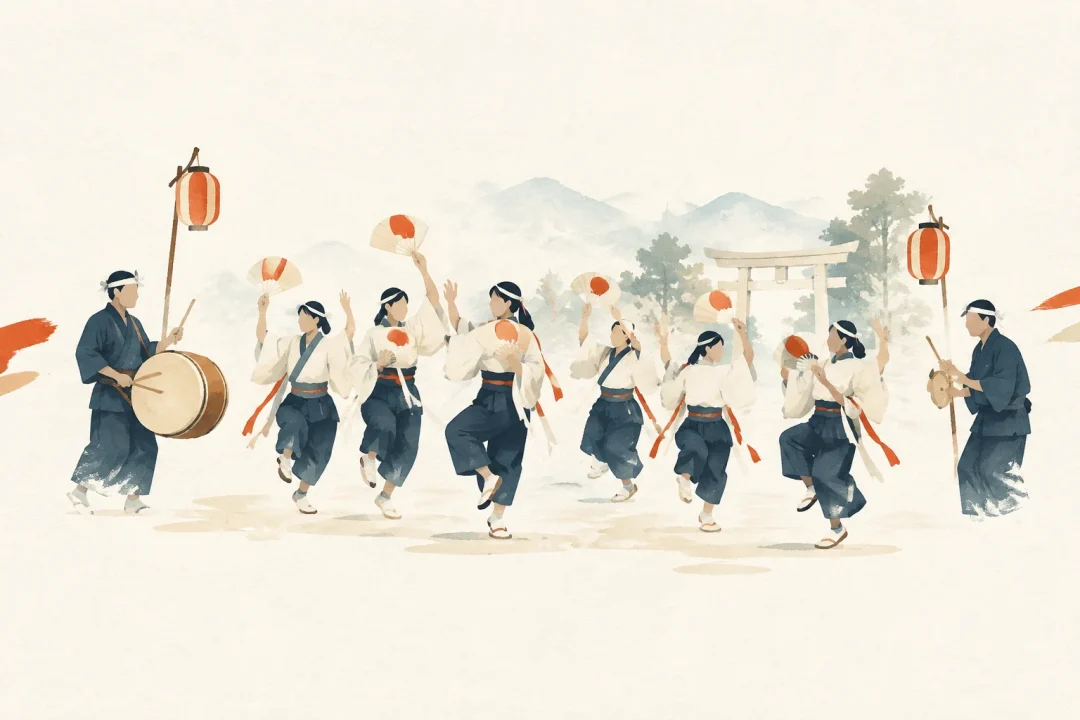
A highlight is the procession entering a courtyard, forming a circle, and then breaking into increasingly vigorous movement.
The drummers and gong players bend so low that their knees almost touch the ground, then swing their arms high and strike their instruments as they move forward.
The hitchiki-stick players and sasara players collide with one another and dance with leaps and jumps.
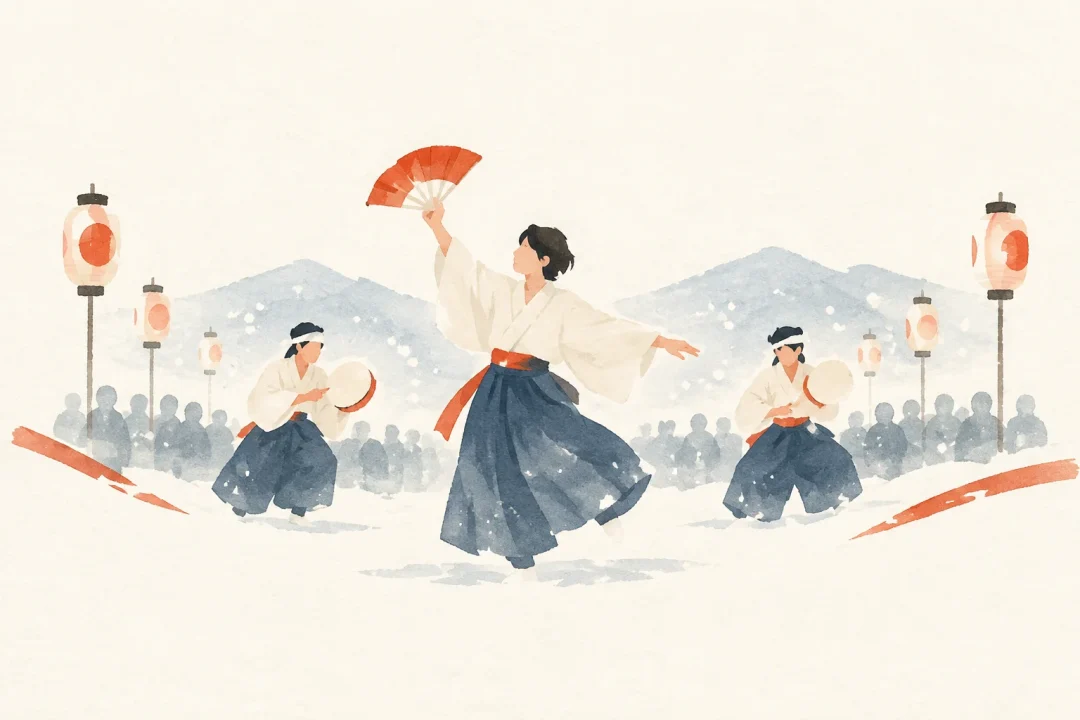
The dance then shifts to quiet nenbutsu and wasan, with the drummers chanting in unison while swaying from side to side—a striking part of the performance.
Source: 和合の念仏踊|文化デジタルライブラリー
A passed down in Wago, where drums and nenbutsu bring the mountain village together
What to expect
On the 13th, niwa-iri, nenbutsu, and wasan are performed at Kumano Shrine and the Miyashita family home, followed by niwa-iri dancing at Rinsyoji Temple.
On the 14th and 15th, the memorial tablets of the newly deceased are gathered at Rinsyoji Temple for a nenbutsu dance of remembrance.
On the 16th, the dance visits Kumano Shrine, the Miyashita family home, and Rinsyoji Temple again, with niwa-iri performed at each location.
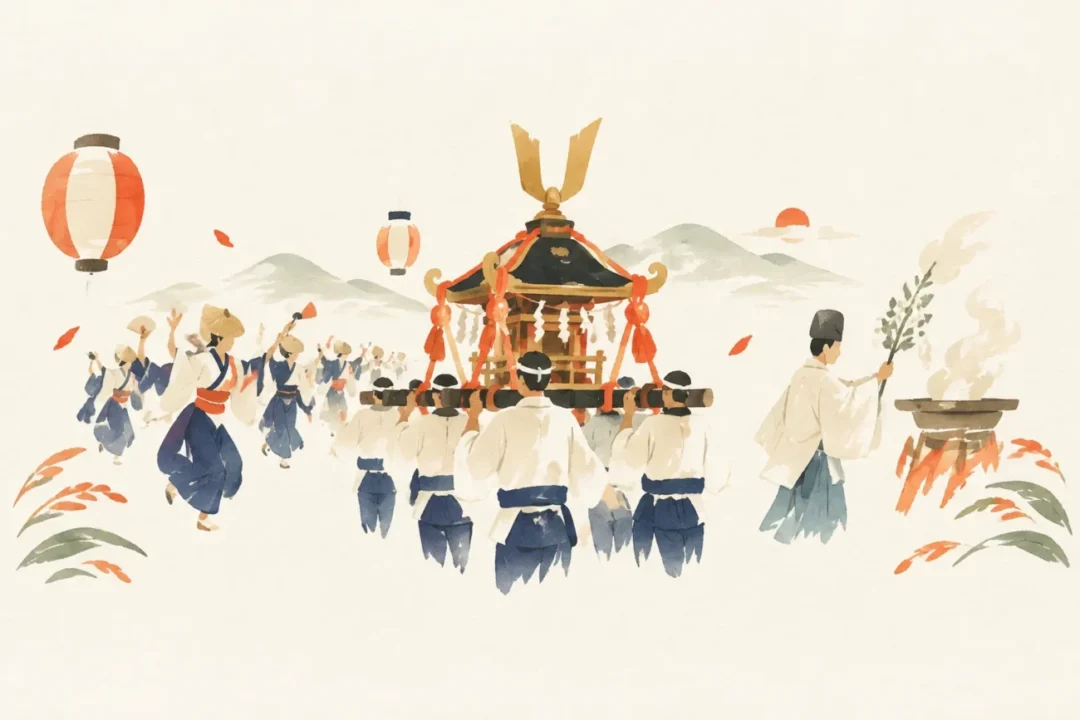
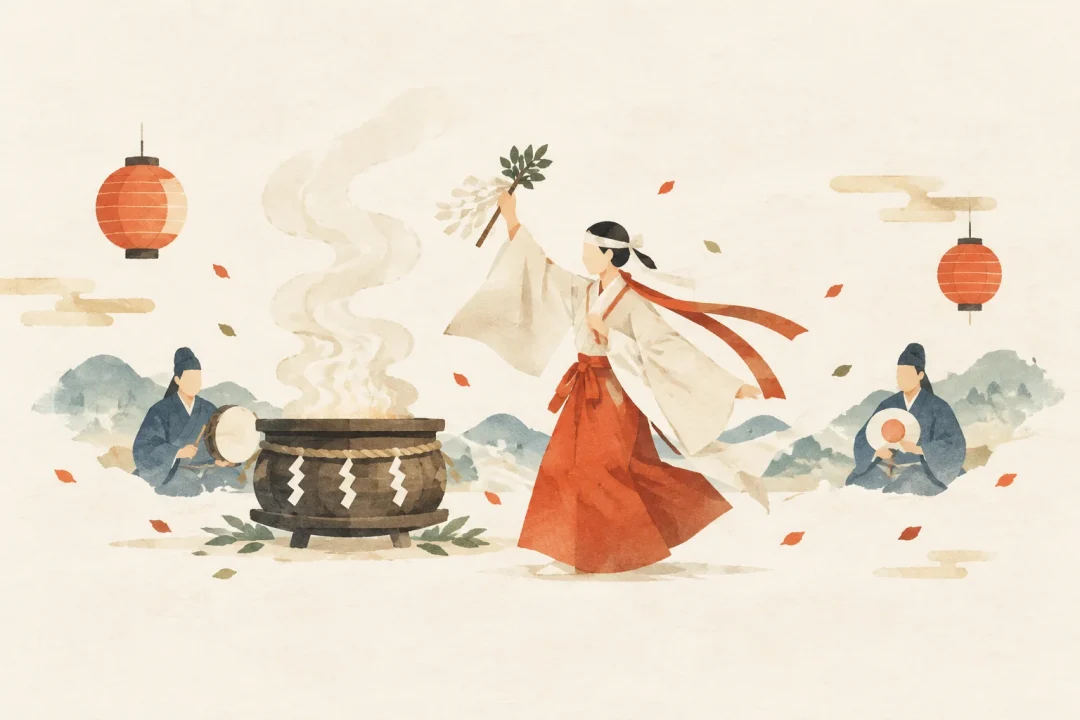
The procession includes roles such as lantern and flag bearers who lead the way, drummers, gong players, flute players, yakko, flower bearers, and willow bearers. The movements and rhythms change with each section of the dance.
How to take part
Visitors can watch the event.
Location and access
- Venue and address
The dance takes place at Kumano Shrine, the Miyashita family home, and Rinsyoji Temple in the Wago district of Anan Town, Shimoina District, Nagano Prefecture.
On the 13th, the dance moves from Kumano Shrine via the Miyashita family home to Rinsyoji Temple; on the 14th and 15th, it takes place at Rinsyoji Temple; and on the 16th, it is performed at all 3 locations.
Address Wago, Anan Town, Shimoina District, Nagano Prefecture
Dates and season
It is usually held every evening from August 13 through the 16th.
Reports say that in 2026, it began on the night of August 13 at Kumano Shrine in the Wago district of Anan Town.
On the 13th and 16th, the dance moves between multiple locations; on the 14th and 15th, a nenbutsu dance honoring the newly deceased takes place at Rinsyoji Temple.
Source: 躍動感ある舞で供養 ユネスコ無形文化遺産 阿南で「和合の念仏踊り」 | 南信州新聞電子版 / 和合の念仏踊り | 南信州民俗芸能ナビ
Accommodation and hotels PR
Showing nearby accommodation.
Prices and availability are current at the time of retrieval. For multi-night stays, only the first night’s price is shown. Confirm the final price and directions to the venue with the booking provider. Select your dates again when using the area search link. Search area: within 3 km of Central Nagano Prefecture / Anan Town (the search is not centered on the festival venue)
Tips for your visit
The venues move between Kumano Shrine, the Miyashita family home, and Rinsyoji Temple, so the viewing location varies by day.
It is a good idea to check the schedule before visiting: the dance takes place at multiple locations on the 13th and 16th, and at Rinsyoji Temple on the 14th and 15th.
Drums, gongs, and flutes accompany the dance, and during hitchiki the dancers vigorously collide with one another.
Please watch quietly from a place where you will not interfere with the religious rites or the dance.
Nearby attractions

安倍神像神社
長野県下伊那郡阿南町にある神社
Origins and History of Wago no Nenbutsu Odori
According to one tradition about the origins of Wago no Nenbutsu Odori, the 15th head of the Miyashita family learned the dance in Kawanakajima, Shinshu, in 1742.
Another account says that the Miyashita family brought the dance from Enshu, as the family came from that region.
It was once held in lunar calendar: July, then during Bon in the Gregorian July; since 1986, it has been held for 4 days, from August 13 through the 16th.
Since the modern period, youth associations have carried on the tradition. In 1948, a preservation society was formed with every household in the district as a member.
Official information
Basic information about its cultural heritage designation can be found in the Agency for Cultural Affairs’ Database of Nationally Designated Cultural Properties.
The Wago Nenbutsu Odori Preservation Society is listed as its protection group, and the dance is introduced as both an Important Intangible Folk Cultural Property and one of the UNESCO Intangible Cultural Heritage “Furyu Odori” dances.
For the latest information on when it is held and how to view it, check with Anan Town or another local contact.
Wago no Nenbutsu Odori at a Glance
Wago no Nenbutsu Odori is a nenbutsu dance passed down in the Wago district of Anan Town and performed during the Bon season.
It unfolds from a procession entering a courtyard and vigorous dancing to the beat of drums and gongs, to quiet drumming accompanying an elder’s nenbutsu, followed by the chanting of wasan.
The dance takes place at Kumano Shrine, the Miyashita family home, and Rinsyoji Temple. On the 14th and 15th, dances are performed to honor the newly deceased.
It is an Important Intangible Folk Cultural Property designated by the national government, conveying both the local faith and performing arts to the present day.
Japanese Festivals.jp Editorial Team
Celebrating local culture and helping you discover a side of Japan you never knew.
Article updated: 2026/10/19
Submit information or a correction Submit photos of this festival