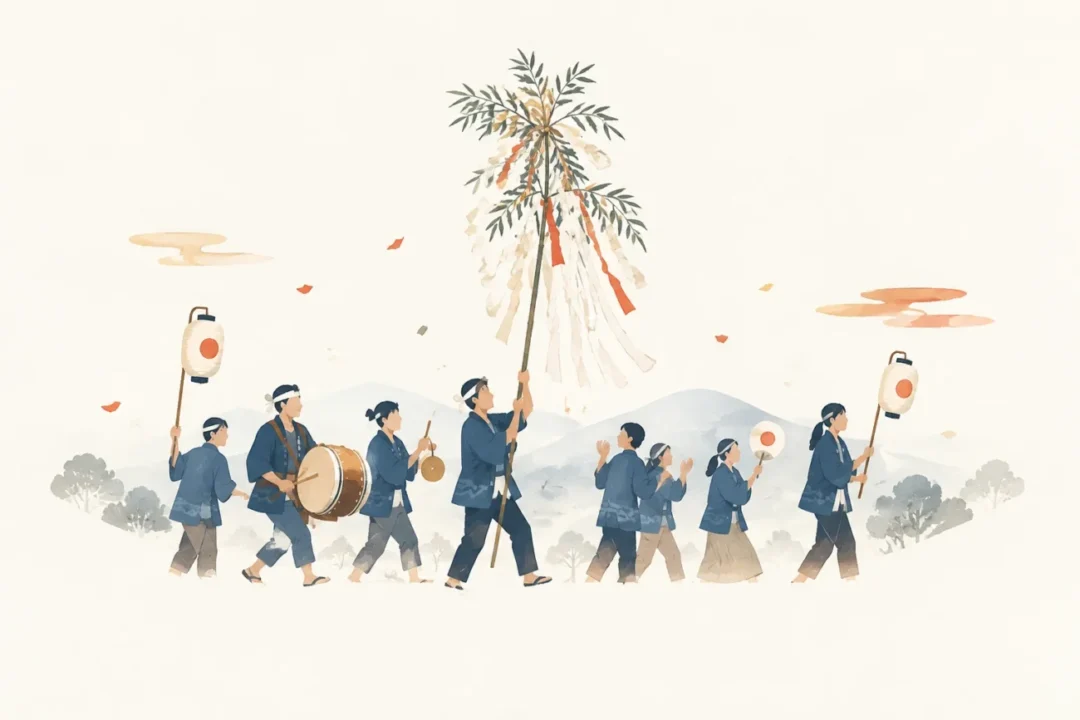
A prayer to send the village’s epidemics beyond the mountain settlement, entrusted to the bonten and hayashi music
Tatsuzawa no Mushio-kuri
Festival information
EVENT INFORMATION- Season / frequency
- August 16 / Every year
- Location
- Tatsuzawa district
- Area
- Saitama Prefecture・Minano(From Tokyo: approx. 30 min–1 h · train)Prefecture-level estimate to a main station or airport, not the venue. Airport access, check-in and onward travel are extra; remote areas and islands can take much longer.
- Features
- Highlights and activities
- Wishes behind the festival
- Last updated
- 2026/10/20
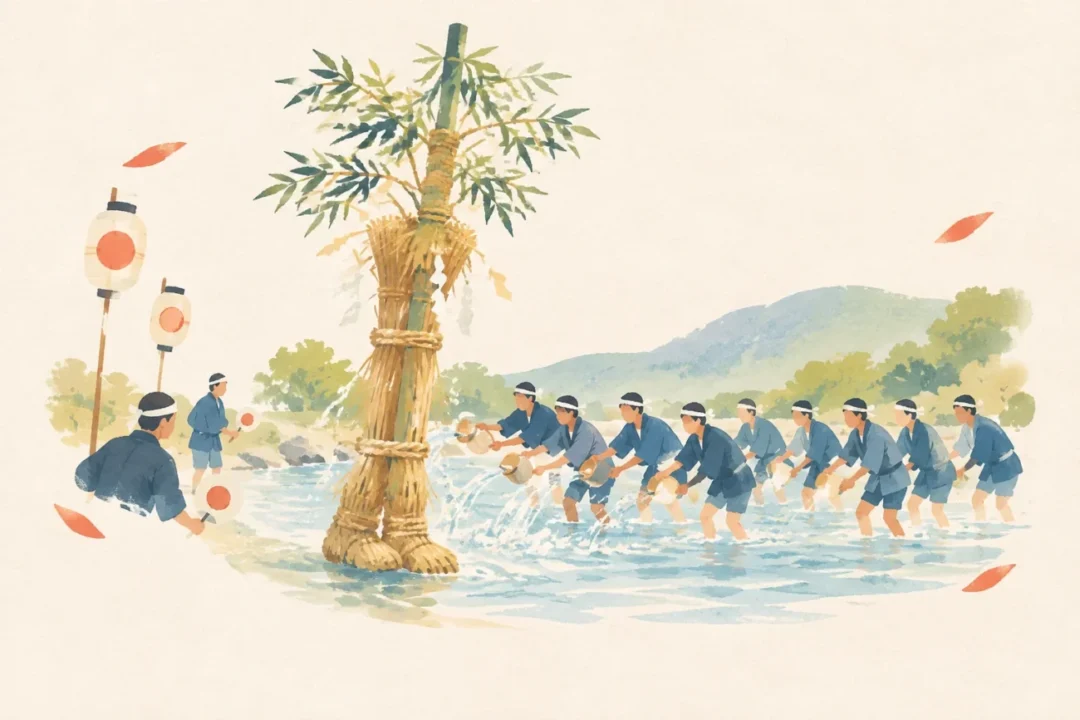
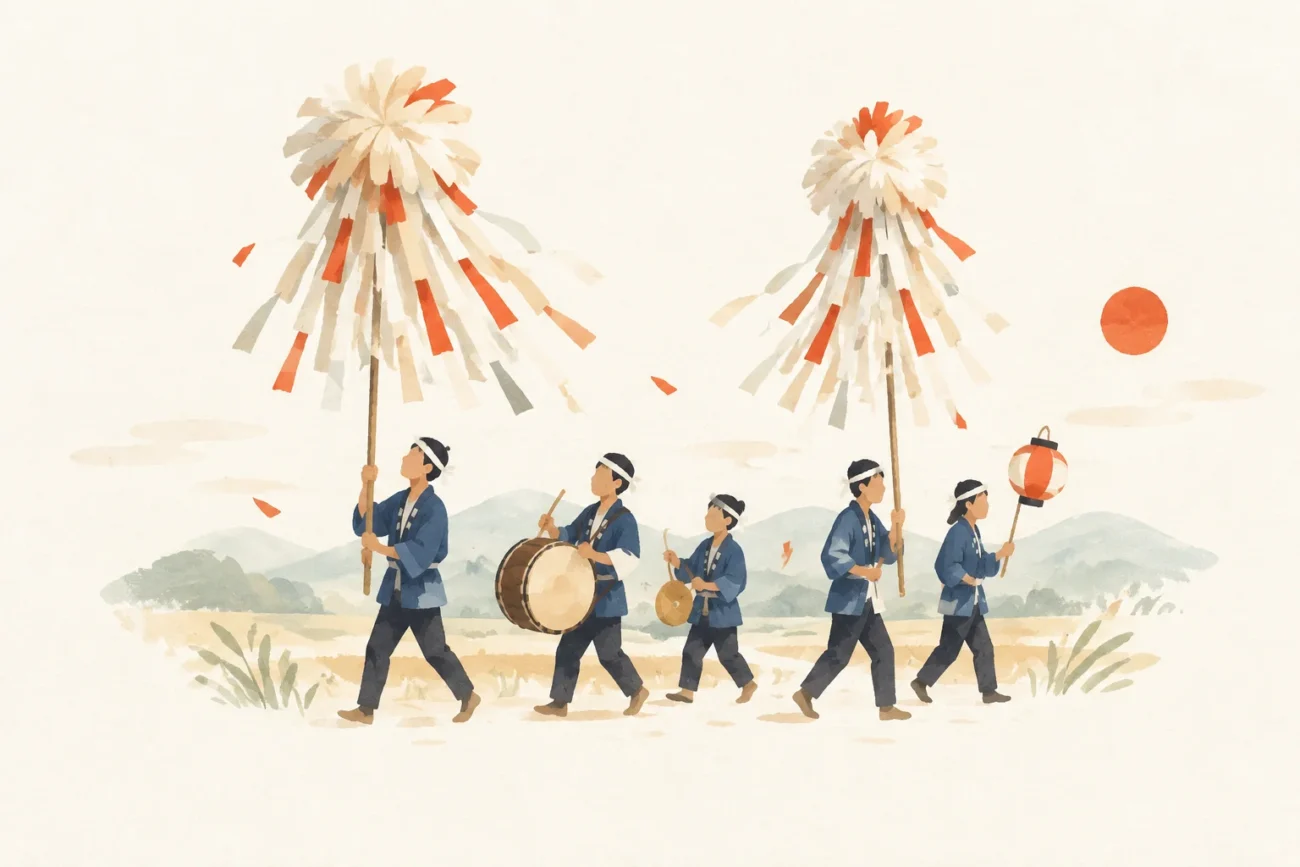
Tatsuzawa no Mushio-kuri, passed down in Kamihinosawa, Minano, is a communal prayer in which a bonten hung with paper strips is carried away to calls and music played on and a gong, driving insects and disease threatening crops beyond the village.
About Tatsuzawa no Mushio-kuri
Tatsuzawa no Mushio-kuri is a ritual passed down in the Tatsuzawa district of Kamihinosawa, Minano, to drive away insects that harm crops.
Pests and diseases are thought to be disguises taken on by the insect deity, and are sent out of the village.
Together with Kadaira no Mushio-kuri, it is considered one of the important communal prayers, alongside rainmaking rites and wind festivals.
Source: 歴史探訪~皆野町を歩く~ | 俳句と秩父音頭の町 みなの
Festival highlights
In the Tatsuzawa district, people use a bonten hung with paper strips called norose.
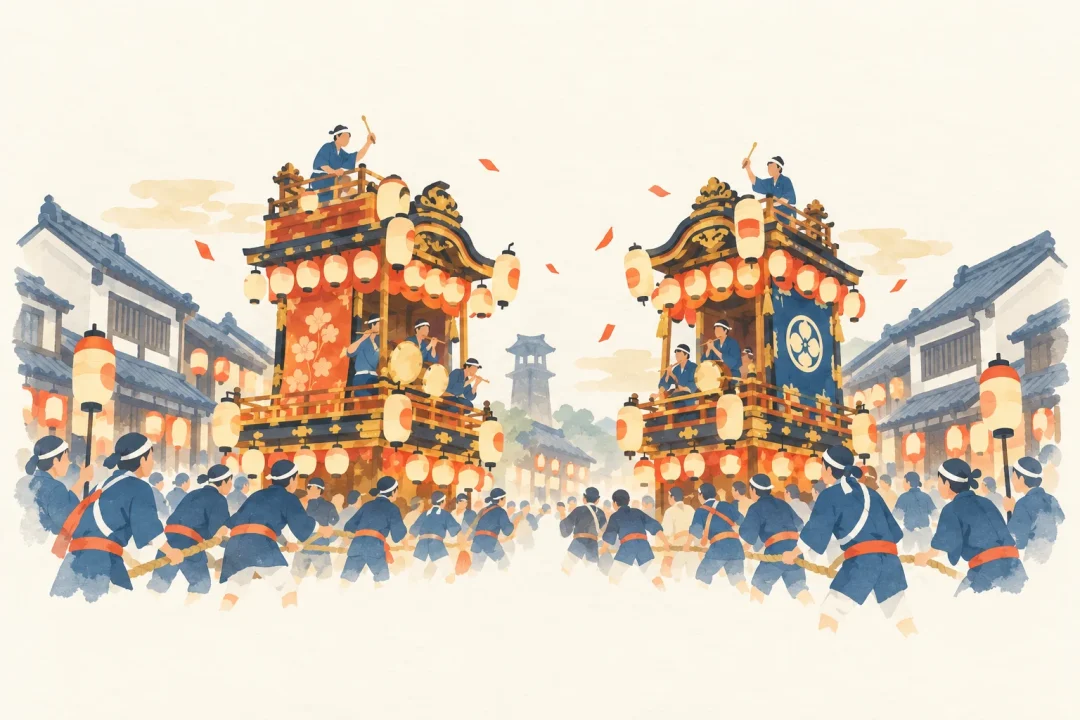
As the bonten passes through the mountain village, calls such as “Send away all the insects, yoi” mingle with hayashi music played on taiko and a gong.
The calls are not fixed: they may change to phrases such as “aona no” or “na daikon,” and sometimes words reflecting the social climate can be heard.
Source: 立沢の虫送り | 秩父お祭りカレンダーPROJECT
A prayer to send the village’s epidemics beyond the mountain settlement, entrusted to the bonten and hayashi music
What to expect
During the event, a bonten hung with paper strips is held aloft and carried through the area to calls and hayashi music played on taiko and a gong.
The basic sequence is to sweep up the village’s epidemics and cast them away beyond its outskirts.
Minano’s guide describes it as an event in which people send the bonten on its way to the sound of gongs and taiko, sometimes accompanied by dancing.
Location and access
- Venue and address
Tatsuzawa district (Kamihinosawa, Minano)
- Train and bus
Chichibu Railway: 30 minutes by town bus from Minano Station to Tatsuzawa, plus a 10-minute walk
Source: 夏のお祭り・イベント アーカイブ - 皆野町観光協会
Address 878 Kamihinosawa, Minano, Chichibu District, Saitama Prefecture
Dates and season
- Season
August 16
- Frequency
Every year
Accommodation and hotels PR
Showing nearby accommodation.
Prices and availability are current at the time of retrieval. For multi-night stays, only the first night’s price is shown. Confirm the final price and directions to the venue with the booking provider. Select your dates again when using the area search link. Search area: within 3 km of Central Saitama Prefecture / Minano (the search is not centered on the festival venue)
Origins and History of Tatsuzawa no Mushio-kuri
Tatsuzawa no Mushio-kuri, together with Kadaira no Mushio-kuri, is a Prefectural Intangible Folk Cultural Property passed down in Minano.
It has been practiced as a communal prayer to send crop pests and diseases out of the village, regarded as the work of the insect deity.
It is also featured in Minano’s cultural heritage and history guide as an annual event held on August 16.
Official information
The official Minano Town website has a page about “Tatsuzawa no Mushio-kuri.”
Tatsuzawa no Mushio-kuri at a Glance
Tatsuzawa no Mushio-kuri is a communal prayer passed down in the Tatsuzawa district of Kamihinosawa, Minano, to send crop pests and diseases out of the village.
A bonten hung with paper strips is carried away to distinctive calls and hayashi music played on taiko and a gong.
It is also designated as a Prefectural Intangible Folk Cultural Property and held annually on August 16.
Japanese Festivals.jp Editorial Team
Celebrating local culture and helping you discover a side of Japan you never knew.
Article updated: 2026/10/20
Submit information or a correction Submit photos of this festival