Votive kabuki performed by local residents, passed down on the island’s stages
Shodoshima Rural Kabuki
Festival information
EVENT INFORMATION- Season / frequency
- Every year on May 3 (Hito-yama); every year on the 2nd Sunday of October (Nakayama) / Every year
- Location
- Stage within the grounds of Hito-yama Rikyu Hachiman Shrine (Hito-yama); Nakayama stage and Kasuga Shrine (Nakayama)
- Area
- Kagawa Prefecture・Tonosho Town, Shodoshima Town(From Tokyo: approx. 1 h 15 min–1 h 35 min · flight time only)Prefecture-level estimate to a main station or airport, not the venue. Airport access, check-in and onward travel are extra; remote areas and islands can take much longer.
- Highlights and activities
- Wishes behind the festival
- Participation / viewing
- Spectators welcome
- Last updated
- 2026/10/19
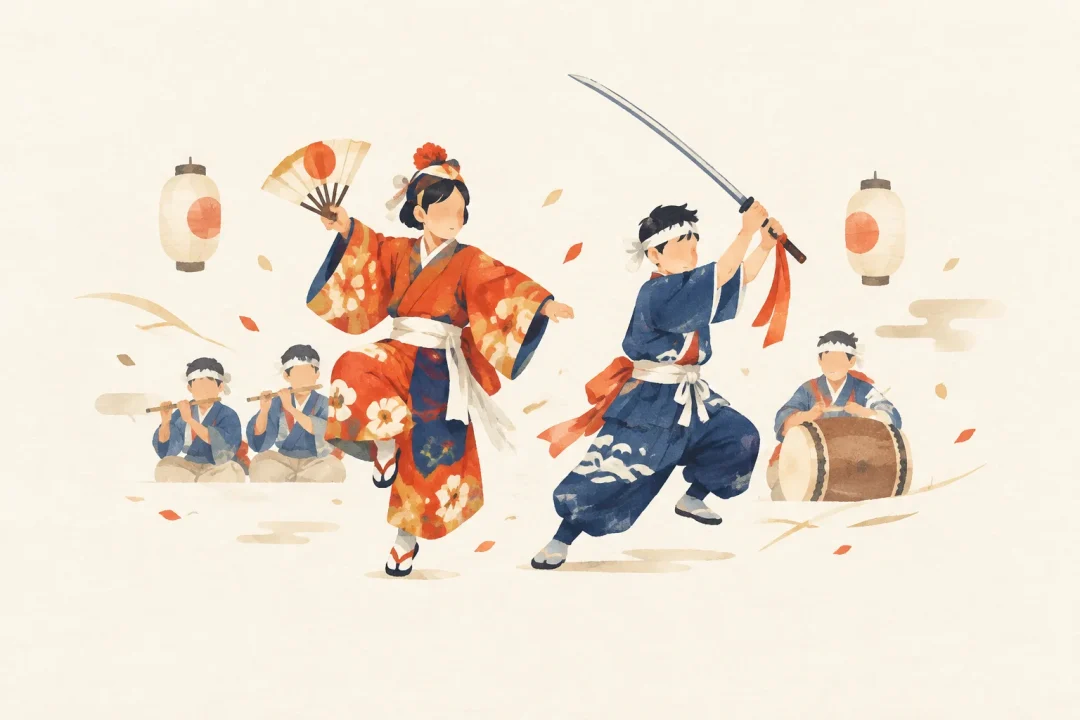
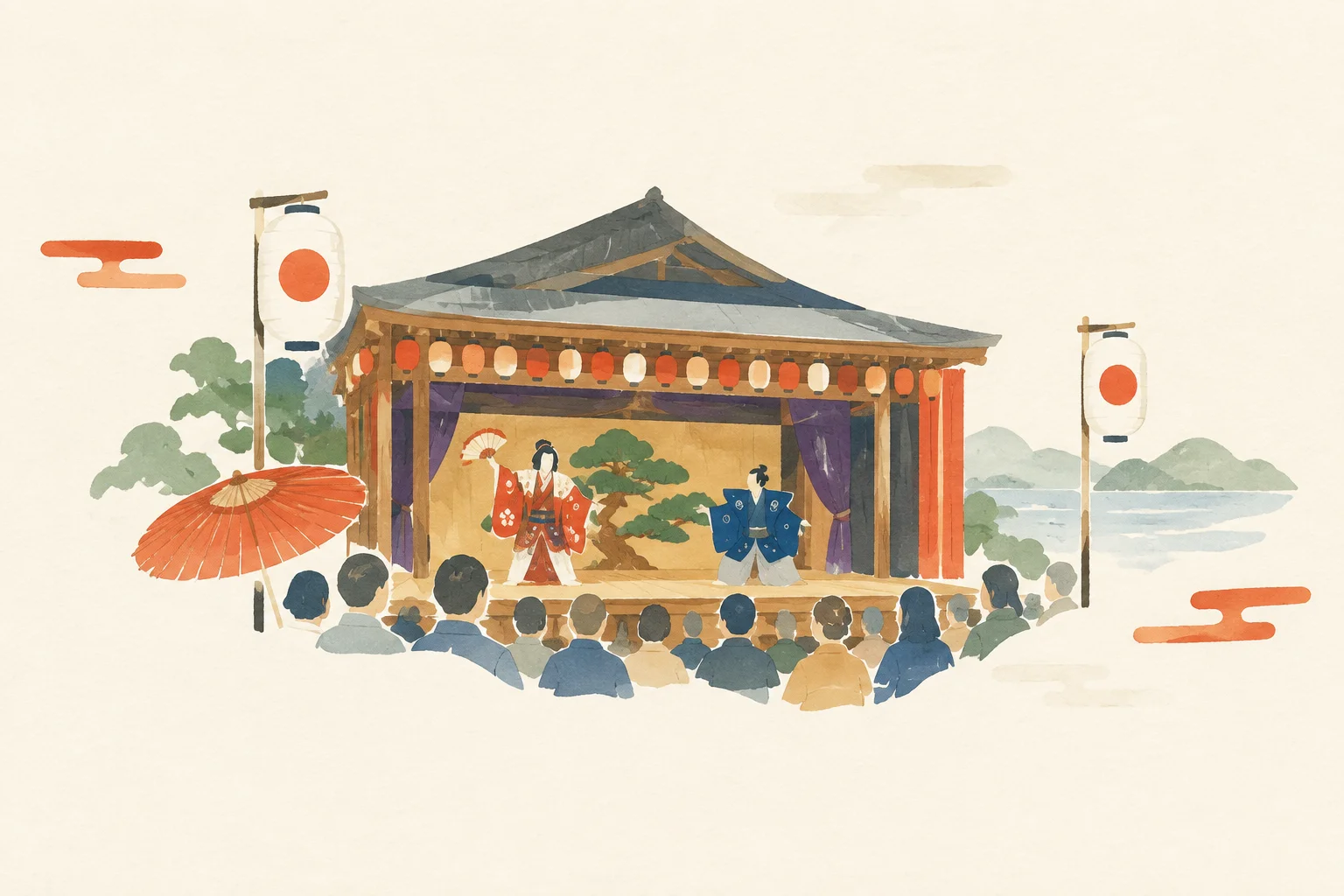
Votive kabuki performed by local residents at two rural stages on Shodoshima. Acting that carries on the Kamigata tradition and historic stage equipment convey the depth of this tradition.
About Shodoshima Rural Kabuki
Photo credits and terms of use
Photographer: 663highland File:Shikokumura03s3200.jpg / Wikimedia Commons / CC BY 2.5 Own work by the contributorDisplay size only adjusted.May differ from the event currently featured.Photo credits and terms of use
Photographer: userinjapan File:Shodoshima Rural Kabuki Stage at Shikokumura Museum - May 9, 2010.jpg / Wikimedia Commons / CC BY-SA 2.0 https://www.flickr.com/photos/userinjapan/4603982406/Display size only adjusted.May differ from the event currently featured.Shodoshima Rural Kabuki is a form of local kabuki passed down in the Hito-yama district of Tonosho Town and the Nakayama district of Shodoshima Town, Kagawa Prefecture.
Local residents serve as actors, tayu narrators, and backstage staff, continuing to stage votive performances on platforms in .
This traditional art of the island retains acting and staging influenced by Kamigata Kabuki, as well as distinctive local stage equipment and customs.
In 2024, it was designated a National Important Intangible Folk Cultural Property.
Source: 「小豆島農村歌舞伎」が国の重要無形民俗文化財に指定されました。/小豆島町 / 小豆島農村歌舞伎 文化遺産オンライン
Festival highlights
The opening performance always features Sanbaso, a dance to purify the stage.
After that, a wide range of plays are performed, including historical dramas such as Kanadehon Chushingura and Ehon Taikoki, domestic dramas, and pure kabuki.
The stage itself is also a highlight, with a revolving stage, trapdoors, and a removable hanamichi walkway. Acting that retains the distinctive features of Kamigata Kabuki is integrated with the local votive performing arts.
Votive kabuki performed by local residents, passed down on the island’s stages
What to expect
For the votive performances, local preservation groups take the lead in serving as actors, tayu narrators, and backstage staff, performing several plays according to the annual program.
In Nakayama, 4 acts are performed from around 5 p.m., and a custom is said to have continued in which spectators watch from the tiered seating while spreading out their boxed meals.
At the Nakayama stage, a stone mill was once used, pulled by an ox, to operate the revolving stage.
Source: 春日神社(中山農村歌舞伎舞台)/小豆島町
How to take part
Visitors are welcome to watch, and Nakayama Rural Kabuki can be viewed free of charge.
The performers, tayu narrators, and backstage staff are members of the preservation association and local residents; no information is provided on whether members of the public can take part as performers.
Hitoshiyama and Nakayama have different performance dates and venues, so you’ll need to choose which performance you want to attend.
Source: 観光コンテンツ | 小豆島観光協会【公式】
Location and access
- Venue and address
Hito-yama Rural Kabuki is performed on the stage within the grounds of Hito-yama Rikyu Hachiman Shrine (Hito-yama, Tonosho Town). Nakayama Rural Kabuki is performed at the Nakayama stage and Kasuga Shrine (Nakayama, Shodoshima Town).
Source: イベントカレンダー | 小豆島観光協会【公式】 / 農村歌舞伎(肥土山)|香川県
Address Hito-yama, Tonosho Town, Kagawa Prefecture; Nakayama, Shodoshima Town, Shozu District, Kagawa Prefecture
Dates and season
In 2026, Hitoshiyama Rural Kabuki is scheduled to be offered at Hitoshiyama Rikyu Hachiman Shrine on May 3, and Nakayama Rural Kabuki at the Nakayama stage on October 11.
The Nakayama performance is listed as starting at 5 p.m.
Shodoshima Rural Kabuki is the collective name for the performances at Hitoshiyama and Nakayama, which are presented at their respective times each year.
Tips for your visit
The Nakayama performance starts around 5 p.m., and tradition has it that people watch until late at night, so it’s best to plan plenty of time for your visit.
It is said that spectators spread out their boxed meals in the tiered seating and watch the performance.
Please check separately for information about parking and other local arrangements on the day, and confirm the venue name before you go so you don’t confuse Hitoshiyama with Nakayama.
Origins and History of Shodoshima Rural Kabuki
Nakayama Rural Kabuki is said to have originated around 300 years ago, in the mid-Edo period, when islanders returning from pilgrimages to Ise brought kabuki from the Kamigata region.
In Hito-yama, the tradition is said to have begun in 1686, when residents staged a grand performance in gratitude for the completion of Kaeruko Pond.
Rural kabuki, once popular throughout the island, gradually declined, and votive performances now remain in Hito-yama and Nakayama.
Official information
You can check the official Shodoshima Town website for event announcements.
Details of its cultural heritage designation are also listed in the Agency for Cultural Affairs’ database of nationally designated cultural properties.
The tourism association’s official website provides information on when and where the Nakayama Rural Kabuki performances are held, as well as admission fees.
Source: 国指定文化財等データベース
Shodoshima Rural Kabuki at a Glance
Shodoshima Rural Kabuki is a community-led form of votive kabuki passed down in Hito-yama, Tonosho Town, and Nakayama, Shodoshima Town.
Highlights include performances that begin with Sanbaso, acting that retains the influence of Kamigata Kabuki, and rural stages equipped with revolving stages and hanamichi walkways.
In 2026, performances are scheduled for Hito-yama on May 3 and Nakayama on October 11.
Japanese Festivals.jp Editorial Team
Celebrating local culture and helping you discover a side of Japan you never knew.
Article updated: 2026/10/19
Submit information or a correction Submit photos of this festival