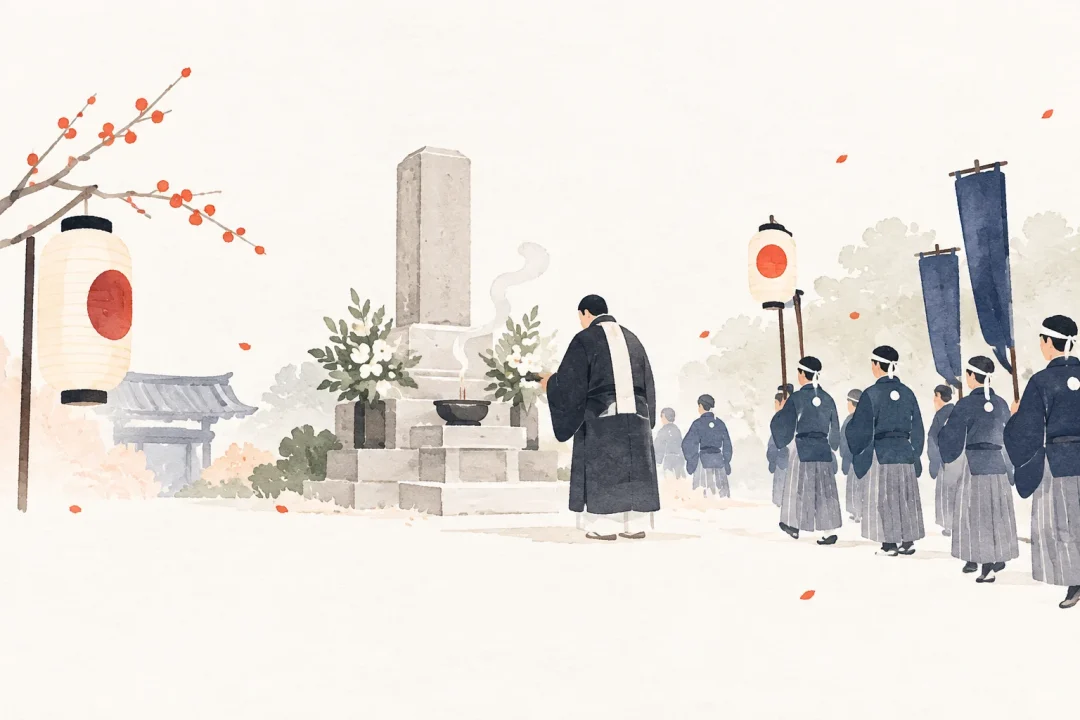
Sakado’s traditional kagura, where mythic dances and silent dramas come to life
Sakado Omiya Sumiyoshi Kagura
Festival information
EVENT INFORMATION- Season / frequency
- Every year on February 23, the first Sunday of April, and November 23 / 3 times a year
- Location
- Omiya Sumiyoshi Shrine
- Area
- Saitama Prefecture・Sakado City(From Tokyo: approx. 30 min–1 h · train)Prefecture-level estimate to a main station or airport, not the venue. Airport access, check-in and onward travel are extra; remote areas and islands can take much longer.
- Features
- Highlights and activities
- Wishes behind the festival
- Participation / viewing
- Spectators welcome
- Last updated
- 2026/10/19
This is the of Omiya Sumiyoshi Shrine in Tsukagoshi, Sakado City, preserving dances and silent dramas based on mythology.
About Sakado Omiya Sumiyoshi Kagura
Sakado Omiya Sumiyoshi Kagura is performed at Omiya Sumiyoshi Shrine in Tsukagoshi, Sakado City.
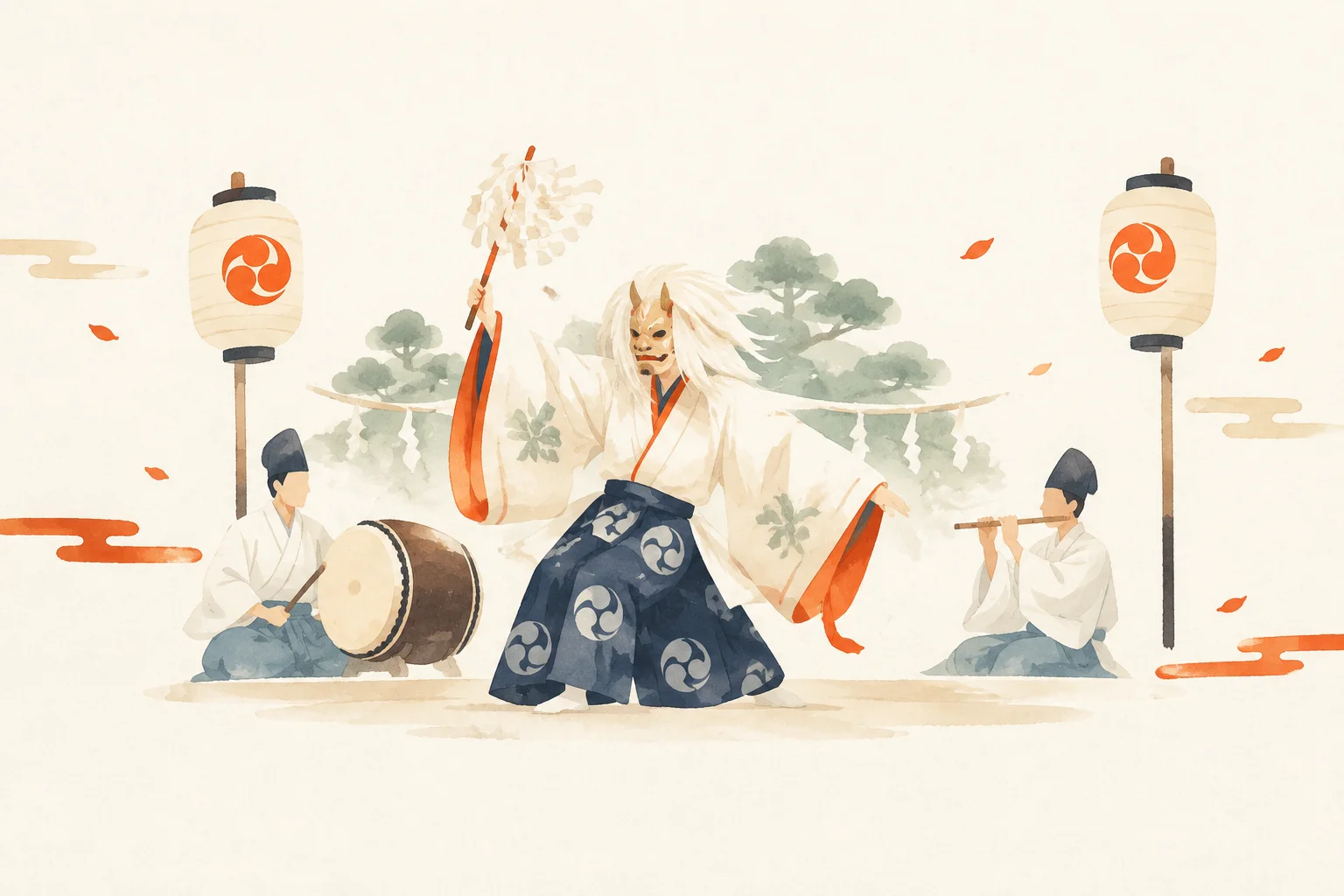
Centered on pieces based on mythology, it combines ritual dances performed with bells and wands with theatrical expressions resembling silent drama.
It has been selected as a nationally designated intangible folk cultural property and designated as an intangible folk cultural property by Saitama Prefecture. The Omiya Sumiyoshi Kagura Preservation Society carries on the tradition locally.
Source: 国指定文化財等データベース / 坂戸の大宮住吉神楽 - 坂戸市ホームページ
Festival highlights
The highlight is how ritual dances and silent dramas depicting myths coexist within a single kagura tradition.
22 pieces have been passed down, of which 12 pieces based on mythology are distinguished as the “Twelve Kagura.”
The annual grand festival features pieces such as the Ukanomitama-no-Mikoto Tanemaki no Za, which depicts rice cultivation, and the Tenka-sai, a procession led by a tengu along the shrine approach.
Source: 令和8年4月4日「前夜祭」と4月5日「例大祭」での神楽奉納 | 坂戸の大宮住吉神楽と塚越ばやしとは
Sakado’s traditional kagura, where mythic dances and silent dramas come to life
What to expect
Kagura generally follows a 4-part structure: “De” and “Iri,” the performers’ entrances and exits; ritual dances oriented toward the four directions; and “Kakuza no Shigoto,” in which silent dramas are performed.
The opening features the Rokugo Kengo no Za, in which an old man performs a dance to pacify the land; the ending features the Akuma-barai, in which performers hold gohei wands and purify the four directions.
Several pieces are performed at the annual grand festival from morning through the afternoon, and the Tenka-sai procession along the shrine approach is also included.
How to take part
Visitors can watch the event.
Location and access
- Venue and address
Omiya Sumiyoshi Shrine (254 Tsukagoshi, Sakado City)
- Train and bus
From the east exit of Wakaba Station on the Tobu Tojo Line, take the Tobu Bus bound for Hachiman Danchi, get off at Sumiyoshi , then walk about 7–8 minutes.
On the Sakacchi Wagon Miyoshi Line, get off at Sumiyoshi Jinja; the stop is right there.
Address 254 Tsukagoshi, Sakado City, Saitama Prefecture
Dates and season
It is usually performed at the Kinensai on February 23, the annual grand festival on the first Sunday of April, and the Niinamesai on November 23.
In 2026, the eve-of-festival celebration was held on April 4, and the annual grand festival on April 5. The announced times were 6 p.m. to around 8 p.m. for the eve-of-festival celebration, and 9:30 a.m. to around 3:30 p.m. for the annual grand festival.
The 2026 event dates have passed, so dates for future years will need to be checked again.
Accommodation and hotels PR
Showing nearby accommodation.
Prices and availability are current at the time of retrieval. For multi-night stays, only the first night’s price is shown. Confirm the final price and directions to the venue with the booking provider. Select your dates again when using the area search link. Search area: within 3 km of Central Saitama Prefecture / Sakado City (the search is not centered on the festival venue)
Tips for your visit
The announcement for the 2026 annual grand festival noted that times might shift slightly depending on the program.
The eve-of-festival celebration and the annual grand festival differ in content and timing, so it is a good idea to check which performance date you want to attend.
If taking photos or videos, please be considerate of the performers, especially by avoiding showing their unmasked faces. You are asked not to publish photos or videos showing unmasked faces on social media, in contests, or elsewhere.
Origins and History of Sakado Omiya Sumiyoshi Kagura
Sakado Omiya Sumiyoshi Kagura is said to have originated when shrine priests from the various districts gathered at Omiya Sumiyoshi Shrine, the head shrine of the twelve districts of Kita-Musashi, studied classical texts, organized kagura, and offered it to the gods.
The Suguro family has served as chief priests since the Nanboku-cho period, and originally the kagura was performed by shrine priests.
Since the Meiji period, local parishioners’ male volunteers have carried on the tradition; today, it is preserved by the Omiya Sumiyoshi Kagura Preservation Society.
Source: 坂戸の指定文化財(無形) - 坂戸市ホームページ
Official information
Dates, venue, access, and an outline of the program are provided on the official Sakado City website.
Its status as a cultural property and the structure of the kagura can also be checked in the Agency for Cultural Affairs’ Database of National Cultural Properties.
The specific program order for the 2026 annual grand festival and eve-of-festival celebration is provided in the event announcement.
Sakado Omiya Sumiyoshi Kagura at a Glance
Sakado Omiya Sumiyoshi Kagura is an intangible folk cultural property of Sakado City, featuring silent dramas based on mythology and ritual dances oriented toward the four directions.
Kagura is performed at Omiya Sumiyoshi Shrine during the Kinensai, the annual grand festival, and the Niinamesai.
At the 2026 annual grand festival, performances depicting rice cultivation and the Tenka-sai procession were held, offering an opportunity to experience local festival rites and traditional performing arts together.
Japanese Festivals.jp Editorial Team
Celebrating local culture and helping you discover a side of Japan you never knew.
Article updated: 2026/10/19
Submit information or a correction Submit photos of this festival