A Hiirugahara tradition passed down from mountain prayers to contests in a sandy enclosure
Orogome
The 2026 edition of Orogome has ended.
Festival information
EVENT INFORMATION- Dates
- 2026/06/06Ended
- Season / frequency
- Every year
- Location
- Hiirugahara District Community Center and its beach
- Area
- Kagoshima Prefecture・Tarumizu City(From Tokyo: approx. 1 h 50 min–2 h 20 min · flight time only)Prefecture-level estimate to a main station or airport, not the venue. Airport access, check-in and onward travel are extra; remote areas and islands can take much longer.
- Wishes behind the festival
- Age restrictions
- Sixth graders take the role of senior heads; fifth graders and younger children take the role of junior heads.
- Last updated
- 2026/11/19
Orogome has been passed down for more than 400 years in the Hiirugahara district of Tarumizu City. This local event, carried on by children, combines prayers for safety in the mountains with wrestling in a sandy enclosure on the beach.
About Orogome
Orogome is a traditional local event passed down in the Hiirugahara district of Tarumizu City, Kagoshima Prefecture.
It is said that an event in which samurai drove wild foals into an enclosure called an “oro” during the feudal era was passed down to children.
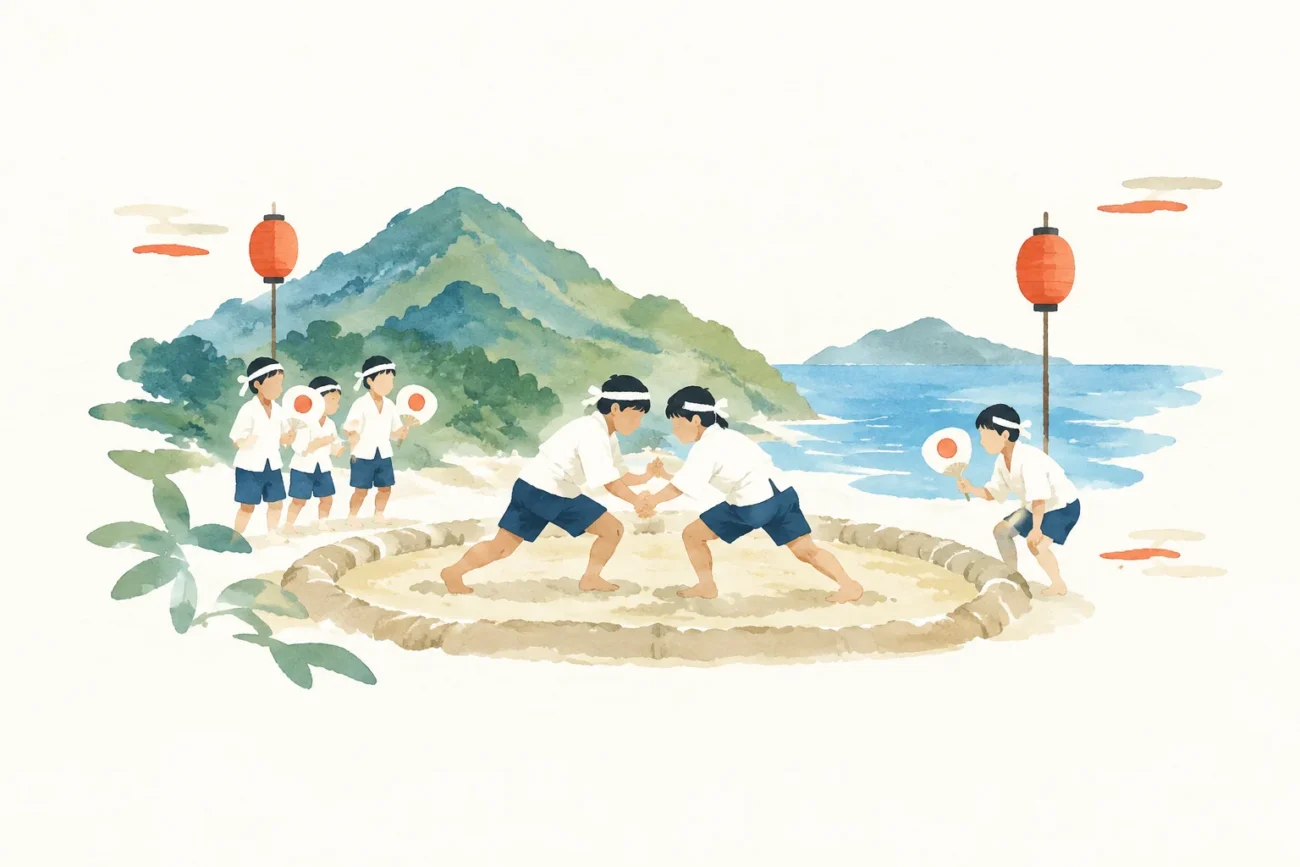
After prayers for safety in the mountains early in the morning, children wrestle in an enclosure dug into the sandy beach—an event that spans both mountain and sea.
It is a tradition that has continued for more than 400 years and is carefully passed down in the community.
Festival highlights
A highlight is the children climbing the mountain with torches and banners, then wrestling in an “oro” dug into the sandy beach.
According to the explanation on Cultural Heritage Online, sixth graders take the role of senior heads, while fifth graders and younger children are junior heads. The senior heads try to pull the junior heads out through the entrance.
The junior heads try to lift the senior heads over the sand wall, and the teams contest by kicking, hitting, and pulling each other’s ears.
In the 2026 event, a fierce struggle took place to drag the junior-head role out of the sandy enclosure.
A Hiirugahara tradition passed down from mountain prayers to contests in a sandy enclosure
What to expect
In preparation for the event, children dig a sandy enclosure on the beach several days in advance.
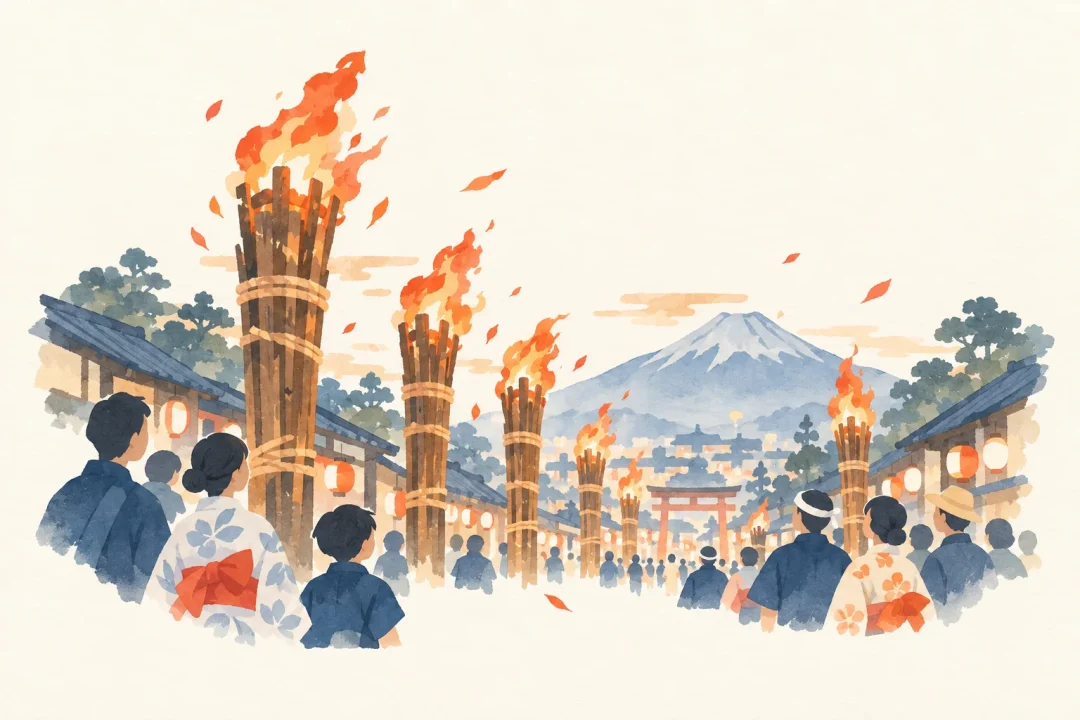
On the day, participants gather before dawn, climb the mountain with banners while torches light the way, raise a battle flag at the summit, and then descend to the “oro.”
Once they reach the enclosure, the children take their assigned roles and wrestle, with the senior heads trying to lead the junior heads out through the entrance.
Cultural Heritage Online explains that 2 or 3 bouts are held with parents and guardians cheering them on.
How to take part
対象年齢:小学校6年生が親頭役、5年生以下が子頭役
Location and access
- Venue and address
Hiirugahara District Community Center and its beach / Hiirugahara district, Tarumizu City, Kagoshima Prefecture
Address Hiirugahara district, Tarumizu City, Kagoshima Prefecture
Dates and season
2026 event information (the listed dates have passed)
In 2026, it was held early in the morning on June 6 (Saturday).
The children gathered at 3:30 a.m. and moved to the beach after 5 a.m., where the wrestling took place.
It was originally scheduled for June 7 (Sunday), but was moved to the previous day because heavy rain was forecast.
Accommodation and hotels PR
Showing nearby accommodation.
Prices and availability are current at the time of retrieval. For multi-night stays, only the first night’s price is shown. Confirm the final price and directions to the venue with the booking provider. Select your dates again when using the area search link. Search area: within 3 km of Central Kagoshima Prefecture / Tarumizu City (the search is not centered on the festival venue)
Origins and History of Orogome
Orogome is described as a tradition passed down to children from an event in which samurai drove wild foals into an enclosure during the feudal era. It has a history of more than 400 years.
Cultural Heritage Online confirms that it was designated on February 9, 2012 as an intangible folk cultural property of the Hiirugahara district of Tarumizu City.
It was once held at several places along the same beach, with more than 10 locations reportedly used across the various settlements and communities at its peak.
Following the situation up to Heisei 22, a 2026 article reports that it is now held at 1 location.
Official information
The Agency for Cultural Affairs’ Cultural Heritage Online lists Orogome as an “Intangible Folk Cultural Property,” gives its location as the Hiirugahara district of Tarumizu City, Kagoshima Prefecture, and states its designation date as February 9, 2012.
The explanation gives details about the timing of the event, how the enclosure is made, the division of roles, and how the contest proceeds.
Orogome at a Glance
Orogome is a traditional local event that has continued for more than 400 years in the Hiirugahara district of Tarumizu City.
Before dawn, the children climb the mountain carrying torches and banners. After praying for safety, they split into the senior-head and junior-head teams and wrestle in an enclosure called an “oro,” dug into the sandy beach.
As a cultural tradition passed down from the feudal era, it was designated an intangible folk cultural property by Tarumizu City in 2012.
In 2026, it was held on June 6, and the way the community continues its tradition was also shared.
Sources and references
Japanese Festivals.jp Editorial Team
Celebrating local culture and helping you discover a side of Japan you never knew.
Article updated: 2026/11/19