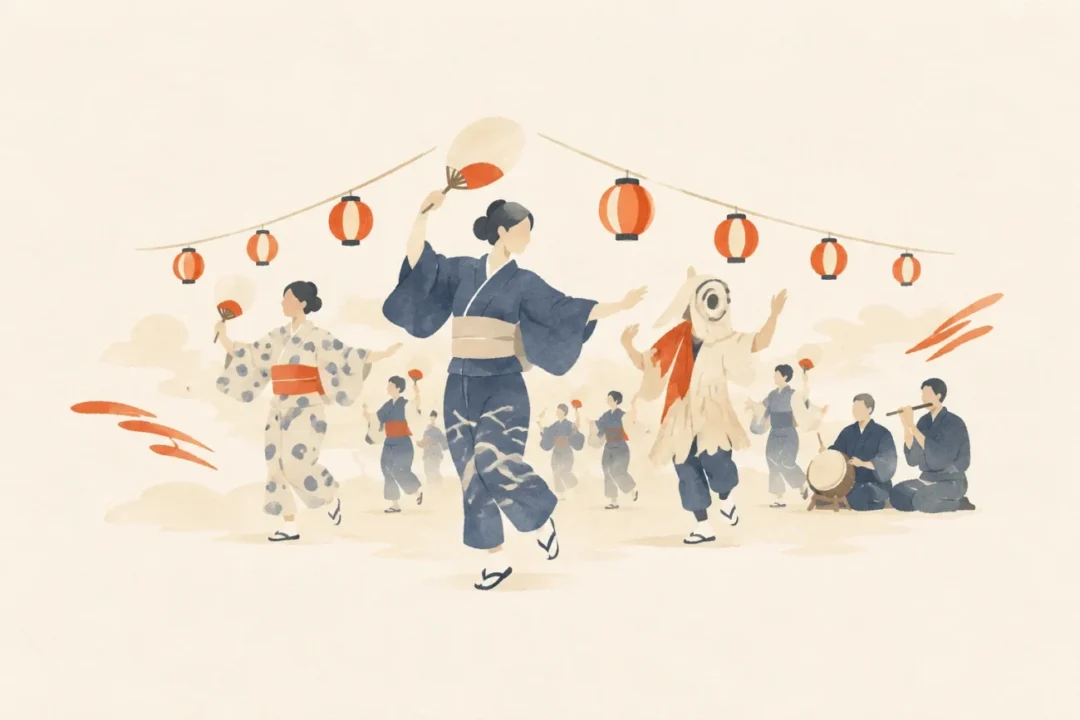
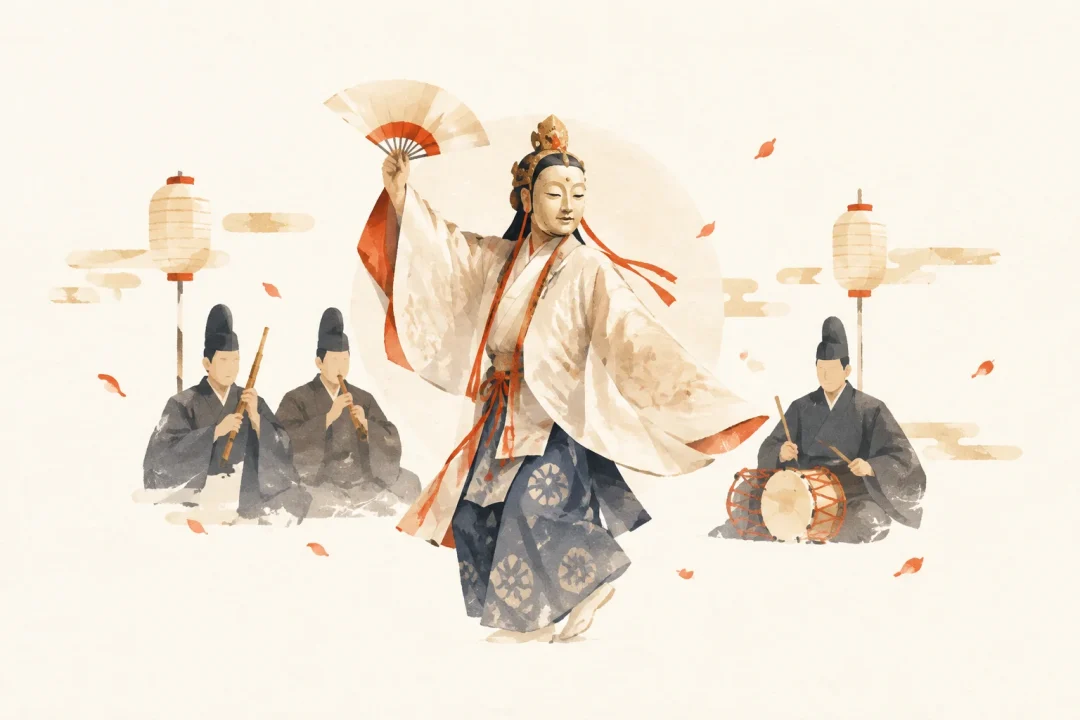
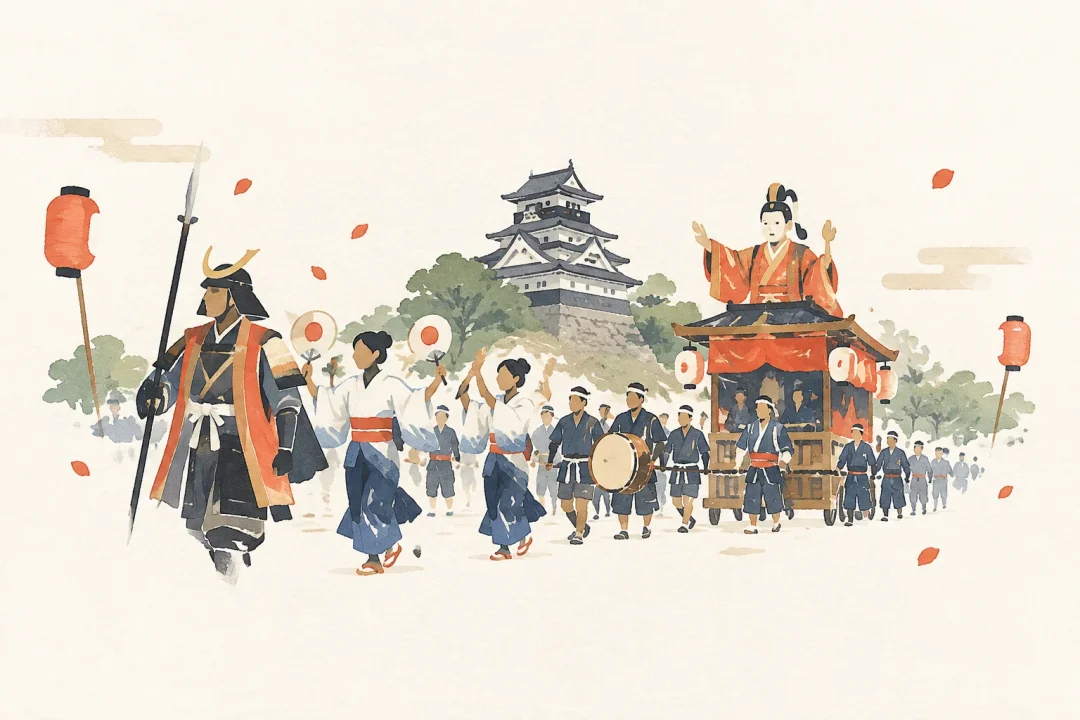
Ancient ceremonial performances where dengaku and Noh resonate together in Mizumi, Ikeda Town
Mizumi Dengaku and Noh Dance

The 2026 edition of Mizumi and Noh Dance has ended.
Festival information
EVENT INFORMATION- Dates
- 2026/02/15Ended
- Season / frequency
- Every year on February 15 / Every year
- Location
- Ukan Shrine
- Area
- Fukui Prefecture・Ikeda Town(From Tokyo: approx. 2 h 50 min–3 h 20 min · bullet train)Prefecture-level estimate to a main station or airport, not the venue. Airport access, check-in and onward travel are extra; remote areas and islands can take much longer.
- Features
- Highlights and activities
- Participation / viewing
- Spectators welcome
- Participation fee
- Free
- Last updated
- 2026/10/19
This traditional event features dengaku and Noh performed according to ancient traditions at Ukan Shrine in Mizumi, Ikeda Town. Following , 4 dengaku pieces and 5 Noh pieces are performed, offering visitors the chance to see performing arts passed down in the community.
About Mizumi Dengaku and Noh Dance
The Mizumi Dengaku and Noh Dance is a traditional event performed at Ukan Shrine in Mizumi, Ikeda Town, Fukui Prefecture.
It is distinctive in that dengaku and Noh are presented as part of a single festival, with 4 dengaku pieces and 5 Noh pieces performed according to ancient traditions.
It is designated a National Important Intangible Folk Cultural Property and has been passed down by residents of the Mizumi district.
Source: 国指定文化財等データベース / 水海の田楽能舞(国指定重要無形民俗文化財)※毎年2月15日開催 | いい池田.jp | 福井県池田町 観光情報サイト
Festival highlights
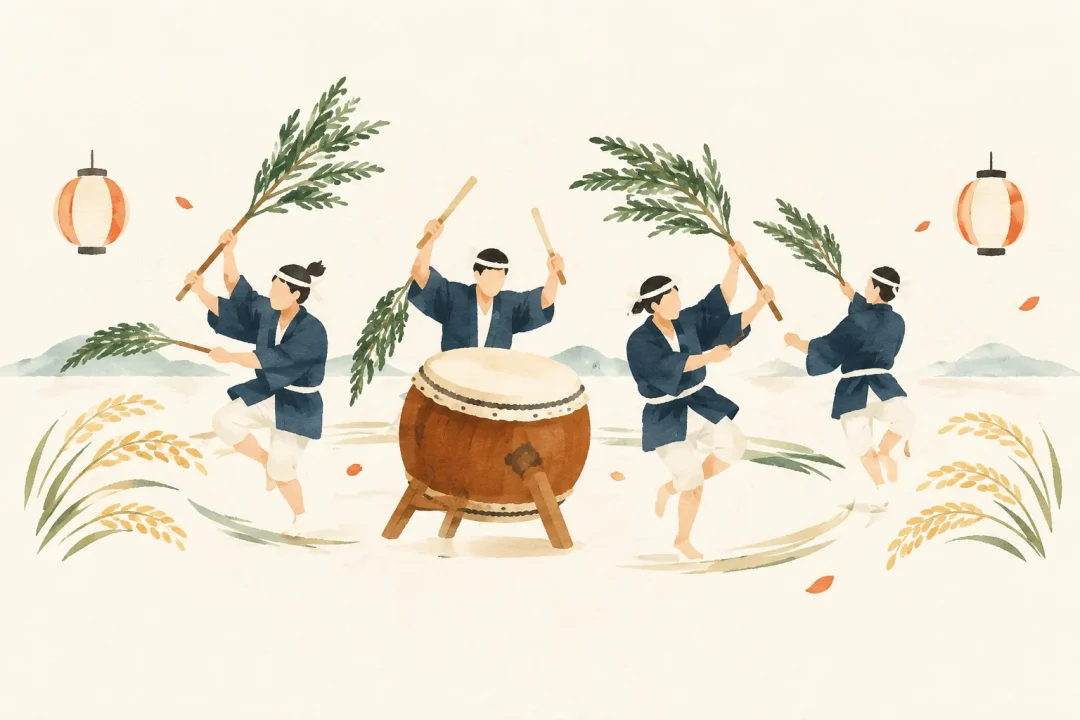
A highlight is the sequence of performances: dengaku, associated with agricultural rituals such as rice planting, followed by Noh, an art form of the aristocracy.
The dengaku performances include “Karasu Tobi,” “,” “Ama Jangoko,” and “Ama,” while the Noh performances include “Shiki Sanban” and “Takasago.”
In “Ama,” performers hold bells and dance a ritual blessing for a good harvest, from rice planting through the end of the harvest, preserving the character of this ancient art form.
Ancient ceremonial performances where dengaku and Noh resonate together in Mizumi, Ikeda Town
What to expect
Misogi takes place at noon, followed by the start of the dengaku and Noh performances at 1 p.m.
Four dengaku pieces and 5 Noh pieces are performed over the course of half a day, until around 5 p.m.
Residents of the Mizumi district serve as performers and musicians, practicing throughout the winter, from junior high school students to the elderly.
How to take part
The dancers and musicians are residents of the Mizumi district, so this is not an event where general visitors can join as performers.
General visitors can watch the dengaku noh performance offered at Ukamo Shrine.
Location and access
- Venue and address
Ukan Shrine (52-24 Mizumi, Ikeda Town, Imadate District, Fukui Prefecture).
- Train and bus
It is about 40 minutes by car from Hapi-Line Fukui’s Takefu Station.
No shuttle buses operate.
- By car
It is about 21 km, or about 30 minutes, via National Route 417 from the Takefu IC on the Hokuriku Expressway.
- Parking
Please use the area around Mizumi Hall (54-1-1 Mizumi, Ikeda Town, Imadate District, Fukui Prefecture) and follow the directions of traffic guides.
Parking is listed as free, with space for 20 vehicles.
Event venue 福井県池田町 鵜甘神社
This map uses the venue name. Check the official guide for the event area and entrances.
Dates and season
2026 event information (the dates listed have passed)
The Mizumi Dengaku and Noh Dance is held every year on February 15.
The 2026 event was announced as scheduled to take place as usual on February 15, with misogi at noon and the dengaku and Noh performances scheduled from 1 p.m. until around 5 p.m.
2026年の開催日は過ぎています。
Accommodation and hotels PR
Showing nearby accommodation.
Prices and availability are current at the time of retrieval. For multi-night stays, only the first night’s price is shown. Confirm the final price and directions to the venue with the booking provider. Select your dates again when using the area search link. Search area: within 3 km of Central Fukui Prefecture / Ikeda Town (the search is not centered on the festival venue)
Tips for your visit
Viewing space is limited, so tripods, monopods, selfie sticks, and stepladders may not be used by anyone other than members of the press.
Please also refrain from using flash or obstructing the view for extended periods.
Follow the directions of traffic guides around the venue and use the parking area smoothly.
Origins and History of Mizumi Dengaku and Noh Dance
The Mizumi Dengaku Noh Dance is said to have been passed down since the Kamakura period and preserved here for about 760 years.
It is said to have begun when Hōjō Tokiyori spent the winter in snowy Mizumi: villagers danced dengaku to comfort him, and in return, Tokiyori taught them Noh dance.
It was designated a National Important Intangible Folk Cultural Property on May 4, 1976.
Official information
The Ikeda Town tourism information website’s page, “Mizumi Dengaku Noh Dance (National Important Intangible Folk Cultural Property),” provides details such as the event date, venue, performance times, parking, and visitor guidelines.
Mizumi Dengaku and Noh Dance at a Glance
The Mizumi Dengaku and Noh Dance is a traditional event in Mizumi, Ikeda Town, where dengaku and Noh are performed as part of the same festival.
Following misogi at noon, 4 dengaku pieces and 5 Noh pieces are performed over the course of half a day.
The 2026 event was announced as scheduled to take place as usual at Ukan Shrine on February 15. Visitors should take care not to use photography equipment or obstruct the view.
Japanese Festivals.jp Editorial Team
Celebrating local culture and helping you discover a side of Japan you never knew.
Article updated: 2026/10/19
Submit information or a correction Submit photos of this festival