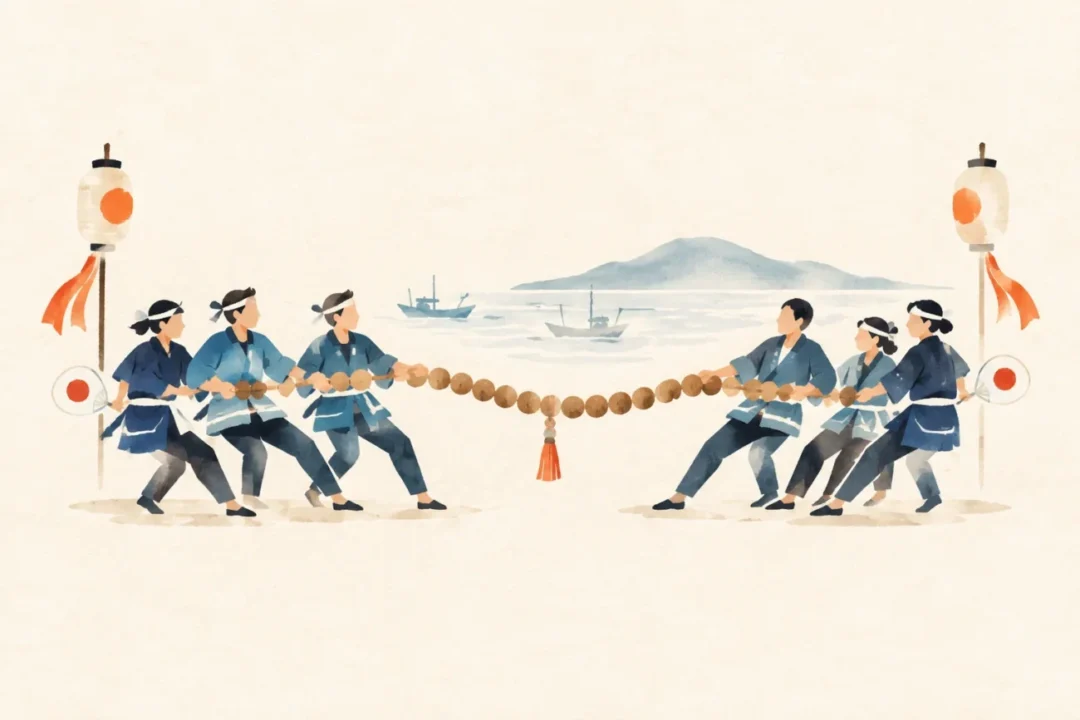
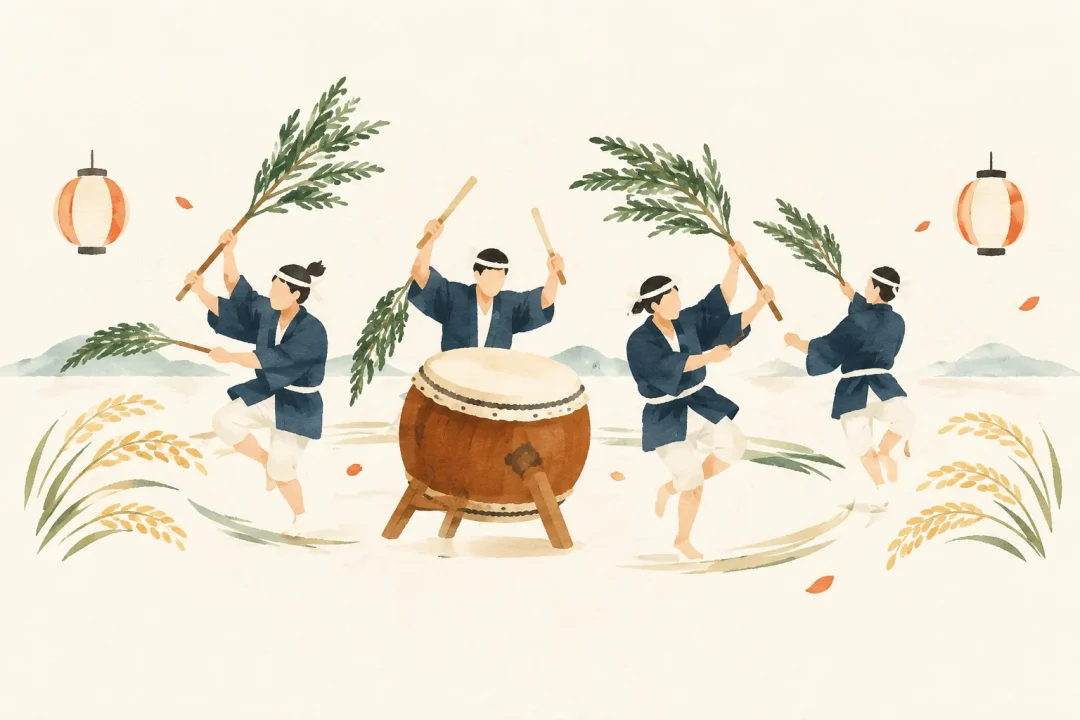
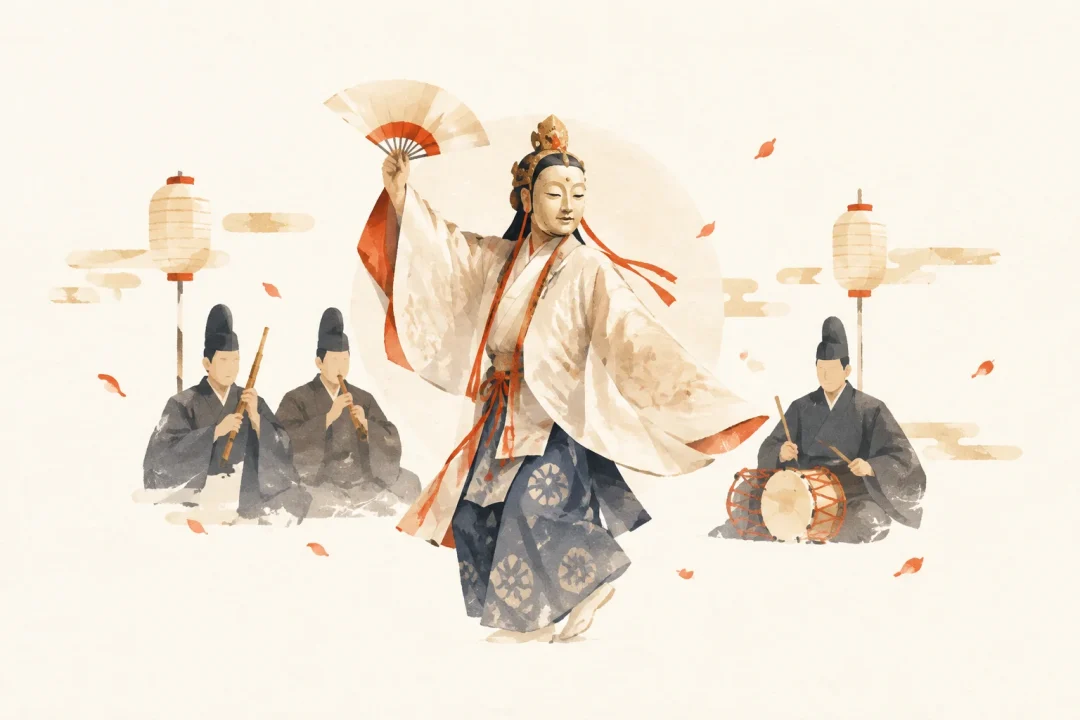
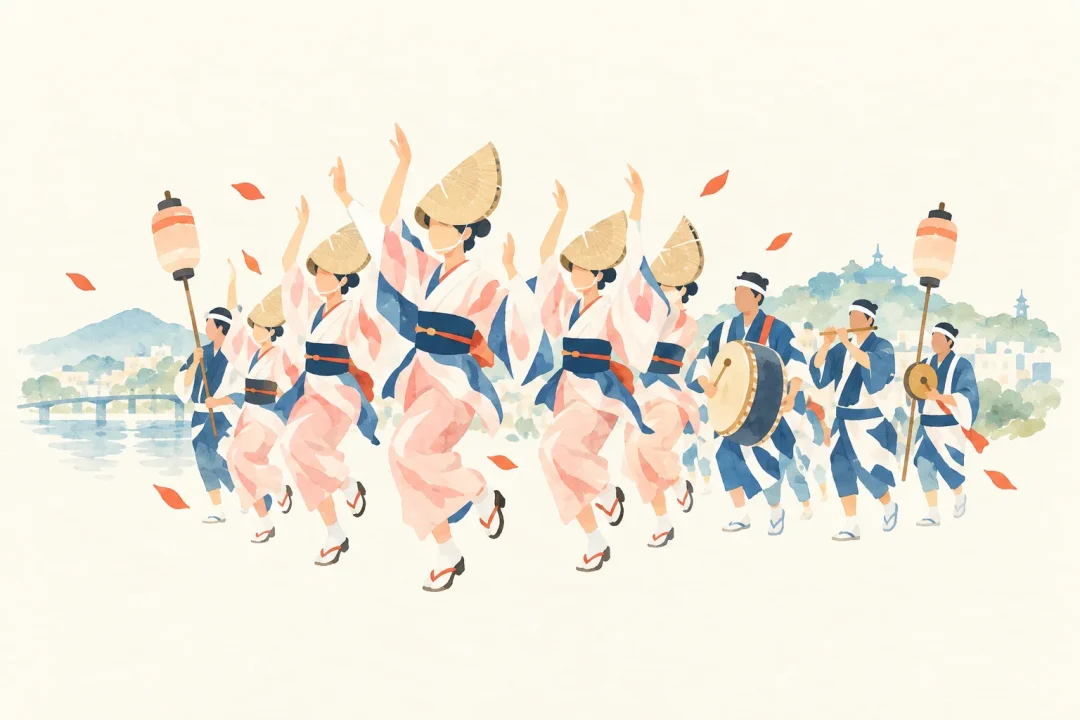
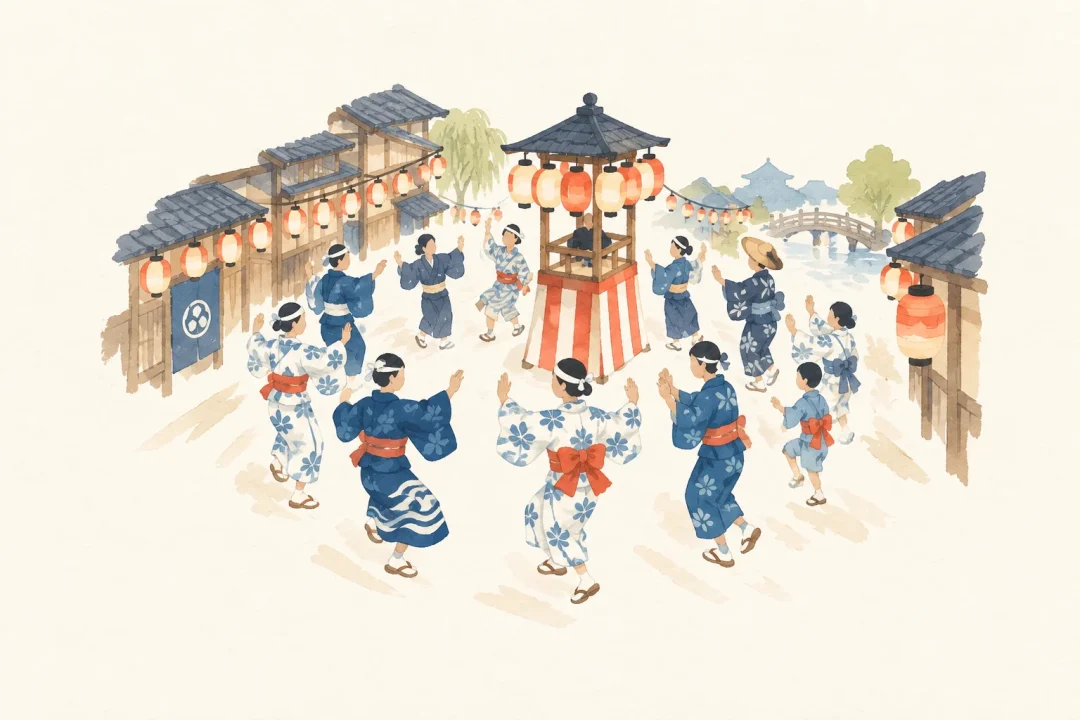
A traditional Bon Odori in Ueno, Minamiechizen Town, featuring folk songs and costumes
Ueno Bon Odori
Festival information
EVENT INFORMATION- Season / frequency
- Every year on August 15 / Every year
- Location
- Grounds of Eiseiji Temple
- Area
- Fukui Prefecture・Minamiechizen Town(From Tokyo: approx. 2 h 50 min–3 h 20 min · bullet train)Prefecture-level estimate to a main station or airport, not the venue. Airport access, check-in and onward travel are extra; remote areas and islands can take much longer.
- Highlights and activities
- Last updated
- 2026/10/19
A passed down in Ueno, Minamiechizen Town, and designated an intangible folk cultural property by the prefecture. Its distinctive dance sequence, costumes, and simple soundscape of local folk songs and interjections are preserved.
About Ueno Bon Odori
Ueno Bon Odori is a prefecturally designated intangible folk cultural property, held every year on August 15 in the grounds of Eiseiji Temple in Ueno, Minamiechizen Town.
It is said to have begun as a celebration of the completion of the Monma Irrigation Canal in the early Edo period, and has been passed down locally.
The “Bon Wakashu,” a group made up of people of all ages and genders, runs the event and also teaches the dances to children.
Source: 文化財詳細 | 福井県文化財ページ
Festival highlights
The highlights are the sequence of dances, beginning with “Dodora Odori,” centering on “Haneso Odori,” and ending with “Senbon Tsuki.”
The dancing proceeds without instrumental accompaniment such as drums, relying only on the lead singer’s local folk song and the dancers’ responses.
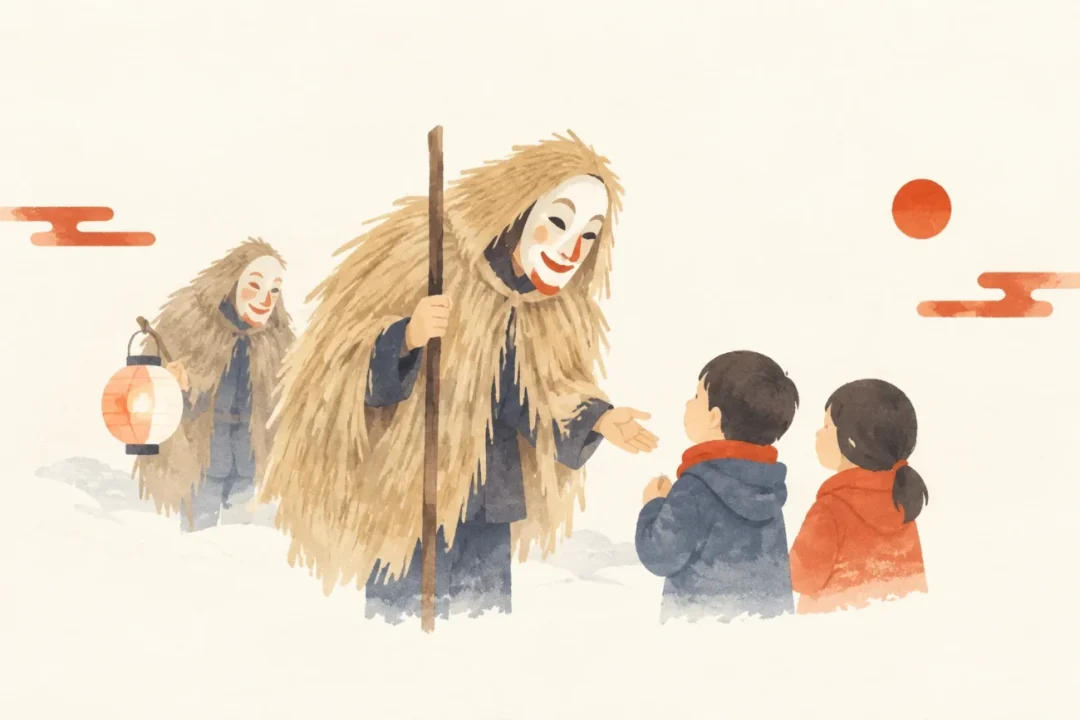
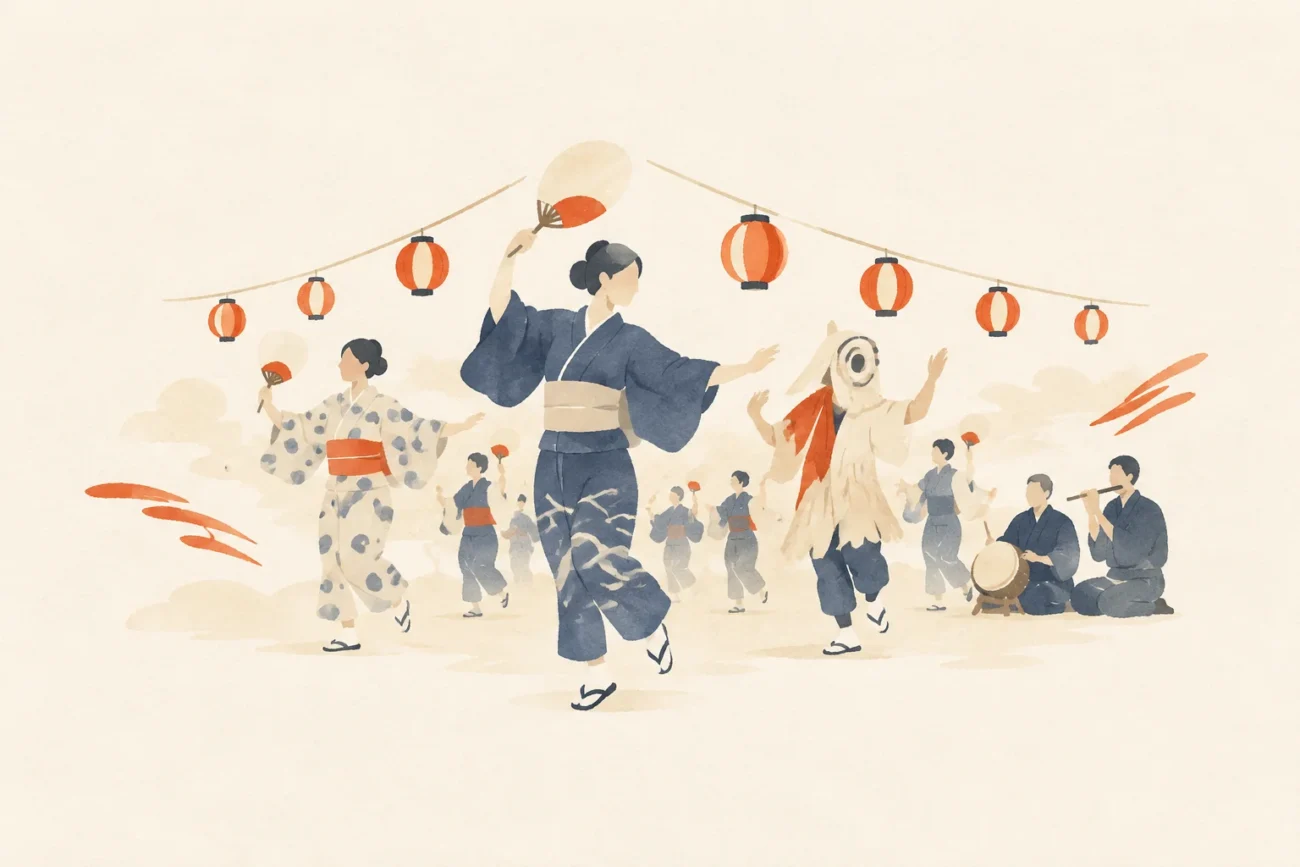
Costumes worn by the dancers and the distinctive role known as “Minomushi,” which keeps the circle in order, are also unique features of this Bon Odori.
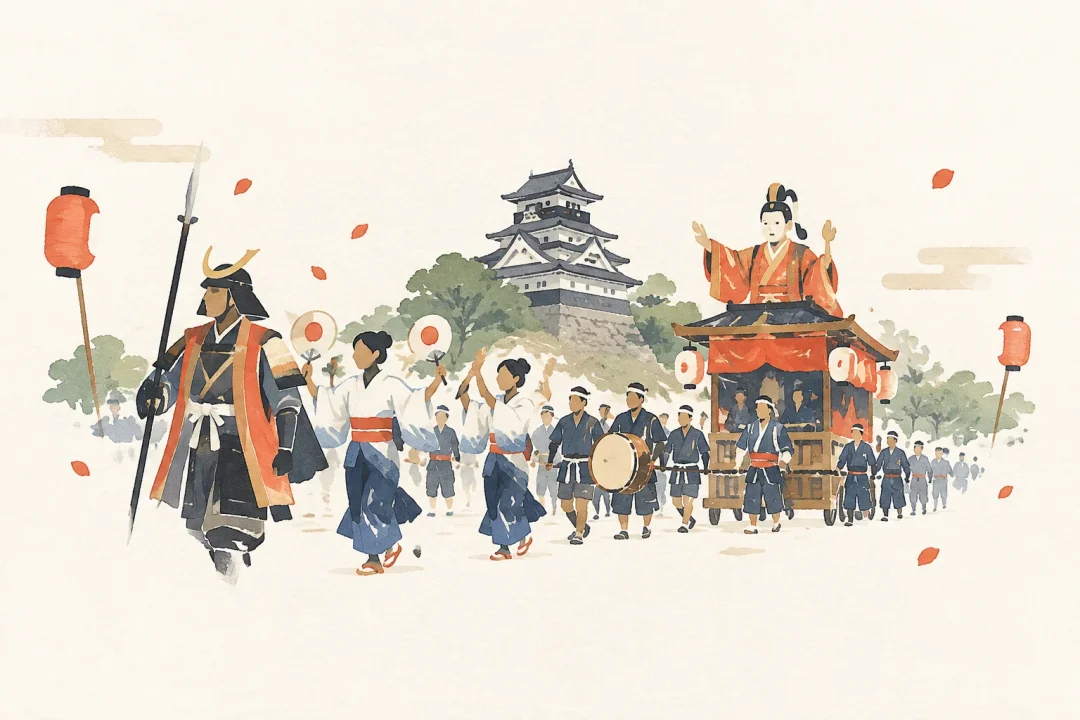
A traditional Bon Odori in Ueno, Minamiechizen Town, featuring folk songs and costumes
What to expect
The dances follow a set order, with the circle formed around local folk songs and interjections.
Some dancers wear costumes, reflecting the festival’s playful, changing style as it incorporates current trends and social conditions.
At the venue, “Minomushi” keeps the dance circle in order and serves to curb mischief and disorderly conduct.
Location and access
- Venue and address
Grounds of Eiseiji Temple (Ueno, Minamiechizen Town)
Address Ueno, Minamiechizen Town
Dates and season
- Season
Every year on August 15
- Frequency
Every year
Accommodation and hotels PR
Showing nearby accommodation.
Prices and availability are current at the time of retrieval. For multi-night stays, only the first night’s price is shown. Confirm the final price and directions to the venue with the booking provider. Select your dates again when using the area search link. Search area: within 3 km of Central Fukui Prefecture / Minamiechizen Town (the search is not centered on the festival venue)
Origins and History of Ueno Bon Odori
Ueno Bon Odori is said to have begun as a celebration of the completion of the Monma Irrigation Canal, also known as the Ueno Irrigation Canal, when it was excavated in the early Edo period.
Today, its traditional sequence of Dodora Odori, Haneso Odori, and Senbon Tsuki is still maintained.
Even as Bon Odori dances set to new folk songs have spread, it has preserved its simple, traditional form and is carried on by the preservation association and the Bon Wakashu.
Official information
The Fukui Prefecture Cultural Properties page introduces Ueno Bon Odori as a prefecturally designated intangible folk cultural property.
The preservation group is the Ueno Bon Odori Preservation Association.
Ueno Bon Odori at a Glance
Ueno Bon Odori is a prefecturally designated intangible folk cultural property, passed down in the grounds of Eiseiji Temple in Ueno, Minamiechizen Town.
Its features include the sequence of Dodora Odori, Haneso Odori, and Senbon Tsuki; its vocals, consisting only of local folk songs and interjections; and its costumes and “Minomushi.”
It is said to have begun as a celebration of the completion of an irrigation canal in the early Edo period, and is carried on through local preservation activities.
Japanese Festivals.jp Editorial Team
Celebrating local culture and helping you discover a side of Japan you never knew.
Article updated: 2026/10/19
Submit information or a correction Submit photos of this festival