A coastal procession of prayer and performance, accompanied by Gongen-sama
Kuromori Kagura
Festival information
EVENT INFORMATION- Season / frequency
- Usually from January 3 to around early March / Held annually, alternating between the northern and southern routes each year
- Location
- Various locations along the Rikuchu coast, starting from Kuromori Shrine
- Area
- Iwate Prefecture・Miyako City(From Tokyo: approx. 2 h 10 min–2 h 40 min · bullet train)Prefecture-level estimate to a main station or airport, not the venue. Airport access, check-in and onward travel are extra; remote areas and islands can take much longer.
- Features
- Highlights and activities
- Wishes behind the festival
- Participation / viewing
- Spectators welcome
- Required number of participants
- More than 10 people
- Last updated
- 2026/10/19
Kuromori is a traditional performing art of Miyako City. Carrying a lion head called Gongen-sama, performers visit homes to bring dances of prayer and night kagura.
About Kuromori Kagura
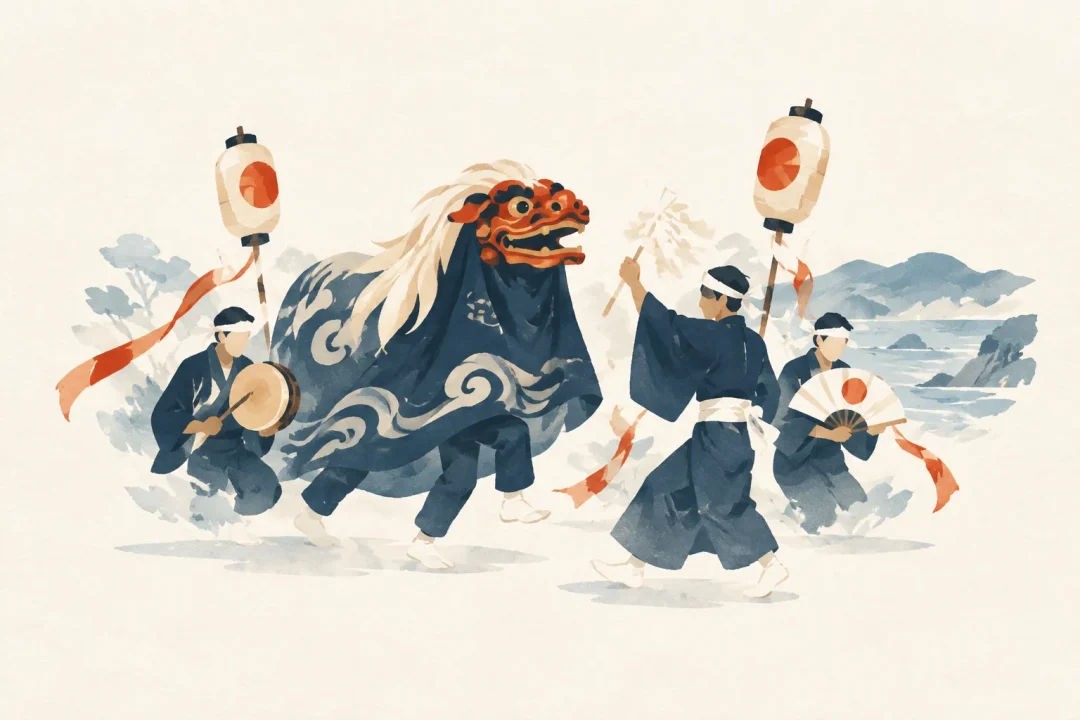
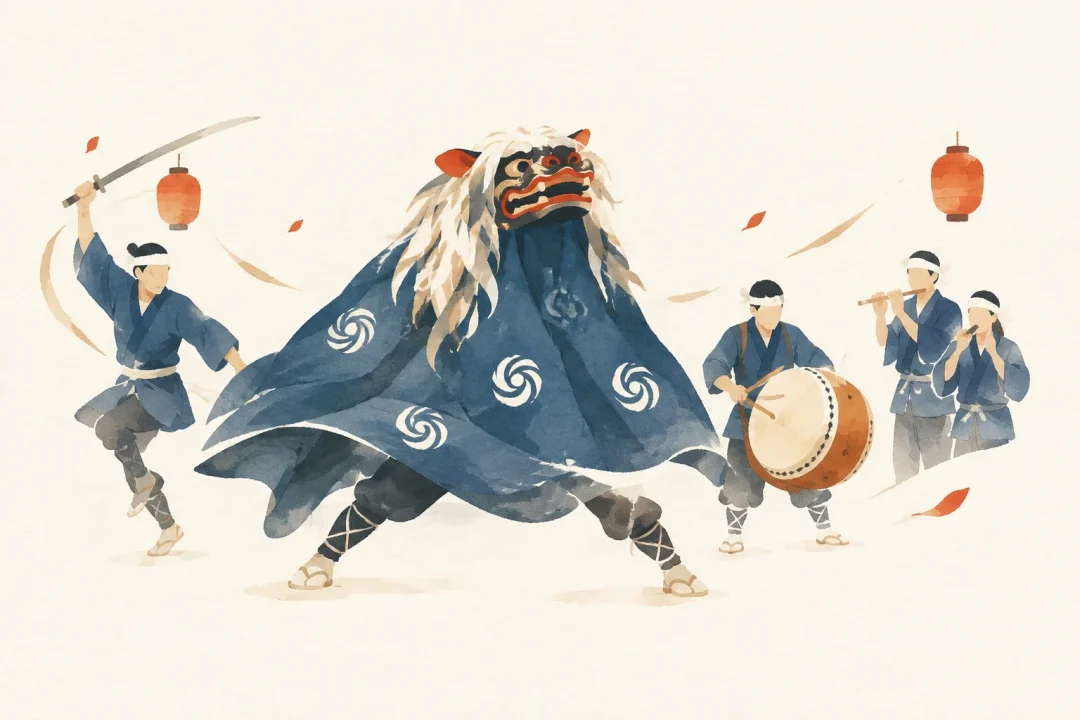
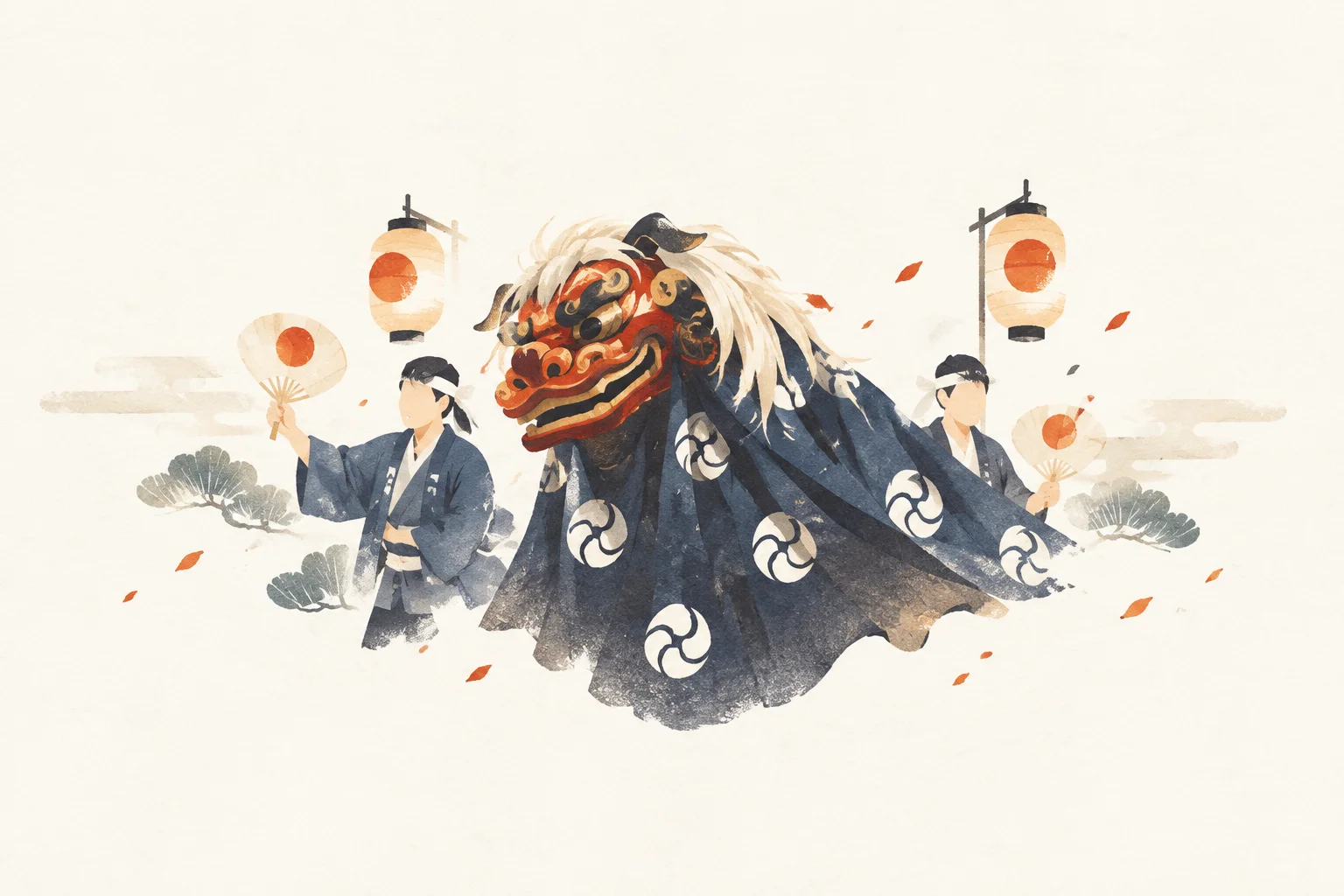
Kuromori Kagura is a folk performing art in which performers carry a lion head called Gongen-sama, believed to house the spirit of Kuromori Shrine, and visit homes in the region to perform dances.
At doorways, they perform dances in response to prayers for protection from misfortune, household safety, good harvests and catches, and memorial rites. At night, they present night kagura in the tatami rooms of private homes.
Based in Miyako City, they continue to preserve the distinctive tradition of visiting coastal settlements.
In 2006, it was designated an Important Intangible Folk Cultural Property of Japan.
Source: 国指定文化財等データベース
Festival highlights
The main highlight is the procession itself: rather than gathering people at a stage, the kagura troupe carries Gongen-sama from home to home.
During the day, different dances of prayer are performed at various locations, including gate dances at doorways, tomb-shishi dances in front of graves, and hashira-gatame, in which Gongen-sama bites a pillar in a newly built home.
At the night kagura, a varied program of performances related to mythology, Noh, and is presented to the accompaniment of drums, flutes, and hand cymbals.
Source: 黒森神楽/岩手県宮古市 ホームページ Miyako City
A coastal procession of prayer and performance, accompanied by Gongen-sama
What to expect
The procession begins at Kuromori Shrine with maitachi, a dance that transfers the shrine’s spirit to Gongen-sama, and continues on to local shrines, lodgings, and homes.
When the performers arrive at a lodging, they perform Gongen-mai and Shittogi-jishi. There is also a custom of placing shittogi, a kneaded rice-flour mixture, on spectators’ foreheads or cheeks.
After the daytime procession comes the night kagura, featuring songs and music to invite the gods, ritual dances, and performances with narrative or comic elements.
How to take part
This is not an event where members of the public join the procession or performances as dancers; generally, visitors watch the kagura passed down by the preservation association.
For night kagura, local people gather at a lodging and watch the performances.
As the procession destinations and kagura lodgings change from year to year, those wishing to watch need to check the route and venues for that year in advance.
If you would like to watch, first check that year's procession route, kagura lodgings, and performance venues.
The northern and southern routes alternate every other year, so the event is not held at the same address each time.
Information advises contacting the Miyako City Tourism Association or the city’s cultural properties office to confirm the dates and venues open to the public.
Location and access
- Venue and address
The procession sets out from Kuromori Shrine and visits coastal settlements along the Rikuchu coast and kagura lodgings in various locations.
Since there is no fixed venue, check that year’s route to find out where to watch.
To reach the related exhibition room, take an Iwate Kenpoku Bus from Miyako Station bound for Yamaguchi Danchi, Miyazono Danchi, or Tashiro, get off at Yamaguchi bus stop, and walk 1 minute.
The Kuromori Kagura Exhibition Room has a parking lot.
Event venue 岩手県宮古市 黒森神社を出発点とする陸中沿岸各地
This map uses the venue name. Check the official guide for the event area and entrances.
Dates and season
The annual procession sets out from Kuromori on January 3, alternating between the northern and southern routes every other year and visiting coastal areas over about 30–40 days.
According to information from Miyako City, on January 3 there are a kami-oroshi ceremony and the first kagura performance of the year. On January 4–5, the performers visit homes in the Yamaguchi district, and the procession continues until early March.
Accommodation and hotels PR
Showing nearby accommodation.
Prices and availability are current at the time of retrieval. For multi-night stays, only the first night’s price is shown. Confirm the final price and directions to the venue with the booking provider. Select your dates again when using the area search link. Search area: within 3 km of Central Iwate Prefecture / Miyako City (the search is not centered on the festival venue)
Tips for your visit
Kuromori Kagura travels along the coast. If there is a performance you want to see or a place you want to visit, check that year’s procession route and kagura lodgings before setting out.
Night kagura is performed in places such as the tatami rooms of private homes. Please respect the local setting and follow the viewing guidance provided.
If visiting during the winter procession season, wear clothing suitable for long periods of travel and waiting outdoors.
Nearby attractions
The Kuromori Kagura Exhibition Room in Yamaguchi, Miyako City, is a related facility where you can learn about Kuromori Kagura throughout the year.
Located inside the Yamaguchi Community Center, the exhibition room offers audiovisual materials about kagura and serves as an information center for anyone interested in Kuromori Kagura.
It is at 1-3-14 Yamaguchi, Miyako City. Opening hours are 9 a.m. to 5 p.m., and admission is free.
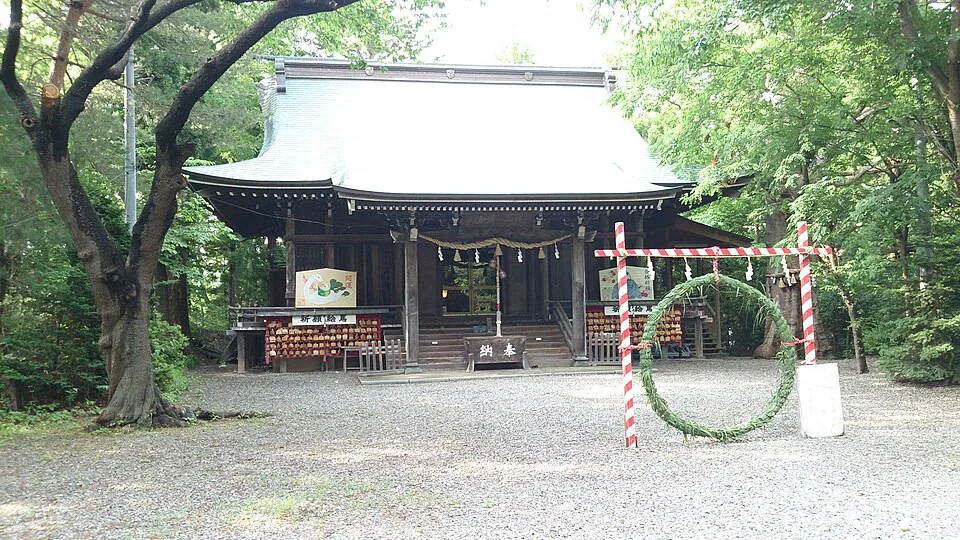
横山八幡宮
岩手県宮古市にある神社
写真:Orienoda / CC BY-SA 4.0(resized and reformatted)
Photo source ·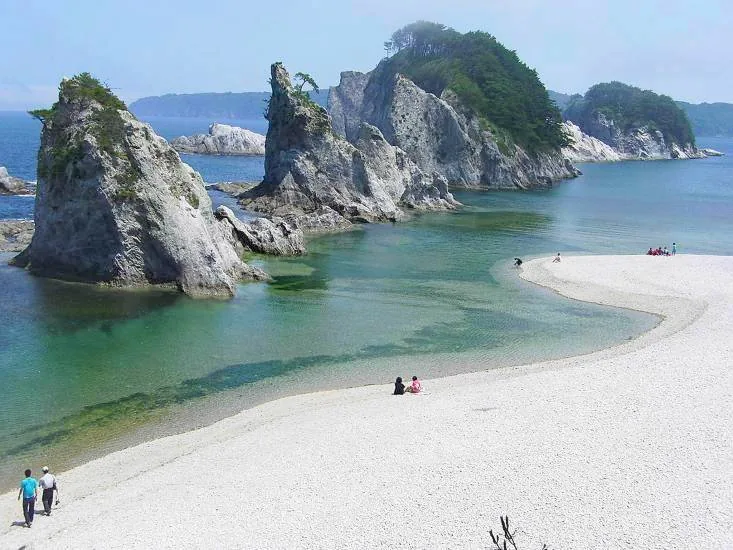
三陸復興国立公園
東北地方の三陸沿岸を区域とする国立公園
写真:Junpei Satoh / CC BY-SA 3.0(resized and reformatted)
Photo source ·Origins and History of Kuromori Kagura
The precise origins of Kuromori Kagura and the start of its processions are unclear, but Kuromori Shrine and Mount Kuromori have been objects of worship since ancient times.
The history of Kuromori Shrine is documented from the 14th century, and a shishi head bearing an inscription dated 1485 has also been handed down.
Records of the coastal procession with Gongen-sama date back to the late 17th century. It is said to have covered an area similar to today’s from the early Edo period.
In March 2006, it was designated an Important Intangible Folk Cultural Property of Japan.
Official information
The official Miyako City website provides information about the history, procession, performances, kagura calendar, and Kuromori Kagura Exhibition Room.
The Agency for Cultural Affairs’ Database of Nationally Designated Cultural Properties lists Kuromori Kagura as an Important Intangible Folk Cultural Property and provides information about its public performances and content.
For information about procession destinations and opportunities to watch in a given year, visitors are advised to contact Miyako City’s cultural properties office or the tourism association.
Kuromori Kagura at a Glance
Kuromori Kagura is a form of kagura in which performers carry Gongen-sama, believed to house the spirit of Kuromori Shrine, and visit homes along the coast, based in Miyako City.
During the day, they perform dances to pray for protection from misfortune, household safety, good harvests, and good catches. At night, they present a varied program of night kagura related to mythology, Noh, and kyogen.
The procession that begins January 3 alternates between the northern and southern routes each year, so be sure to check that year’s route and kagura lodgings before planning a visit.
Japanese Festivals.jp Editorial Team
Celebrating local culture and helping you discover a side of Japan you never knew.
Article updated: 2026/10/19
Submit information or a correction Submit photos of this festival