Three days connecting Yunomine and Oyunohara through Kumano’s prayers
Kumano Hongu Taisha Grand Festival
The 2026 edition of Kumano Hongu Taisha Grand Festival has ended.
Festival information
EVENT INFORMATION- Dates
- 2026/04/13 〜 2026/04/15Ended
- Season / frequency
- Every year, April 13–15 / Every year
- Location
- Kumano Hongu Taisha; former site, Oyunohara
- Area
- Wakayama Prefecture・Tanabe City(From Tokyo: approx. 3 h 30 min–4 h · bullet train + connecting train)Prefecture-level estimate to a main station or airport, not the venue. Airport access, check-in and onward travel are extra; remote areas and islands can take much longer.
- Highlights and activities
- Wishes behind the festival
- Participation fee
- Free
- Last updated
- 2026/10/19
This features the Yunodori , a procession, dances, and goma fire rituals, linking Kumano Hongu Taisha with its former site, Oyunohara.
About Kumano Hongu Taisha Grand Festival
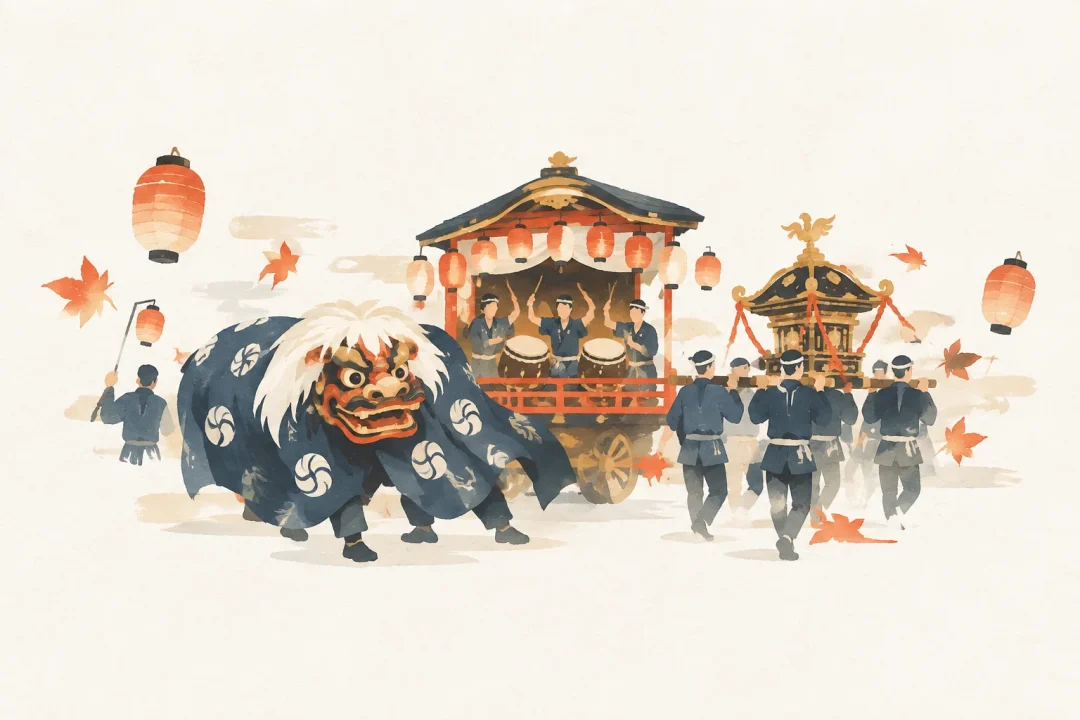
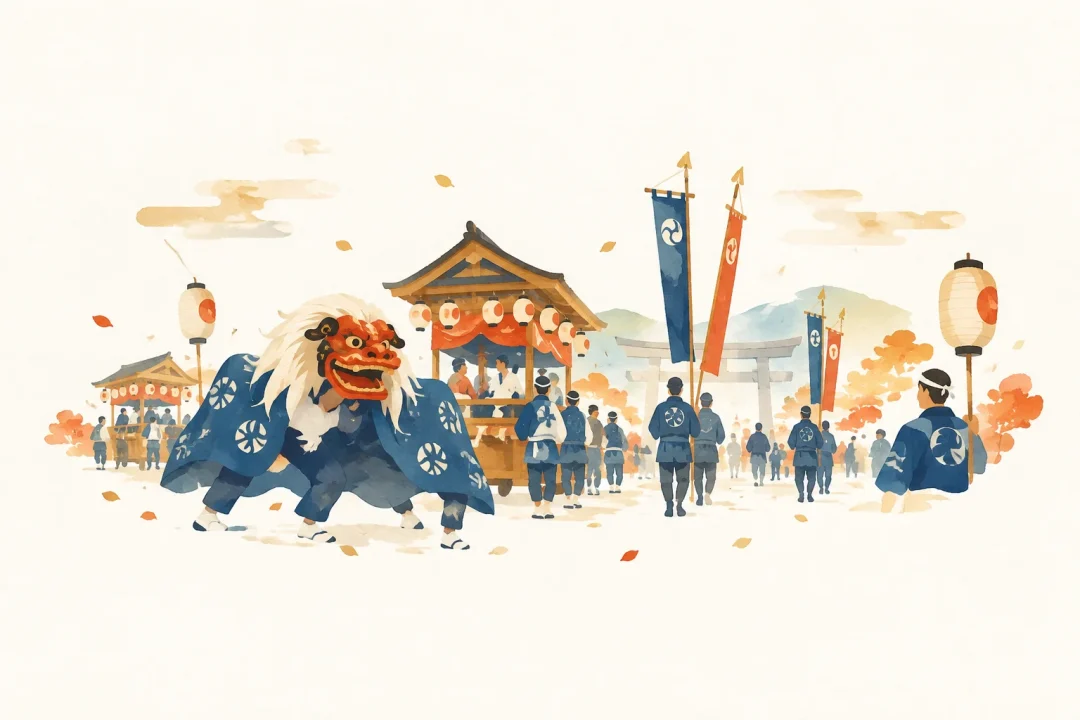
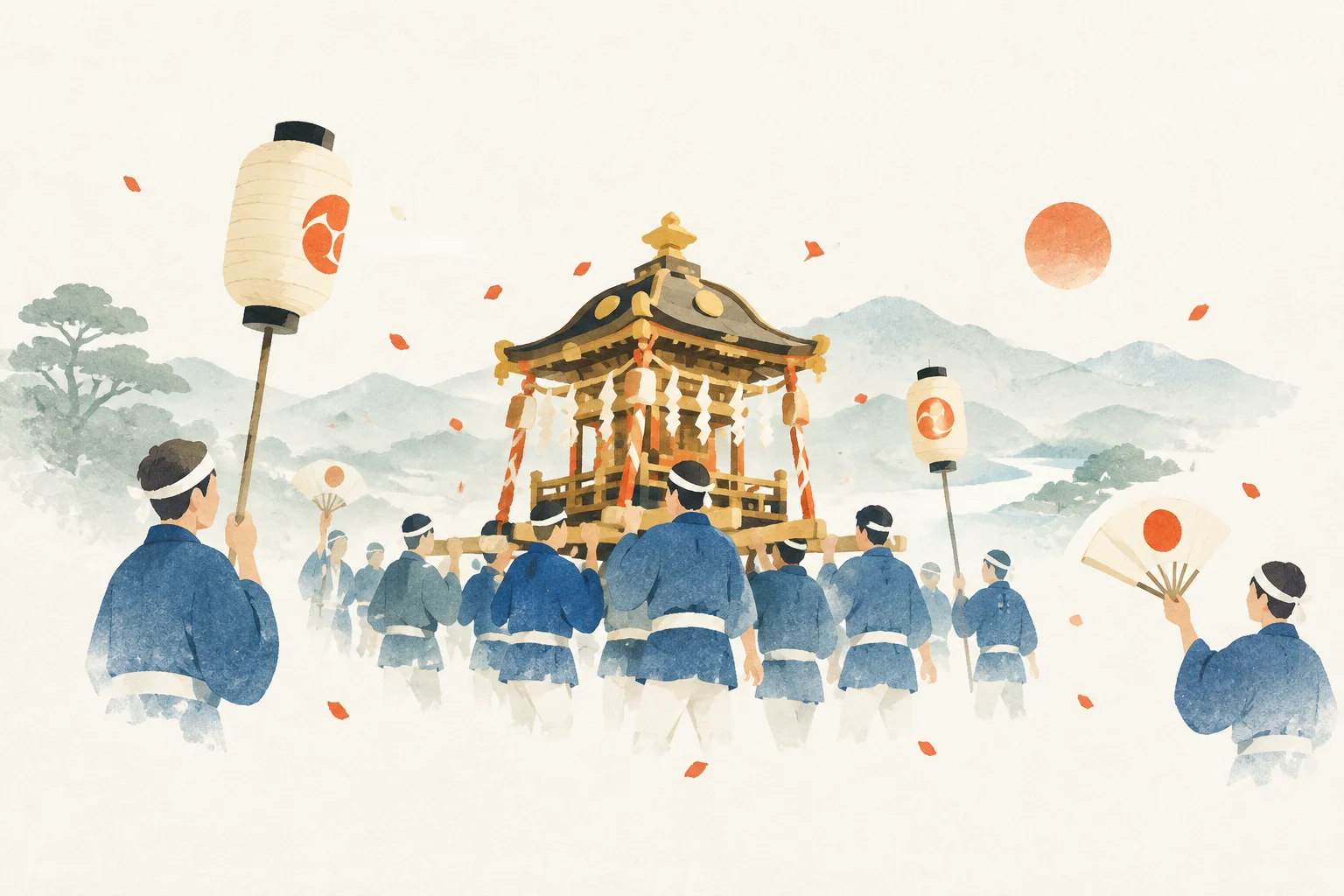
The Kumano Hongu Taisha Grand Festival is a spring festival held at Kumano Hongu Taisha and its former site, Oyunohara, where a mikoshi carrying the deity is paraded through various locations.
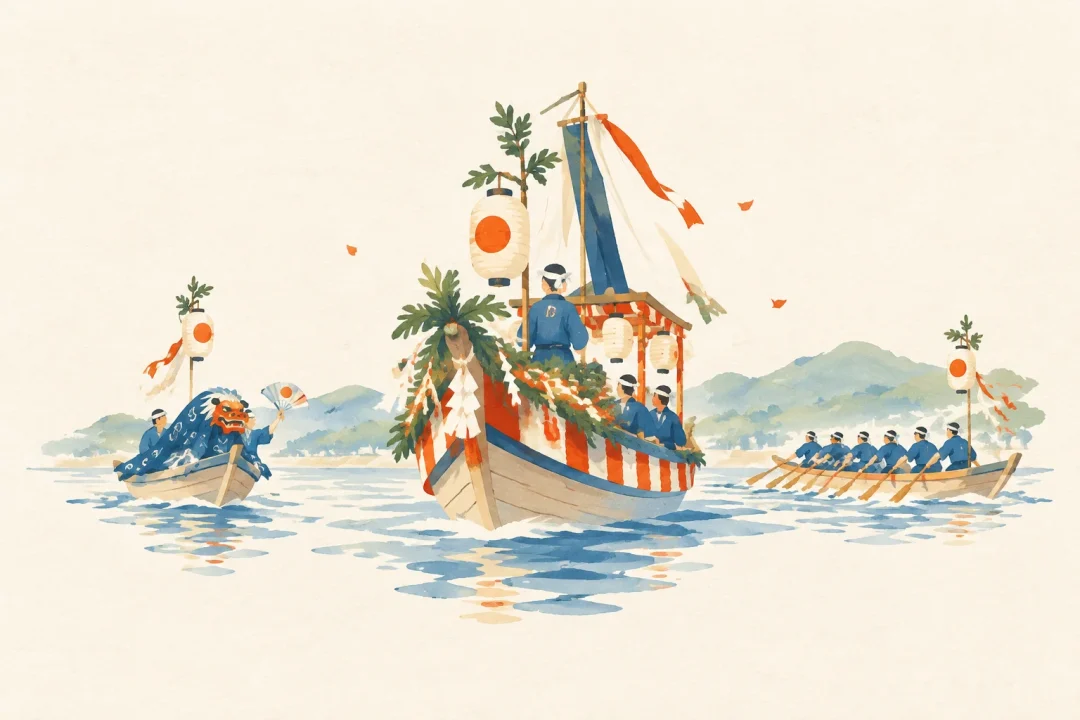
The Yunodori Shinto ritual, Funatama Festival, and Ota Festival take place over 3 days, and the festival is said to pray for an abundant harvest in the coming year.
Children, priests, parishioners, and mountain ascetics take part in sacred songs, dances, and processions during the Yunodori ritual and Ota Festival.
The festival brings together the faith of Kumano Hongu Taisha and local routes linking Yunomine and Oyunohara.
Source: 熊野本宮大社例大祭 - Wikipedia
Festival highlights
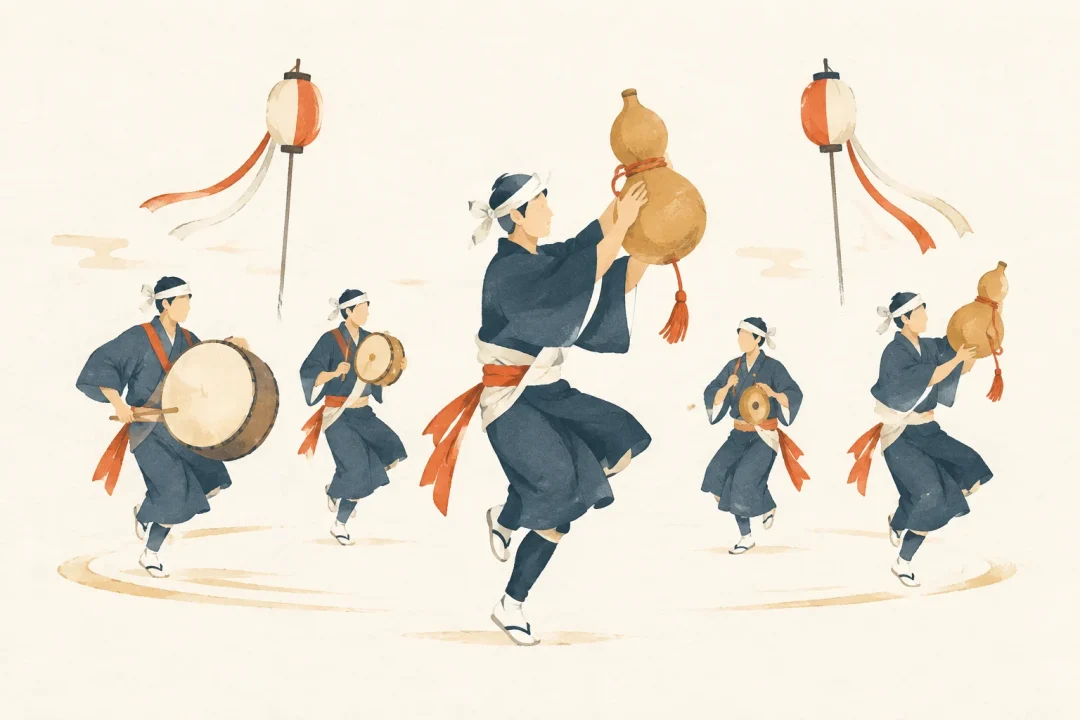
Highlights include the Yatsubachi ritual, in which children dance while beating small drums strapped to their chests, and the Yunodori Shinto ritual, in which children travel along a mountain path on their fathers’ shoulders.
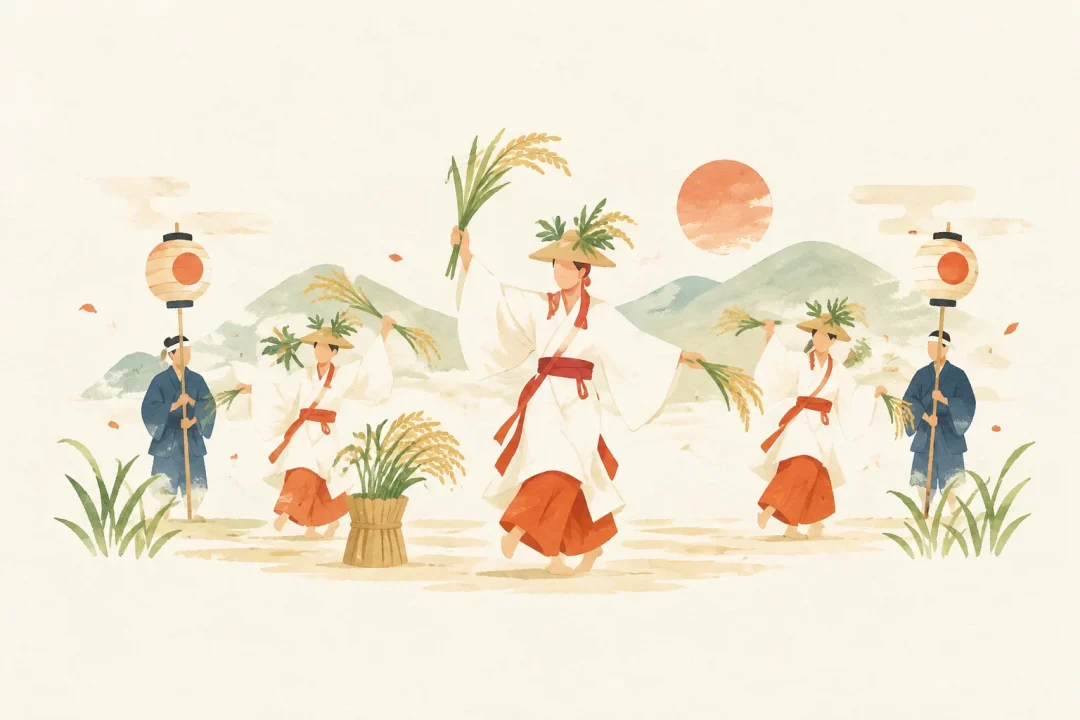
At the Ota Festival, Yamato dances, shrine maiden dances, and rice-planting dances are dedicated around a mikoshi decorated with artificial chrysanthemums.
At Oyunohara, mountain ascetics also perform goma fire rituals, letting visitors feel the festival’s prayers through the movement of the flames.
The custom of worshippers scrambling for artificial choka flowers is another distinctive practice associated with wishes for good fortune and abundant harvests.
Source: 熊野本宮大社例大祭 – 熊野本宮観光協会
Three days connecting Yunomine and Oyunohara through Kumano’s prayers
What to expect
On the first day, during the Yunodori Shinto ritual, the group leaves Kumano Hongu Taisha, performs a hot-spring purification at Yunomine Onsen, and eats rice porridge cooked in the hot spring water.
The Yatsubachi ritual is then performed at Yunomine-oji and Tsukimigaoka Shrine, before the procession heads to the former shrine site via the Dainichi-goe trail.
The Funatama Festival and eve-of-festival celebration take place on the 14th, followed on the 15th by the main sanctuary ceremony and the mikoshi procession.
Dances, rice-planting dances, goma fire rituals, and other observances are dedicated at Oyunohara, and the mikoshi returns to Kumano Hongu Taisha around evening, bringing the festival to a close.
How to take part
The festival is led by the chief priest and other , , musicians, ujiko representatives, children, and yamabushi.
At the Ota Festival, shrine priests, dancers, children, local children, ujiko representatives, and others form a procession and take part in rituals and performances dedicated to the kami.
However, no information is provided on whether general visitors can participate as ritual performers.
The event is described as one where visitors can watch the rites as worshippers and receive an artificial choka flower.
Location and access
- Venue and address
Kumano Hongu Taisha and Oyunohara, the former shrine site.
The address is 1110 Hongu, Hongu-cho, Tanabe City, Wakayama Prefecture.
- Train and bus
From JR Shingu Station, take a bus for about 1 hour 20 minutes, get off at “Kumano Hongu Taisha-mae,” then walk about 10 minutes.
From JR Kii-Tanabe Station, take a bus for about 2 hours 10 minutes, get off at “Hongu Taisha-mae,” then walk about 6 minutes.
- By car
From Kumano-Odomari IC on the Kisei Expressway, travel about 50 km via National Routes 42, 311, and 168; the drive takes about 1 hour.
- Parking
Free parking is available for 600 cars on the riverbank and 40 cars near the , for a total of 640 cars.
Source: Kumano Hongu Taisha Grand Festival · 本宮祭(和歌山県/熊野本宮)|開催期間 · アクセス|るるぶ&more.
Address 1110 Hongu, Hongu-cho, Tanabe, Wakayama Prefecture
Dates and season
2026 event information (the listed dates have passed)
The 2026 schedule ran from April 13 through the 15th.
The Yunodori Shinto ritual takes place on the 13th, the Funatama Festival and eve-of-festival celebration on the 14th, and the main sanctuary ceremony and mikoshi procession on the 15th.
The main sanctuary ceremony on the 15th is scheduled for 8 a.m., followed by the mikoshi procession at 1 p.m.
The Yunodori ritual and mikoshi procession feature processions, dances, and goma fire rituals, so visiting over several days makes it easier to follow the festival’s sequence.
Accommodation and hotels PR
Showing nearby accommodation.
Prices and availability are current at the time of retrieval. For multi-night stays, only the first night’s price is shown. Confirm the final price and directions to the venue with the booking provider. Select your dates again when using the area search link. Search area: within 3 km of Central Wakayama Prefecture / Tanabe City (the search is not centered on the festival venue)
Nearby attractions
Oyunohara, the festival venue, is the former site of Kumano Hongu Taisha, located on a sandbar where the Kumano, Otonashi, and Iwata rivers meet.
Nearby attractions include the Nakahechi route of the Kumano Kodo, Yunomine Onsen, Hosshinmon-oji, and the Okukumano Kodo Hongu roadside station.
The Dainichi-goe trail links Yunomine and Oyunohara and is also part of the festival route.
Alongside the festival, visitors can explore places connected with the faith of Kumano Hongu and its pilgrimage routes.
Source: 熊野本宮大社 | 和歌山県 / 熊野本宮大社|スポット|和歌山県公式観光サイト

南方熊楠顕彰館
和歌山県田辺市にある博物館

新庄総合公園
和歌山県田辺市にある公園

熊野古道なかへち美術館
和歌山県田辺市にある美術館

熊野本宮大社
和歌山県田辺市本宮町本宮にある神社
写真:Tim Notari from Tanabe-Shi Wakayama-Ken, Japan / CC BY-SA 2.0
Photo source ·
田辺市立美術館
和歌山県田辺市にある美術館

道の駅田辺市龍神ごまさんスカイタワー
和歌山県田辺市にある国道371号の道の駅
Origins and History of Kumano Hongu Taisha Grand Festival
Following the great flood of the Kumano River in Meiji 22, the shrine buildings of Kumano Hongu Taisha were moved from the former site at Oyunohara to their present location.
The mikoshi is still paraded to Oyunohara as its temporary resting place during the festival, maintaining the connection with the former shrine site.
Yunomine, associated with the Yunodori Shinto ritual, has long been connected with pilgrimages to Kumano, but the practice of using it for hot-spring purification is thought to have emerged from the Nanboku-cho period onward.
The Dainichi-goe trail is believed to have been opened by the Heian period at the latest and is now part of the Kumano Pilgrimage Route.
Official information
Festival information is available on the Kumano Hongu Tourism Association’s “Kumano Hongu Taisha Grand Festival” page.
Transport information and details on getting around the Hongu area are also available from the association.
Kumano Hongu Taisha Grand Festival at a Glance
The Kumano Hongu Taisha Grand Festival is held over 3 days, from the Yunodori Shinto ritual to the Ota Festival, linking Yunomine, Oyunohara, and Kumano Hongu Taisha.
Visitors can experience Kumano’s religious traditions and local performing arts all at once, including the children’s Yatsubachi ritual, the mikoshi procession, Yamato and rice-planting dances, and goma fire rituals.
The 2026 schedule was listed from April 13 through the 15th, with events at Kumano Hongu Taisha and its former site, Oyunohara.
Japanese Festivals.jp Editorial Team
Celebrating local culture and helping you discover a side of Japan you never knew.
Article updated: 2026/10/19
Submit information or a correction Submit photos of this festival