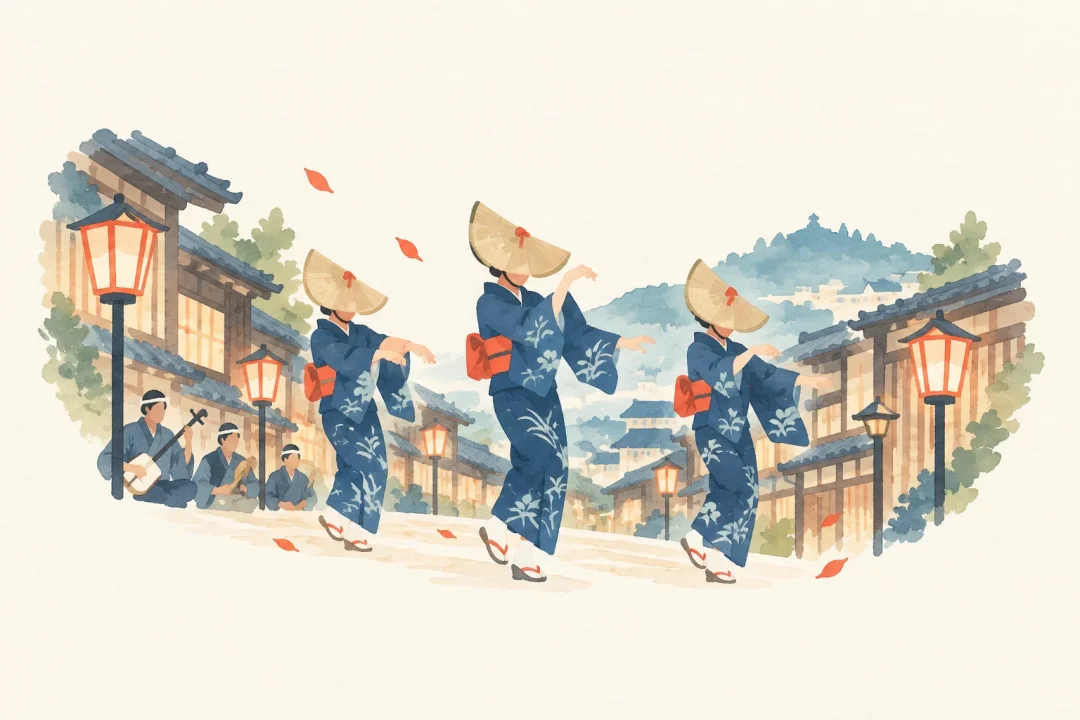
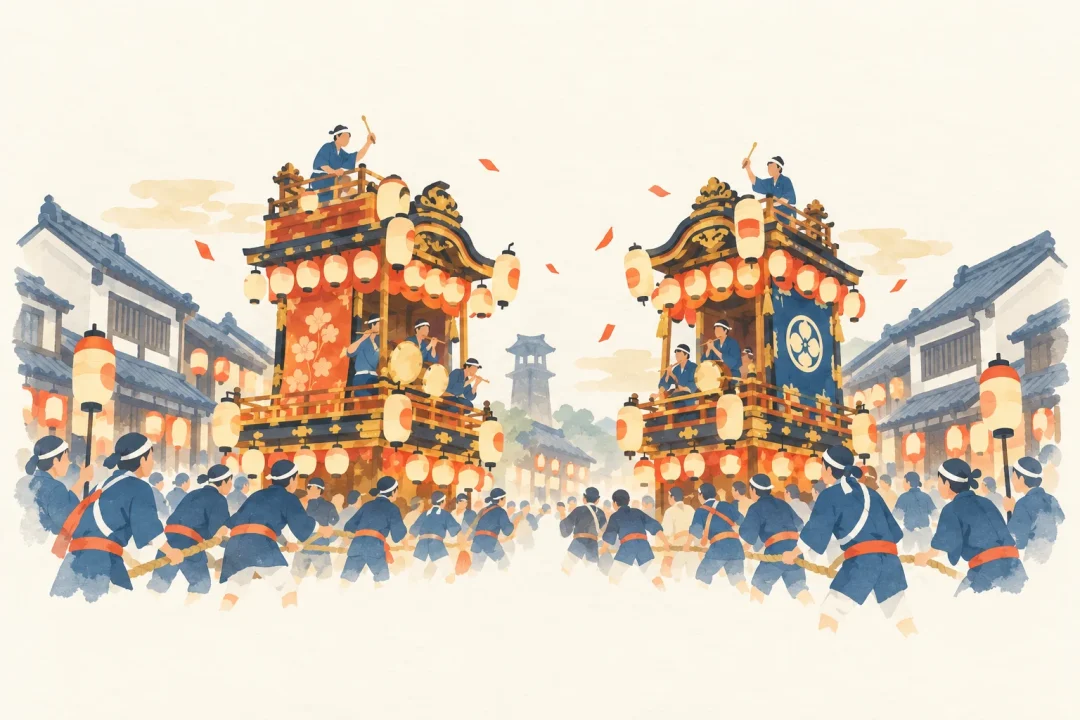
A folk performing art of Nishinojima, where the sounds of work songs, taiko, and dance come together
Jusanya
Festival information
EVENT INFORMATION- Location
- Nishinojima, Yoshikawa Ward
- Area
- Niigata Prefecture・Joetsu City(From Tokyo: approx. 1 h 40 min–2 h 10 min · bullet train)Prefecture-level estimate to a main station or airport, not the venue. Airport access, check-in and onward travel are extra; remote areas and islands can take much longer.
- Highlights and activities
- Last updated
- 2026/11/17
Jusanya, passed down in Nishinojima, Yoshikawa Ward, Joetsu City, is a folk performing art comprising yosedaiko, flute, work songs, and dance. Set against the once played during ground-compacting work in the Meiji era, it has been passed down in close connection with local life.
About Jusanya
Jusanya is a folk performing art passed down in Nishinojima, Yoshikawa Ward, Joetsu City.
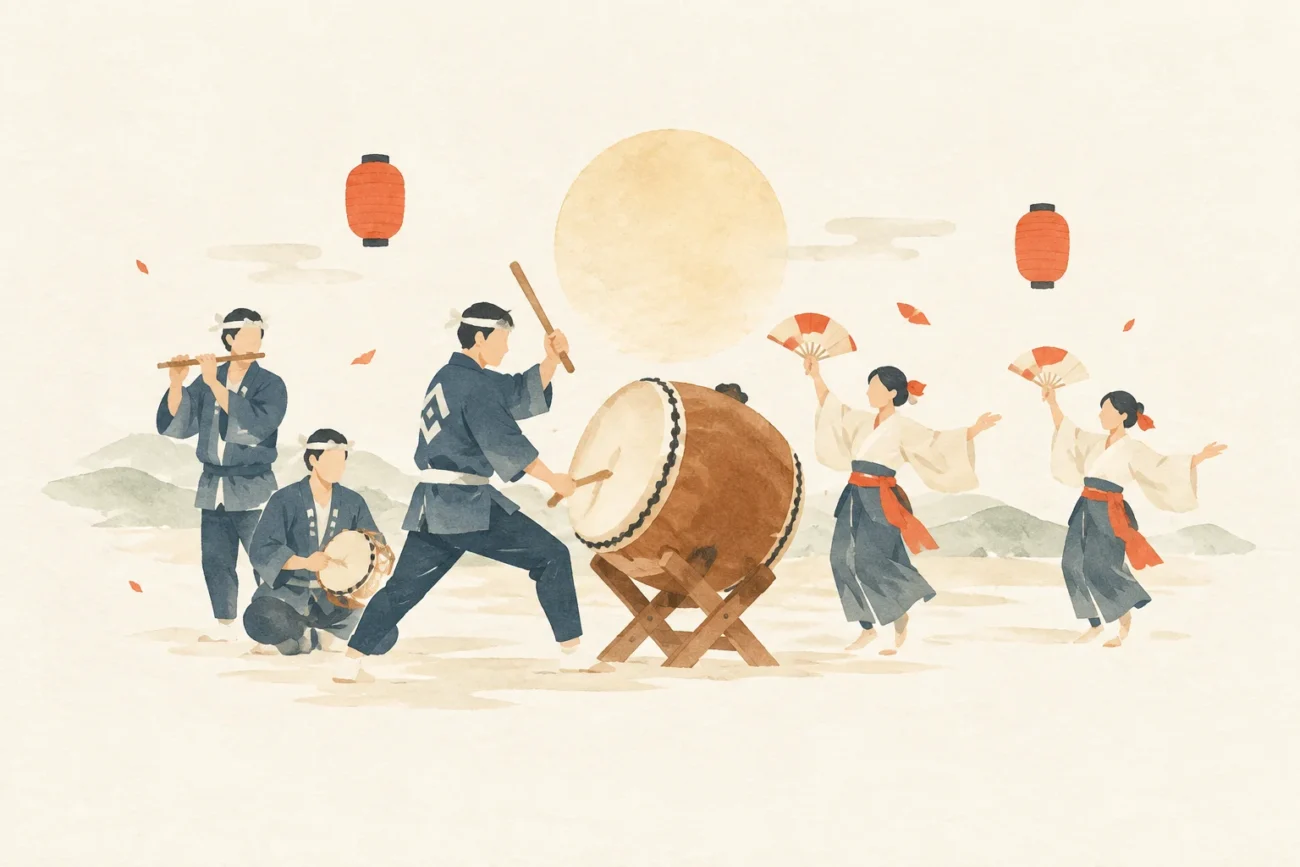
It consists of yosedaiko, flute, age-ondo and hon-ondo songs, and dance, performed with dancing to the songs and .
It is designated as a city cultural property and documented as a performing art passed down in the community.
Festival highlights
A highlight is how age-ondo and hon-ondo songs join the sounds of yosedaiko and flute, leading into the dance.
Age-ondo was a work song sung while hauling out timber in “daimochi-hiki” or compacting the ground in “ishiban-kachi.”
A distinctive feature is that songs from the workplace were also passed down for send-offs for master carpenters after a ridge-raising ceremony and for transporting wedding gifts.
A folk performing art of Nishinojima, where the sounds of work songs, taiko, and dance come together
What to expect
The program consists of yosedaiko, flute, age-ondo and hon-ondo songs, and dance.
Age-ondo is a work song once sung while hauling timber or compacting the ground.
Later, it was also sung at send-offs for master carpenters and when transporting wedding gifts. In the Jusanya tradition passed down today, people dance to the songs and taiko.
Location and access
- Venue and address
Nishinojima, Yoshikawa Ward, Joetsu City
Address Nishinojima, Yoshikawa Ward, Joetsu City
Accommodation and hotels PR
Showing nearby accommodation.
Prices and availability are current at the time of retrieval. For multi-night stays, only the first night’s price is shown. Confirm the final price and directions to the venue with the booking provider. Select your dates again when using the area search link. Search area: within 3 km of Central Niigata Prefecture / Joetsu City (the search is not centered on the festival venue)
Nearby attractions

上越市立水族博物館
新潟県上越市にある水族館
Origins and History of Jusanya
Jusanya is said to have developed into its present form from the hayashi played during ground-compacting work in the Meiji era.
Age-ondo spread from being a work song to one sung at send-offs for master carpenters and when transporting wedding gifts.
The name “Jusanya” comes from “Jōsanya,” a refrain used in work songs.
It was designated a cultural property by the former Yoshikawa Town in Showa 57 and by Joetsu City in Heisei 19.
Official information
The Joetsu City website page “Jusanya” introduces its location, components, history of transmission, and designation date as a city-designated cultural property.
The Jusanya Preservation Society is listed as the owner and related party.
Jusanya at a Glance
Jusanya is a folk performing art passed down in Nishinojima, Yoshikawa Ward, Joetsu City, and is designated as a city cultural property.
It consists of yosedaiko, flute, age-ondo and hon-ondo songs, and dance, performed with dancing to the songs and taiko.
Set against the hayashi once played during ground-compacting work in the Meiji era, work songs were also passed down for send-offs for master carpenters and when transporting wedding gifts.
Sources and references
Japanese Festivals.jp Editorial Team
Celebrating local culture and helping you discover a side of Japan you never knew.
Article updated: 2026/11/17