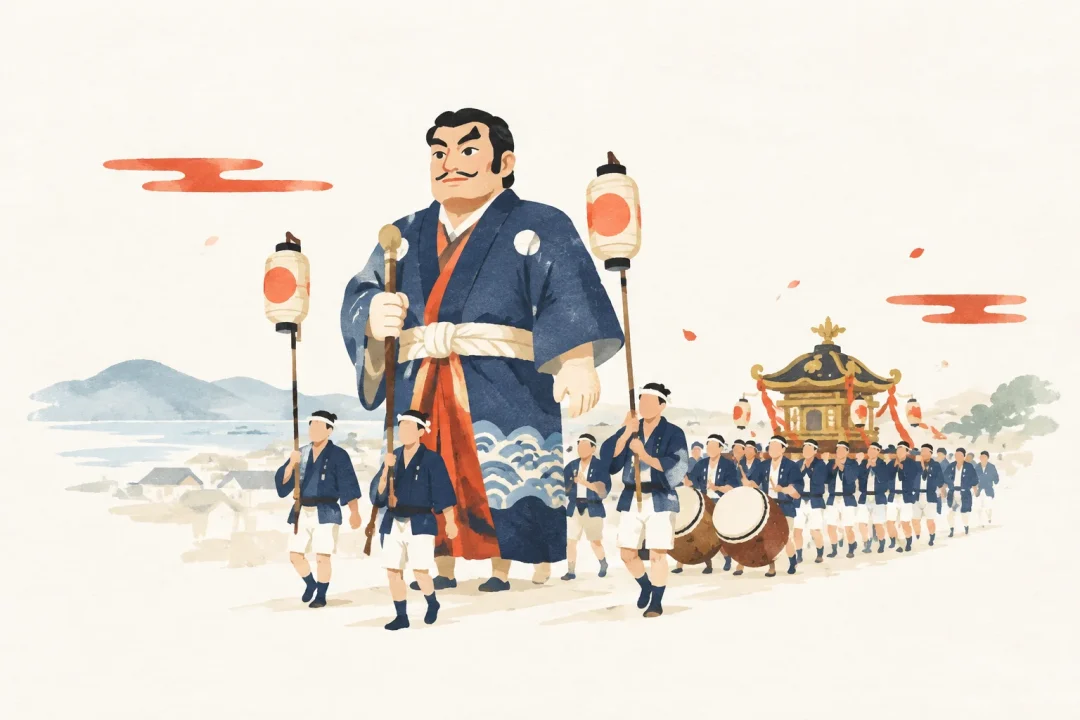
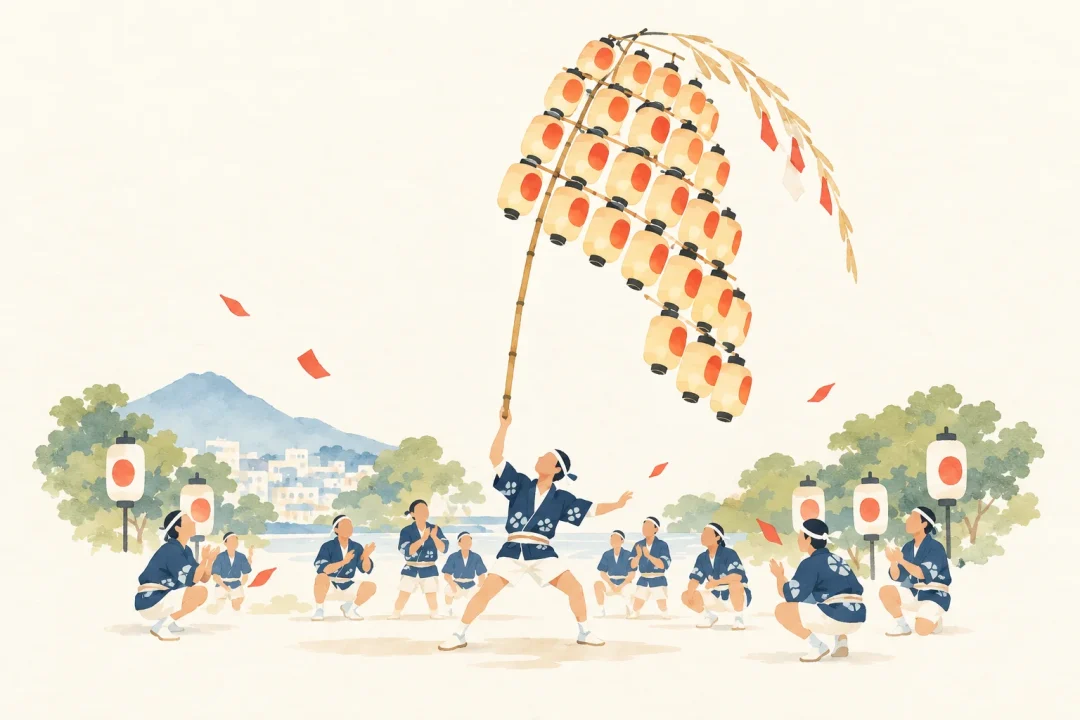
A traditional hamakudari in Iwakawa, led by a 5-meter-tall giant figure
Iwakawa’s Yagorō-don

Festival information
EVENT INFORMATION- Season / frequency
- From assembly before dawn on November 3 to the and dismantling of the giant figure on November 5
- Location
- From Iwakawa Hachiman to the designated
- Area
- Kagoshima Prefecture・Soo City(From Tokyo: approx. 1 h 50 min–2 h 20 min · flight time only)Prefecture-level estimate to a main station or airport, not the venue. Airport access, check-in and onward travel are extra; remote areas and islands can take much longer.
- Highlights and activities
- Wishes behind the festival
- Last updated
- 2026/11/11
A festival handed down in Iwakawa, Osumi-chō, Soo City, Kagoshima Prefecture, centered on the giant figure of Yagorō-don. Events accompanied by and a continue from assembly in the middle of the night until the hamakudari procession in the early afternoon. It is one of the hamakudari traditions of southern Kyushu, offering thanks for the harvest.
About Iwakawa’s Yagorō-don
Iwakawa’s Yagorō-don is a festival featuring a giant figure, handed down in Iwakawa, Osumi-chō, Soo City, Kagoshima Prefecture.
The giant figure is assembled and paraded as part of the autumn reisai of Iwakawa Hachiman Jinja.
It is one of the hamakudari traditions of southern Kyushu, a festival offering thanks and celebrating that year’s harvest from the mountains and fields.
Festival highlights
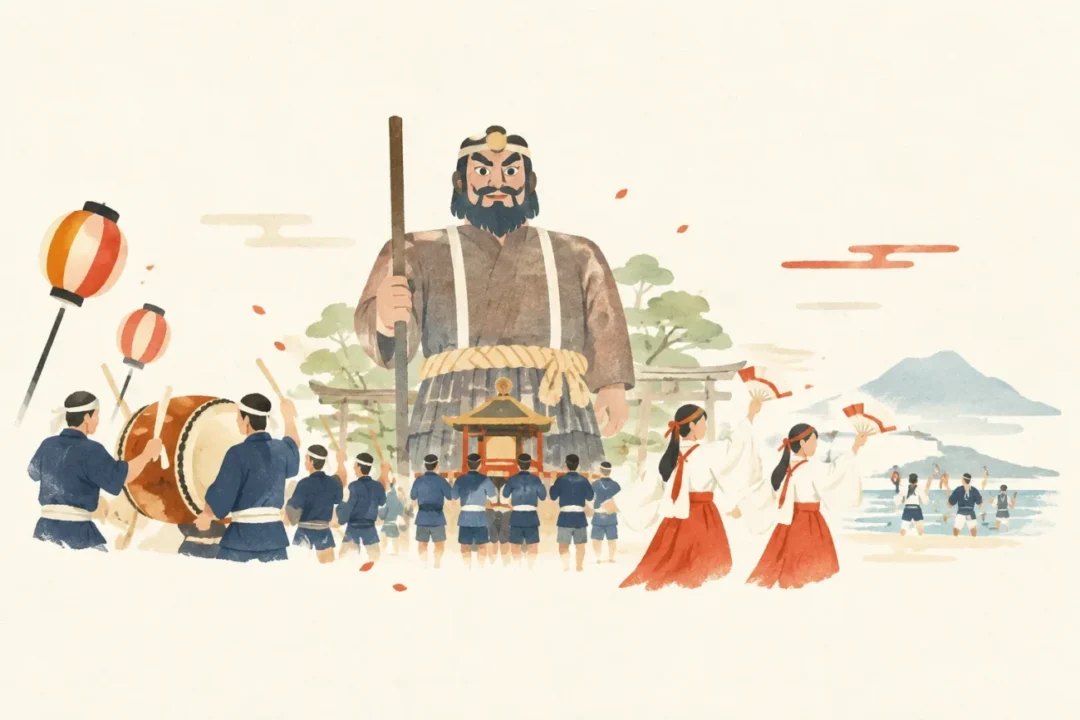
A highlight is the giant figure, finished by adding clothing and a mask to a bamboo-basket-like frame.
When complete, the giant figure stands about 5 meters tall and is raised all at once to the call “Yagorō-don ga okiddō!” and the signal of fireworks.
In the early-afternoon procession, the taiko group, giant figure, large parasol, mikoshi, banners, spears and other ceremonial objects proceed in order, while bearers—mainly children—call out as they pull.
A traditional hamakudari in Iwakawa, led by a 5-meter-tall giant figure
What to expect
The event centers on assembling and parading the giant figure.
At 1 a.m., young men beat taiko and call out to announce the start of assembly throughout the district.
Then, inside the shrine hall, they dress the frame and add a mask, completing it by around 4 a.m. before bringing it out into the .
In the early afternoon, it is paraded from the jinja to an otabisho; after a break, it returns to the jinja, and once the reisai on the 5th is over, the giant figure is dismantled.
Location and access
- Venue and address
From Iwakawa Hachiman Jinja to the designated otabisho
Event venue 鹿児島県曽於市 岩川八幡神社から所定の御旅所まで
This map uses the venue name. Check the official guide for the event area and entrances.
Dates and season
- Season
From assembly before dawn on November 3 to the reisai and dismantling of the giant figure on November 5
Accommodation and hotels PR
Showing nearby accommodation.
Prices and availability are current at the time of retrieval. For multi-night stays, only the first night’s price is shown. Confirm the final price and directions to the venue with the booking provider. Select your dates again when using the area search link. Search area: within 3 km of Central Kagoshima Prefecture / Soo City (the search is not centered on the festival venue)
Origins and History of Iwakawa’s Yagorō-don
The Iwakawa festival is believed to have existed in almost its present form since at least the late early-modern period.
The 1843 “Sangoku Meishō Zue” describes a festival in which a giant figure is made and a hamakudari procession is held as a vanguard.
Because the giant figure was once taken to the riverbank, the festival is also called the Hamakudari of Yagorō-don.
Official information
Iwakawa’s Yagorō-don is listed in the Agency for Cultural Affairs’ Database of Nationally Designated Cultural Properties as an “intangible folk cultural property for which measures such as documentation should be undertaken.”
Its category is festival (religious belief) under customs and manners, and the preservation organization is the Yagorō-don Festival Preservation Society.
Iwakawa’s Yagorō-don at a Glance
At Iwakawa’s Yagorō-don festival, a giant figure is assembled in gratitude for the harvest and paraded from the jinja to an otabisho.
The event unfolds in several main stages: the taiko announcement in the middle of the night, assembly until around 4 a.m., raising the figure in the “Yagorō-don Okoshi” ritual, and the hamakudari procession in the early afternoon.
Its hallmarks include a procession accompanied by taiko and a mikoshi, a giant figure about 5 meters tall, and records dating back to the late early-modern period.
Sources and references
Japanese Festivals.jp Editorial Team
Celebrating local culture and helping you discover a side of Japan you never knew.
Article updated: 2026/11/11