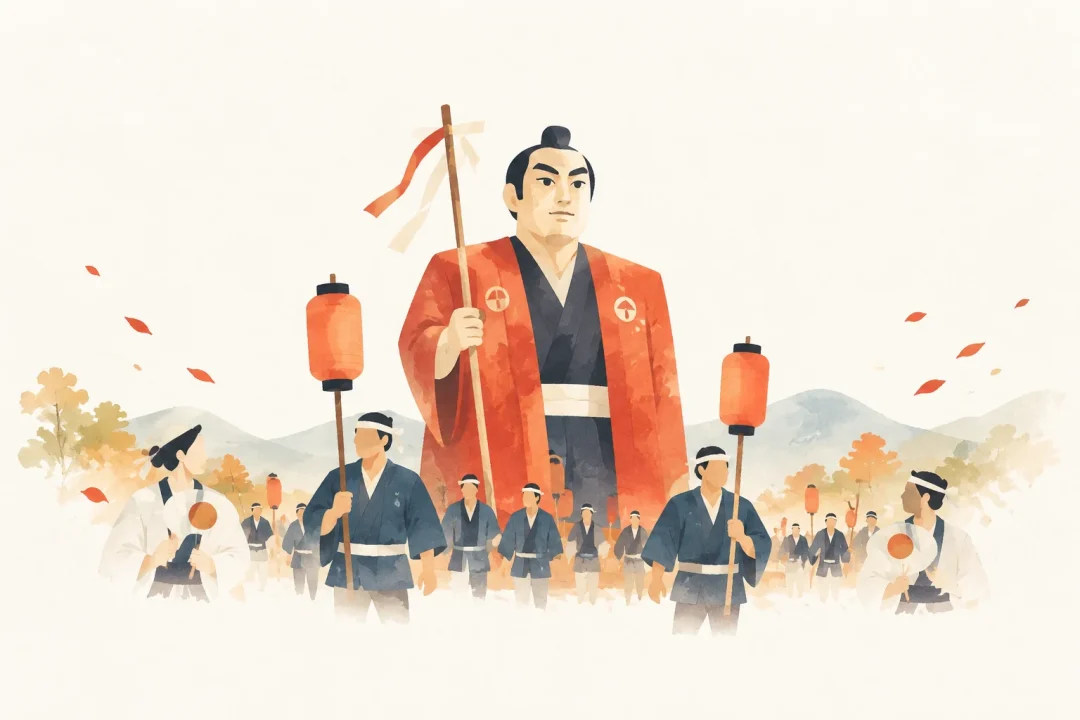
An autumn sacred procession led through Iwakawa by the giant Yagoro-don
Iwakawa Yagoro Doll Festival
Festival information
EVENT INFORMATION- Season / frequency
- Every year November 3 / Every year
- Location
- Iwakawa Hachiman Shrine and the streets of the Iwakawa district
- Area
- Kagoshima Prefecture・Soo City(From Tokyo: approx. 1 h 50 min–2 h 20 min · flight time only)Prefecture-level estimate to a main station or airport, not the venue. Airport access, check-in and onward travel are extra; remote areas and islands can take much longer.
- Features
- Highlights and activities
- Wishes behind the festival
- Participation / viewing
- Spectators welcome
- Last updated
- 2026/10/19
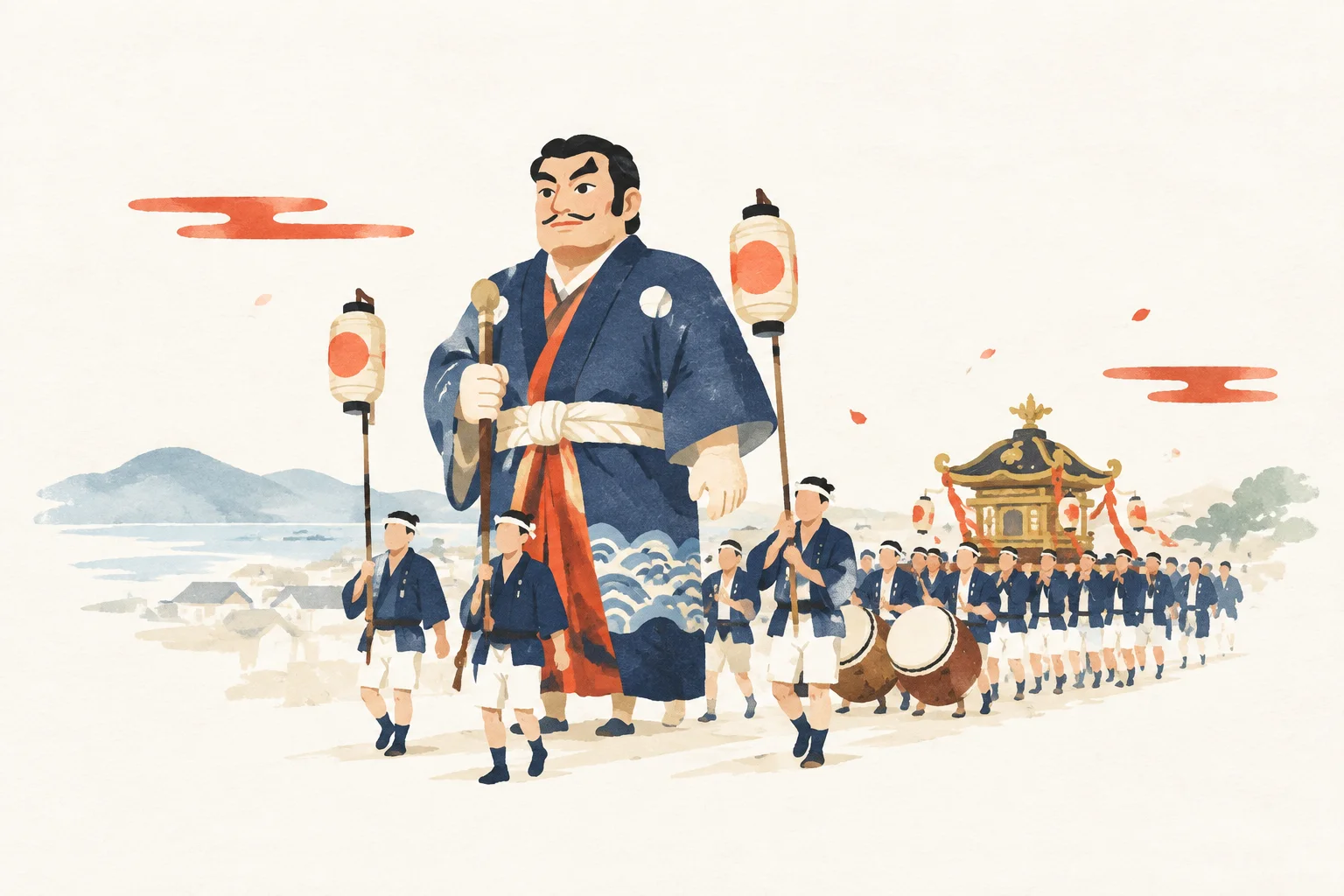
This traditional event takes place at Iwakawa Hachiman Shrine in Soo City, Kagoshima Prefecture, where a giant Yagoro figure leads the sacred procession. The Hamakudari procession, accompanied by drums and a , travels through the streets of the Iwakawa district.
About Iwakawa Yagoro Doll Festival
The Iwakawa Yagoro Doll Festival is part of the autumn festival held at Iwakawa Hachiman Shrine in Osumi-cho, Soo City.
A giant warrior figure called Yagoro, approximately 4.85 meters tall, stands at the head of the sacred procession.
The figure travels through the streets of Iwakawa, praying for a bountiful harvest, and the tradition is carried on by local .
It was designated a National Important Intangible Folk Cultural Property in 2025.
Source: 国指定文化財等データベース / 岩川八幡神社の弥五郎どん祭り|観光・イベント|曽於市
Festival highlights
The main highlight is the Hamakudari procession, in which the approximately 4.85-meter-tall Yagoro figure is placed on a cart and slowly advances amid calls from the crowd.
A young man called a moribito stands on the figure’s shoulders, swaying them from side to side to create a dignified movement.
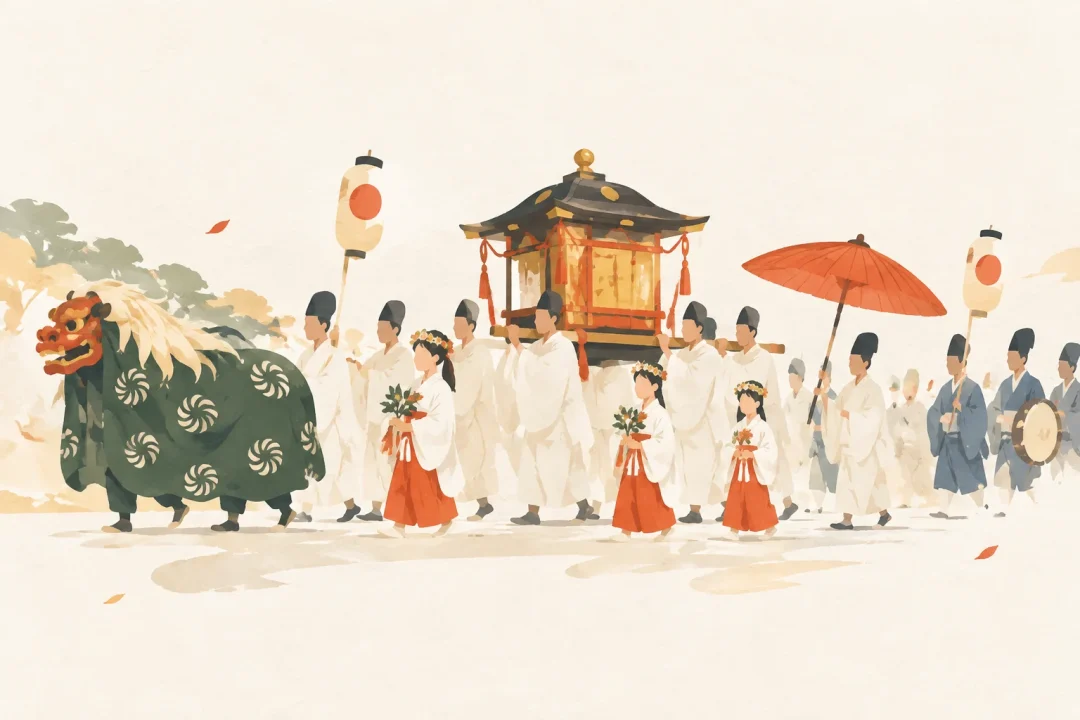
Drummers, a large parasol, an ōnusa purification wand, a mikoshi, bows, and festival flags follow in the procession, which can be watched from along the route.
The sight of large straw sandals and geta placed beside the figure is also distinctive.
An autumn sacred procession led through Iwakawa by the giant Yagoro-don
What to expect
The event begins late at night with drums announcing the procession and calls, and the Yagoro figure is assembled in the shrine’s .
After “raising Yagoro-don,” when the figure is pulled upright with ropes, its clothing, sword, halberd, and other items are arranged to complete it.
In the afternoon, the procession sets out for the Hamakudari behind the drummers and travels back and forth between Iwakawa Hachiman Shrine and the .
After placing the figure at the otabisho, the procession returns to the shrine while purifying the district.
How to take part
You can watch the procession and observe the Hamakudari from along the route.
The roles of pulling the Yagoro puppet, serving as its guardian, and carrying ritual implements are undertaken by boys and young men from the district, as well as families of shrine attendants.
Before joining, please check the event information to see whether general visitors may take part in running the procession.
Location and access
- Venue and address
Iwakawa Hachiman Shrine (5745 Iwakawa, Osumi-cho, Soo City, Kagoshima Prefecture).
The Hamakudari procession follows a route between Iwakawa Hachiman Shrine and Osumi Chuo Community Center, where an otabisho is set up, and travels through the streets of the Iwakawa district.
Address 5745 Iwakawa, Osumi-cho, Soo City, Kagoshima Prefecture
Dates and season
It takes place every year on November 3.
Iwakawa Hachiman 's autumn reisai lasts 3 days starting on November 3, and the Yagoro puppet event takes place on the first day.
Accommodation and hotels PR
Showing nearby accommodation.
Prices and availability are current at the time of retrieval. For multi-night stays, only the first night’s price is shown. Confirm the final price and directions to the venue with the booking provider. Select your dates again when using the area search link. Search area: within 3 km of Central Kagoshima Prefecture / Soo City (the search is not centered on the festival venue)
Tips for your visit
During the Hamakudari procession, a parade led by the Yagoro figure slowly makes its way through the streets of the Iwakawa district.
Many spectators gather along the route, so please do not block the procession and be considerate of other shrine visitors and local residents.
The event begins with drums announcing the procession late at night, so check the schedule if you plan to watch the early-morning events.
Source: 大隅町・岩川八幡神社の「弥五郎どん祭り」 | 鹿児島県神社庁
Origins and History of Iwakawa Yagoro Doll Festival
Iwakawa Hachiman Shrine is said to have been established in 1025 by transferring the enshrined deity from Iwashimizu Hachimangu Shrine in Kyoto.
The Hamakudari procession with the Yagoro figure is described in the 1843 publication Sankoku Meishō Zue, indicating that the figure had been part of the procession by the late Edo period.
In the past, the procession traveled as far as the riverbank where the Hishida and Maekawa rivers meet, but today it travels mainly through the streets of the Iwakawa district.
There are several theories about Yagoro’s identity, including that he was a leader of the Hayato people or Takenouchi no Sukune.
Official information
Information from the local government is available on the Soo City official website under “Iwakawa Yagoro Doll Festival.”
Details of the cultural property designation and an explanation of the event are also listed in the Agency for Cultural Affairs’ Database of Nationally Designated Cultural Properties.
Iwakawa Yagoro Doll Festival at a Glance
The Iwakawa Yagoro Doll Festival is a traditional event in Iwakawa, Soo City, where a giant warrior figure leads the sacred procession.
It begins late at night with the raising of the figure, then proceeds through the streets as a Hamakudari procession accompanied by drums and a mikoshi.
It is part of an autumn festival praying for a bountiful harvest, and in 2025 it was designated a National Important Intangible Folk Cultural Property.
Japanese Festivals.jp Editorial Team
Celebrating local culture and helping you discover a side of Japan you never knew.
Article updated: 2026/10/19
Submit information or a correction Submit photos of this festival