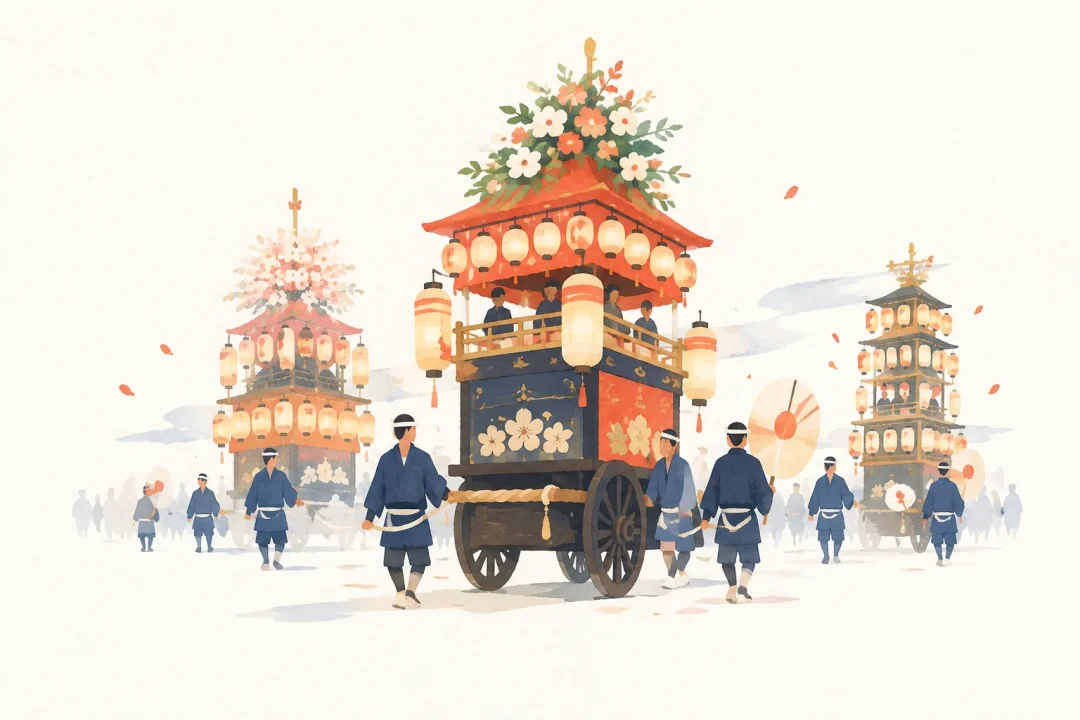
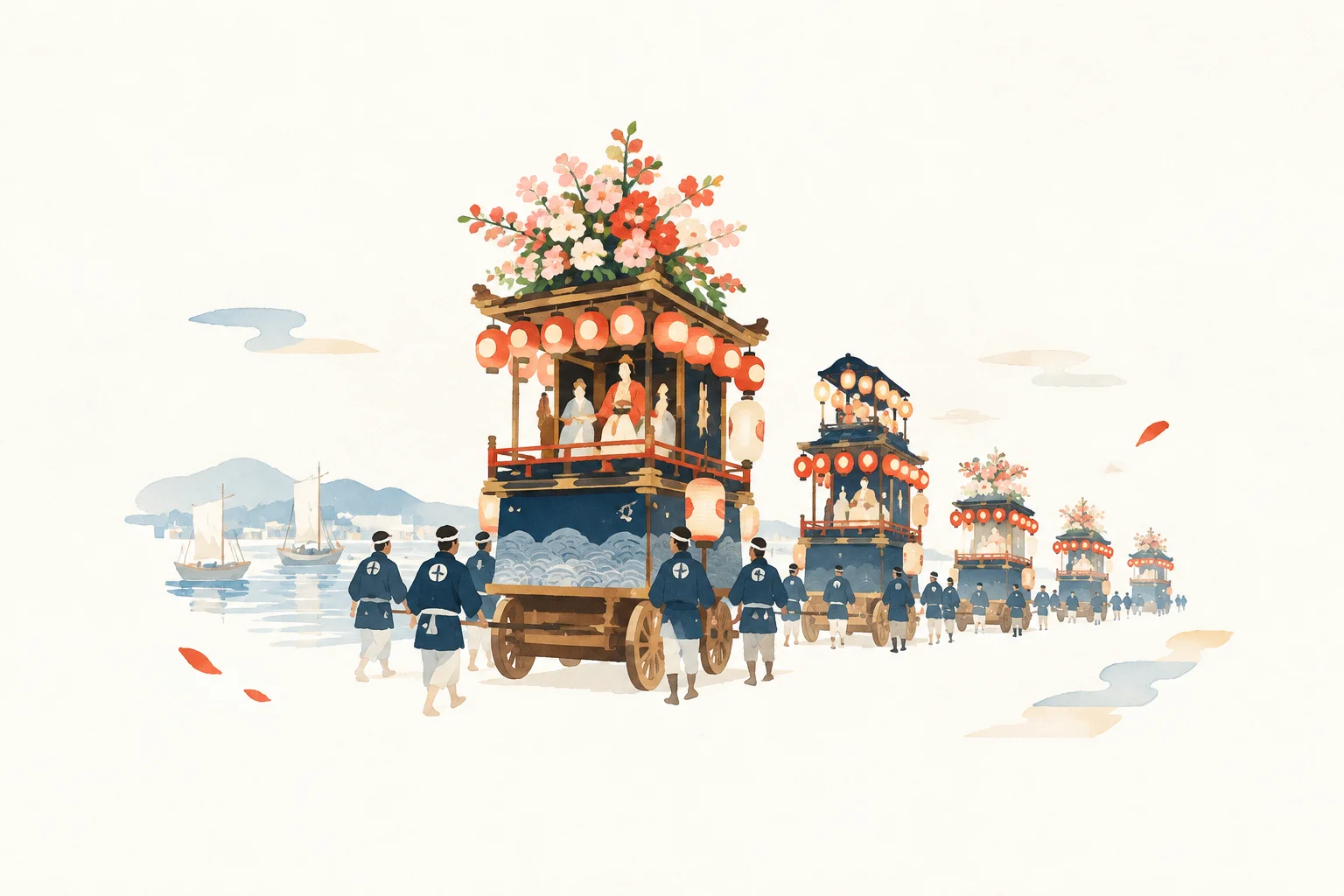
13 dashi and Tsukiyama festivities bring color to the port town, from flower-decorated floats by day to lantern-covered floats by night
Hikiyama and Tsukiyama events of the Hojozu Hachimangu Festival
Festival information
EVENT INFORMATION- Season / frequency
- Every year from September 30 to October 2 / Every year
- Area
- Toyama Prefecture・Imizu City(From Tokyo: approx. 2 h 10 min–2 h 40 min · bullet train)Prefecture-level estimate to a main station or airport, not the venue. Airport access, check-in and onward travel are extra; remote areas and islands can take much longer.
- Highlights and activities
- Last updated
- 2026/10/19
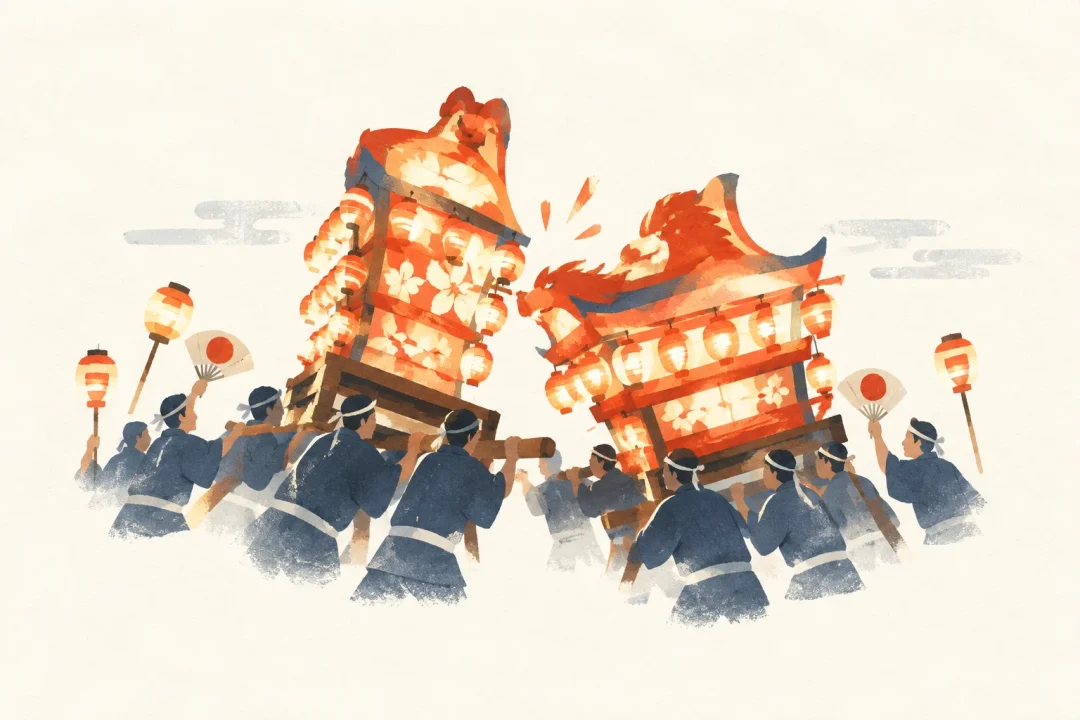
At Hojozu Hachimangu Shrine in Imizu, Toyama Prefecture, 13 process through the port town, while the Tsukiyama event, in which divine spirits and figures are enshrined, takes place in the . You can see festival traditions that have continued since the Edo period, including flower-decorated dashi by day, lantern-covered dashi by night, and the lively Kado-mawashi turns performed to the rhythm of festival music.
About Hikiyama and Tsukiyama events of the Hojozu Hachimangu Festival
The and Tsukiyama events of the Hojozu Hachimangu Festival are an autumn festival held at Hojozu Hachimangu Shrine in Imizu, Toyama Prefecture.
The festival consists of two events: a procession of 13 dashi through the city, and the Tsukiyama event, in which a temporary altar is set up in the shrine grounds to enshrine divine spirits and figures.
The dashi change from flower-decorated floats by day to lantern-covered floats by night, while the Tsukiyama displays decorative figures depicting people and history associated with the area.
This Important Intangible Folk Cultural Property conveys the culture of this port town, passed down since the Edo period.
Source: 国指定文化財等データベース
Festival highlights
The main highlight is the 13 dashi, which take on a different appearance by day and night.
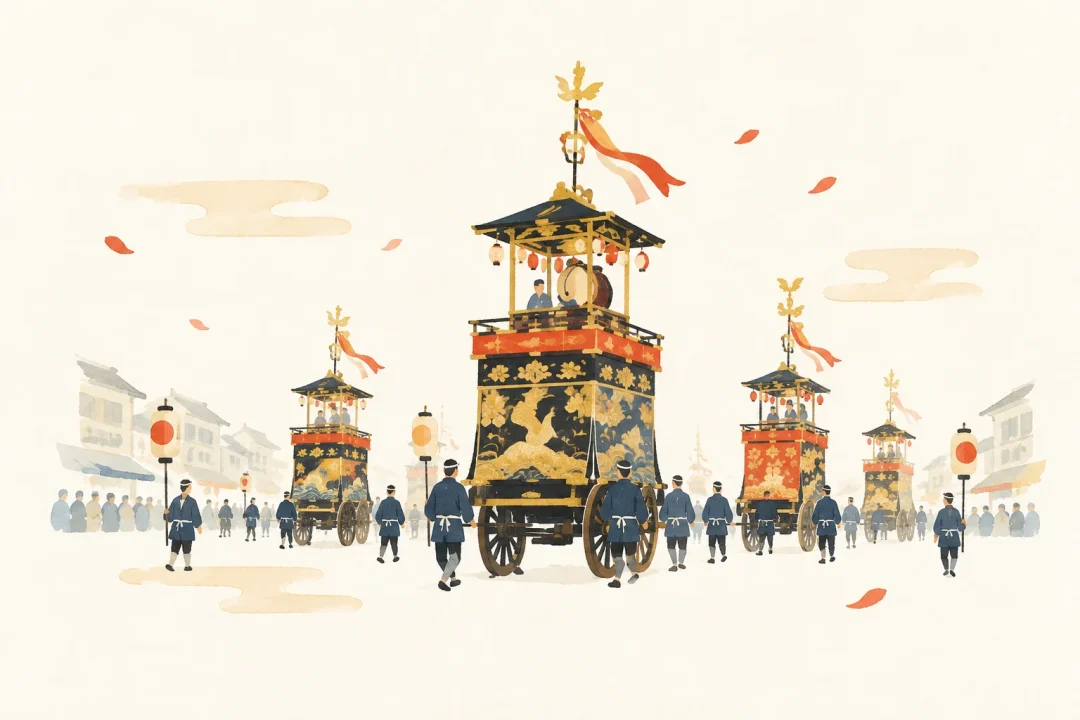
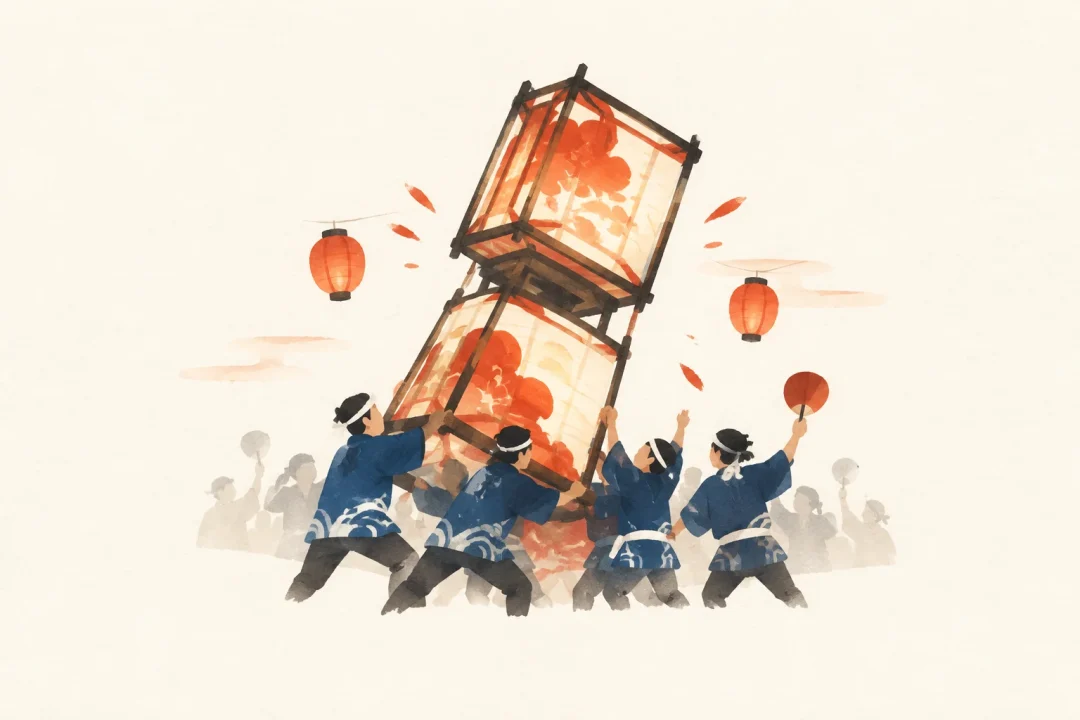
By day, they are flower-decorated floats adorned with flower umbrellas and figures; at night, they become lantern-covered floats enclosed by numerous lanterns in a square formation, proceeding through the former Shinminato city center to the festival music.
During Kado-mawashi, dashi make energetic turns through the narrow streets of the port town, accompanied by bold festival music and shouts.
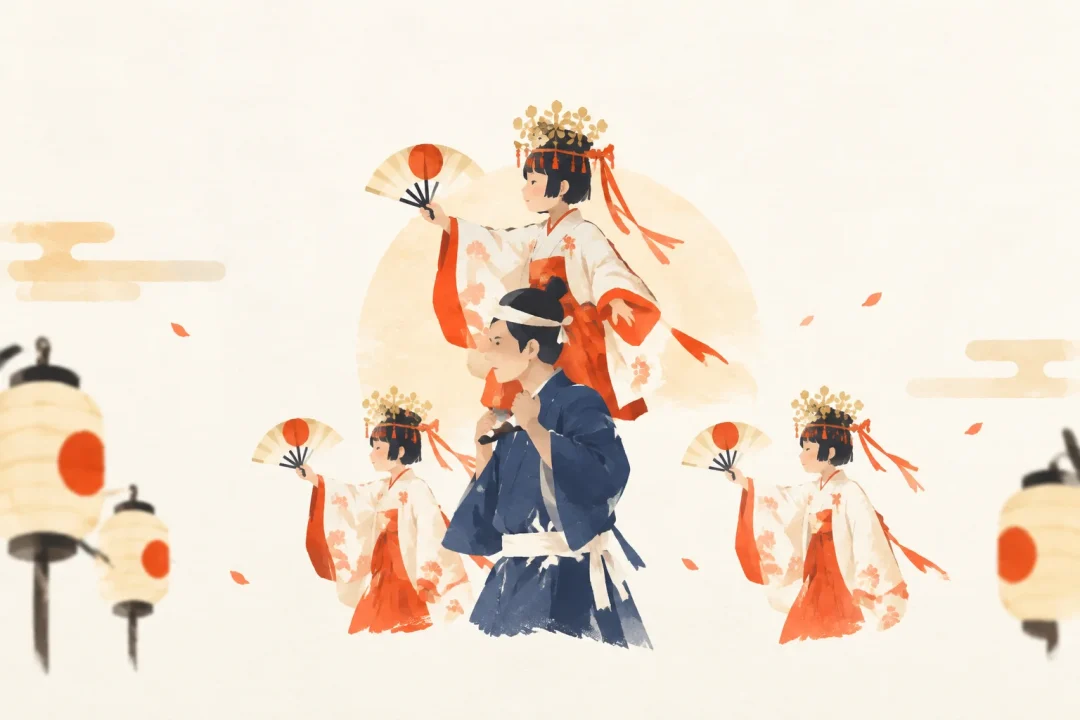
At the Tsukiyama, you can view divine spirits welcomed from the sea and decorative figures representing local history and people.
13 dashi and Tsukiyama festivities bring color to the port town, from flower-decorated floats by day to lantern-covered floats by night
What to expect
The events center on the dashi procession and the Tsukiyama ritual.
The dashi set out from Hojozu Hachimangu Shrine and accompany the procession, traveling through the city for a full day to the festival music of each neighborhood.
They proceed as flower-decorated floats by day and lantern-covered floats by night, then return to the shrine for the Hikibiki-wakare farewell.
At the Tsukiyama, divine spirits are welcomed from the sea, and the principal deity, the Four Heavenly Kings, and decorative figures are placed on the altar and displayed until sunset.
How to take part
The dashi procession and the public display of the tsukiyama are events that visitors can watch from along the route or within the shrine grounds.
The tsukiyama, with its altar and decorative figures, is open to the public, while the dashi travels through the city, so you can watch the daytime hanayama and nighttime lantern-covered dashi.
However, no information is provided on whether general visitors may freely take part in pulling the dashi or in roles involving the mikoshi.
Information on how to apply to take part as a mikoshi bearer is available on the official website of Hōjōzu Hachimangū.
Applications can be submitted through “Mikoshi Bearer Application” on the official website.
Source: 放生津八幡宮公式HP
Location and access
- Venue and address
Hojozu Hachimangu Shrine and the former Shinminato city center (Imizu, Toyama Prefecture).
Event venue 富山県射水市 放生津八幡宮および旧新湊市街地
This map uses the venue name. Check the official guide for the event area and entrances.
Dates and season
- Season
Every year from September 30 to October 2
- Frequency
Every year
Accommodation and hotels PR
Showing nearby accommodation.
Prices and availability are current at the time of retrieval. For multi-night stays, only the first night’s price is shown. Confirm the final price and directions to the venue with the booking provider. Select your dates again when using the area search link. Search area: within 3 km of Central Toyama Prefecture / Imizu City (the search is not centered on the festival venue)
Tips for your visit
The dashi look different by day and night, so you will need to visit at different times if you want to see both the flower-decorated and lantern-covered floats.
The dashi travel through the streets of the former Shinminato city center, and some scenes, such as Kado-mawashi, take place along the route, so please watch from a location that does not obstruct the procession.
The decorative figures at the Tsukiyama are said to be on display only until sunset, so please take note of the viewing hours.
Nearby attractions

射水市大島絵本館
富山県射水市にある博物館

射水市新湊博物館
富山県の博物館・美術館のスポットです。
Origins and History of Hikiyama and Tsukiyama events of the Hojozu Hachimangu Festival
The Hikiyama procession is said to have begun in Keian 3 (1650), when the Hikiyama from Koshinmachi accompanied the mikoshi. The number of dashi increased as the town developed.
It is said that Minamitate-machi built a dashi in Bun文久 2 (1862), bringing the total to the same 13 seen today.
Records related to the Tsukiyama event include a “mountain construction” entry from Kyoho 15 (1730) and a donation of a Tsukiyama platform in Koka 2 (1845).
The dashi’s design and procession influenced festivals along the Toyama Bay coast, forming a distinctive festival cultural sphere.
Official information
The official Hojozu Hachimangu Shrine website provides festival information, contact details for the Hikiyama and Tsukiyama Preservation Association, and instructions for applying to help pull the mikoshi.
The Imizu City official tourism website also introduces the structure and highlights of the Shinminato Hikiyama Festival.
The National Cultural Properties Database provides the event’s name, location, time of year, and designation information as a cultural property.
Hikiyama and Tsukiyama events of the Hojozu Hachimangu Festival at a Glance
The Hikiyama and Tsukiyama events of the Hojozu Hachimangu Festival are a traditional festival in which 13 dashi process through the port town of Imizu, while Tsukiyama structures and figures are enshrined in the shrine grounds.
Highlights include flower-decorated dashi by day, lantern-covered dashi by night, Kado-mawashi turns accompanied by festival music, and decorative figures depicting local history.
Passed down since the Edo period, this Important Intangible Folk Cultural Property keeps the festival traditions of western Toyama Prefecture alive today.
Japanese Festivals.jp Editorial Team
Celebrating local culture and helping you discover a side of Japan you never knew.
Article updated: 2026/10/19
Submit information or a correction Submit photos of this festival