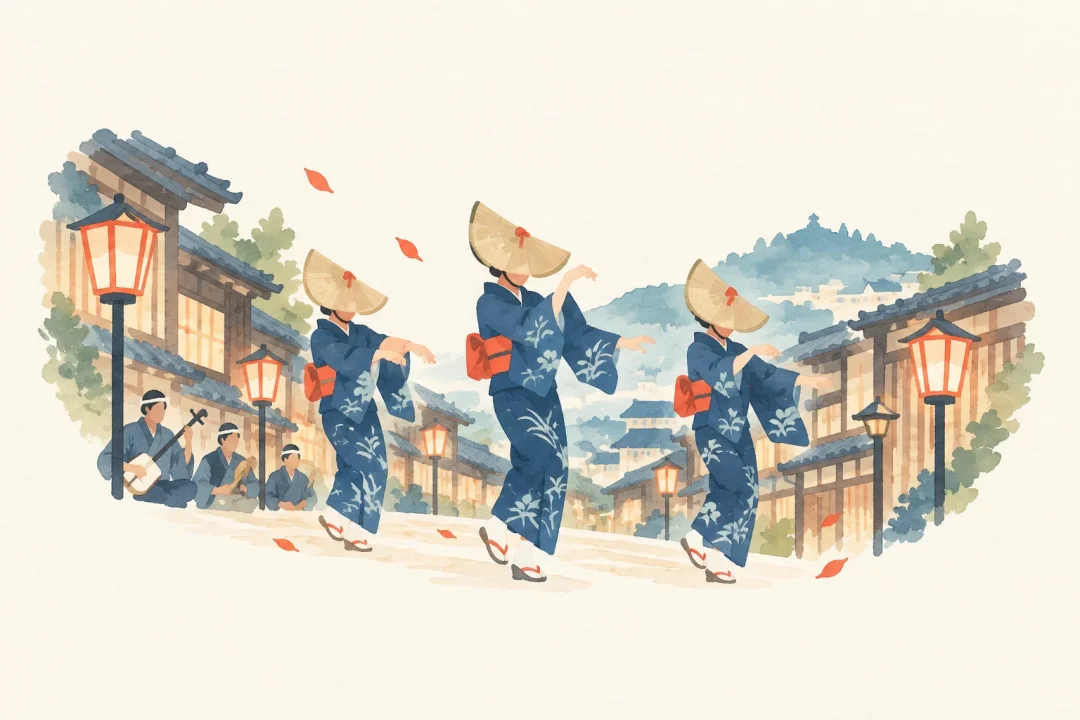
A Bon nenbutsu dance in Hiranai, passed down around a lantern
Hiranai Keimai
Festival information
EVENT INFORMATION- Season / frequency
- August 13 through around the 15th (performances are irregular)
- Location
- District cemetery in Hiranai, Hashikami Town
- Area
- Aomori Prefecture・Hashikami Town(From Tokyo: approx. 3 h–3 h 30 min · bullet train)Prefecture-level estimate to a main station or airport, not the venue. Airport access, check-in and onward travel are extra; remote areas and islands can take much longer.
- Features
- Highlights and activities
- Wishes behind the festival
- Last updated
- 2026/10/19
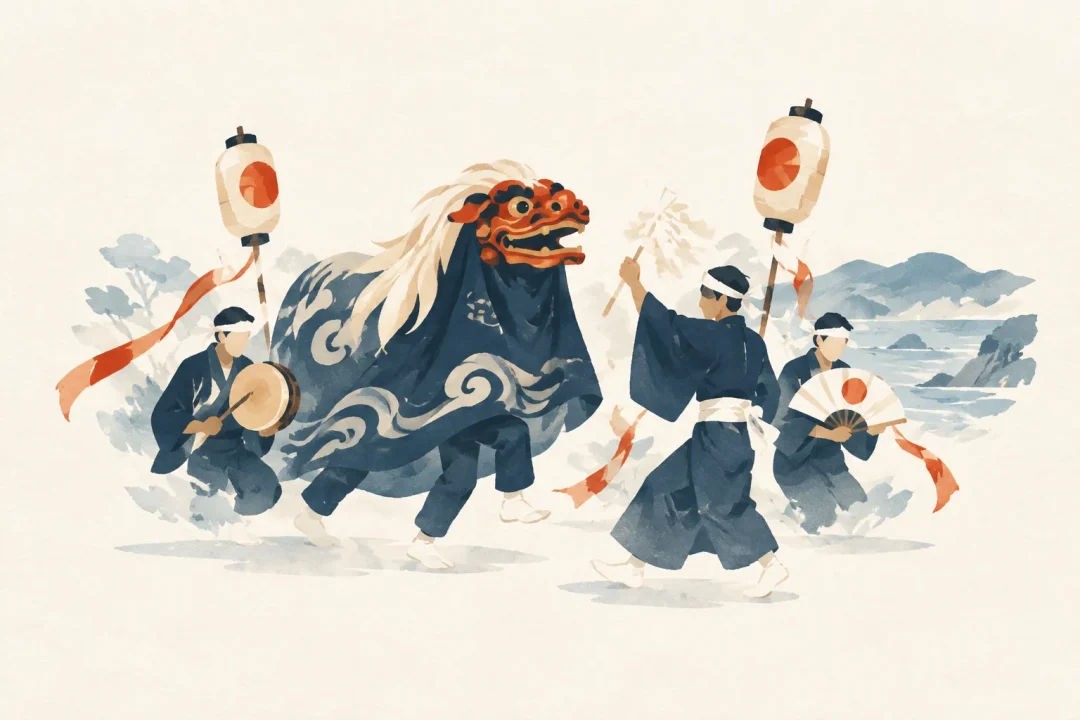
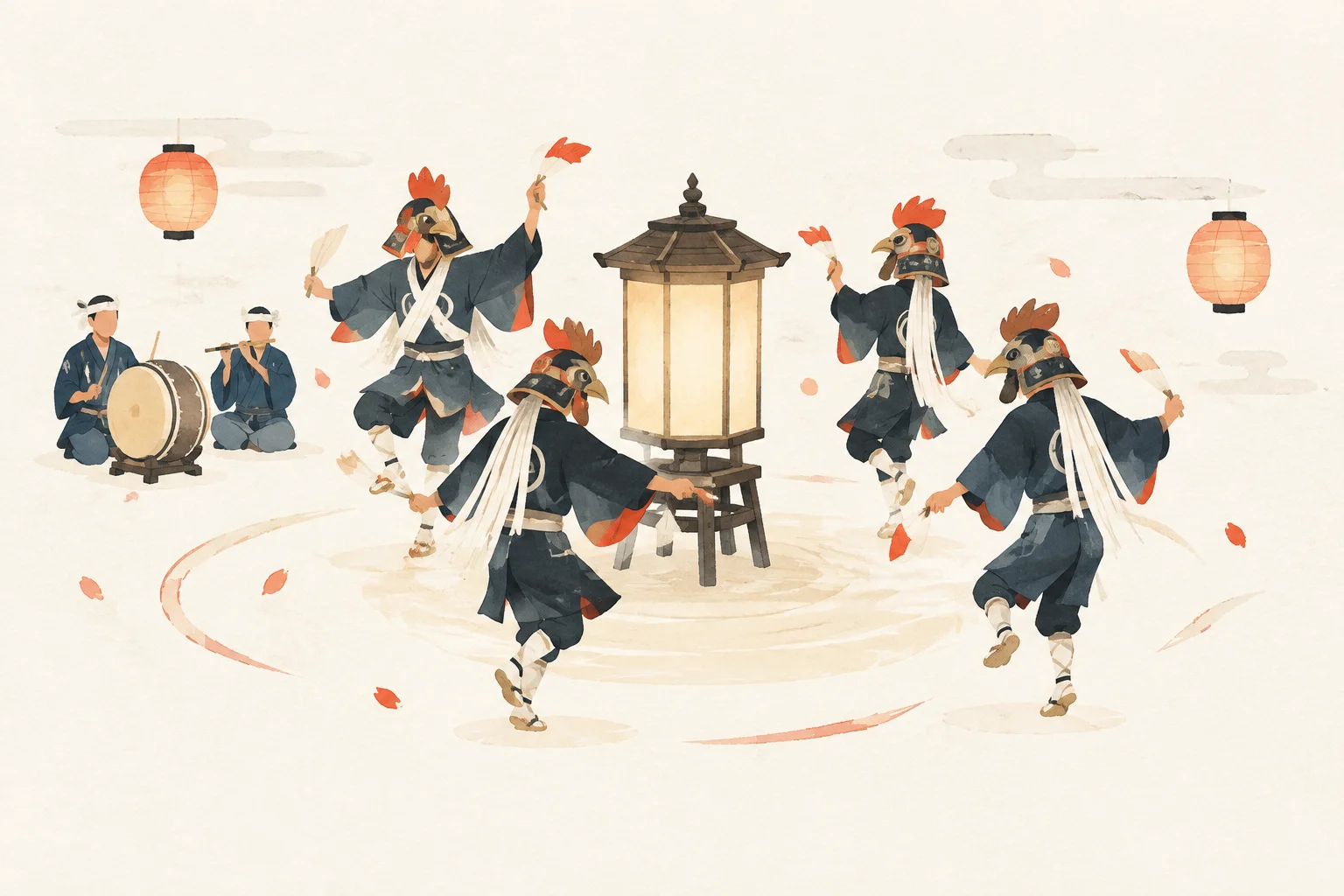
Hiranai Keimai, passed down in Hiranai, Hashikami Town, Aomori Prefecture, is a nenbutsu dance associated with honoring ancestors during Bon. Dancers wearing helmets circle a hexagonal lantern and dance to accompaniment including drums and flutes.
About Hiranai Keimai
Hiranai Keimai is a nenbutsu dance passed down in Hiranai, Hashikami Town, Aomori Prefecture.
On the night Bon begins, performers enact a grave nenbutsu dance at a cemetery to honor their ancestors, then dance at cemeteries in the communities of the former Hiranai Village and in front of household Buddhist altars.
It has been designated an Intangible Folk Cultural Property by the prefecture and selected by the national government as an “Intangible Folk Cultural Property for which Measures such as Record Creation Should Be Taken.”
It has been passed down as a folk performing art associated with local Bon observances.
Festival highlights
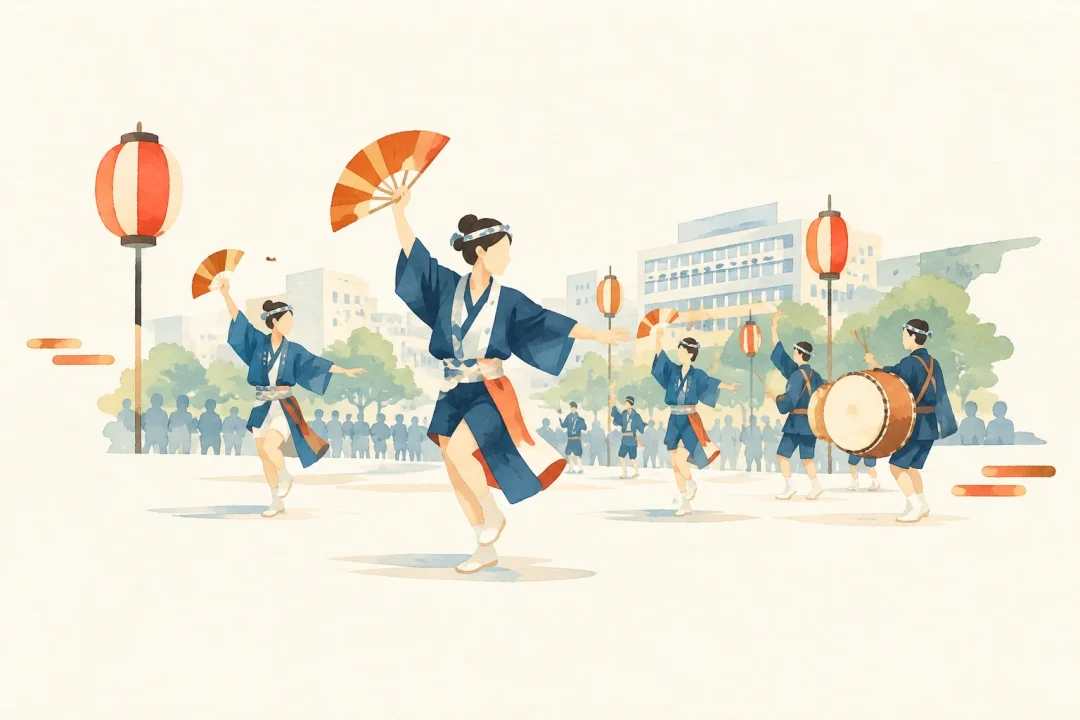
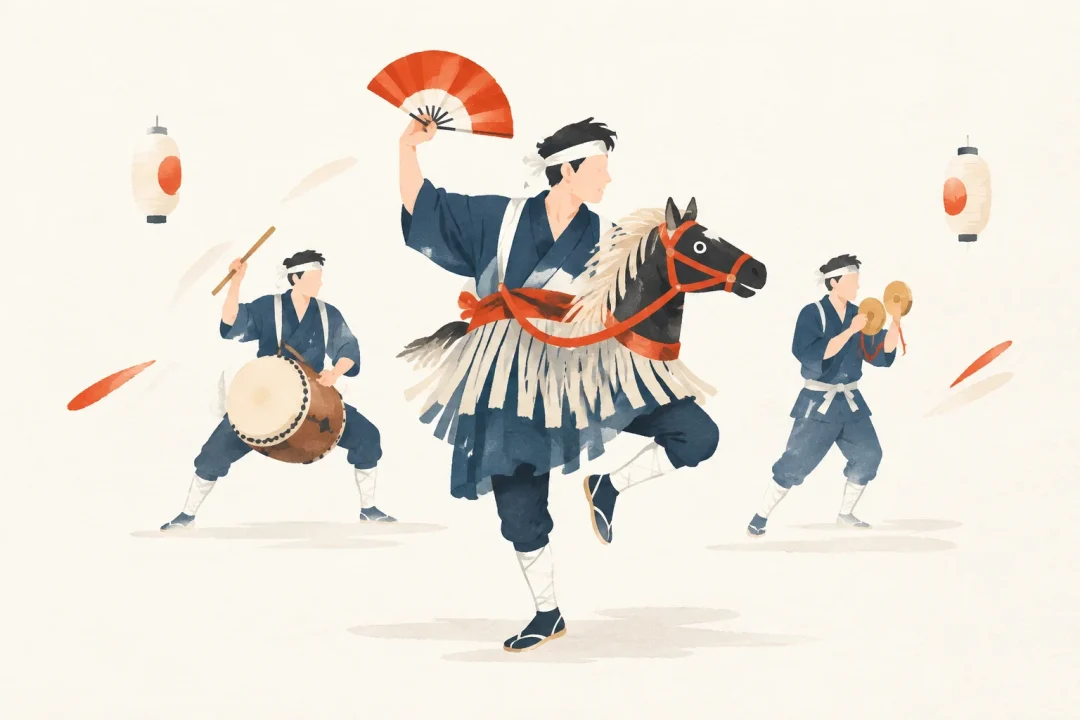
A highlight is “Haneru,” in which performers dance clockwise around the tuyugi of a hexagonal lantern, striking sticks, swords, long swords, ayabō, and fans against one another.
The 9 dancers wear costumes suited to their roles, including helmets with kuwagata crests and bird helmets.
A 6-person ensemble featuring drums, flutes, tebyōshi gongs, and sasara accompanies them, and the garden dances include 8 performances, such as “Sanba” and “Ippon Ōgi.”
A Bon nenbutsu dance in Hiranai, passed down around a lantern
What to expect
The observance begins with a grave nenbutsu dance in a cemetery clearing on the night Bon begins.
They then dance at cemeteries in the communities of the former Hiranai Village and in front of household Buddhist altars, offering nenbutsu chants such as grave nenbutsu, household altar nenbutsu, Osanago Wasan, and Hana Wasan.
Garden dances feature performances using ritual objects and proceed with accompaniment including drums and flutes.
Location and access
- Venue and address
Performances are held at district cemeteries in Hiranai, Hashikami Town.
As the observances also take place at cemeteries in several communities and in front of household Buddhist altars, this is not an event held at a single venue.
Near cemeteries, please be considerate and avoid disrupting local traffic or worshippers.
Address Hiranai, Hashikami Town, Sannohe District, Aomori Prefecture
Dates and season
Usually, haka nenbutsu is performed on the night Obon begins on August 13, and the dance is open to the public at local cemeteries on August 14 and 15.
If you plan to attend as a spectator, you must contact the Hiranai Keimai Group or the Hashikami Town Board of Education.
Accommodation and hotels PR
Showing nearby accommodation.
Prices and availability are current at the time of retrieval. For multi-night stays, only the first night’s price is shown. Confirm the final price and directions to the venue with the booking provider. Select your dates again when using the area search link. Search area: within 3 km of Central Aomori Prefecture / Hashikami Town (the search is not centered on the festival venue)
Tips for your visit
The performance locations vary, including district cemeteries, cemeteries within the local communities, and in front of household Buddhist altars. When watching, please behave quietly and avoid disturbing local residents and worshippers.
As this observance centers on honoring ancestors at cemeteries, it is important to follow local guidance about photography and entering the grounds.
As performances are said to be held irregularly, please check with the preservation group or the Hashikami Town Board of Education before visiting.
Nearby attractions
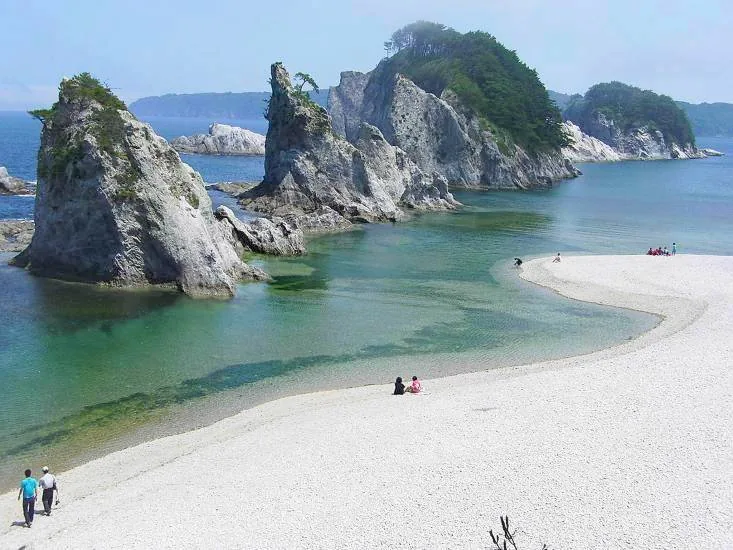
三陸復興国立公園
東北地方の三陸沿岸を区域とする国立公園
写真:Junpei Satoh / CC BY-SA 3.0(resized and reformatted)
Photo source ·Origins and History of Hiranai Keimai
According to the story of its origins, Hiranai Keimai was brought by Shinsaka Shōemon, who came from Kesen in Rikuchū during the Ansei era (1854–1859).
It was subsequently passed down as a nenbutsu dance, including grave nenbutsu and garden dances, as part of Bon observances in the Hiranai area.
It was designated an Intangible Folk Cultural Property by the prefecture in Showa 34 and selected as a national Intangible Folk Cultural Property in Showa 53. It is considered one of the representative nenbutsu dances of the southern part of the prefecture.
Official information
For inquiries, contact the Social Education Group of the Education Division, Hashikami Town Board of Education.
To confirm details about viewing, you can contact the Hiranai Keimai Preservation Group or the Hashikami Town Board of Education.
The listed inquiry phone number for the Social Education Group of the Education Division, Hashikami Town Board of Education, is 0178-88-2698.
Hiranai Keimai at a Glance
Hiranai Keimai is a nenbutsu dance passed down in Hiranai, Hashikami Town, and associated with honoring ancestors during Bon.
Nine dancers wearing helmets circle a hexagonal lantern, striking ritual objects against one another as they dance to accompaniment including drums and flutes.
It is said to date back to the Ansei era, and has been designated a cultural property by the prefecture and the national government.
Performances are irregular, so please confirm details before visiting.
Japanese Festivals.jp Editorial Team
Celebrating local culture and helping you discover a side of Japan you never knew.
Article updated: 2026/10/19
Submit information or a correction Submit photos of this festival