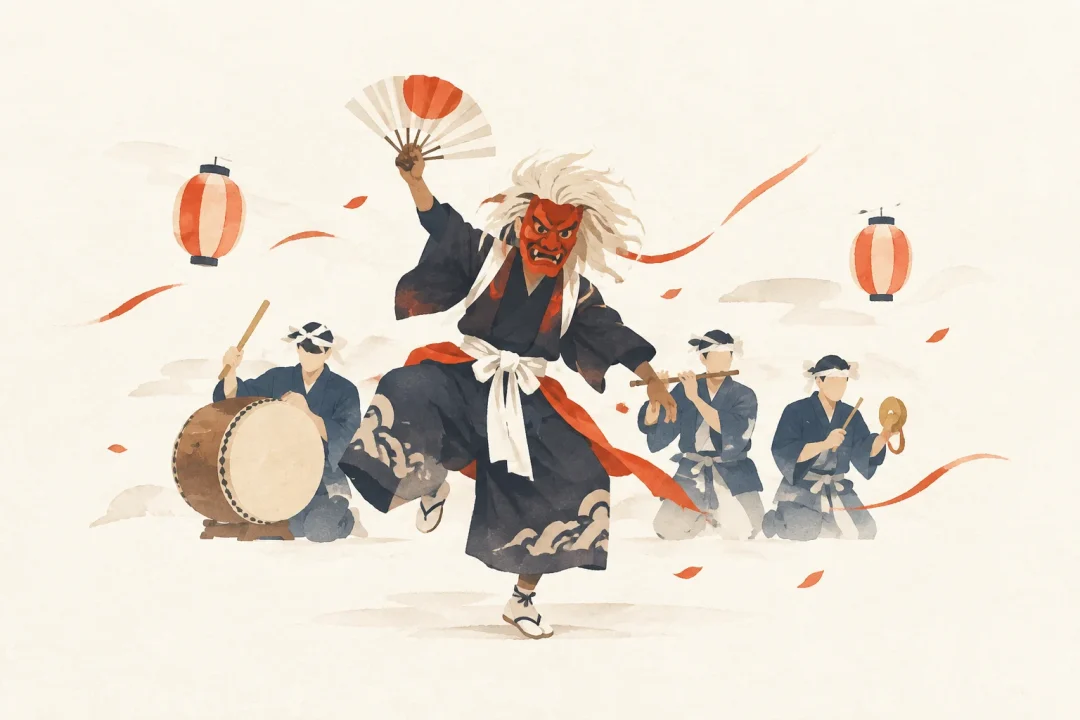
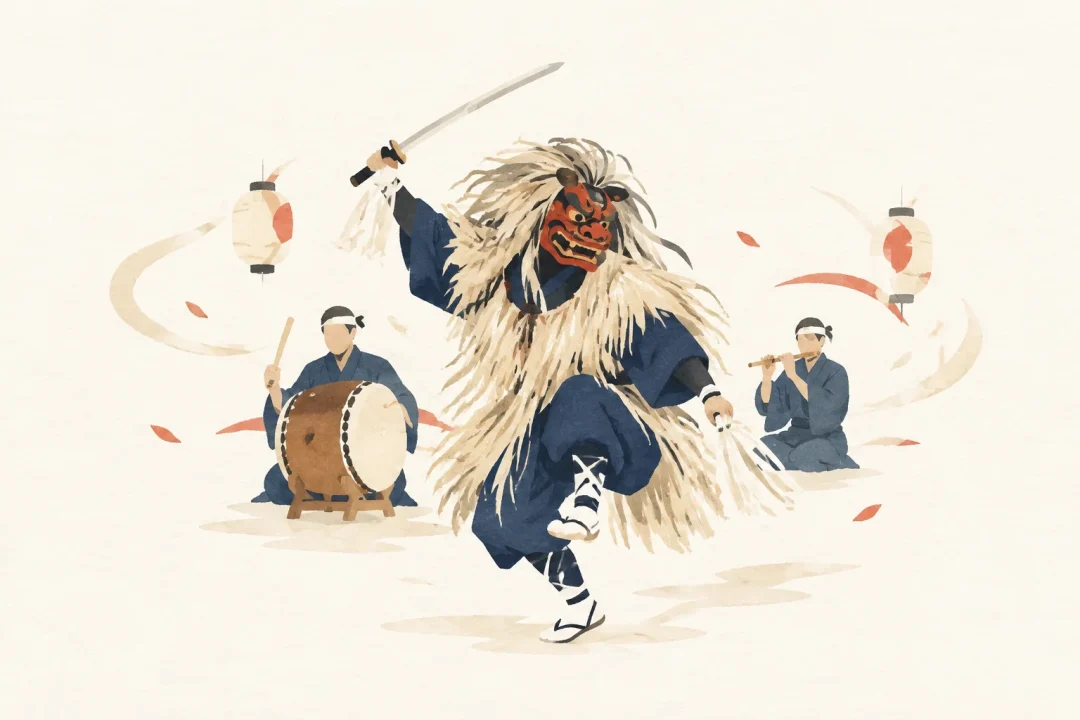
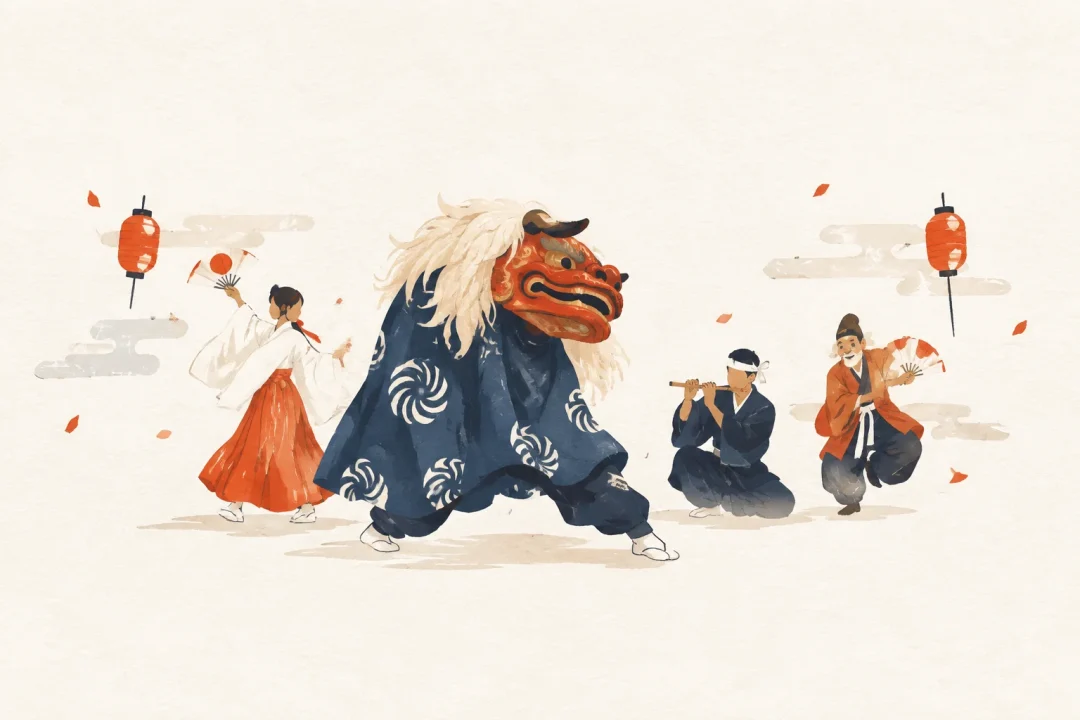
Dances by two kagura troupes carrying on the mountain faith
Hayachine Kagura
Festival information
EVENT INFORMATION- Season / frequency
- In addition to regular performances on the 2nd Sunday of each month, annual events are held from January to December. / Performances and annual events on the 2nd Sunday of each month
- Location
- Hayachine Shrine, no Yakata, the Hayachine Kagura Densho-kan, and the Osako Community Exchange and Revitalization Center (Hayachine Hall), among others
- Area
- Iwate Prefecture・Hanamaki City(From Tokyo: approx. 2 h 10 min–2 h 40 min · bullet train)Prefecture-level estimate to a main station or airport, not the venue. Airport access, check-in and onward travel are extra; remote areas and islands can take much longer.
- Features
- Highlights and activities
- Last updated
- 2026/10/19
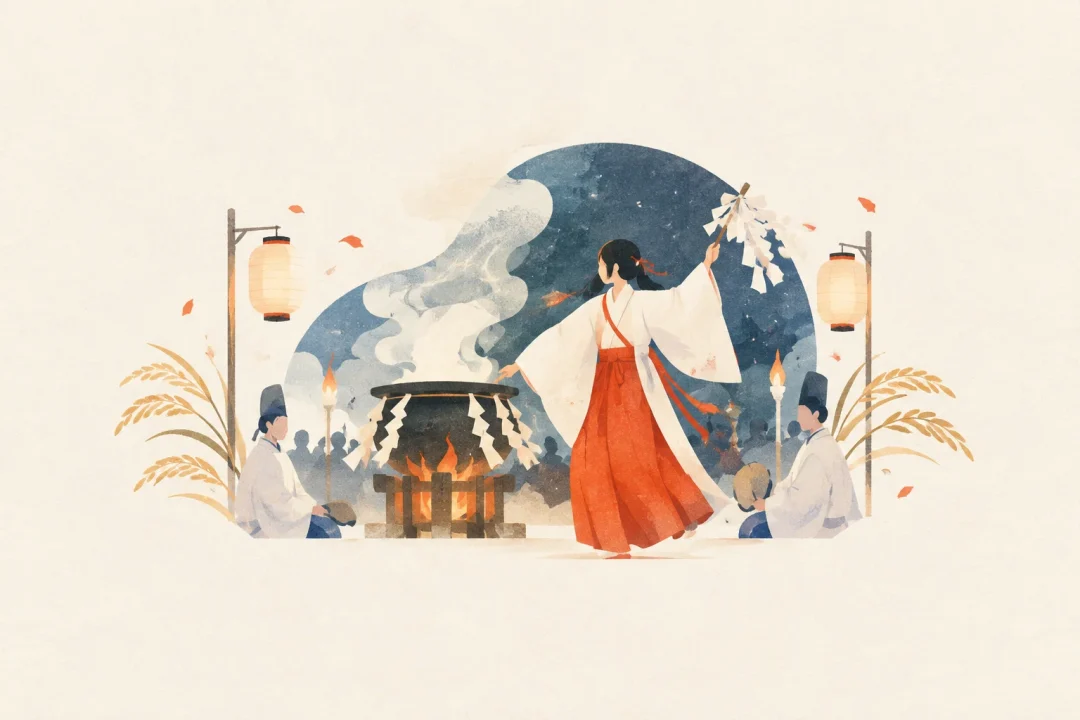
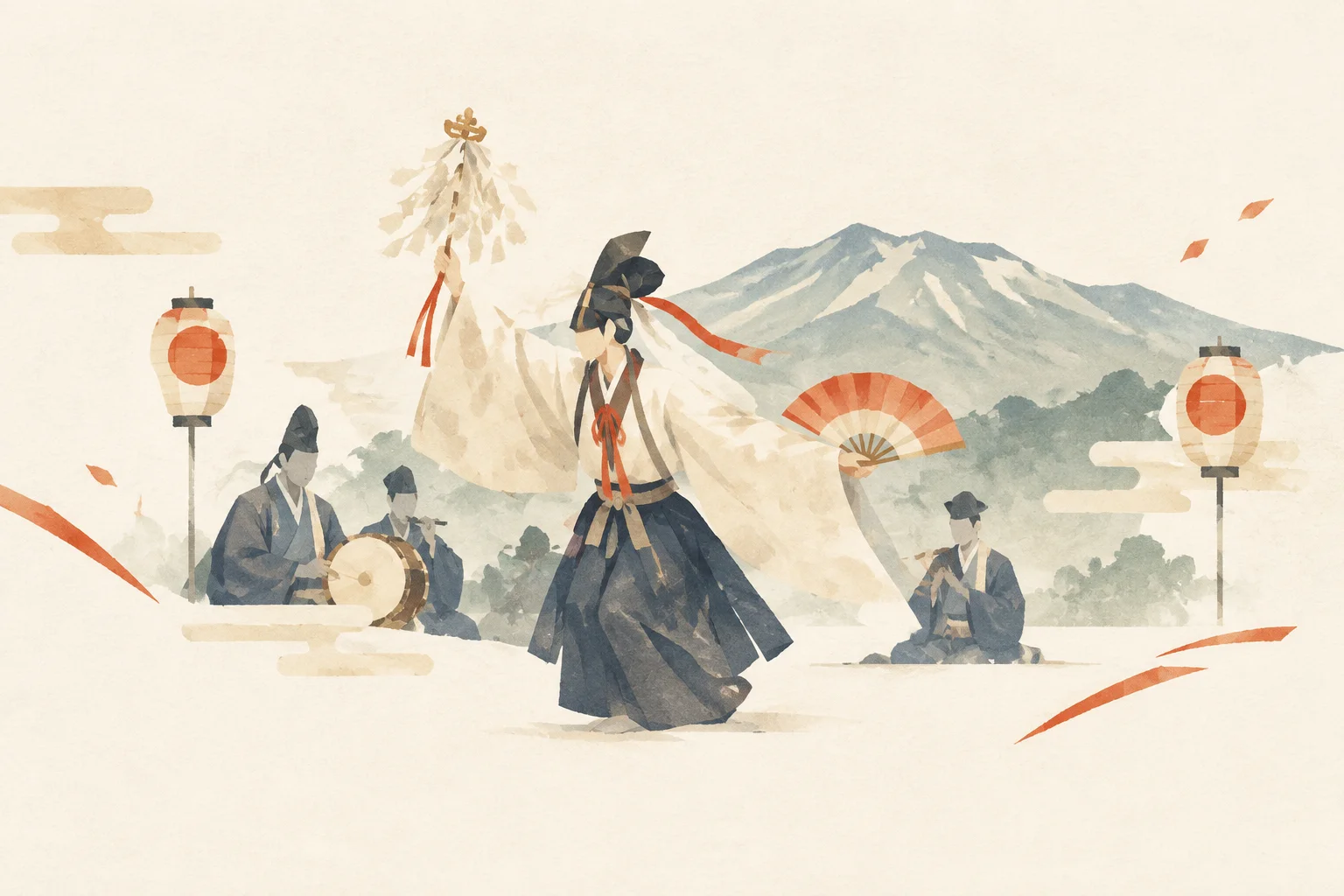
Traditional performing arts of Take Kagura and Otsugunai Kagura, passed down in Hanamaki City, which looks up to Mount Hayachine. Ceremonial dances, dances outside the troupe’s formal repertoire, and are performed at shrine festivals and local performances.
About Hayachine Kagura
Hayachine Kagura is the collective name for two kagura troupes, Otsugunai and Take, passed down in Hanamaki City, Iwate Prefecture.
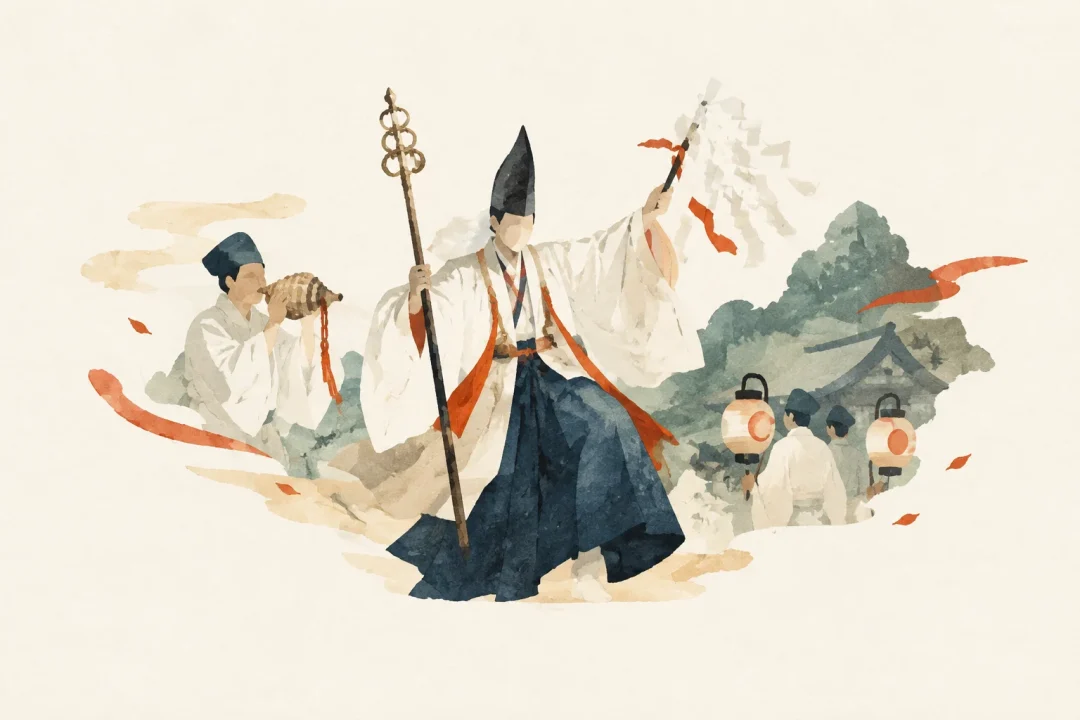
The local people have carried on the tradition, which is based on dances performed by mountain ascetics who revered Mount Hayachine as a sacred peak.
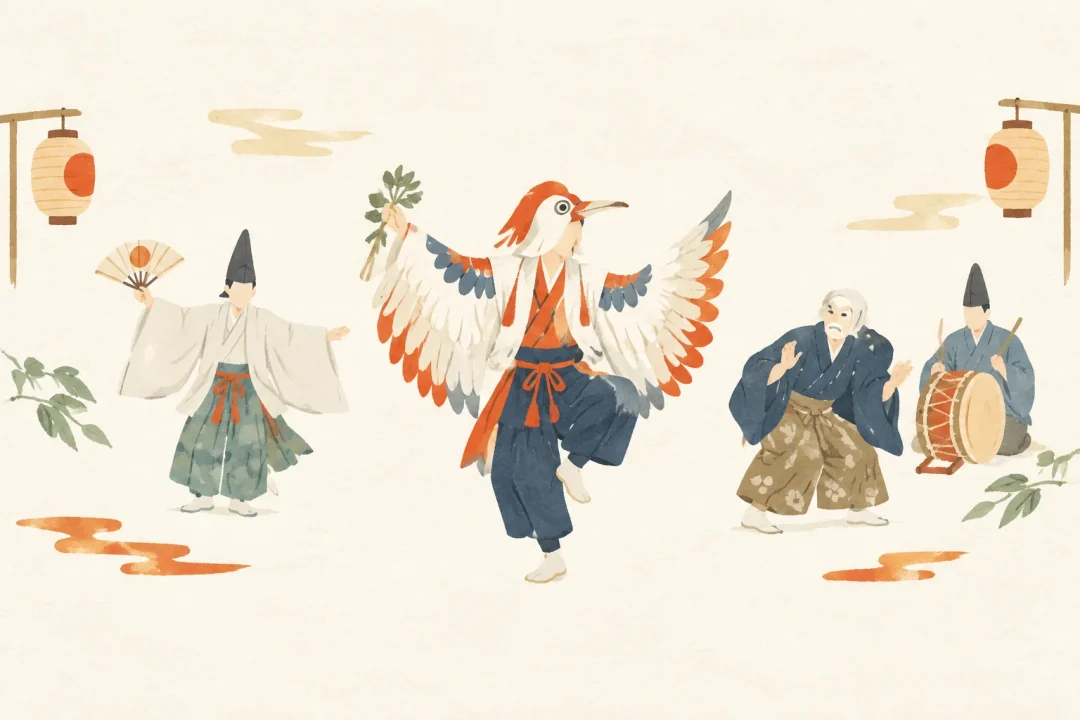
The dances are offered at festivals at Hayachine Shrine and are made up of ceremonial dances, dances outside the troupe’s formal repertoire, and kyogen.
This local cultural tradition has been designated a National Important Intangible Folk Cultural Property and inscribed on UNESCO’s Intangible Cultural Heritage list.
Source: 国指定文化財等データベース
Festival highlights
A highlight is the varied dances and repertoire, passed down over many years.
Ceremonial dances include “Torimai,” “Okina,” and “Sanbaso,” while dances performed outside the kagura troupe’s formal repertoire include “Kamimai,” “Onna-mai,” and “Otoko-mai.”
Otsugunai Kagura and Take Kagura differ in the places where they are offered and in their repertoire, so you can encounter different dances at each shrine festival and performance.
The acting and staging have features that evoke what noh theater may have been like before it reached its mature form.
Dances by two kagura troupes carrying on the mountain faith
What to expect
As an opportunity to see the dances, “Kagura no Hi,” held on the 2nd Sunday of each month, features Take Kagura, Otsugunai Kagura, and Yagimaki Kagura in rotation each month.
At Hayachine Hall in the Osako Community Exchange and Revitalization Center in Hanamaki City, the doors open at 10 a.m., the performance starts at 11 a.m., and it ends at around 3 p.m.
There is a break from 12 p.m. to 1 p.m., and you can enjoy an extended close-up viewing of the kagura dances.
Annual events also include the first dance of the year, spring dances, the annual grand festival, and the final dance of the year.
Source: ユネスコ無形文化遺産 早池峰神楽 |【花巻観光協会公式サイト】
How to take part
Members of the public can watch performances that are open to the public as audience members.
On “Kagura Day,” held on the second Sunday of every month, visitors can watch by purchasing tickets at the venue on the day.
However, no information is provided on whether members of the public can participate as performers in the preservation association that performs kagura.
If you visit to watch kagura or a festival, please follow the viewing arrangements for each venue and the instructions provided on the day.
For “Kagura Day,” visitors can enter with tickets purchased at the venue on the day.
Doors open at 10 a.m. and the performance begins at 11 a.m. There is a break from 12 to 1 p.m., and the performance ends at around 3 p.m.
No information is provided on how to apply or be recruited to participate as a kagura performer.
If you wish to watch a hono performance at a festival, please check the event information for each venue.
Location and access
- Venue and address
The regular “Kagura no Hi” performances are held at Hayachine Hall in the Osako Community Exchange and Revitalization Center in Hanamaki City.
Venues for festivals and annual events vary by event and include Hayachine Shrine, the Take Kagura Densho-kan, and Kagura no Yakata.
Event venue 岩手県花巻市 早池峰神社
This map uses the venue name. Check the official guide for the event area and entrances.
Dates and season
The regular “Kagura Day” performances are held on the second Sunday of every month, with Take Kagura, Otsugunai Kagura, and Yagimaki Kagura performing in rotation.
Annual events include the Otsugunai Kagura first performance of the year on January 2, the Take Kagura first performance of the year on January 3, the Spring Dance from late April to early May, the Hayachine Jinja Grand Festival’s eve-of-festival observance on July 31 and main festival on August 1, and the final dance of the year in December.
The Otsugunai Jinja Grand Festival takes place in mid-September.
Accommodation and hotels PR
Showing nearby accommodation.
Prices and availability are current at the time of retrieval. For multi-night stays, only the first night’s price is shown. Confirm the final price and directions to the venue with the booking provider. Select your dates again when using the area search link. Search area: within 3 km of Central Iwate Prefecture / Hanamaki City (the search is not centered on the festival venue)
Tips for your visit
There is some time between the doors opening and the performance starting, so it is a good idea to check the entry procedure for the day and arrive early.
“Kagura no Hi” is a long performance with a lunch break, and you can check the schedule and break time in advance.
Festivals and kagura performances offered to the deities may be held at different venues, such as Hayachine Shrine and Kagura no Yakata, so take care not to confuse the event you want to attend with its venue.
Nearby attractions
The Hayachine Take Kagura Densho-kan is recommended for anyone interested in the history, instruments, and video materials of Hayachine Kagura.
At the Hanamaki City Cultural Properties Center, you can view exhibits about the nature of Mount Hayachine, Hayachine Kagura, and local life.
Kagura no Yakata hosts events such as Otsugunai Kagura’s first dance of the year, spring dances, the annual grand festival, and the final dance of the year.
These facilities all offer ways to learn about Hayachine Kagura and its background.
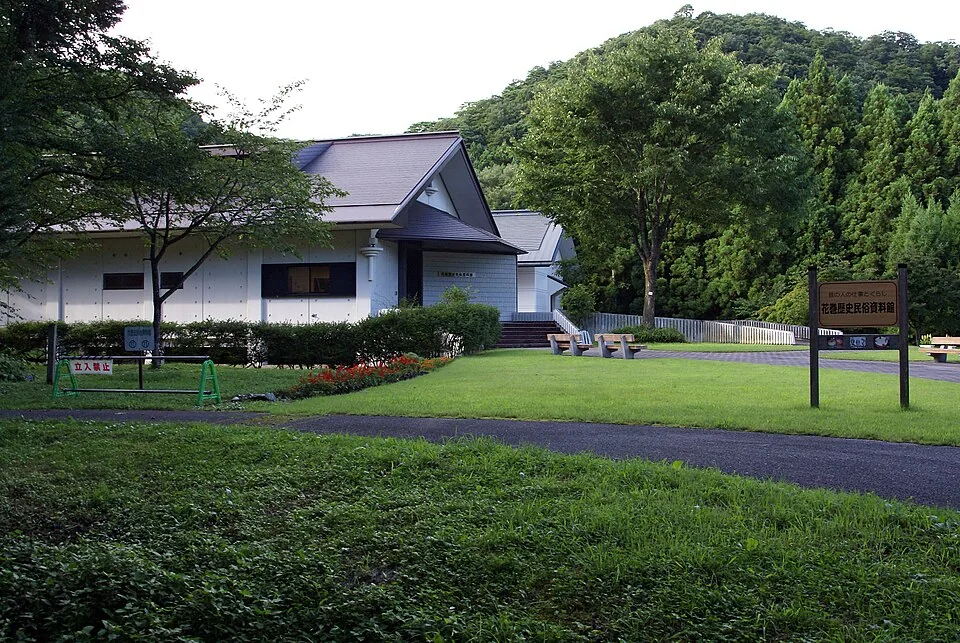
花巻歴史民俗資料館
岩手県花巻市にあった資料館
写真:663highland / CC BY 2.5(resized and reformatted)
Photo source ·Origins and History of Hayachine Kagura
Hayachine Kagura has been passed down in connection with the faith in Mount Hayachine.
It is said that kagura developed from ritual dances performed by mountain ascetics. A lion head dating to Bunroku 4 has been passed down in Take, and a document on the transmission of kagura dating to Chokyo 2 has been passed down in Otsugunai.
Some records no longer survive, and aspects of the tradition’s origins remain uncertain. However, local people have carried it on since the Meiji era; it was designated a National Important Intangible Folk Cultural Property in 1976 and inscribed on UNESCO’s Intangible Cultural Heritage list in 2009.
Official information
Information on performance dates and programs is available on the Hanamaki Tourism Association’s Hayachine Kagura page.
Information on related events and venues in 2026 is available on the Hanamaki City page for “National Kagura Festival Hayachine 2026.”
Hayachine Kagura at a Glance
Hayachine Kagura is a traditional performing art of Hanamaki City, carried on by the two kagura troupes of Otsugunai and Take.
The varied repertoire includes Torimai, Okina, and Sanbaso, performed at shrine festivals and local performances.
At “Kagura no Hi,” held on the 2nd Sunday of each month, you can enjoy a program of kagura dances, including Hayachine Kagura.
Its history, rooted in mountain ascetic practices and the faith in Mount Hayachine, is also a major draw.
Japanese Festivals.jp Editorial Team
Celebrating local culture and helping you discover a side of Japan you never knew.
Article updated: 2026/10/19
Submit information or a correction Submit photos of this festival