Kamosawa Kagura: a tradition of Gongen-mai and a diverse repertoire
Kamosawa Kagura
Festival information
EVENT INFORMATION- Season / frequency
- Every year (a fire-prevention gate visit to each household)
- Area
- Iwate Prefecture・Oshu City(From Tokyo: approx. 2 h 10 min–2 h 40 min · bullet train)Prefecture-level estimate to a main station or airport, not the venue. Airport access, check-in and onward travel are extra; remote areas and islands can take much longer.
- Highlights and activities
- Wishes behind the festival
- Last updated
- 2026/10/19
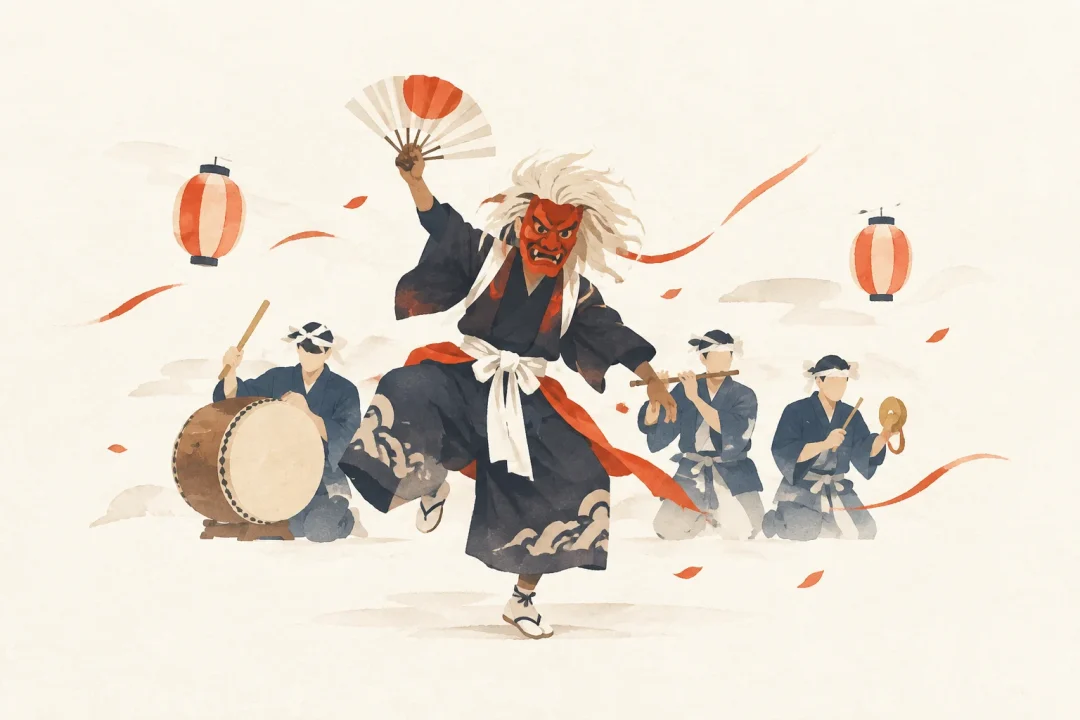
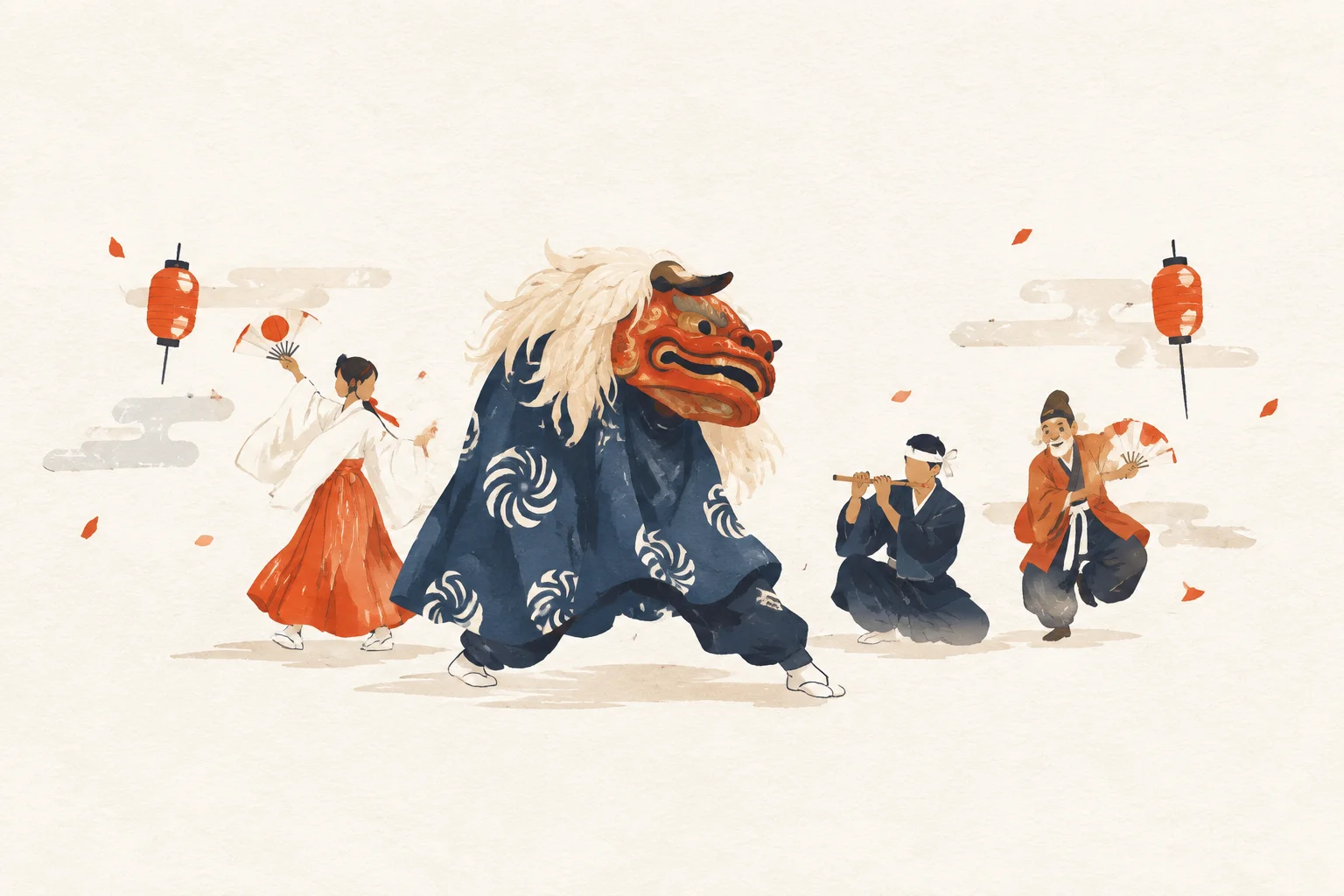
Kamosawa , passed down in Ōshū, Iwate Prefecture, is a shishi kagura rooted in the Hayachine Kagura tradition. Centered on Gongen-mai, it encompasses a wide range of performances, including ritual pieces, women’s dances, and . It is performed at festivals such as the one at Niiyama Shrine and has been preserved by local tradition-bearing groups.
About Kamosawa Kagura
Kamosawa Kagura is a shishi kagura centered on Gongen-mai, a dance widely performed across the Tohoku region, and a folk performing art belonging to the Hayachine Kagura lineage.
It is performed at festivals such as the one at Niiyama Shrine, and in Kamosawa its tradition has been maintained by groups of kagura performers.
The repertoire includes ritual pieces, women’s dances, kyogen, shita-mai, and Gongen-mai, preserving to this day a rich performing art rooted in the local community.
Source: 国指定文化財等データベース
Festival highlights
Highlights include a wide-ranging program featuring 36 kagura pieces, more than a dozen kyogen pieces, shita-mai, and Gongen-mai.
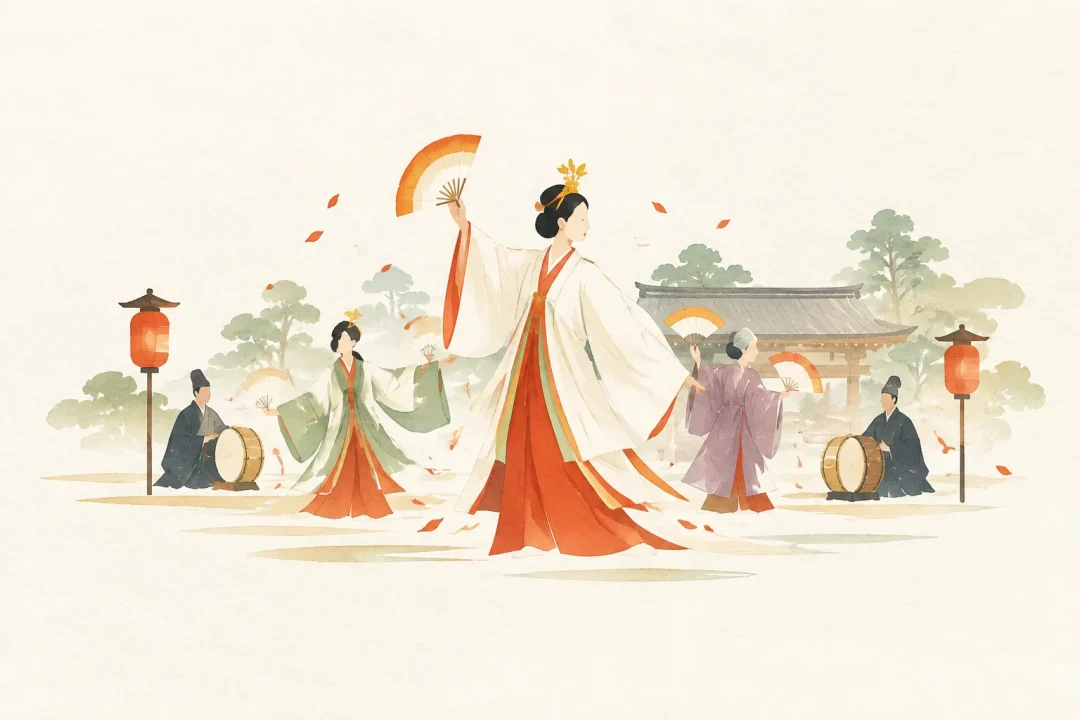
In the women’s dance, the performer pinches her sleeve, raises her index finger, and emerges from behind the curtain facing away. She slowly rises and makes delicate movements with her upper body.
Distinctive hand gestures used throughout the women’s dances create the delicate expression characteristic of Kamosawa Kagura.
Kamosawa Kagura: a tradition of Gongen-mai and a diverse repertoire
What to expect
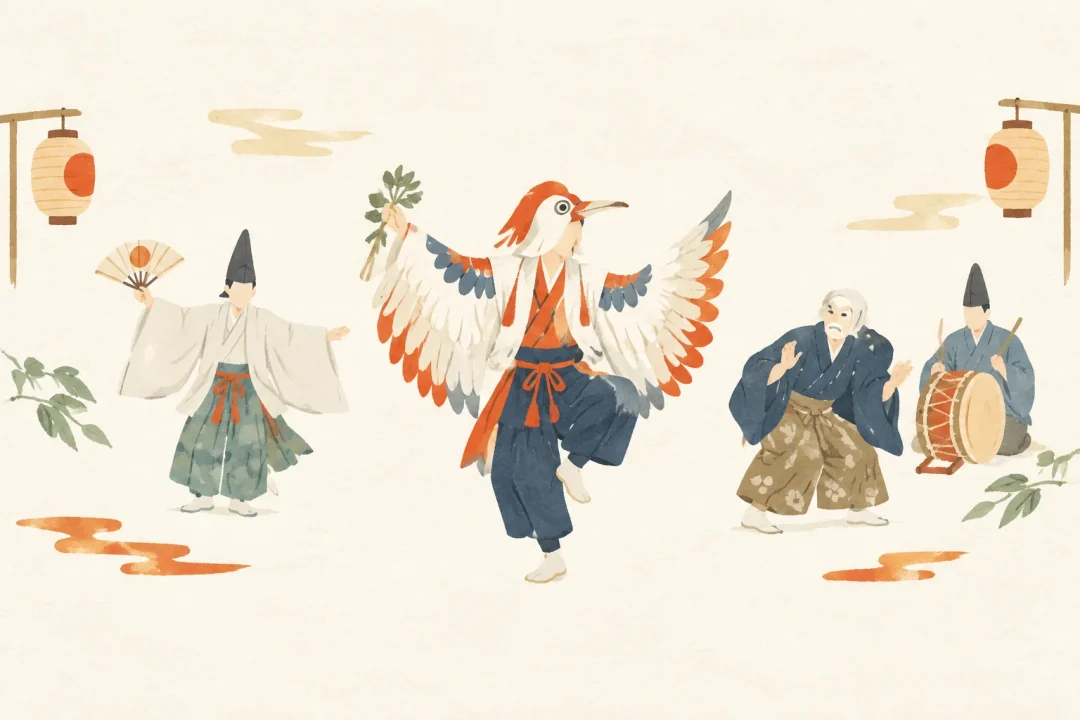
The repertoire includes the ritual Shiki Rokuban, as well as Torimai, Okina-mai, Sambaso, Shiyumi, , Iwato, Tennyo, and Hataori.
In the women’s dances, performers slowly rise and make broad yet delicate movements with their upper bodies.
In addition to being performed at festivals such as the one at Niiyama Shrine, the tradition of visiting individual households with Gongen-mai has also been passed down.
Location and access
- Address
Oshu City
Host municipality 岩手県奥州市
This map shows the surrounding area, not the exact venue location.
Dates and season
- Frequency
Every year (a fire-prevention gate visit to each household)
Accommodation and hotels PR
Showing nearby accommodation.
Prices and availability are current at the time of retrieval. For multi-night stays, only the first night’s price is shown. Confirm the final price and directions to the venue with the booking provider. Select your dates again when using the area search link. Search area: within 3 km of Central Iwate Prefecture / Oshu City (the search is not centered on the festival venue)
Nearby attractions
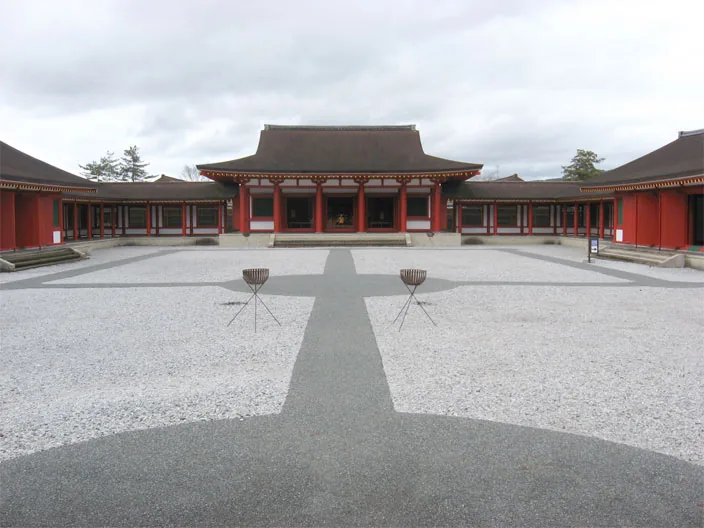
えさし藤原の郷
岩手県奥州市江刺にある平安時代のテーマパーク
写真:Kano / Public domain(resized and reformatted)
Photo source ·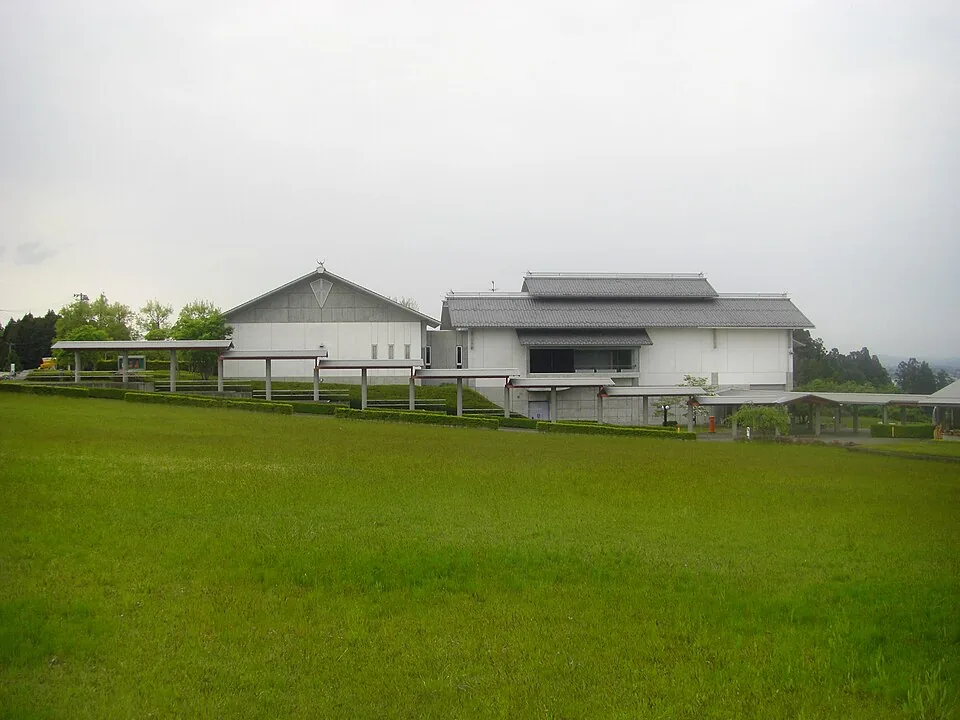
奥州市牛の博物館
岩手県奥州市前沢にある博物館
写真:Okayamakunio / CC BY 3.0(resized and reformatted)
Photo source ·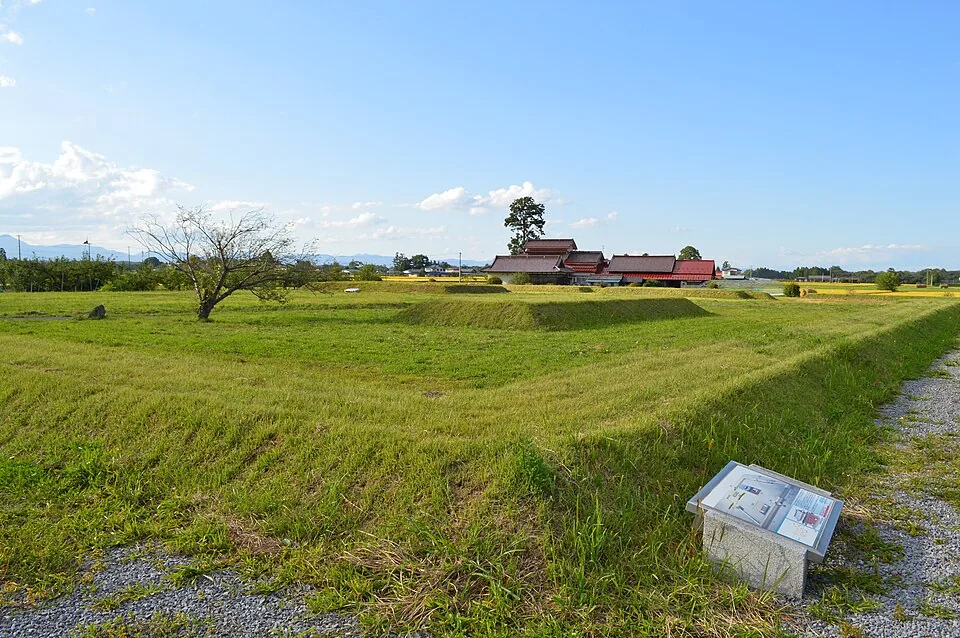
胆沢城
岩手県奥州市にあった古代城柵
写真:Saigen Jiro / CC0(resized and reformatted)
Photo source ·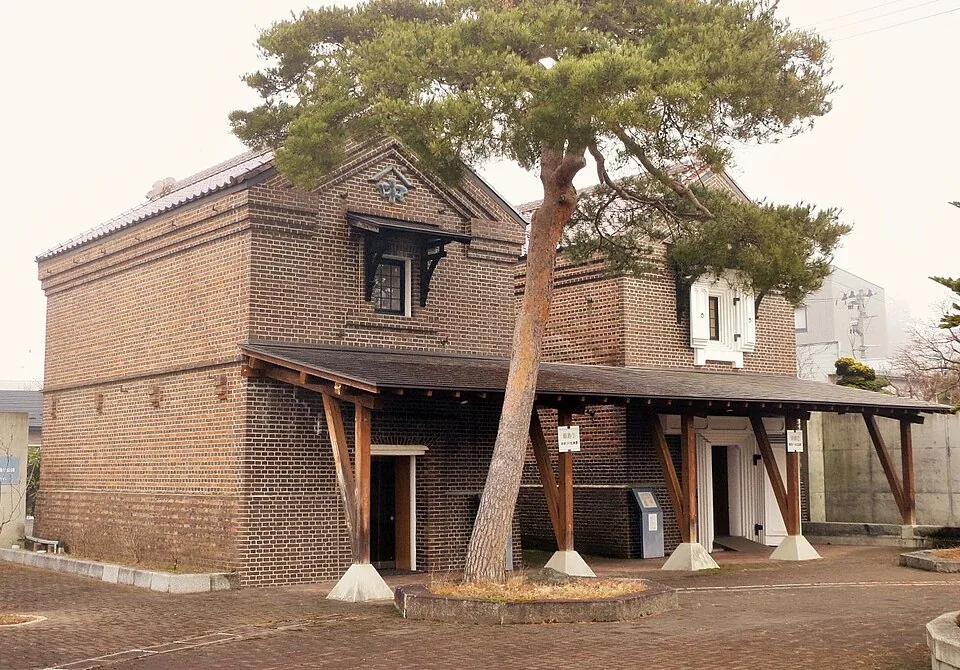
菊田一夫記念館
岩手県奥州市にある資料館
写真:Ty19080914 / CC BY-SA 4.0(resized and reformatted)
Photo source ·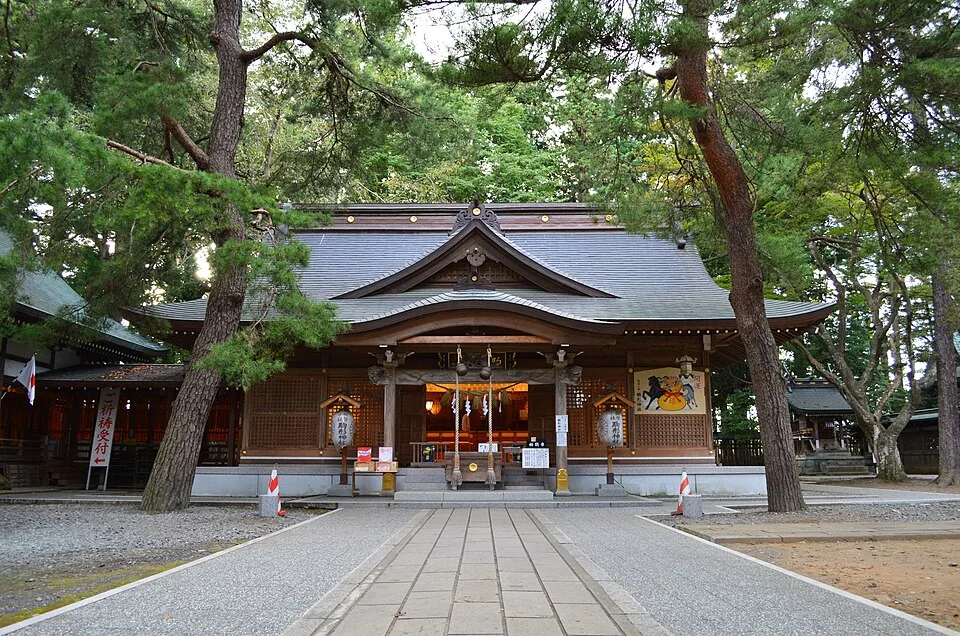
駒形神社
岩手県奥州市にある神社
写真:Saigen Jiro / CC0(resized and reformatted)
Photo source ·Origins and History of Kamosawa Kagura
Kamosawa Kagura is considered part of a lineage of kagura that developed when Shugendo practitioners from Noguchi Hōjōin in Ōtsugun, home of Hayachine Kagura, incorporated the Saibe style of Kyoto’s court kagura.
This tradition reached Hareyama in Tōwa Town toward the end of the Edo period, passed through Karuishi in Esashi City, and arrived in Kamosawa in the early Meiji period.
Another account says it was taught in Karuishi between 1844 and 1847, and that it formally became independent after receiving authorization from Karuishi Kagura in 1881.
Source: 郷土芸能紹介 - 広瀬振興会ホームページ
Official information
Kamosawa Kagura is listed in the Agency for Cultural Affairs’ Database of Nationally Designated Cultural Properties as an “intangible folk cultural property for which measures such as documentation should be undertaken.”
It is listed as a prefecturally designated folk performing art—kagura—in the intangible folk cultural properties list on the official Ōshū City website.
An overview of the tradition, its repertoire, and information about the preservation groups can be found in these official cultural heritage guides.
Source: 無形民俗文化財一覧/奥州市公式ホームページ
Kamosawa Kagura at a Glance
Kamosawa Kagura is a traditional shishi kagura from Ōshū, Iwate Prefecture, belonging to the Hayachine Kagura lineage.
Its diverse repertoire includes 36 kagura pieces, kyogen, women’s dances, and Gongen-mai, with delicate hand gestures in the women’s dances as a distinctive feature.
It has been passed down in the community through festivals at Niiyama Shrine and fire-prevention gate visits to individual households.
Japanese Festivals.jp Editorial Team
Celebrating local culture and helping you discover a side of Japan you never knew.
Article updated: 2026/10/19
Submit information or a correction Submit photos of this festival