A Gion Festival that fills Ham玉’s streets with sound, featuring giant dashi and the dramatic Ōmagiri
Hamasaki Gion Festival
The 2026 edition of Hamasaki Gion Festival has ended.
Festival information
EVENT INFORMATION- Dates
- 2026/07/25 〜 2026/07/26Ended
- Season / frequency
- Every summer, on the Saturday and Sunday after Marine Day / Every year
- Location
- Around Suwa Shrine (Hamasaki, Hamatama, Karatsu City)
- Area
- Saga Prefecture・Karatsu City(From Tokyo: approx. 1 h 50 min–2 h 10 min · flight time only)Prefecture-level estimate to a main station or airport, not the venue. Airport access, check-in and onward travel are extra; remote areas and islands can take much longer.
- Features
- Highlights and activities
- Wishes behind the festival
- Participation fee
- Free
- Last updated
- 2026/11/15
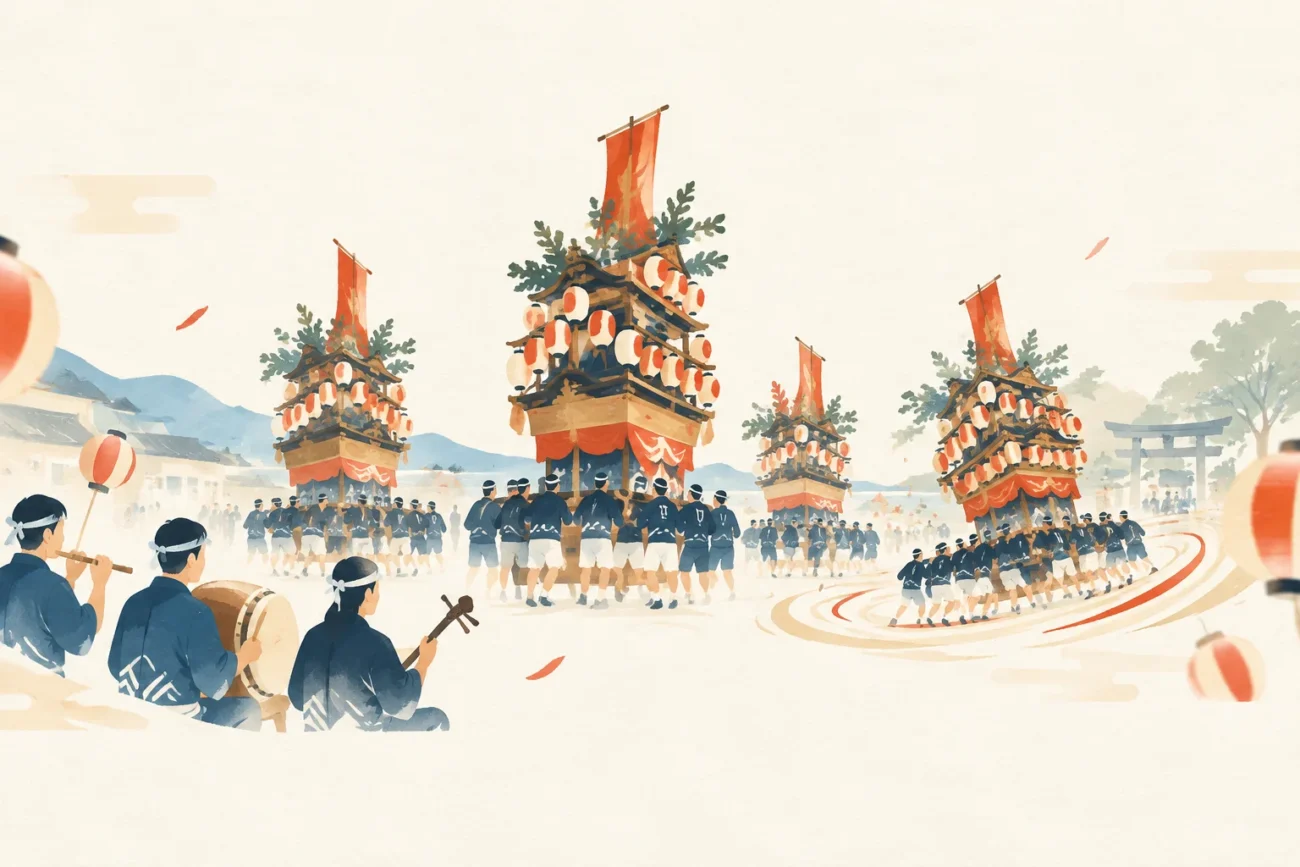
Hamasaki Gion Festival, passed down in Hamasaki, Hamatama, Karatsu City, is a traditional event where 3 giant make their way through town to the sound of flutes, , shamisen, and music. Toward the end of the festival, the dashi are spun around at Suwa Shrine in an event called “Ōmagiri.”
About Hamasaki Gion Festival
Hamasaki Gion Festival is a traditional event that has been passed down in Hamasaki, Hamatama, Karatsu City.
The festival began in Hōreki 3 (1753), with prayers for protection from epidemics and bountiful harvests. Around 150 people pull 3 decorative dashi, each 15 meters tall, through the streets.
The distinctive hayashi music, with shamisen accompanying the flutes and taiko, is another defining feature of the festival.
It is designated an Important Intangible Folk Cultural Property of the city.
Festival highlights
The main highlight is “Ōmagiri,” when giant dashi are spun around repeatedly toward the end of the festival.
Held at Suwa Shrine before the end of both days, this movement brings the size of the dashi and the strength of those pulling them close to view.
By day, the lavish decorations stand out; at night, the lantern-lit dashi take on a dreamlike appearance.
The hayashi music played on flutes, taiko, and shamisen also contributes to the festival’s lively atmosphere.
A Gion Festival that fills Ham玉’s streets with sound, featuring giant dashi and the dramatic Ōmagiri
What to expect
Three lavish dashi come out from the East, West, and Hama districts, and local people pull them through the streets.
During the procession, the sound of flutes, taiko, shamisen, and the cries of “Enya!” echoes through the town.
Toward the end of the festival, the dashi are spun around at Suwa Shrine in an event called “Ōmagiri.”
The children’s dashi procession is also included in the schedule.
How to take part
参加費:無料
Location and access
- Venue and address
Around Suwa Shrine, Hamasaki, Hamatama, Karatsu City
- Train and bus
About a 5-minute walk from Hamasaki Station on the JR Chikuhi Line
- Parking
Free parking available
Event venue 佐賀県唐津市 諏訪神社
This map uses the venue name. Check the official guide for the event area and entrances.
Dates and season
2026 Event Information (The listed dates have passed)
In 2026, the festival was held on July 25 (Saturday) and the 26th (Sunday).
本祭の巡行時間は、7月25日が15:00〜22:00、7月26日が15:00〜22:30です。
7月24日(金)には子供山笠が17:30〜19:15に巡行しました。
The schedule indicated that “Ōmagiri” would take place at around 8 p.m. toward the end of both festival days.
Accommodation and hotels PR
Showing nearby accommodation.
Prices and availability are current at the time of retrieval. For multi-night stays, only the first night’s price is shown. Confirm the final price and directions to the venue with the booking provider. Select your dates again when using the area search link. Search area: within 3 km of Central Saga Prefecture / Karatsu City (the search is not centered on the festival venue)
Tips for your visit
The dashi procession and “Ōmagiri” look different depending on the time of day.
Notice the decorations during the day and the lantern-lit dashi at night to enjoy their different charms.
The official website states that the use of small unmanned aircraft (drones) is prohibited.
Nearby attractions
Nearby attractions in Karatsu City, where the festival is held, include Marine Center Osakana-mura, Bougen no Mori, Kagamiyama, and Kagamiyama Kiln.
Marine Center Osakana-mura is noted for its freshly caught morning fish and locally grown vegetables.
Kagamiyama is listed as a scenic spot, Bougen no Mori as a Karatsu tourist garden, and Kagamiyama Kiln as a local attraction.

佐賀県立名護屋城博物館
佐賀県唐津市にある博物館
写真:Aboshi at Japanese Wikipedia / CC BY-SA 3.0
Photo source ·
名護屋城
佐賀県の城跡
写真:Aboshi at Japanese Wikipedia / CC BY-SA 3.0
Photo source ·

唐津神社
佐賀県唐津市南城内にある神社

末盧館
佐賀県唐津市にある博物館

河村美術館
佐賀県唐津市にある美術館

鏡神社
唐津市にある神社
Origins and History of Hamasaki Gion Festival
Hamasaki Gion Festival began in Hōreki 3 (1753), with prayers for protection from epidemics and bountiful harvests.
A 2026 introduction by Karatsu City describes it as a traditional event in the Hamasaki district, passed down for more than 270 years.
The sight of local people pulling 3 dashi through the streets reflects the community ties that sustain the festival across generations.
It is also designated an Important Intangible Folk Cultural Property of the city.
Official information
浜崎祇園祭公式サイト:浜崎祇園祭:浜崎祇園山笠振興会
主催:浜崎祇園山笠振興会
問い合わせ:浜崎祇園山笠振興会事務局 090-9607-6552
Hamasaki Gion Festival at a Glance
Hamasaki Gion Festival is a traditional event in Hamasaki, Hamatama, Karatsu City, which began in 1753 with prayers for protection from epidemics and bountiful harvests.
Three 15-meter-tall dashi are pulled through the streets to the sound of flutes, taiko, shamisen, and hayashi music.
Toward the end, giant dashi spin around at Suwa Shrine in the event called “Ōmagiri.”
Another feature is the contrast between the decorations by day and the lantern-lit appearance at night.
Japanese Festivals.jp Editorial Team
Celebrating local culture and helping you discover a side of Japan you never knew.
Article updated: 2026/11/15