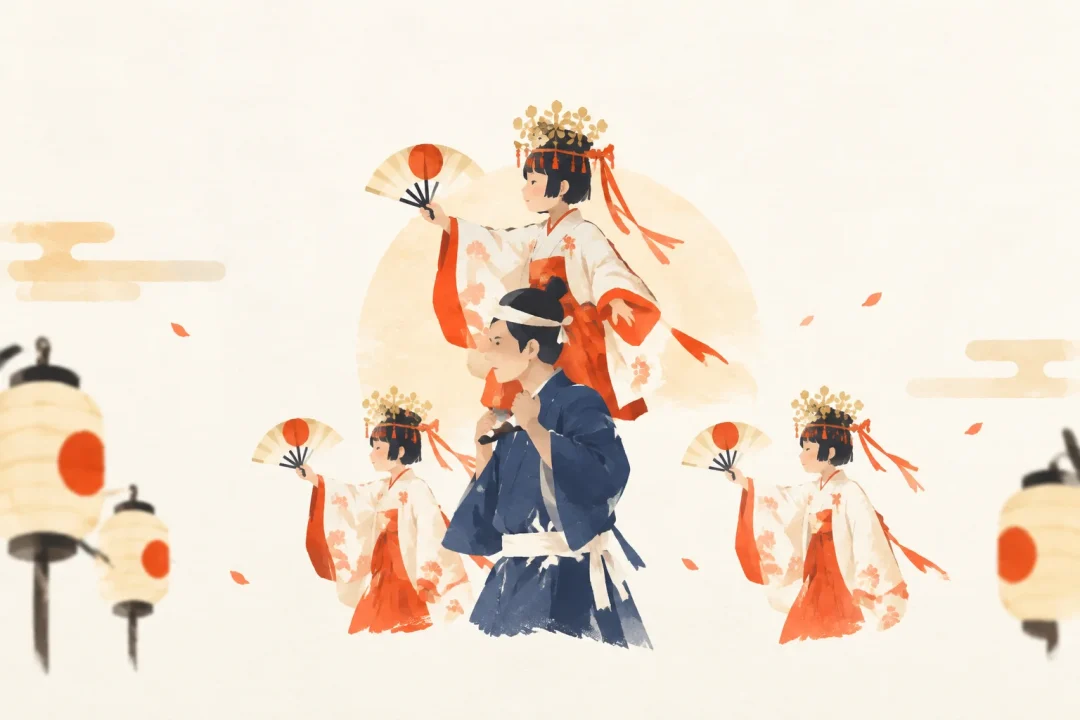
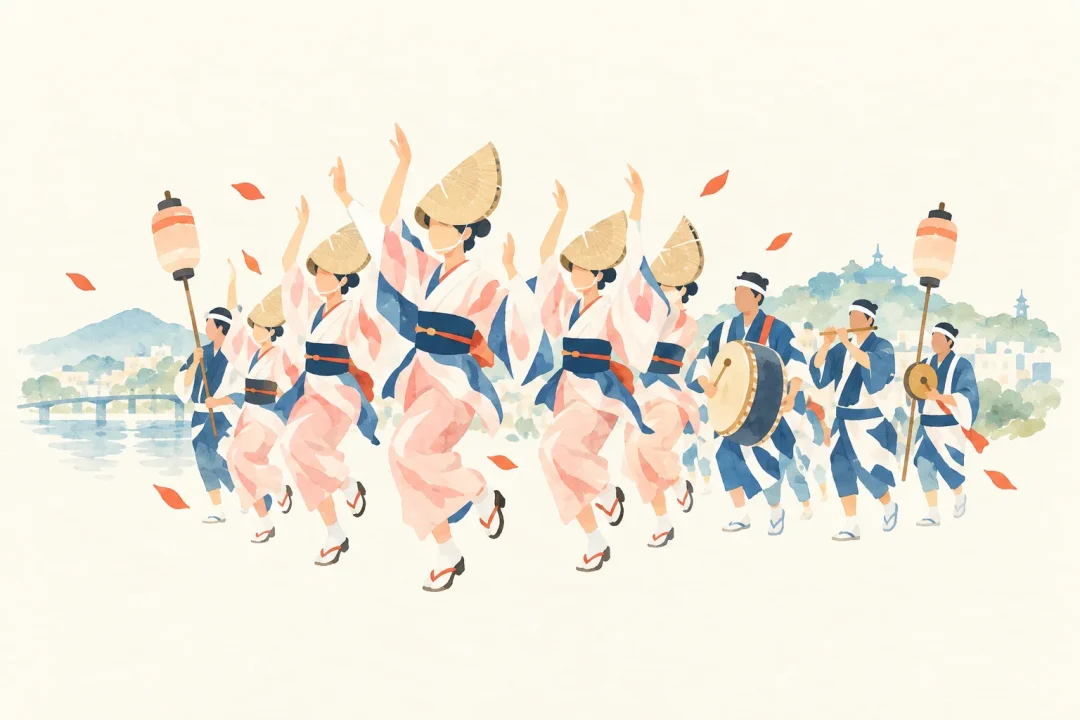
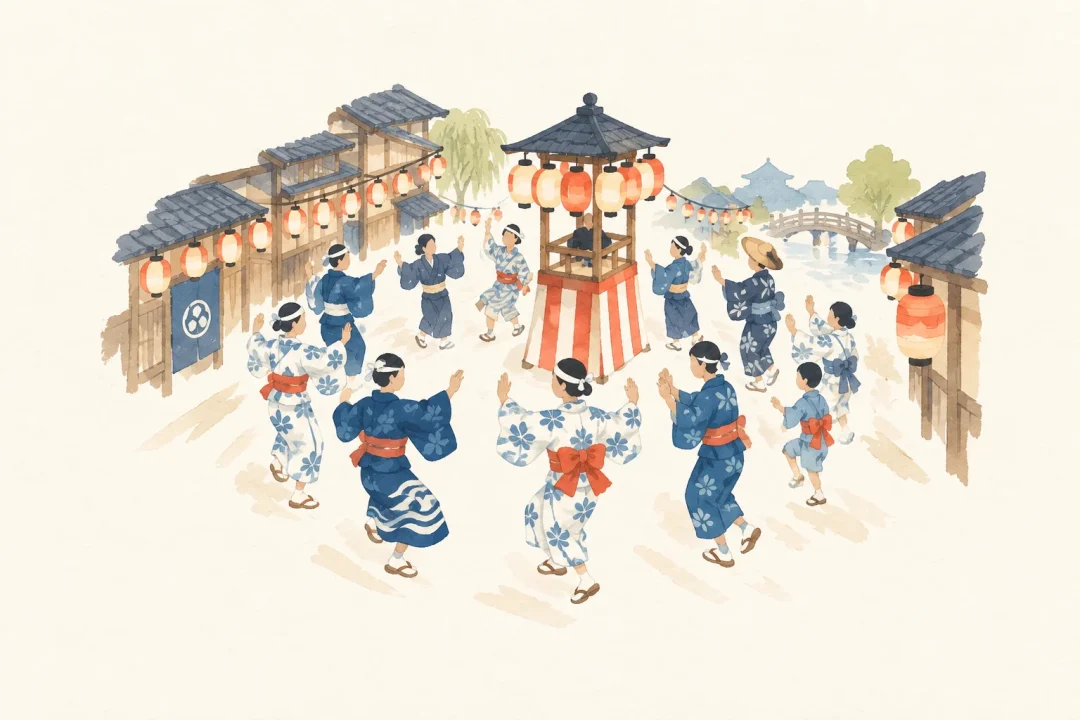
Children’s bugaku dances set against the pondside stage and bridgeway
Hakusan Shrine Bugaku

Festival information
EVENT INFORMATION- Season / frequency
- April 24
- Location
- Nou Hakusan Shrine
- Area
- Niigata Prefecture・Itoigawa City(From Tokyo: approx. 1 h 40 min–2 h 10 min · bullet train)Prefecture-level estimate to a main station or airport, not the venue. Airport access, check-in and onward travel are extra; remote areas and islands can take much longer.
- Features
- Highlights and activities
- Last updated
- 2026/10/19
Children and adults perform traditional dances on a stage set up in the middle of a pond, using a 17-meter bridgeway. This is a local folk performing art passed down through the festivals of Nou Hakusan Shrine.
About Hakusan Shrine Bugaku
Hakusan Shrine Bugaku is a traditional performing art dedicated at festivals of Nou Hakusan Shrine.
It is also known as “Chigo-mai” and is performed by parishioners of Nou.
Another distinctive feature is the layout: a stage is set in the middle of a square pond and connected to the dressing room by a bridgeway.
Among folk performing arts, it is classified as an imported performing art and stage art.
Source: 国指定文化財等データベース
Festival highlights
A highlight is the staging, which makes use of the stage in the middle of the pond and the 17-meter bridgeway connecting it to the dressing room.
Children and adults take on different roles and perform several dances passed down through generations.
The pieces include “Shimboko,” “Taiheiraku,” “Kyuhoraku,” and “Ryo-o,” among others; some are performed by adults as well as children.
Children’s bugaku dances set against the pondside stage and bridgeway
What to expect
At the festival, parishioners of Nou dedicate bugaku dances, with children and adults each taking their roles and performing the pieces.
There are 11 dances in the tradition: some are performed by 1 to 4 children, while others are performed by 1 or 2 adults.
The layout, which uses a stage in the middle of the pond and a bridgeway, creates a performance flow unlike that of typical stage arts.
Location and access
- Venue
Nou Hakusan Shrine
Event venue 新潟県糸魚川市 能生白山神社
This map uses the venue name. Check the official guide for the event area and entrances.
Dates and season
Hakusan Shrine Bugaku is said to be dedicated at April 24, a festival of Nou Hakusan Shrine.
Accommodation and hotels PR
Showing nearby accommodation.
Prices and availability are current at the time of retrieval. For multi-night stays, only the first night’s price is shown. Confirm the final price and directions to the venue with the booking provider. Select your dates again when using the area search link. Search area: within 3 km of Central Niigata Prefecture / Itoigawa City (the search is not centered on the festival venue)
Nearby attractions

Nou Hakusan Shrine
新潟県糸魚川市大字能生にある神社
Origins and History of Hakusan Shrine Bugaku
Hakusan Shrine Bugaku is said to have descended from Shitennoji Bugaku.
It is considered one of the forms of bugaku brought from the capital in the medieval period and passed down across Hokuriku and Tohoku, adapting to local communities along the way.
In 1973, it was selected as an intangible folk cultural property for which measures such as documentation should be undertaken.
Official information
Hakusan Shrine Bugaku is listed in the Agency for Cultural Affairs’ Database of Nationally Designated Cultural Properties.
The listing classifies it as “imported performing arts and stage arts” among folk performing arts, and names the Nou Hakusan Shrine Bugaku Preservation Society as its preservation organization.
The performances are dedicated at festivals of Nou Hakusan Shrine.
Hakusan Shrine Bugaku at a Glance
Hakusan Shrine Bugaku is a children’s bugaku dance performed at festivals of Nou Hakusan Shrine.
A key feature is the setup, with a stage in the middle of a pond and a 17-meter bridgeway connecting it to the dressing room. Children and adults perform 11 dances.
It is said to have descended from Shitennoji Bugaku, and has been passed down as a local performing art, rooted in the community after being brought from the capital in the medieval period.
Japanese Festivals.jp Editorial Team
Celebrating local culture and helping you discover a side of Japan you never knew.
Article updated: 2026/10/19
Submit information or a correction Submit photos of this festival