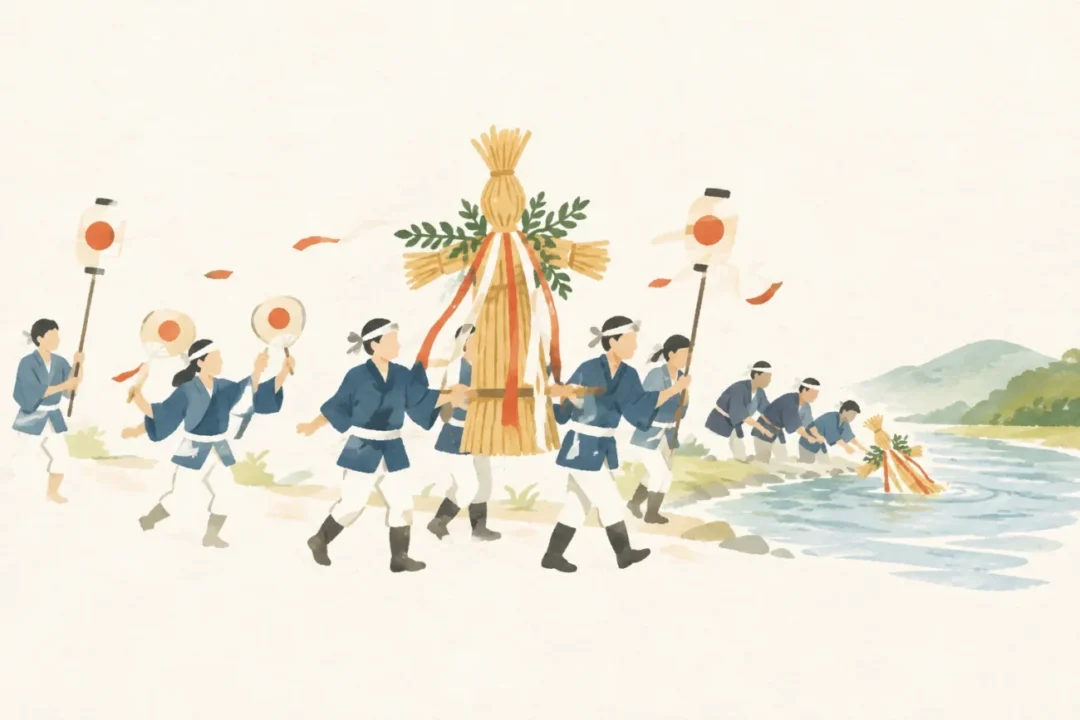
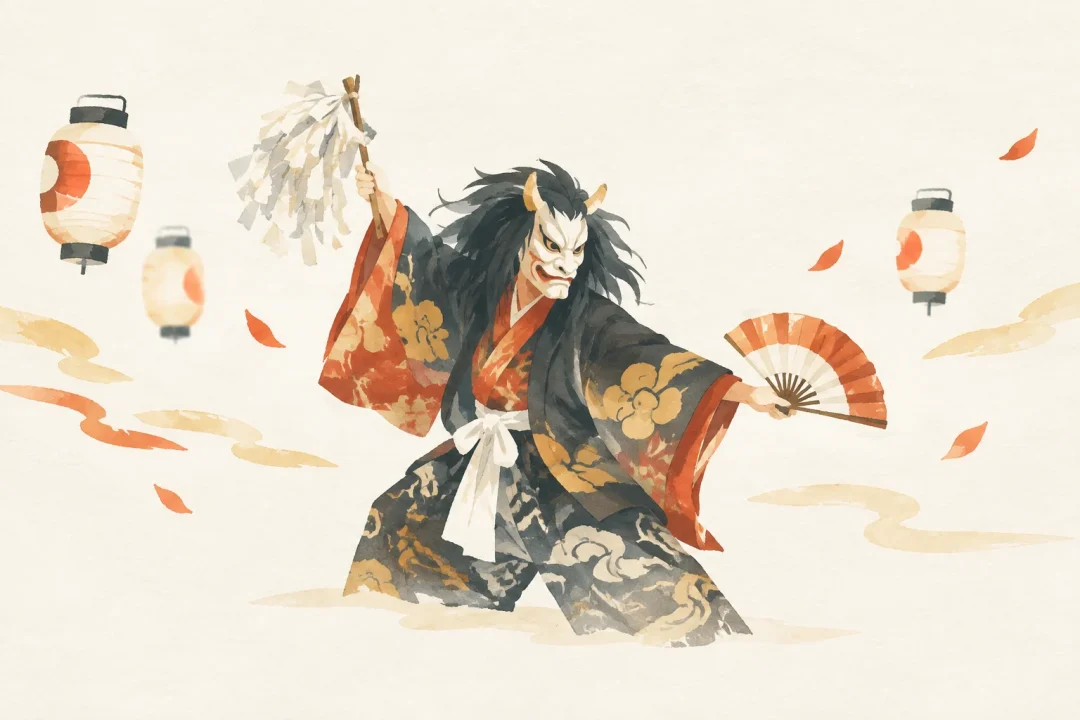
Twelve kagura pieces and a jujutsu-inspired dance, passed down in Ato
Ato Kagura

Festival information
EVENT INFORMATION- Season / frequency
- The night before the Sunday closest to October 15
- Area
- Hiroshima Prefecture・Hiroshima City(From Tokyo: approx. 3 h 50 min–4 h 20 min · bullet train)Prefecture-level estimate to a main station or airport, not the venue. Airport access, check-in and onward travel are extra; remote areas and islands can take much longer.
- Features
- Highlights and activities
- Last updated
- 2026/10/19
Ato , handed down in the Ato district of Asaminami Ward, Hiroshima City, is a form of Jūnishingi-style kagura that incorporates jujutsu techniques. Distinctive pieces such as “Shomowake” and “Shogun” are performed to the music of large drums, flutes, and bells.
About Ato Kagura
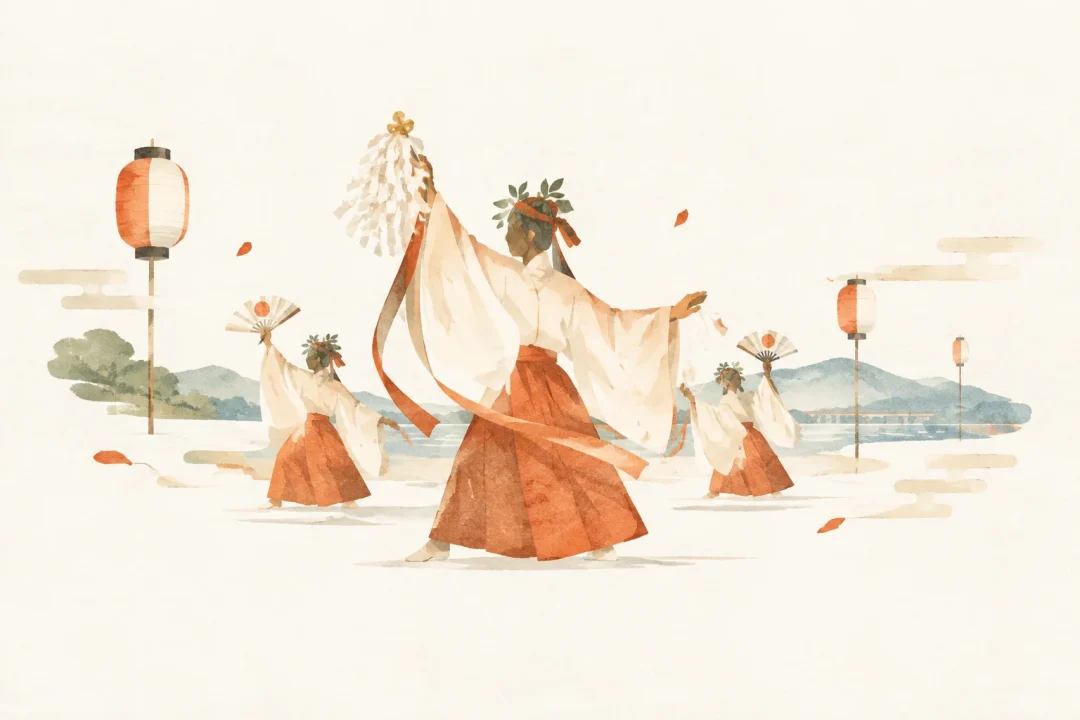
Ato Kagura is a form of Jūnishingi-style kagura handed down in the Ato district of Asaminami Ward, Hiroshima City.
A canopy is suspended above a roughly 7-meter-square stage, where performers dance to the music of large drums, flutes, and bells.
Passed down orally and through practice from parents to children and grandchildren, it is carefully preserved as a performing art that keeps Ato’s local culture alive today.
It was designated an Intangible Folk Cultural Property of Hiroshima Prefecture in Showa 40.
Source: 阿戸ルートの概要(あさみなみ散策マップ)|広島市公式ウェブサイト / 阿刀神楽団(あとかぐらだん) | 【公式】広島の観光・旅行情報サイト Dive! Hiroshima / 国指定文化財等データベース
Festival highlights
Highlights include powerful dances incorporating jujutsu forms and the varied developments across the twelve pieces.
Among them, “Shomowake” is an epic piece in seven sections depicting a dispute among five princes over the division of the gods’ possessions.
In the final piece, “Shogun,” a dancer in armor shoots at a rice bag suspended from the canopy. In the past, spirit possession and oracles were also part of the performance.
Twelve kagura pieces and a jujutsu-inspired dance, passed down in Ato
What to expect
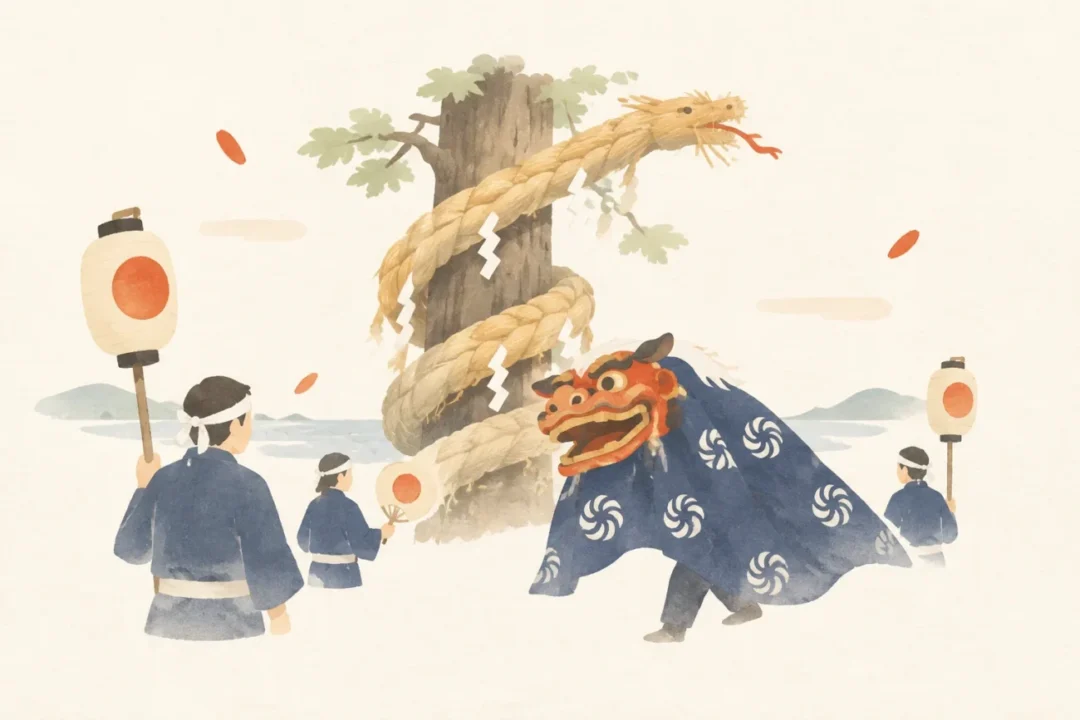
The repertoire consists of twelve kagura forms, including “Hebi no Kuchiake,” “Yudate Mai,” “Ebisu Mai,” “Kōjin,” “Gokatanomai,” “Onitaiji no Mai,” “Amano-Iwato no Mai,” “Shomowake,” and “Shogun.”
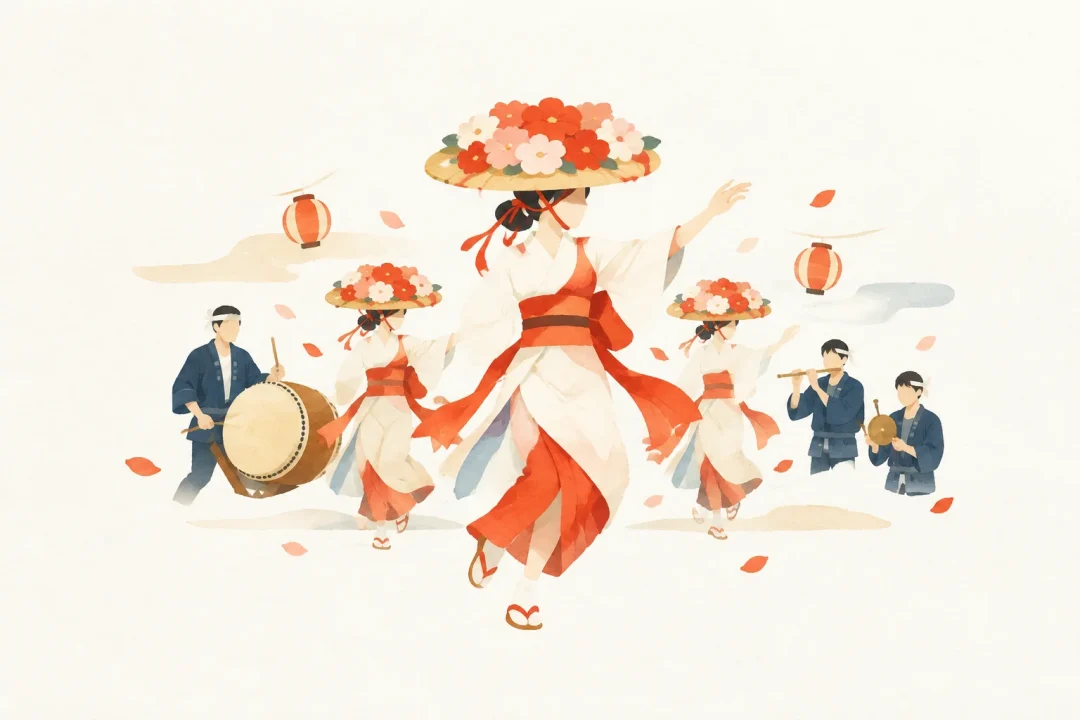
On stage, large drums, flutes, and bells accompany the dancers as they perform each piece.
The Ato Kagura Heritage Hall has storage rooms for costumes and equipment, as well as a dance hall. It is used as a practice venue for the kagura troupe and children.
Location and access
- Venue and address
Performances are held at local shrines in the Ato district.
- Train and bus
The Ato Route starts at the bus stop in front of Toyama Post Office, passes places including Ato Myōjin Shrine, and continues to the Chūō bus stop.
The Ato-shimo Route runs from the Chūō bus stop to the Takahama bus stop.
Event venue 広島県広島市 阿戸地区の地元神社で上演されます
This map uses the venue name. Check the official guide for the event area and entrances.
Dates and season
At the local , the performance takes place on the evening before the Sunday closest to October 15.
Accommodation and hotels PR
Showing nearby accommodation.
Prices and availability are current at the time of retrieval. For multi-night stays, only the first night’s price is shown. Confirm the final price and directions to the venue with the booking provider. Select your dates again when using the area search link. Search area: within 3 km of Central Hiroshima Prefecture / Hiroshima City (the search is not centered on the festival venue)
Nearby attractions
The Ato Route is promoted as a route through the Ato district that visits places such as Ato Myōjin Shrine, the Ato Kagura Heritage Hall, and the Toyama Folk Museum.
The grove at Ato Myōjin Shrine is thick with large hinoki cypress, sugi cedar, and fir trees, and is designated a natural monument of Hiroshima City.
This walking route through fields and wooded hills lets visitors experience kagura alongside the area’s history and nature.

お好み村
広島県広島市中区にあるフードテーマパーク
写真:Taisyo ; Uploaded to Commons by Nihonjoe / CC BY 3.0
Photo source ·
ひろしま美術館
広島県広島市中区にある美術館
写真:Taisyo at Japanese Wikipedia / CC BY 3.0
Photo source ·
マツダミュージアム
広島市南区にある企業博物館

尾長天満宮
広島県広島市東区にある神社

平和記念公園
広島市にある公園

広島市こども文化科学館
広島市中央公園内にある科学館
写真:Taisyo at Japanese Wikipedia / CC BY 3.0
Photo source ·
広島市交通科学館
広島県の博物館・美術館のスポットです。

広島市安佐動物公園
広島県の観光名所のスポットです。
写真:Taisyo at Japanese Wikipedia / CC BY 3.0
Photo source ·
広島市植物公園
広島県広島市佐伯区倉重にある都市公園

広島市江波山気象館
Museums

広島市現代美術館
広島県広島市南区にある美術館
写真:Taisyo at Japanese Wikipedia / CC BY 3.0
Photo source ·Origins and History of Ato Kagura
Ato Kagura is said to have begun in Bunka 1 (1804), when Uda Sōsuke incorporated jujutsu forms.
Later, Uda Naotsugu and others established the basic form used today, and it has been passed down as a kagura consisting of twelve pieces.
It became an Intangible Folk Cultural Property of Hiroshima Prefecture in Showa 40 and was selected by the Agency for Cultural Affairs in Showa 55 as an “Intangible Folk Cultural Property for which measures should be taken to create a record.”
Official information
The official Hiroshima Prefecture tourism website introduces the Ato Kagura Troupe, while the Hiroshima City official website provides information about the Ato Route and the history of Ato Kagura.
Basic information about its cultural-property designation can be found in the Database of Nationally Designated Cultural Properties.
Ato Kagura at a Glance
Ato Kagura is a traditional performing art of the Jūnishingi style passed down in the Ato district.
Highlights include dances incorporating jujutsu techniques, music played on large drums, flutes, and bells, and distinctive pieces such as “Shomowake” and “Shogun.”
The specific date for 2026 is currently being checked, but the annual performance is said to take place on the night before the Sunday closest to October 15.
Japanese Festivals.jp Editorial Team
Celebrating local culture and helping you discover a side of Japan you never knew.
Article updated: 2026/10/19
Submit information or a correction Submit photos of this festival