A grand kagura of shrine pavilions and pine pillars, passed down in Yukiba
Iwakuni Yukiba no Kagura
Festival information
EVENT INFORMATION- Season / frequency
- The small is held every year on October 14. The larger kagura is held once every 7 years. / The small kagura held every year and the larger kagura held once every 7 years
- Area
- Yamaguchi Prefecture・Iwakuni City(From Tokyo: approx. 1 h 35 min–1 h 55 min · flight time only)Prefecture-level estimate to a main station or airport, not the venue. Airport access, check-in and onward travel are extra; remote areas and islands can take much longer.
- Features
- Highlights and activities
- Last updated
- 2026/10/19
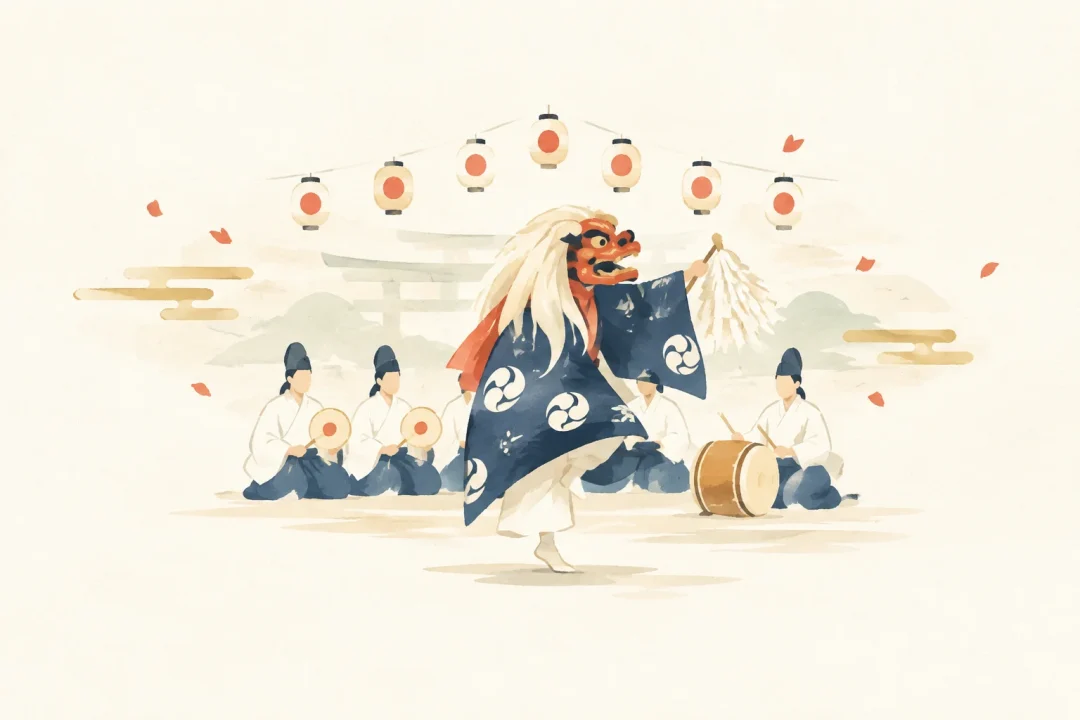
Iwakuni Yukiba no Kagura is a form of kagura passed down in Yukiba, Iwakuni City, Yamaguchi Prefecture. In addition to the small kagura held every year, the larger kagura, held once every 7 years, features a shrine pavilion erected on the banks of the Nishiki River, where various dances are dedicated. It is designated a National Important Intangible Folk Cultural Property and is passed down by a local preservation association.
About Iwakuni Yukiba no Kagura
Photo credits and terms of use
Photographer: westwind File:ManmaiYukaba58R.jpg / Wikimedia Commons / CC BY-SA 3.0 Own work at exercise place (「岩国行波の神舞伝承館」にて本人撮影)Display size only adjusted.May differ from the event currently featured.Photo credits and terms of use
Photographer: westwind File:KanmaiYukaba54R.jpg / Wikimedia Commons / CC BY-SA 3.0 Own work at exercise place (「岩国行波の神舞伝承館」にて本人撮影)Display size only adjusted.May differ from the event currently featured.Iwakuni Yukiba no Kagura is a form of kagura passed down in Yukiba, Iwakuni City. It consists of a small kagura performed every year and a larger kagura held once every 7 years.
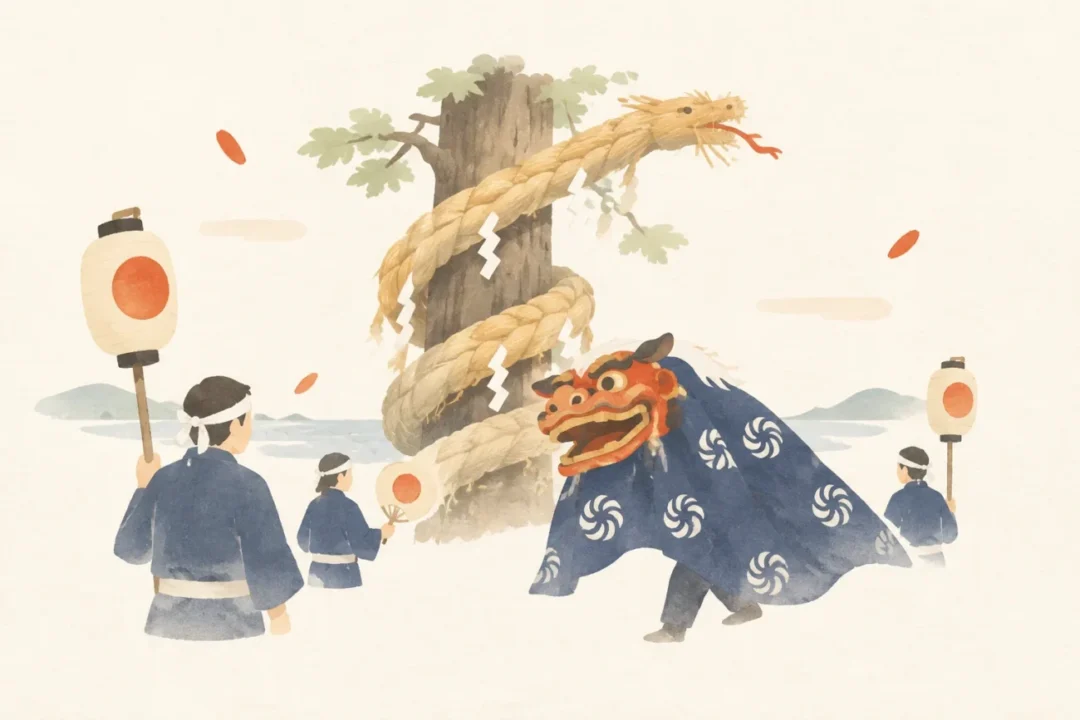
At the small kagura, some of the program is dedicated in the grounds of Aratama Shrine; for the larger kagura, a shrine pavilion is erected on the banks of the Nishiki River.
A local preservation association is responsible for passing down the tradition, and it was designated a National Important Intangible Folk Cultural Property in 1979.
This is a festival rooted in the local community that conveys the distinctive features of kagura in the Suō region.
Source: 国指定文化財等データベース / 岩国行波の神舞 | いわくに文化財探訪
Festival highlights
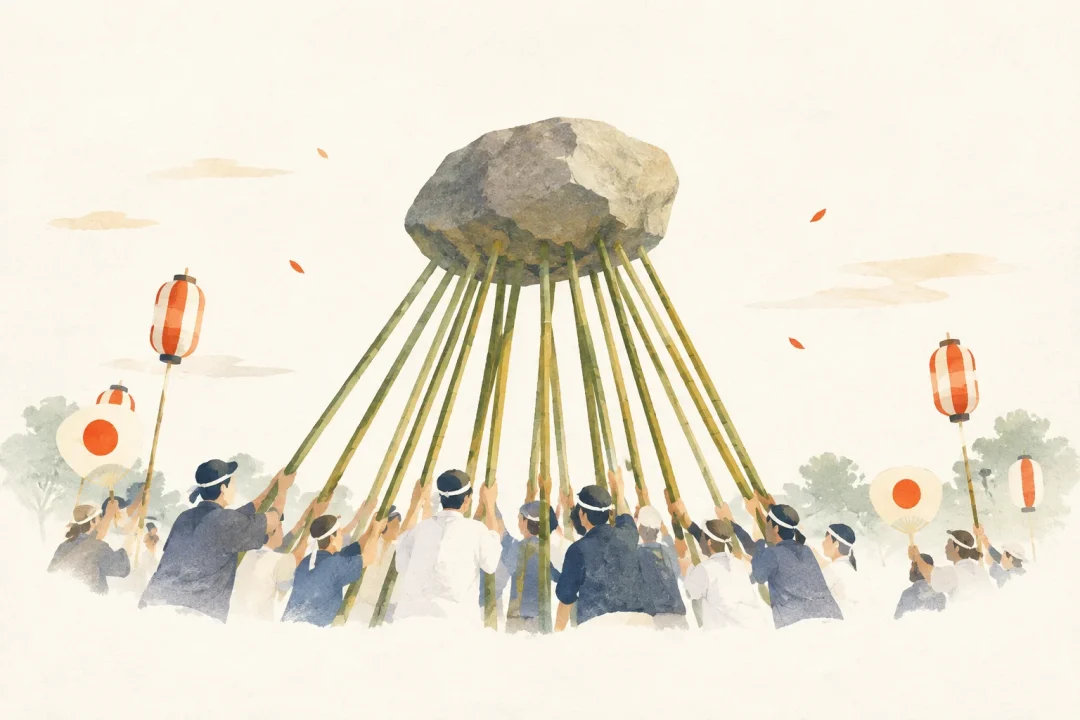
For the larger kagura, held once every 7 years, 9 red pine pillars are assembled into a shrine pavilion about 8 meters square, which is adorned with a thatched roof and a canopy.
In particular, during the Hachikan dance, a performer climbs a tall red pine pillar erected about 25 meters upstream from the shrine pavilion and performs an acrobatic dance.
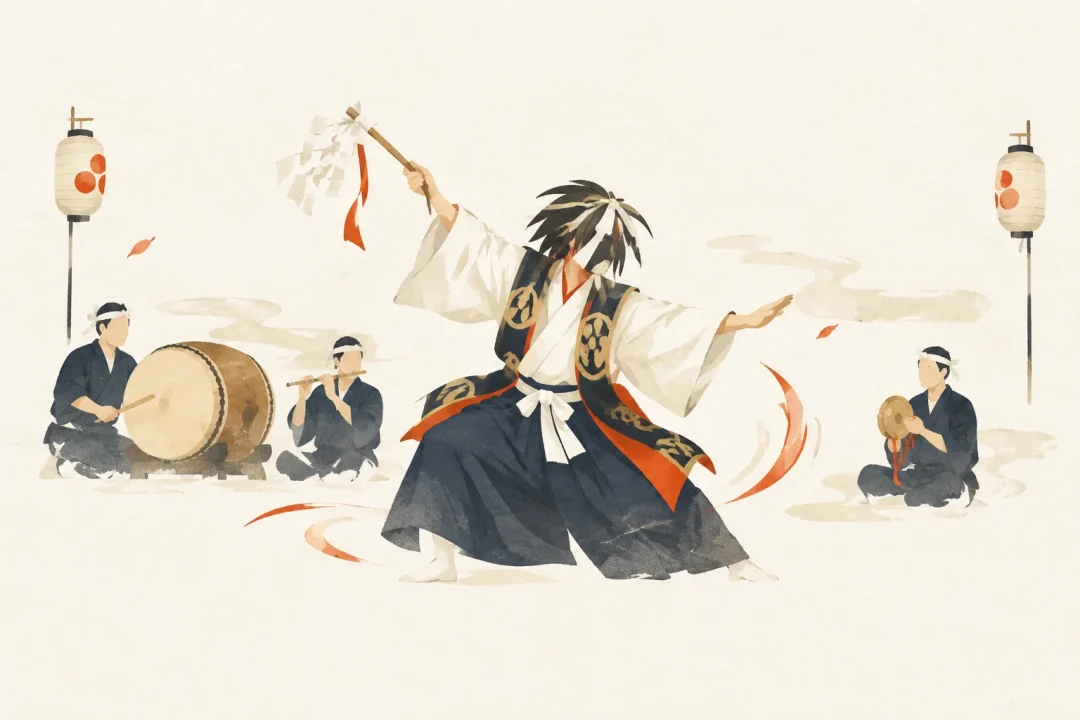
The program features a variety of performances, including the 12 dances, Yutate, and Hinō, offering a close-up view of kagura performed in its traditional form.
A grand kagura of shrine pavilions and pine pillars, passed down in Yukiba
What to expect
At the small kagura, some of the program is dedicated in the grounds of Aratama Shrine.
For the larger kagura in the 7th year, a shrine pavilion is assembled on the riverbank. The night before, rituals such as Yutate and Hishizume are held; on the day, the 12 dances are performed from early morning, followed by the Hachikan dance.
The event is said to last as long as 15 hours in total, with dances at the shrine pavilion and dances involving a pine pillar forming its main sequence.
Location and access
- Address
Iwakuni City
Host municipality 山口県岩国市
This map shows the surrounding area, not the exact venue location.
Dates and season
Each year, some of the small kagura performances are offered at the Aratama on October 14, while the large kagura is held once every seven years.
For the large kagura, after the offering performances on the eve, twelve acts and the Eight-Barrier Dance are performed from early morning on the day itself.
Accommodation and hotels PR
Showing nearby accommodation.
Prices and availability are current at the time of retrieval. For multi-night stays, only the first night’s price is shown. Confirm the final price and directions to the venue with the booking provider. Select your dates again when using the area search link. Search area: within 3 km of Central Yamaguchi Prefecture / Iwakuni City (the search is not centered on the festival venue)
Nearby attractions

吉川史料館
山口県岩国市にある博物館

岩国学校教育資料館
山口県岩国市にある博物館

岩国徴古館
山口県岩国市にある博物館

柏原美術館
山口県岩国市にある博物館
Origins and History of Iwakuni Yukiba no Kagura
Iwakuni Yukiba no Kagura is said to have originated in the Kyoto region after the Muromachi period and spread westward. Another theory identifies it as a type of Kōjin kagura brought from Bungo Province.
It was originally Shajin kagura performed by , but was passed on to local residents after the hereditary system was abolished during the Meiji Restoration.
Offerings in Yukiba began in 1791, and the kagura has been passed down without interruption as a performance held every 7 years.
Official information
It is listed in the Agency for Cultural Affairs’ Database of Nationally Designated Cultural Properties as a nationally designated Important Intangible Folk Cultural Property.
Iwakuni City’s cultural property guide provides an overview of the location, the preservation association, and the dedication performances.
Iwakuni Yukiba no Kagura at a Glance
Iwakuni Yukiba no Kagura is a form of kagura that has been preserved and passed down in Yukiba, Iwakuni City.
In addition to the small kagura held every year, the larger kagura, held once every 7 years, features a shrine pavilion on the riverbank, 12 dances, and Hachikan, in which a performer climbs a pine pillar.
As a nationally designated Important Intangible Folk Cultural Property that preserves ancient traditions, it carries local heritage into the present.
Japanese Festivals.jp Editorial Team
Celebrating local culture and helping you discover a side of Japan you never knew.
Article updated: 2026/10/19
Submit information or a correction Submit photos of this festival