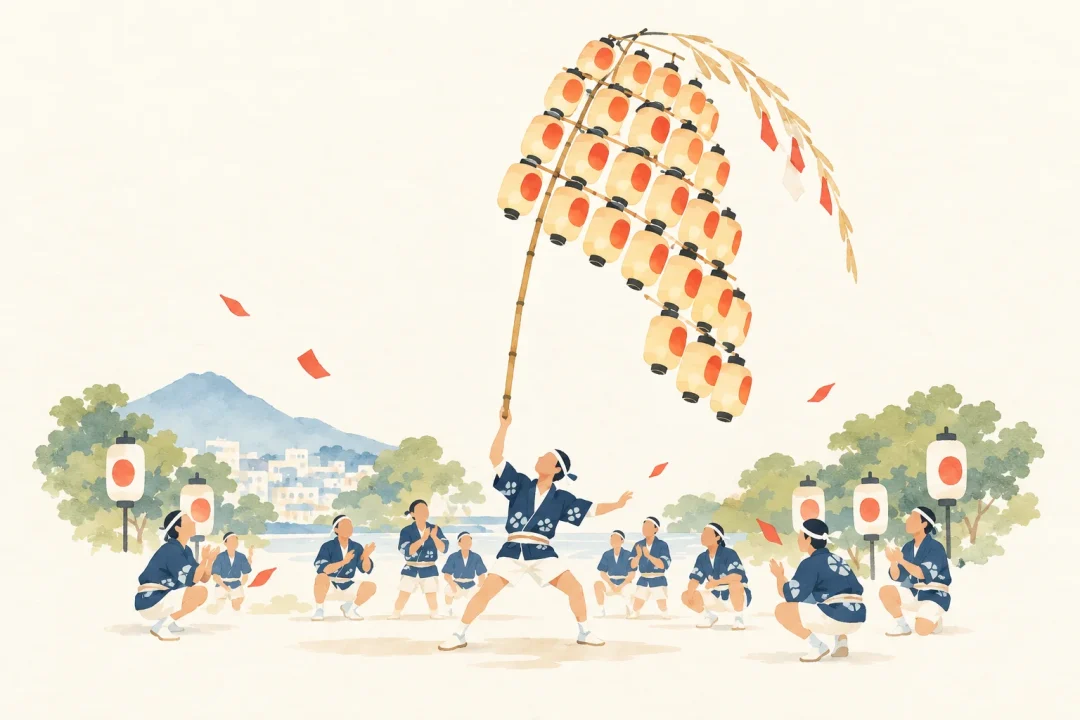
Guided by fire and drums, the Amhage’s prayers make their way through Akaishi
Akaishi no Amhage

Festival information
EVENT INFORMATION- Location
- Inari Shrine, Shinmei Shrine, and homes throughout the Konoura Akaishi district
- Area
- Akita Prefecture・Nikaho City(From Tokyo: approx. 3 h 40 min–4 h 10 min · bullet train)Prefecture-level estimate to a main station or airport, not the venue. Airport access, check-in and onward travel are extra; remote areas and islands can take much longer.
- Features
- Highlights and activities
- Wishes behind the festival
- Last updated
- 2026/11/11
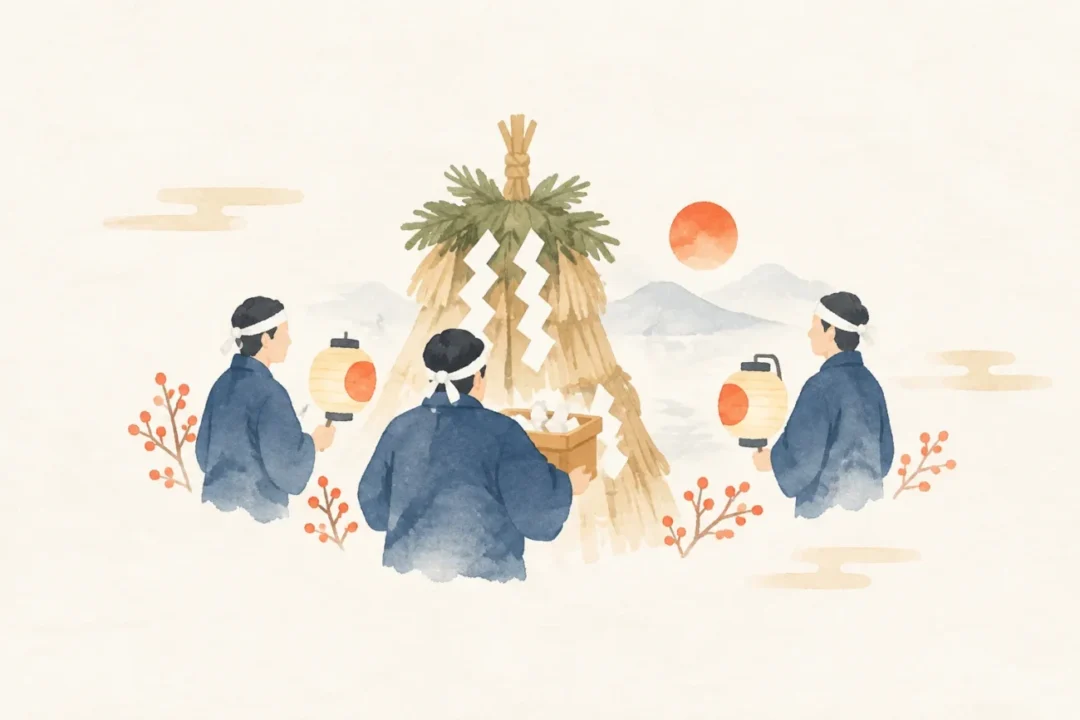
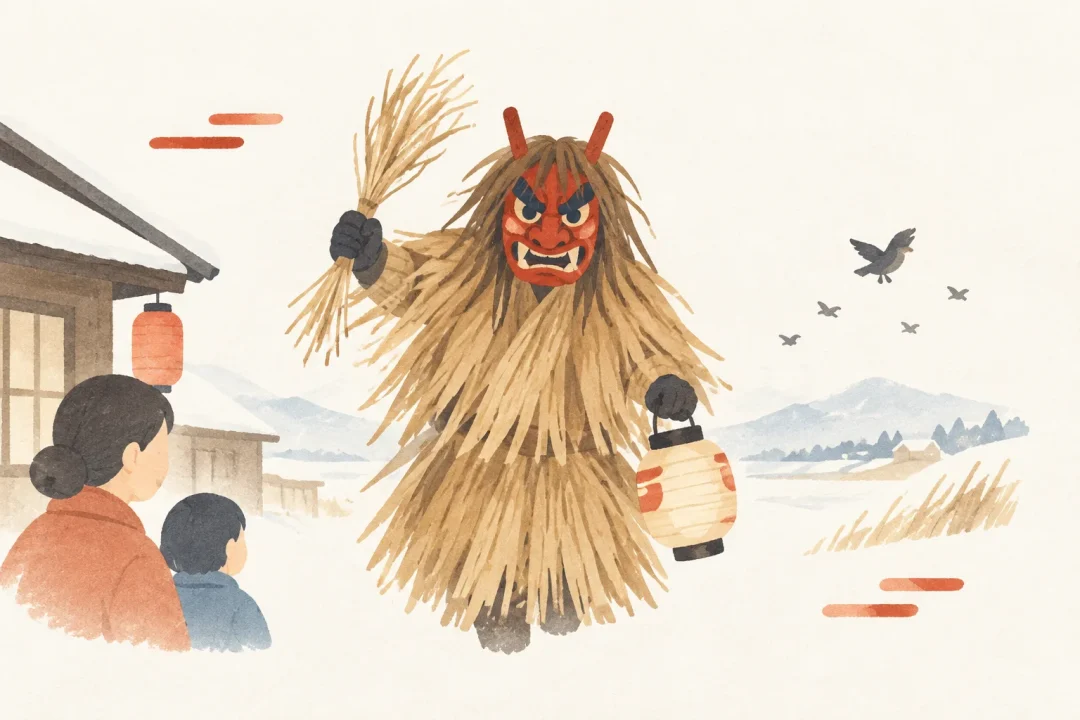
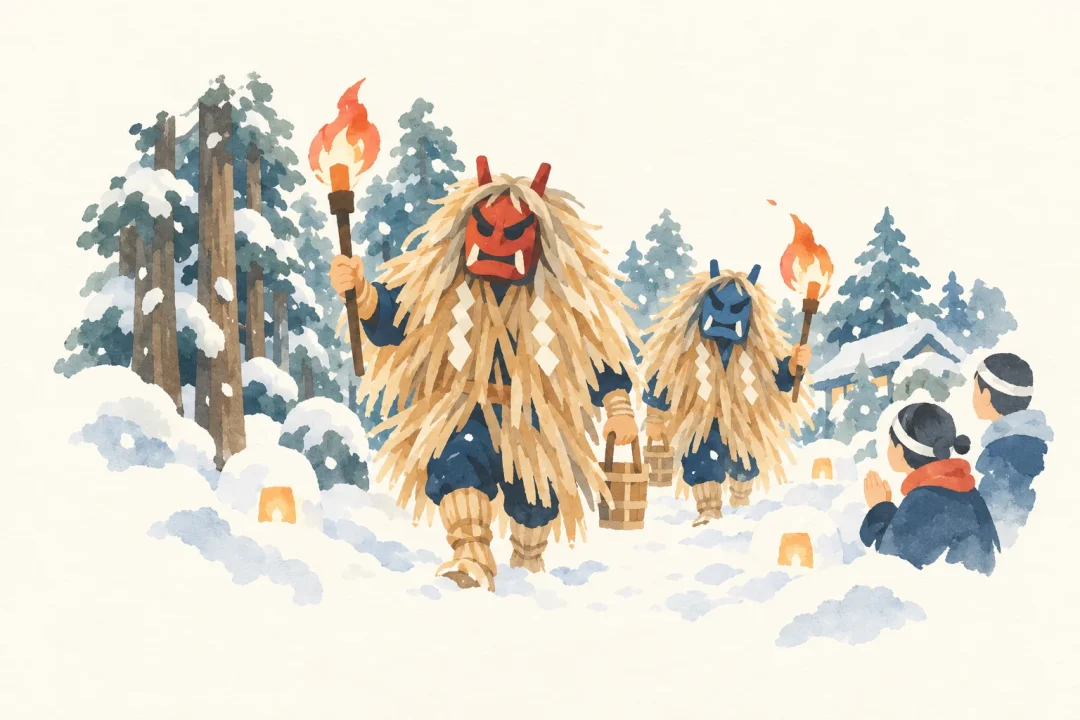
The Amhage, dressed in ink and straw, make their way through the Akaishi district to the sound of drums and gongs and the children’s singing. The sequence—from jumping at the shrine and performing purification rites at homes to putting away the costume—reveals a local tradition passed down through generations.
About Akaishi no Amhage
Akaishi no Amhage is an event recognized as an intangible folk cultural property, held in Akaishi, Konoura, Nikaho City, Akita Prefecture.
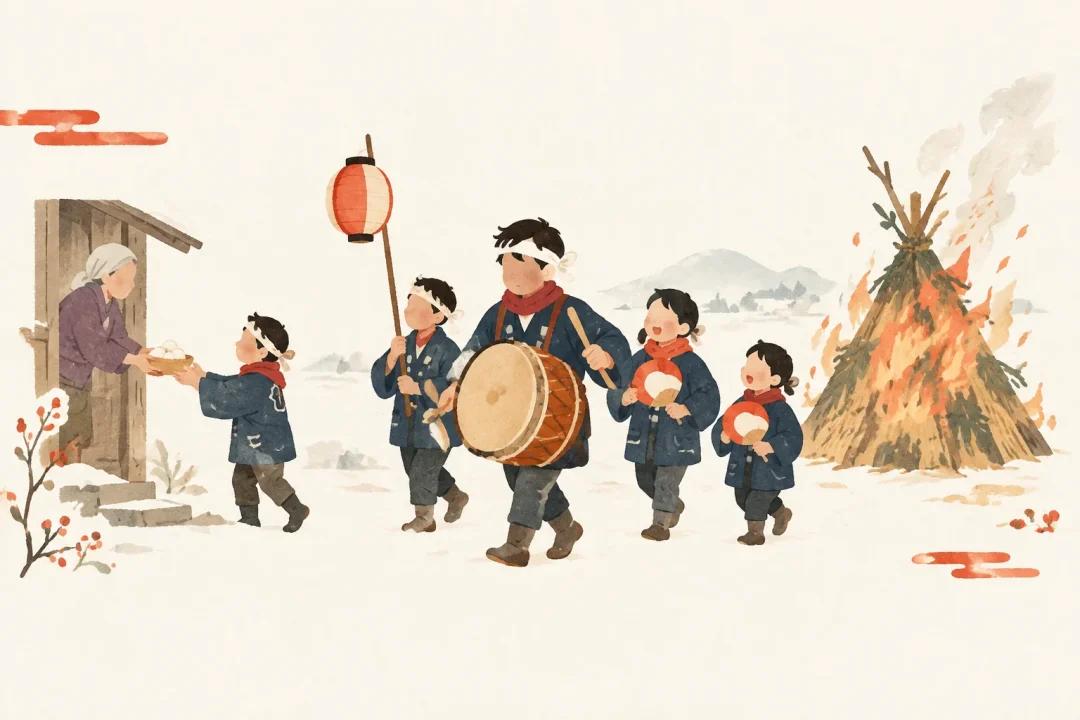
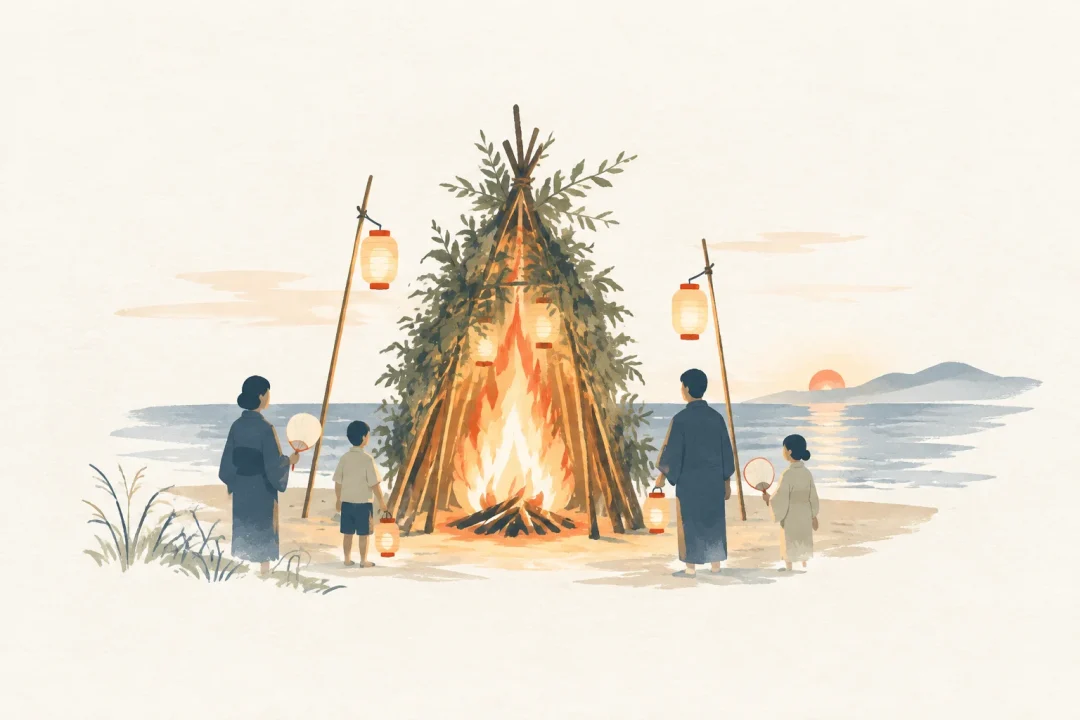
After warming themselves by the Dondoyaki bonfire, the children prepare for Amhage at the hall next to Inari Shrine.
The Amhage visit homes throughout the district and jump in front of the household altars to perform purification rites. Fire, costumes, drums, and community ties all come together in this tradition.
Festival highlights
A highlight is seeing 2 older boys become Amhage by smearing ink on their faces and wearing black hats and costumes woven from straw.
At Shinmei Shrine, the Amhage jumps 15 times as the other children shout, “Waa!”
Then they make their way through the district, beating drums and gongs and singing. At each home, they jump another 15 times in front of the household altar and perform purification rites.
Guided by fire and drums, the Amhage’s prayers make their way through Akaishi
What to expect
The event begins with warming themselves by the Dondoyaki bonfire, followed by preparing the Amhage costumes at the hall.
After jumping 15 times at Shinmei Shrine, the children, led by the Amhage, proceed through the district, beating drums and gongs and singing a set song.
At each home, only the Amhage enters, while the children call out from the entrance.
After visiting every home, they return to Inari Shrine and put away the straw costume at the Sae-no-kami shrine.
Location and access
- Venue and address
Akita Prefecture, Nikaho City, Konoura Akaishi / Inari Shrine, Shinmei Shrine, and homes throughout the district
Address Akaishi, Konoura, Nikaho City, Akita Prefecture
Accommodation and hotels PR
Showing nearby accommodation.
Prices and availability are current at the time of retrieval. For multi-night stays, only the first night’s price is shown. Confirm the final price and directions to the venue with the booking provider. Select your dates again when using the area search link. Search area: within 3 km of Central Akita Prefecture / Nikaho City (the search is not centered on the festival venue)
Nearby attractions

TDK歴史みらい館
秋田県にかほ市にある企業博物館
写真:掬茶 / CC BY-SA 4.0(resized and reformatted)
Photo source ·
フェライト子ども科学館
秋田県にかほ市にある科学館
写真:掬茶 / CC BY-SA 4.0(resized and reformatted)
Photo source ·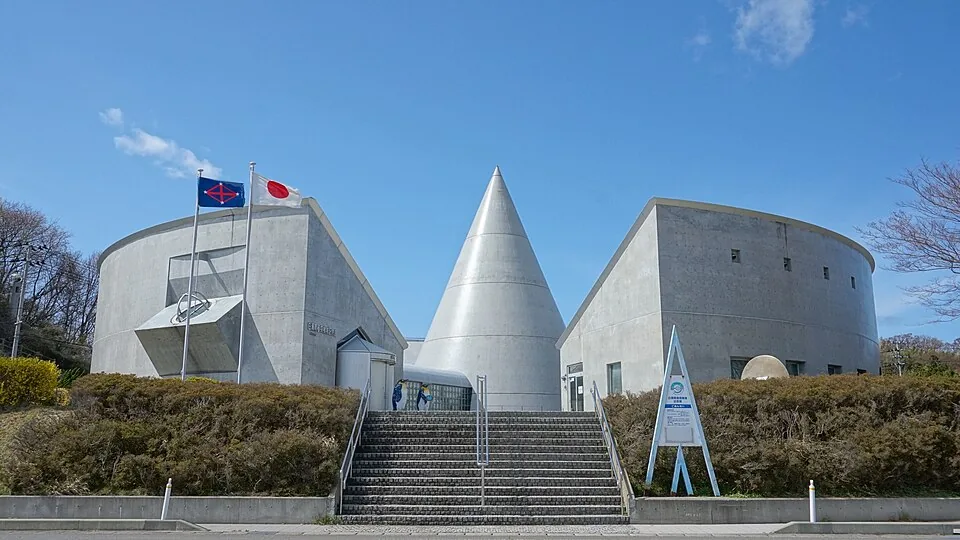
白瀬南極探検隊記念館
秋田県にかほ市の科学館
写真:掬茶 / CC BY-SA 4.0(resized and reformatted)
Photo source ·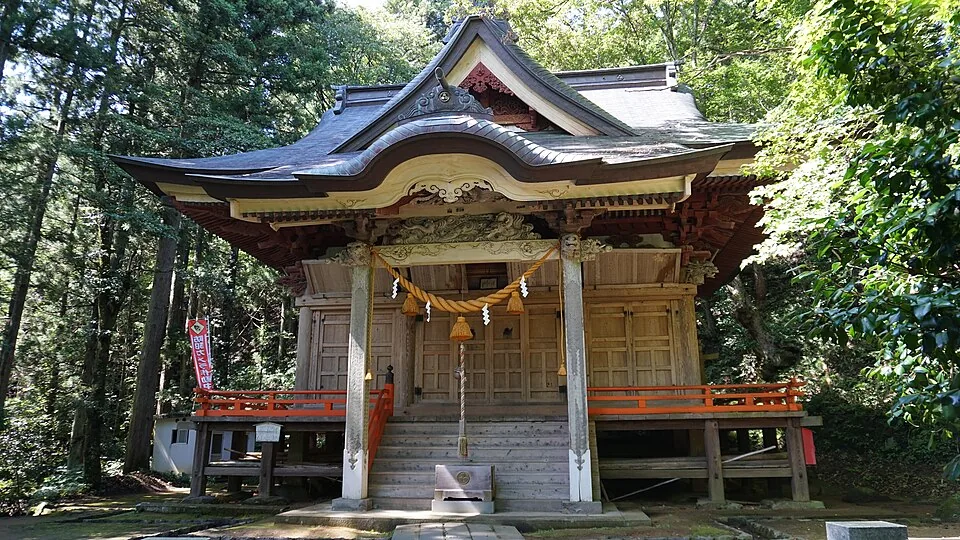
金峰神社 (にかほ市)
にかほ市にある神社
写真:掬茶 / CC BY-SA 4.0(resized and reformatted)
Photo source ·Origins and History of Akaishi no Amhage
Akaishi no Amhage is an intangible folk cultural property designated by Akita Prefecture.
The designation date is recorded as March 16, 2018.
The event is described as a sequence in which they warm themselves by the Dondoyaki bonfire, visit every home in the district, and finally put away the straw costume at the Sae-no-kami shrine.
Official information
Bunkazai Online lists the location, designation details, and event sequence for Akaishi no Amhage.
Akaishi no Amhage at a Glance
Akaishi no Amhage is an intangible folk cultural property passed down in Akaishi, Konoura, Nikaho City.
After warming themselves by the Dondoyaki bonfire, they prepare the Amhage with ink-painted faces and straw costumes, then jump 15 times at Shinmei Shrine and at the homes they visit.
The event follows a sequence: a procession through the district with drums, gongs, and singing; visits to every home; and putting away the costume at the Sae-no-kami shrine.
Sources and references
Japanese Festivals.jp Editorial Team
Celebrating local culture and helping you discover a side of Japan you never knew.
Article updated: 2026/11/11